qsr

Americans’ Favorite Fast-food Chain Is a Convenience Store

Buc-ee’s has been rated the top fast-food chain in the U.S., according to a dunnhumby study, followed by Kwik Trip. This indicates a merging of restaurants and convenience stores, with many consumers viewing c-stores as legitimate meal options. The study analyzed 58 quick-service restaurants, showing that convenience stores ranked prominently among consumer favorites.

https://www.restaurantbusinessonline.com/consumer-trends/americans-favorite-fast-food-chain-convenience-store

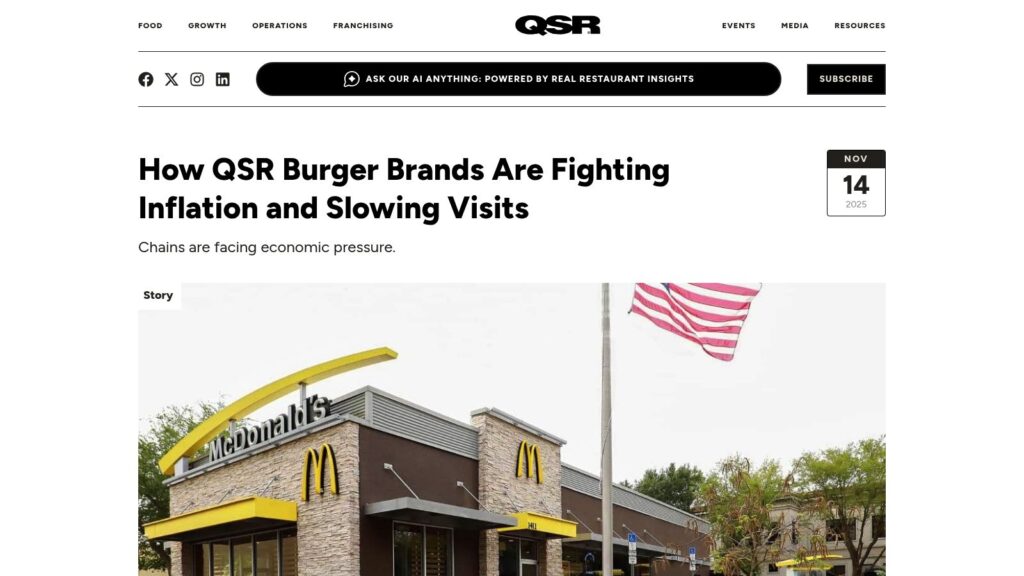
How QSR Burger Brands Are Fighting Inflation and Slowing Visits

QSR burger industry faces 2025 challenges like rising costs, inflation, and traffic declines. Major chains like McDonald’s regain momentum via value offerings, while smaller chains struggle. Operators must enhance efficiency, define unique value propositions, and actively adapt to shifting consumer preferences to thrive going into 2026.

https://www.qsrmagazine.com/story/how-qsr-burger-brands-are-fighting-inflation-and-slowing-visits/

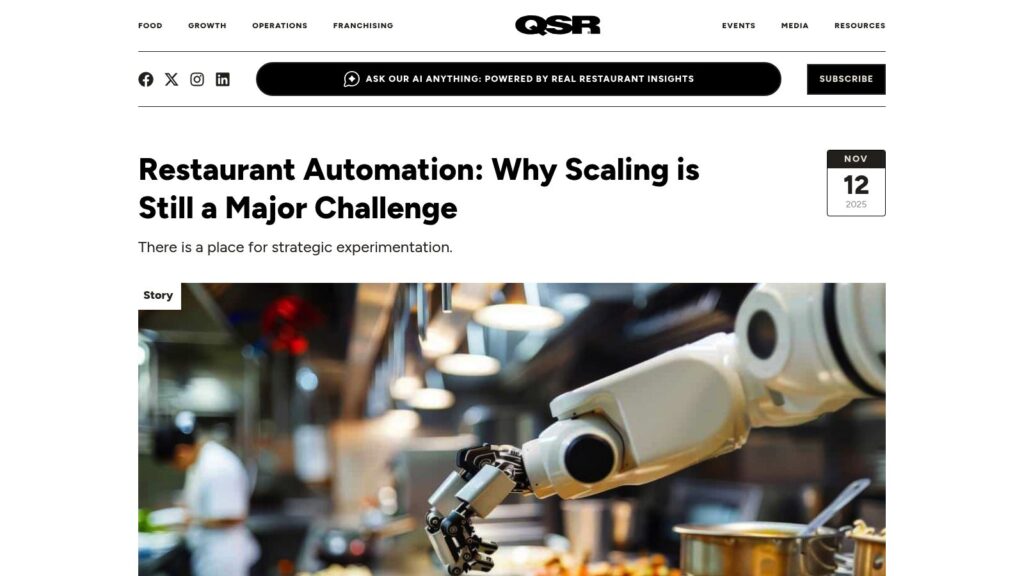
Restaurant Automation: Why Scaling Is Still a Major Challenge

Restaurant automation faces challenges scaling due to the complexity of food prep tasks requiring fine motor skills. Although some innovations exist, widespread adoption is hindered by technology limitations and operational adjustments needed. Organizations are strategizing on investments in automation while considering cost-effectiveness and employee retraining. The future of kitchen automation may deliver transformative capabilities, but current examples are limited, necessitating careful evaluation before implementation.

https://www.qsrmagazine.com/story/restaurant-automation-why-scaling-is-still-a-major-challenge/

United States Fast Food & Quick Service Restaurant Market Size and Forecast 2025–2033

US fast food and QSR market projected to grow from $248.8B in 2024 to $345.6B by 2033 (CAGR 3.74%). Key growth drivers include convenience, health-focused menu innovations, and technology. Challenges include rising costs and intense competition. Major segments: hamburgers, pizza, and Mexican food. Future success hinges on speed, personalization, and digital engagement.

https://vocal.media/feast/united-states-fast-food-and-quick-service-restaurant-market-size-and-forecast-2025-2033-ks4c70i0p

How Predictive Analytics Are Guiding Restaurant Closures and Remodel Decisions |

Outback Steakhouse is closing 21 U.S. locations and allowing 22 leases to lapse, driven by data and predictive analytics rather than intuition. The parent company, Bloomin’ Brands, is reallocating resources for modernization and a strategic turnaround plan, indicating a broader trend in the restaurant industry where technology informs business decisions, including which restaurants to close or renovate. Predictive analytics are now pivotal for assessing long-term profitability, modernization costs, and determining the operational viability of restaurant locations. Other chains like Wendy’s are following suit, using data-driven approaches for their operational strategies and capital investments, shifting the restaurant management landscape towards technology readiness as a determinant of success.

https://restauranttechnologynews.com/2025/11/how-predictive-analytics-are-guiding-restaurant-closures-and-remodel-decisions/

Gen Z Vs. Gen X: Winning Both Generations at the QSR Checkout

Summary: QSRs must attract both Gen Z and Gen X by personalizing the checkout experience. Gen Z prefers novel, edgy offers, while Gen X values stability and bundles. Tailoring offers based on real-time data at checkout can boost customer satisfaction and sales. Brands that understand customer preferences enhance loyalty and revenue, making the checkout a key moment for engagement.

https://www.restaurantdive.com/spons/gen-z-vs-gen-x-winning-both-generations-at-the-qsr-checkout/804011/

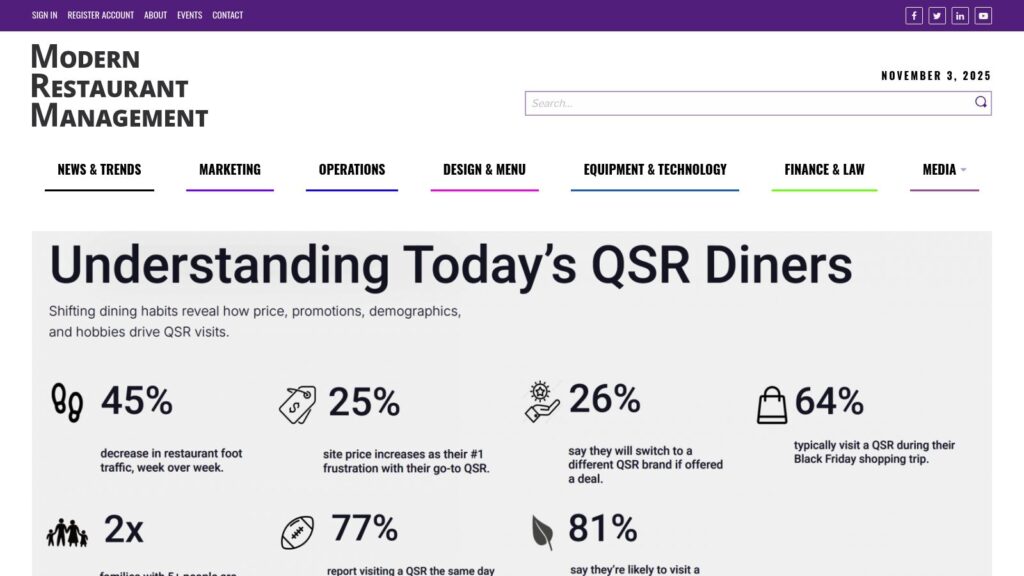
MRM Research Roundup: QSR Reputations, Menu Price Rises, and Alcohol Out, Cannabis In

QSR industry shows resilience despite economic challenges. Foodservice spend reached $357.3B, projected to grow to $385B by 2028. Notable QSR reputation rankings led by Hardee’s, focusing on food quality. Menu prices rise due to inflation, labor costs, and tariffs, affecting holiday dining costs. Entrepreneurs face high initial costs in hospitality, loans averaging $185.7K. Shifts noted in dining and beverage preferences, with declines in alcohol sales and growth in cannabis-infused drinks. Online reputation crucial as AI impacts consumer research behavior. Youth favor convenience and value in dining choices, leading brands prioritizing those aspects to perform better.

https://modernrestaurantmanagement.com/mrm-research-roundup-qsr-reputations-menu-price-rises-and-alcohol-out-cannabis-in/

Limited-service Visits Decline as Customer Service, Value Perceptions Hit New Lows

Limited-service restaurants face a crisis as visits decline 1.6% in early 2025 despite projected 4.3% sales growth. Customers report increased complaints about service, wait times, and quality, with a shift in value perception towards quality over price. “Sauce-flation,” where extra charges for condiments frustrate consumers, is notable. Brands improving their reputation, like Hardee’s, focus on menu innovation and operations, emphasizing quality and service to attract traffic.

https://www.fastcasual.com/news/limited-service-visits-decline-as-customer-service-value-perceptions-hit-new-lows/

Scroll to Top