customer experience

How to Scale Customization Without Slowing Down the Guest Experience

Gong cha of the Americas is addressing the challenge of scaling complex customization without sacrificing speed or consistency by redesigning ordering, production, and labor strategies. Their approach includes kiosk-first ordering to streamline guest customization, strategic automation to simplify workflows without replacing employees, and redeploying labor toward higher-value tasks to improve efficiency and hospitality. This operational reset responds to rising off-premise demand and volume variability, emphasizing technology and labor integration as critical factors for sustainable growth and guest experience.

https://www.qsrmagazine.com/story/how-to-scale-customization-without-slowing-down-the-guest-experience/

Rethinking the Drive-Thru Experience for Today’s Conscious Consumer

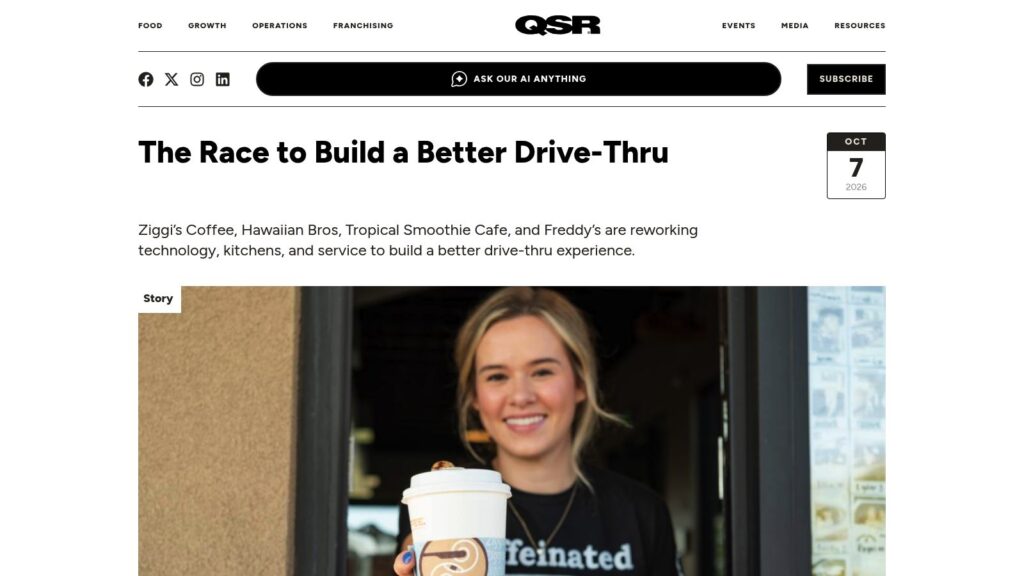
Quick-service restaurants are addressing challenges in their drive-thru operations—such as slow service and order errors—by implementing incremental technology upgrades including digital menu boards, advanced headsets, and line-busting tablets, as well as leveraging managed services for support. These innovations aim to streamline ordering, improve communication, and enhance efficiency without overwhelming staff or budgets, while integrating seamlessly with broader restaurant systems to maintain speed and accuracy in high-volume environments.

https://www.qsrweb.com/blogs/rethinking-the-drive-thru-experience-for-todays-conscious-consumer/

Restaurant Brands Are Rebuilding Their Apps Around Loyalty, Personalization and Digital Guest Engagement

Leading restaurant brands are redesigning their mobile apps to focus on loyalty, personalization, and digital guest engagement beyond basic ordering convenience. These apps now serve as comprehensive platforms integrating gamification, targeted rewards, exclusive access, and community-building features to deepen customer relationships, gather first-party data, and drive repeat visits while reducing reliance on third-party channels. This shift reflects the growing importance of branded apps as strategic marketing tools and direct engagement hubs that personalize offers, track guest behavior, and support dynamic, seasonally-driven campaigns.

https://restauranttechnologynews.com/2026/07/restaurant-brands-are-rebuilding-their-apps-around-loyalty-personalization-and-digital-guest-engagement/

Why QSR Loyalty Needs a Reset in a K-shaped Economy

In a K-shaped economy where higher-income consumers maintain spending while lower-income consumers cut back, QSR loyalty programs must shift from merely rewarding transactions to building genuine, effortless customer relationships. Effective loyalty strategies focus on simplifying the customer experience through recognition and convenience rather than pushing more points or aggressive personalization, with AI tools serving to reduce ordering friction rather than to upsell. Programs that treat loyalty as an ongoing engagement platform and measure meaningful customer affinity, rather than just financial metrics, are better positioned to retain customers across diverse income segments.

https://www.qsrmagazine.com/story/why-qsr-loyalty-needs-a-reset-in-a-k-shaped-economy/

When AI Ordering Becomes More Hype Than Help

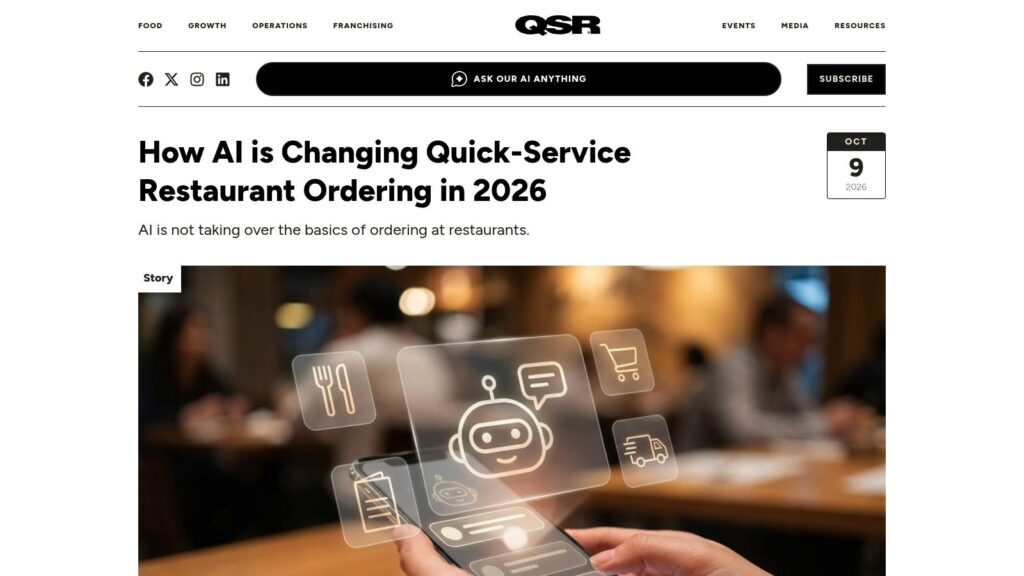
Quick-service restaurants (QSRs) adopting AI ordering must focus on reducing friction, improving accuracy, and integrating seamlessly with store operations to enhance convenience rather than simply adding novelty. Effective AI should manage contextual recommendations, inventory, and order accuracy behind the scenes, supporting operational efficiency and consistent customer experiences rather than requiring customers to engage in more complex ordering interactions. Brands that connect AI to real-time systems like POS, inventory, and kitchen capacity will build trust and simplify ordering, while isolated AI implementations risk increasing customer effort and dissatisfaction.

https://www.qsrmagazine.com/story/when-ai-ordering-becomes-more-hype-than-help/

The QSR Value Wars Are Buying Traffic, Not Loyalty

The article analyzes the impact of aggressive value-promotion campaigns launched by major quick-service restaurants (QSRs) starting in mid-2024, revealing that while these “value wars” boosted traffic and transactions for many brands, they largely failed to increase customer retention and loyalty. Data from 18 major QSRs show that 15 experienced declines in customer retention despite higher sales, indicating customers were attracted by discounts but did not become more loyal, highlighting the need for separate strategies and metrics for promotions and loyalty.

https://www.restaurantdive.com/spons/the-qsr-value-wars-are-buying-traffic-not-loyalty/821059/

The State of Mobile Ordering in QSR: Which Brands Are Winning, and Where Opportunity Still Lies

The 2026 mystery shopper report by Intouch Insight, featured in QSR Magazine, evaluates mobile ordering in quick-service restaurants across nine major brands, focusing on order accuracy, speed, service, and overall experience. Findings show mobile ordering apps generally perform well with high accuracy and customer satisfaction, but issues like technical glitches, unclear pickup instructions, and late orders still create friction, reducing satisfaction. Friendly staff interactions can mitigate some negative impacts, and dedicated pickup lanes improve speed and service at certain locations, highlighting ongoing opportunities for operational improvements in mobile ordering.

https://www.qsrmagazine.com/story/the-state-of-mobile-ordering-in-qsr-which-brands-are-winning-and-where-opportunity-still-lies/

How Technology Can Help QSRs Overcome Cost and Experience Challenges

Technology has become a crucial driver for quick-service restaurants (QSRs), helping them address cost challenges related to food and labor while enhancing customer experience through faster, accurate, and friendly service. Integrating purpose-built technology such as connected POS systems, AI-enabled devices, and back-office software enables QSRs to streamline operations and make data-driven decisions, with managed services further supporting ongoing maintenance and maximizing return on investment.

https://www.qsrmagazine.com/story/how-technology-can-help-qsrs-overcome-cost-and-experience-challenges/

Report: Loyalty Is QSR’s Primary Growth Engine

Par Technology's 2026 QSR Operational Index Report reveals that customer loyalty is now the primary growth driver for quick-service restaurants (QSR), with loyalty transactions growing 28.5% year-over-year and loyalty members spending more per visit than anonymous guests. The report highlights that digital channels, especially drive-thru and delivery, are reshaping sales patterns, while dinner and late-night periods generate the highest revenues, emphasizing the importance of integrating loyalty programs with operational efficiency and channel strategies to boost revenue amid rising costs.

https://www.franchising.com/articles/20260511_report_loyalty_is_qsrs_primary_growth_engine.html

Are Restaurant Customers Starting to Feel Digital Fatigue?

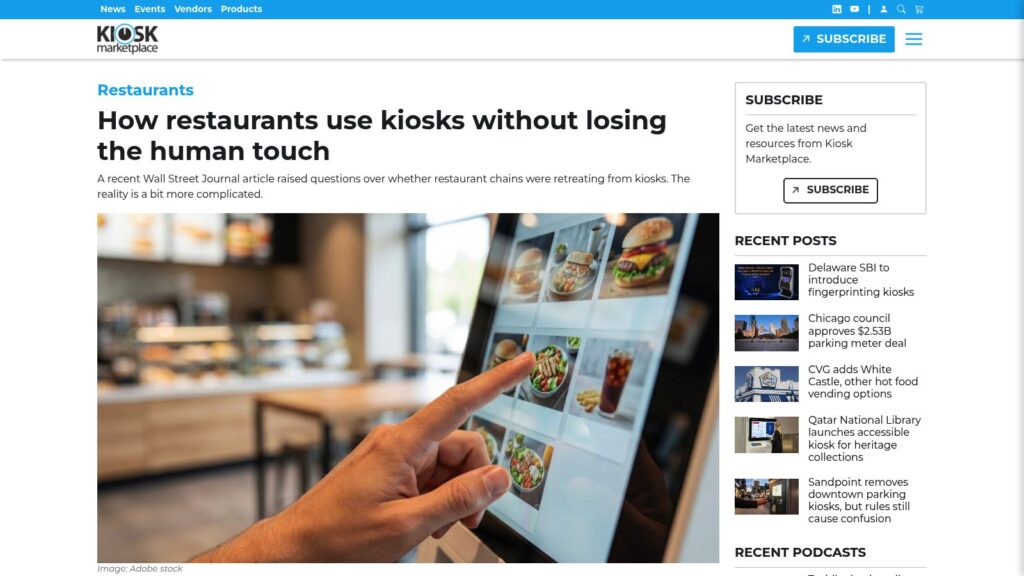
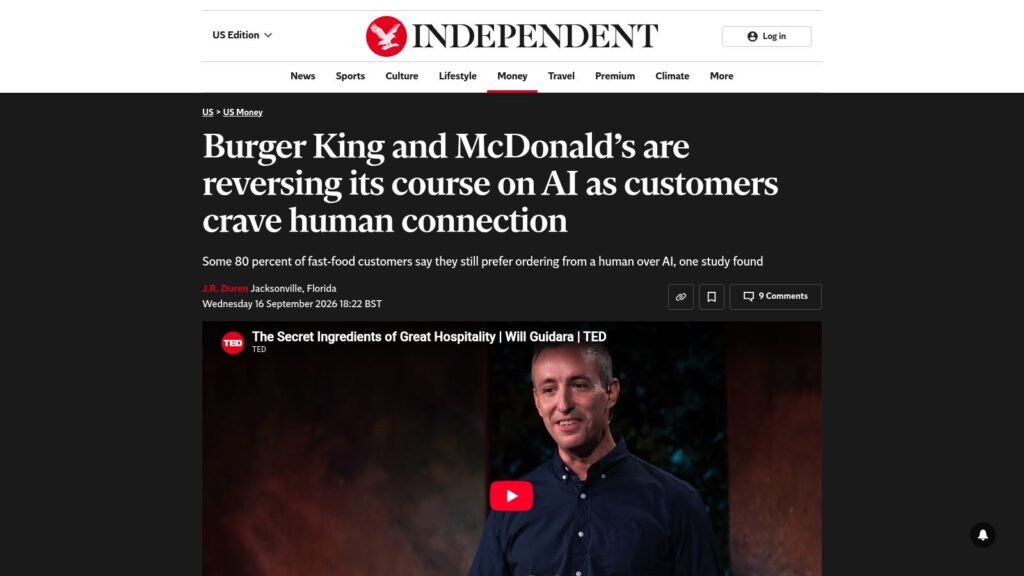
The 14th edition of William Blair’s restaurant tracker reveals that consumer engagement with restaurants has declined, with fewer people dining out frequently and an increased preference for face-to-face interaction over digital ordering methods. Despite lower visit frequencies, average spending has risen, particularly among lower-income groups, while convenience and cost remain key factors influencing restaurant choice; the findings also suggest potential early signs of digital fatigue, with some consumers favoring traditional ordering over apps and kiosks.

https://www.qsrmagazine.com/story/are-restaurant-customers-starting-to-feel-digital-fatigue/

Scroll to Top