qsr

Recognition That Resonates: Retaining Restaurant Workers

TLDR: To reduce summer employee turnover in the restaurant and hospitality sectors, consistent and meaningful recognition is vital. Recognizing staff with specific, timely, and authentic praise improves morale and loyalty, especially during high-pressure seasons. Strategies include personalizing recognition, encouraging peer acknowledgment, and utilizing structured praise methods like the S.T.A.R. framework. Although higher pay and benefits are important, sincere recognition can significantly enhance retention and performance.

https://www.qsrweb.com/blogs/recognition-that-resonates-retaining-restaurant-workers/

How Simulation Training Is Closing the Competency Gap in Digitized Quick-Service Restaurant Operations

Simulation training enhances QSR employee skills amid rising tech demands. Realistic, immersive simulations bridge competency gaps, boosting confidence and improving service. This approach fosters faster proficiency, retention, and operational efficiency through tailored AI-driven training, ultimately maximizing tech ROI for restaurants.

https://restauranttechnologynews.com/2025/10/how-simulation-training-is-closing-the-competency-gap-in-digitized-quick-service-restaurant-operations/

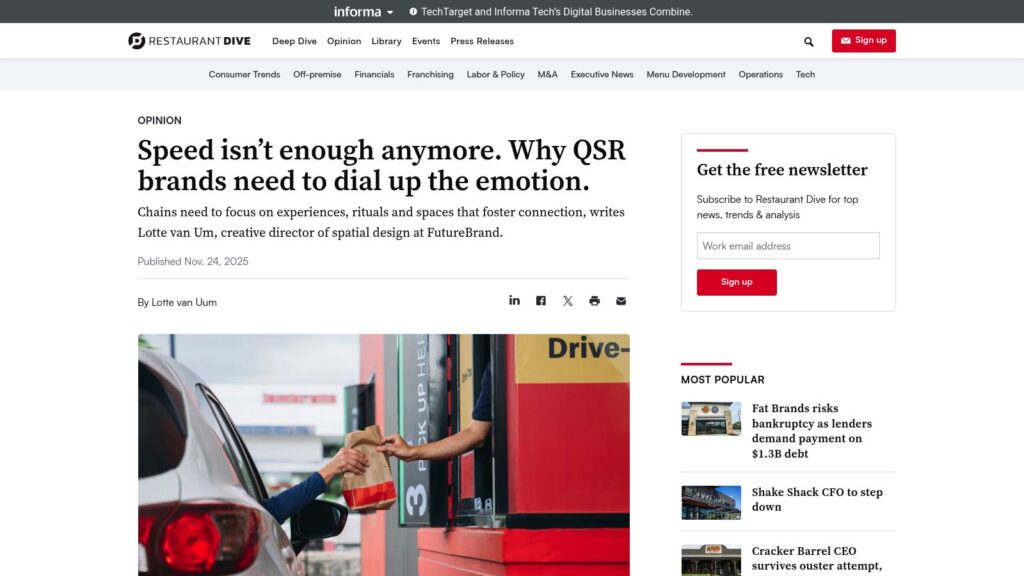
Taco Bell Is Once Again the Fastest Drive-Thru in America

Taco Bell has maintained its title as the fastest drive-thru in America for five years, with continued sales growth and the implementation of advanced AI technologies to enhance customer experience. The brand is focusing on speed, accuracy, and hospitality while integrating innovations like Voice AI and loyalty programs. Taco Bell's drive-thru strategy emphasizes technology to improve operational efficiency and customer interaction, promising a future of intuitive and memorable service experiences.

https://www.qsrmagazine.com/story/taco-bell-is-once-again-the-fastest-drive-thru-in-america/

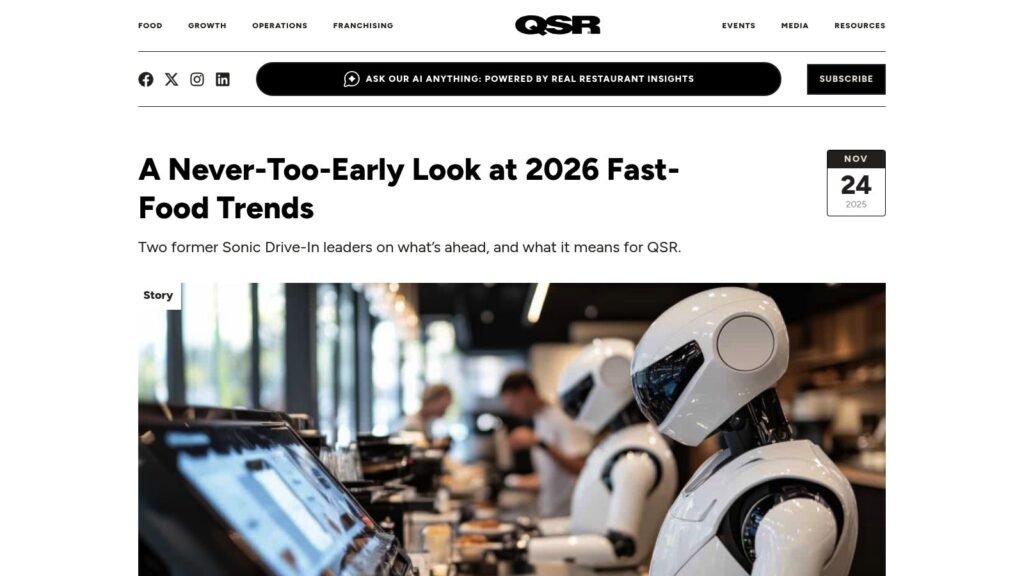
No More Stock Surprises: How AI Is Changing Food Service Inventory

AI revolutionizes food service inventory by automating stock counts, enhancing accuracy, reducing waste, and boosting profitability. Traditional manual inventory management is outdated, leading to errors and inefficiencies. AI-powered devices streamline inventory processes, enabling quick, accurate counts while allowing staff to focus on customer service. Restaurants using AI achieve better visibility, smarter labor use, reduced waste, and improved decision-making, establishing a competitive edge. The shift to AI is essential for enhancing operational efficiency and customer experience in the food service industry.

https://www.qsrweb.com/blogs/no-more-stock-surprises-how-ai-is-changing-food-service-inventory/

Chick-fil-A Wins on Order Accuracy, Experience at the Drive-thru

Chick-fil-A leads in drive-thru satisfaction (98%) despite longer wait times (over 7 minutes). Taco Bell topped in speed (average 4:16). Post-pandemic speed improvements have plateaued due to complex transactions like mobile orders. AI-assisted drive-thru orders were 21 seconds faster, yet faced issues with clarity and friendliness. Overall, convenience and speed are prioritized by customers.

https://www.restaurantdive.com/news/intouch-insight-drive-thru-ai-speed-satisfaction-taco-bell-chick-fil-a/801721/

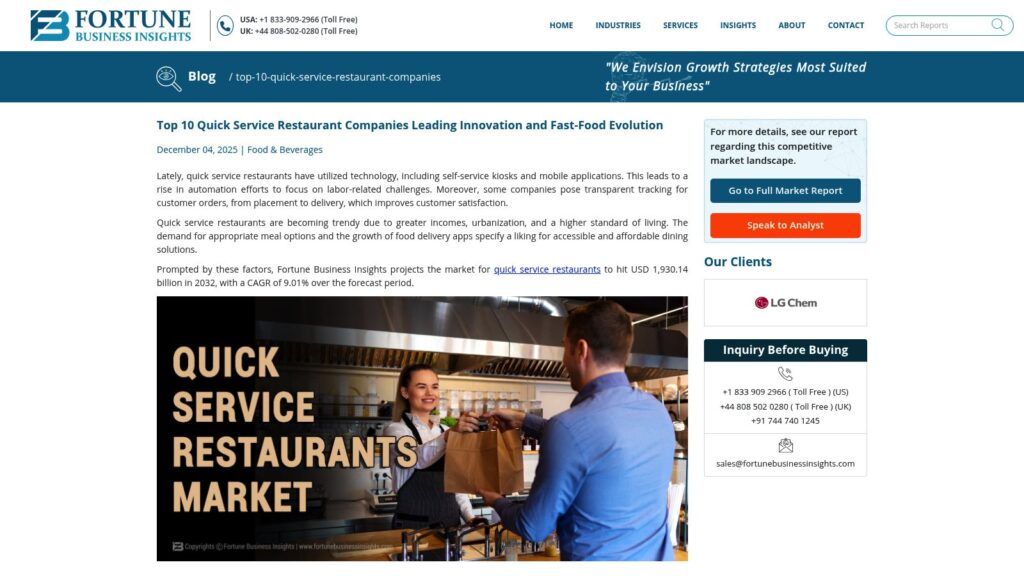
Quick Service Restaurants Market Size, Share & Growth Report 2033

QSR Market Overview:
2025 market size: $1,064.44B, projected to reach $2,078.46B by 2033 (CAGR 8.75%). Growth driven by online delivery (48% of sales), digital ordering, and changing consumer preferences. Key players include McDonald's, Subway, KFC. Major trends: convenience, urbanization, mobile apps. Asia-Pacific fastest-growing region (CAGR 9.96%). Restraints: rising operational costs and supply chain issues. Opportunities in expanding digital platforms.

https://www.snsinsider.com/reports/quick-service-restaurants-market-8670

The Top 3 Fastest-Growing QSR Categories of 2025

Fastest-Growing QSR Categories of 2025: Coffee shops, chicken chains, and Mexican-inspired brands saw growth in visits during the first half of 2025, while traditional fast-food segments like burgers and sandwiches declined. Despite growth, average visits per location decreased, suggesting potential market saturation as chains expand rapidly. However, summer trends hint at declining foot traffic and rising coffee prices, which may impact consumer habits.

https://foodinstitute.com/focus/the-top-3-fastest-growing-qsr-categories-of-2025/

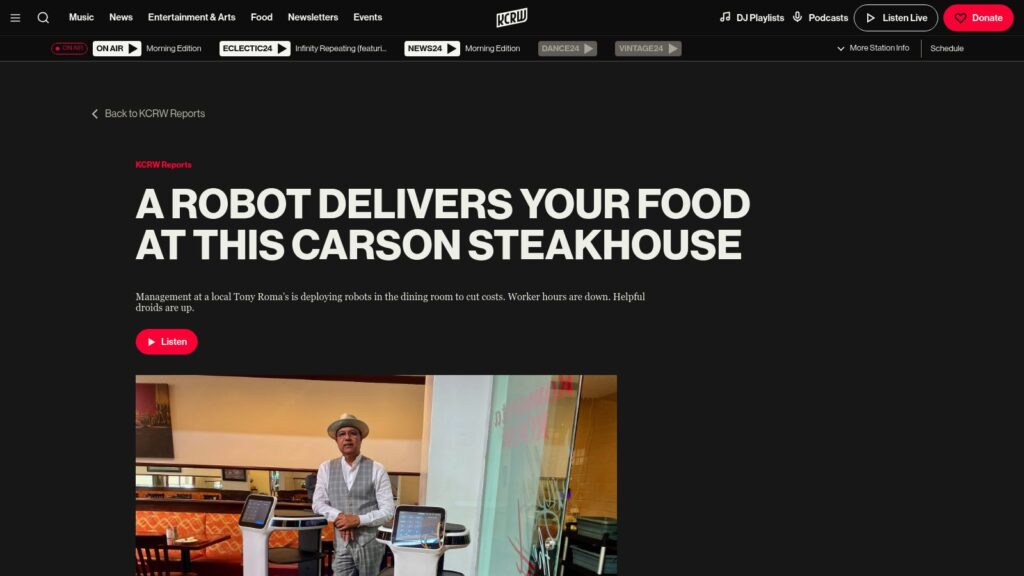
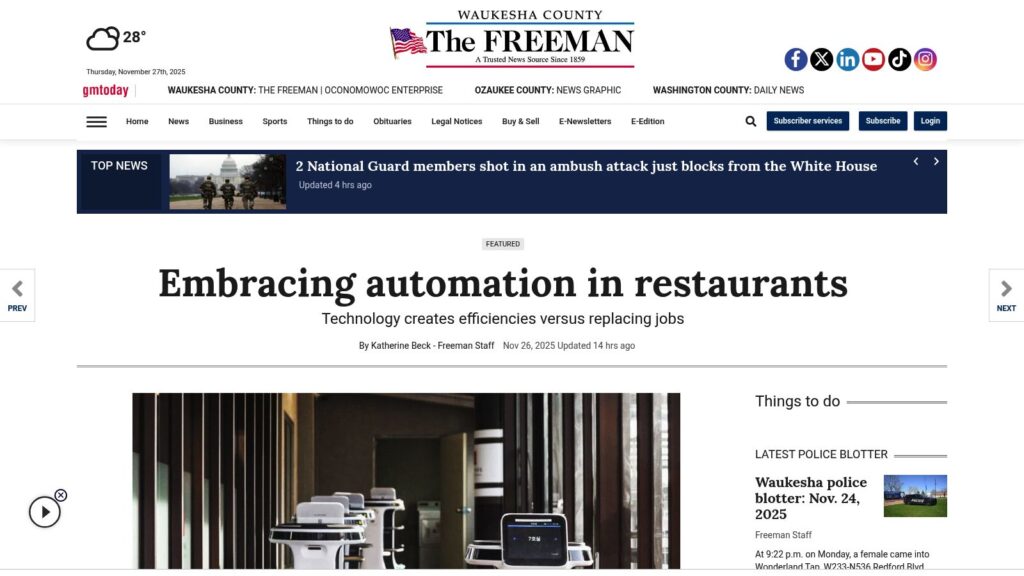
From QSR to Fine Dining: How Restaurants Are Adapting to Self Ordering Systems

Restaurants are evolving with self-ordering systems, moving from fast food to fine dining. Kiosks, tablets, and apps allow guests to independently place orders, enhancing accuracy and speed while addressing staffing shortages and customer demand for convenience. Fast food chains pioneered this trend, but now casual and fine dining venues also utilize technology to improve service without detracting from personal interactions. Though these systems offer many benefits, such as increased order accuracy and customer satisfaction, challenges include costs, maintenance, and ensuring accessibility for all patrons.

https://techbullion.com/from-qsr-to-fine-dining-how-restaurants-are-adapting-to-self-ordering-systems/

Quick Service Restaurants Market Size & Share

Global Quick Service Restaurants (QSR) market projected to grow from $336.1B in 2023 to $632.4B by 2032, at a 7.1% CAGR. Driven by changing consumer lifestyles, urbanization, and demand for convenience. Key trends include digitalization, AI integration for efficiency, and sustainability focus. Dine-in remains the largest segment, while delivery is the fastest-growing. Major markets include North America, Europe, and Asia-Pacific, with competitive strategies emphasizing plant-based menu options and tech innovations. Challenges include labor shortages and regulatory hurdles.

https://www.skyquestt.com/report/quick-service-restaurants-market

BorgWarner’s SWOT Analysis: Stock Outlook Amid EV Transition and Margin Strength By Investing.com

Restaurant Brands International (QSR), parent of Burger King, Tim Hortons, and Popeyes, shows growth through global expansion despite brand challenges. With a market cap of $29.13 billion and 19.71% revenue growth, it’s focusing on digital initiatives, comparable sales growth target of 3%, and extensive international presence. While Tim Hortons slightly underperformed, QSR's international segment exceeds expectations. Risks include fierce competition and challenges in China. Analysts suggest potential upside in stock valuation, with price targets between $67-$93. The company maintains a strong dividend yield of 3.84% and consistent shareholder returns.

https://www.investing.com/news/swot-analysis/restaurant-brands-internationals-swot-analysis-stock-outlook-amid-global-expansion-and-brand-challenges-93CH-3873060

Scroll to Top