delivery

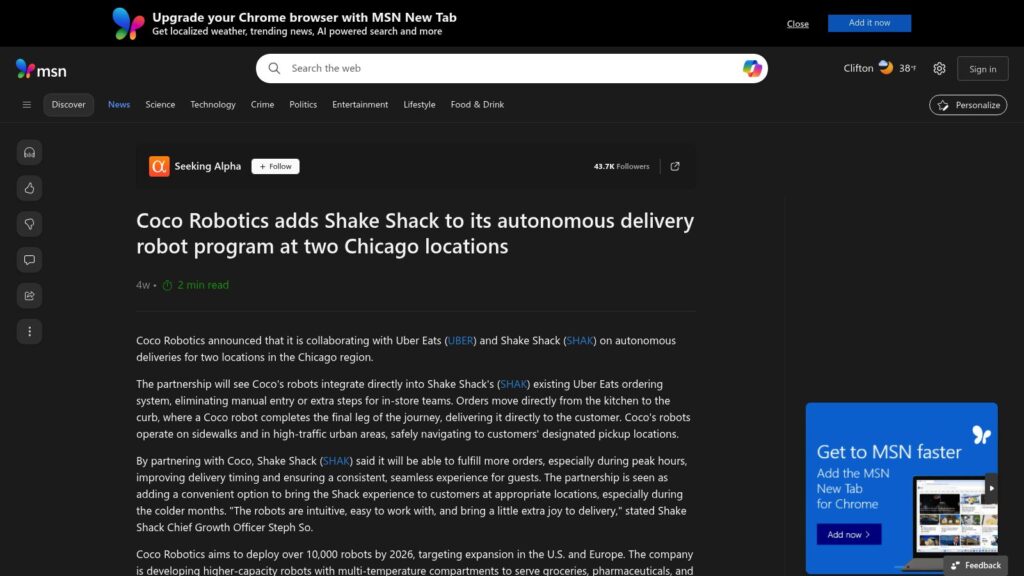
A Day In The ‘Life’ Of a Food Delivery Robot: Lots Of Waiting And a Few Collisions

A Block Club Chicago reporter and photographer spent a day following a Coco food delivery robot in Lakeview, documenting its activity over seven hours, during which it made four deliveries while experiencing periods of waiting and a few minor collisions. The article highlights the robot’s cautious navigation of busy pedestrian areas, varied public reactions, and ongoing concerns about safety and job displacement amid Chicago’s pilot program for personal delivery devices.

https://blockclubchicago.org/2026/04/28/a-day-in-the-life-of-a-food-delivery-robot-lots-of-waiting-and-a-few-collisions/

More Problems at Serve Robotics (SERV)

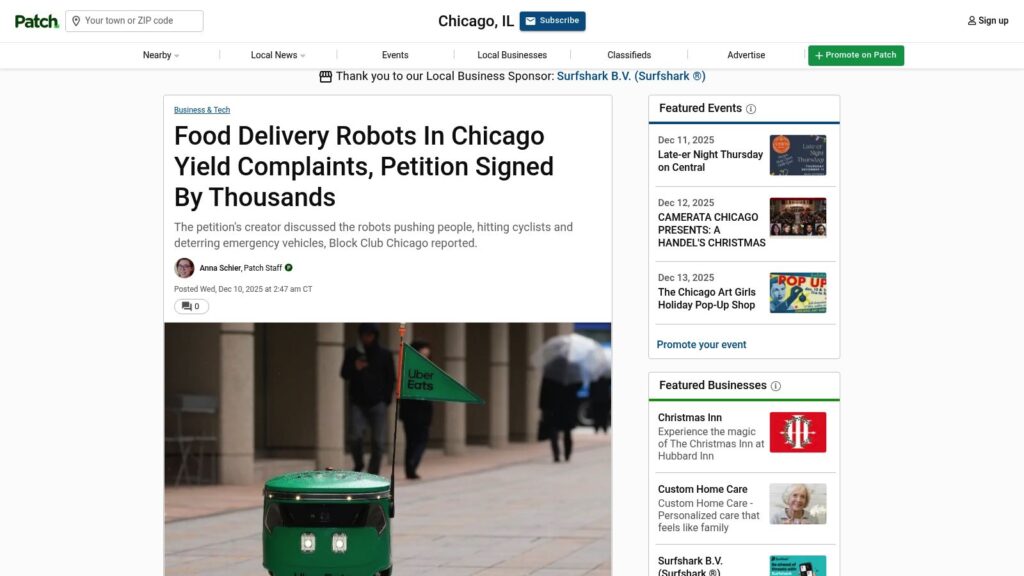
Serve Robotics, a company testing self-driving robots for food delivery, faces challenges in Chicago due to resident opposition. Residents complain that the robots block sidewalks, inconvenience pedestrians, and pose safety hazards. Additionally, the company’s robots have been involved in incidents that have blocked firetrucks and trains and harassed the disabled.

https://thebearcave.substack.com/p/more-problems-at-serve-robotics-serv

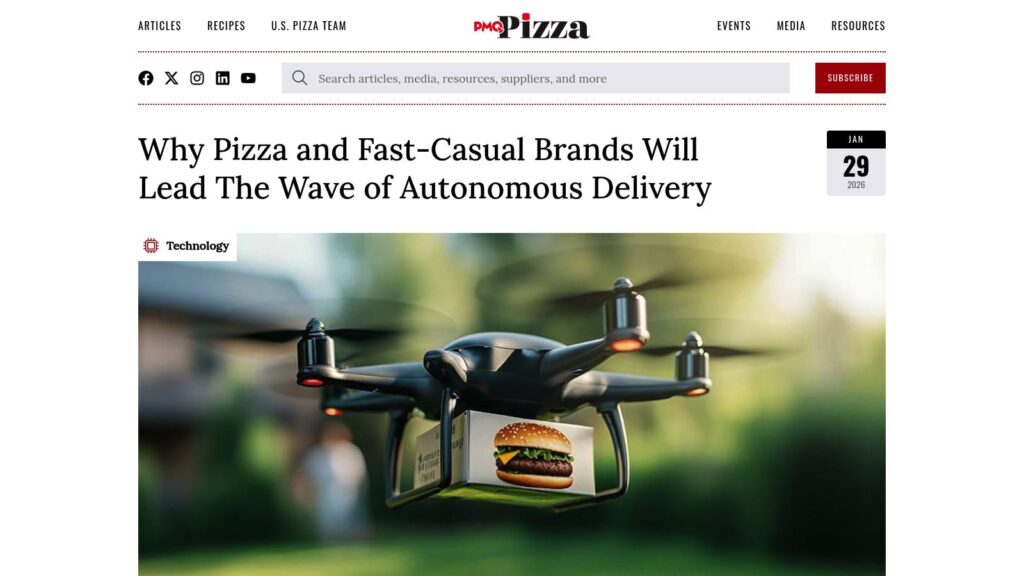
Why Pizza and Fast-Casual Brands Will Lead The Wave of Autonomous Delivery

Pizza and fast-casual brands are poised to lead in autonomous delivery due to their infrastructure, order density, and hybrid dispatch systems. Current delivery evolution has reached Delivery 2.0 with intelligent software for routing orders, while Delivery 3.0 will integrate autonomous vehicles and AI for improved logistics. The key to success will be sophisticated dispatch intelligence to manage diverse delivery methods. Operators must invest in hybrid orchestration and API systems now to avoid falling behind as technology rapidly advances.

https://www.pmq.com/why-pizza-and-fast-casual-brands-will-lead-the-wave-of-autonomous-delivery/

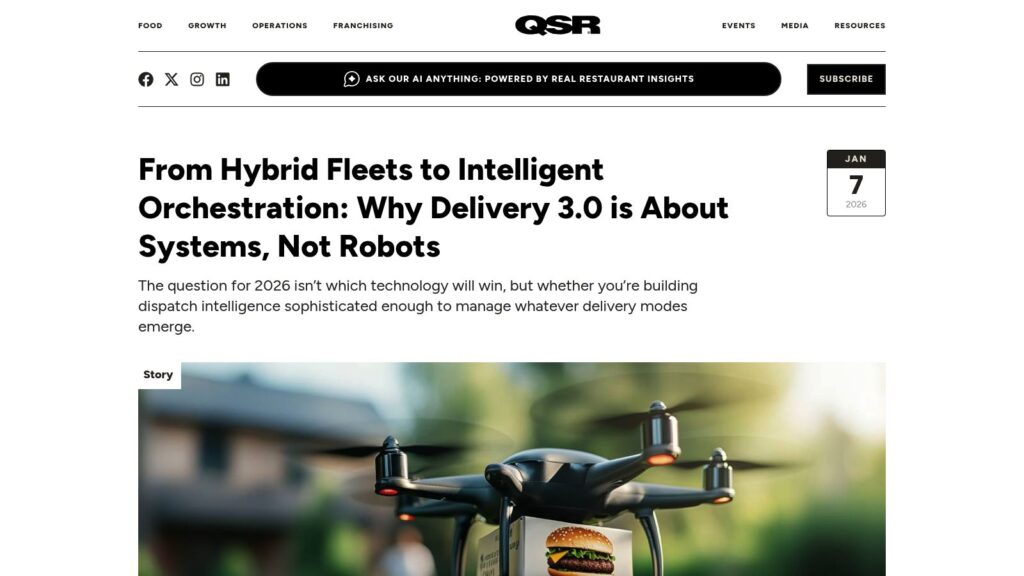
From Hybrid Fleets to Intelligent Orchestration: Why Delivery 3.0 Is About Systems, Not Robots

Delivery 3.0 revolutionizes restaurant logistics through hybrid orchestration, integrating autonomous technologies like drones and robots with existing delivery systems. This shift requires operators to build sophisticated dispatch intelligence to manage varied delivery modes effectively. Successful adaptation hinges on their ability to enhance real-time decision-making across diverse fleets, maximizing efficiency and profitability while meeting customer expectations for tracking and service. Fast-casual and pizza chains are likely to lead this transition due to their operational infrastructure and delivery needs. Operators must invest now in advanced systems to stay competitive as autonomous delivery evolves.

https://www.qsrmagazine.com/story/from-hybrid-fleets-to-intelligent-orchestration-why-delivery-3-0-is-about-systems-not-robots/

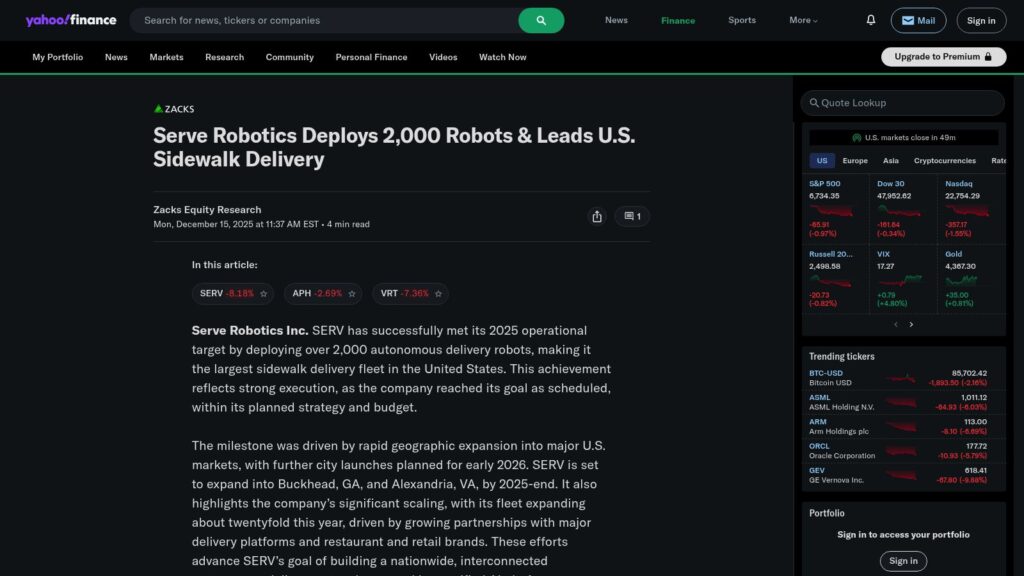
Serve Robotics Deploys 2,000 Robots & Leads U.S. Sidewalk Delivery

Serve Robotics (SERV) has deployed more than 2,000 autonomous delivery robots in 2025, giving it the largest sidewalk delivery fleet in the United States and meeting its operational target on time and on budget. The company rapidly expanded into major U.S. markets, with further launches planned in Buckhead, GA, and Alexandria, VA, and emphasizes that its zero-emission robots can cut traffic congestion and emissions while operating with minimal human intervention and high safety.

Growth is being driven by deep partnerships with Uber and DoorDash, which together provide access to over 80% of the U.S. food delivery market, and by expanding relationships with national restaurant brands such as Jersey Mike’s, Shake Shack, and Little Caesars. Over the past year, Serve’s fleet has grown 10x, its city footprint 5x, and its restaurant reach to more than 3,600 locations, while passing 1,000 deployed robots in Q3 2025 and 2,000 by mid-December, which accelerates its AI learning flywheel and strengthens its position as a leader in autonomous delivery and physical AI.

https://finance.yahoo.com/news/serve-robotics-deploys-2-000-163700829.html

DoorDash Rolls Out Zesty, an AI Social App for Discovering New Restaurants

DoorDash is launching Zesty, an AI-driven social app for discovering local restaurants, initially in San Francisco and New York. Users can get personalized recommendations through an AI chatbot without sifting through reviews. The app aggregates information from various platforms and allows sharing of experiences. It's part of DoorDash's expansion beyond food delivery, focusing on social interactions. While some may prefer existing platforms like Google, Zesty aims to cater to social discovery needs.

https://techcrunch.com/2025/12/16/doordash-rolls-out-zesty-an-ai-social-app-for-discovering-new-restaurants/

Uber Brings Robotic Delivery to New South Florida Metro Area

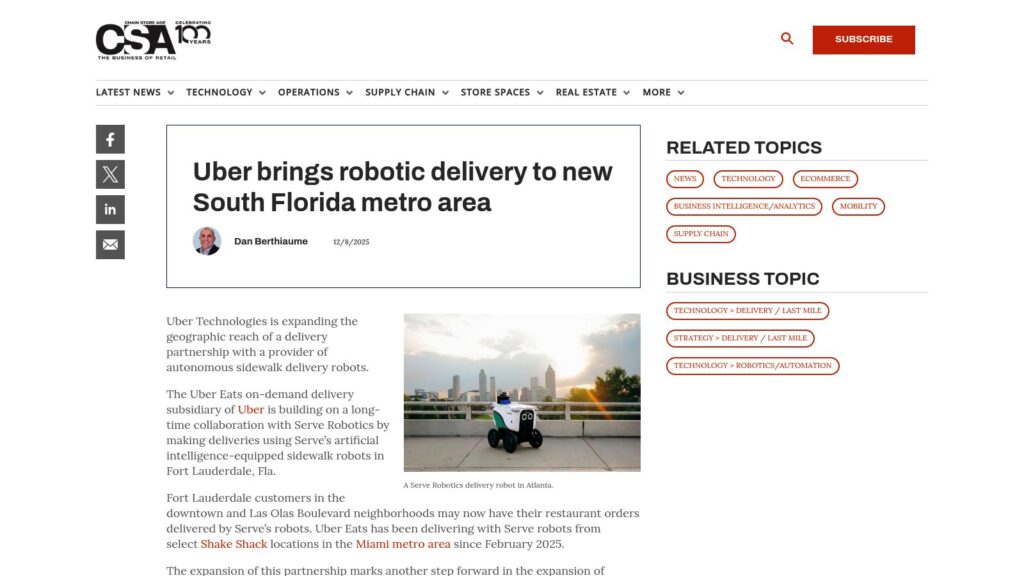
Uber Eats expands robotic delivery with Serve Robotics in Fort Lauderdale, enhancing autonomous deliveries in South Florida's downtown and Las Olas Boulevard. This builds on previous operations in Miami and Atlanta, as Serve aims to deploy 2,000 robots across the U.S. by year-end. The partnership utilizes AI-equipped robots for efficient, reliable food delivery, reflecting Uber's commitment to innovative logistics within a tech-friendly community.

https://chainstoreage.com/uber-brings-robotic-delivery-new-south-florida-metro-area

Scroll to Top