pricing

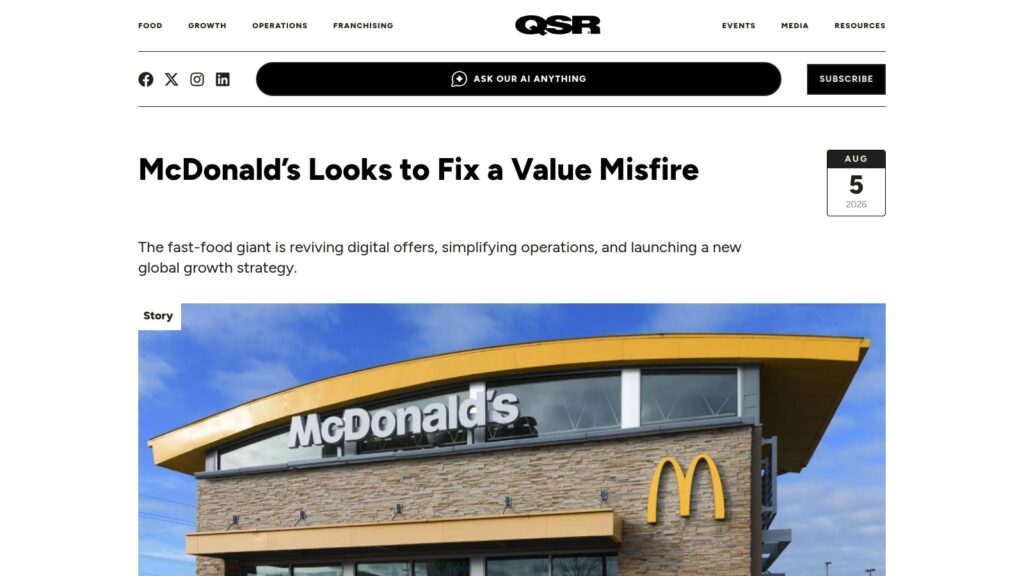
McDonald’s Looks to Fix a Value Misfire

McDonald’s U.S. same-store sales rose just 0.8 percent in Q2, falling short due to missteps in executing its new everyday affordability platform and reducing digital offers, which led to lower traffic and operational challenges. To address this, McDonald’s is enhancing pricing compliance, reviving digital promotions, simplifying its rollout calendar, and launching a new global growth strategy, McDonald’s > NEXT, focused on food quality, simplified operations, and hospitality to drive long-term growth and profitability.

https://www.qsrmagazine.com/story/mcdonalds-looks-to-fix-a-value-misfire/

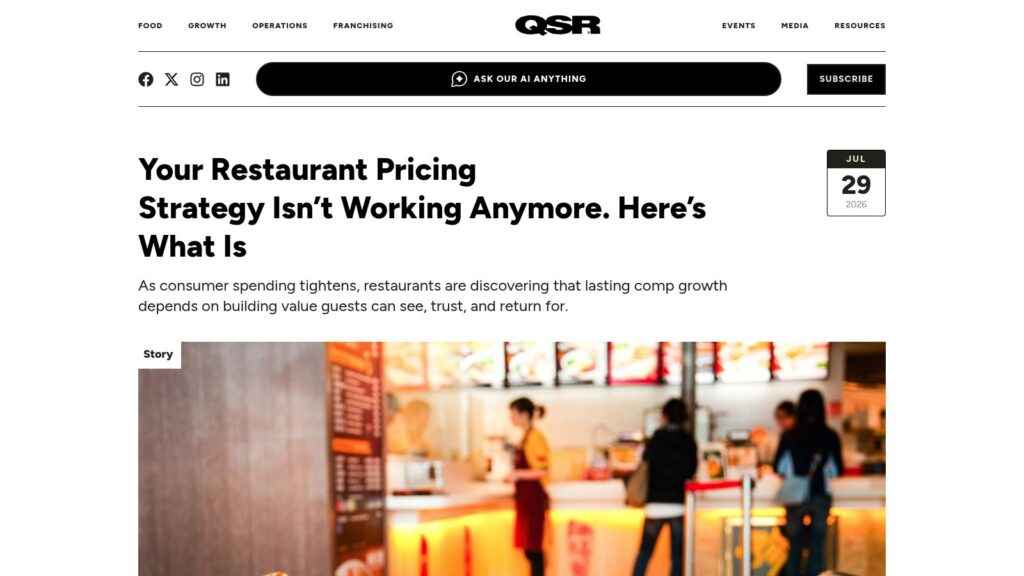
Your Restaurant Pricing Strategy Isn’t Working Anymore. Here’s What Is

As consumer spending tightens, traditional restaurant pricing strategies focused on raising prices to boost revenue are losing effectiveness, often suppressing traffic and comparable sales. Successful restaurants now prioritize delivering clear, honest value by aligning pricing with customer preferences, making quality visible, ensuring operational excellence, building meaningful loyalty beyond coupons, leveraging technology to enhance experience, and targeting specific market occasions. This strategic approach, emphasizing tangible value over cheapness, is enabling brands like Chili’s, Taco Bell, and McDonald’s to drive growth amid challenging economic conditions.

https://www.qsrmagazine.com/story/your-restaurant-pricing-strategy-isnt-working-anymore-heres-what-is/

Value for Restaurants Is an Economics Discipline, Not a Coupon Strategy

Restaurant value should be treated as an economics discipline rather than just a coupon or discount strategy, as relying heavily on promotions can erode long-term profitability and customer loyalty. Operators face rising labor and food costs, and improving profitability requires focusing on operational efficiencies such as menu simplification and cost management instead of simply cutting prices. Sustainable growth depends on strong unit economics that balance delivering value customers perceive as worthwhile while maintaining healthy margins at the store level.

https://www.qsrmagazine.com/story/value-for-restaurants-is-an-economics-discipline-not-a-coupon-strategy/

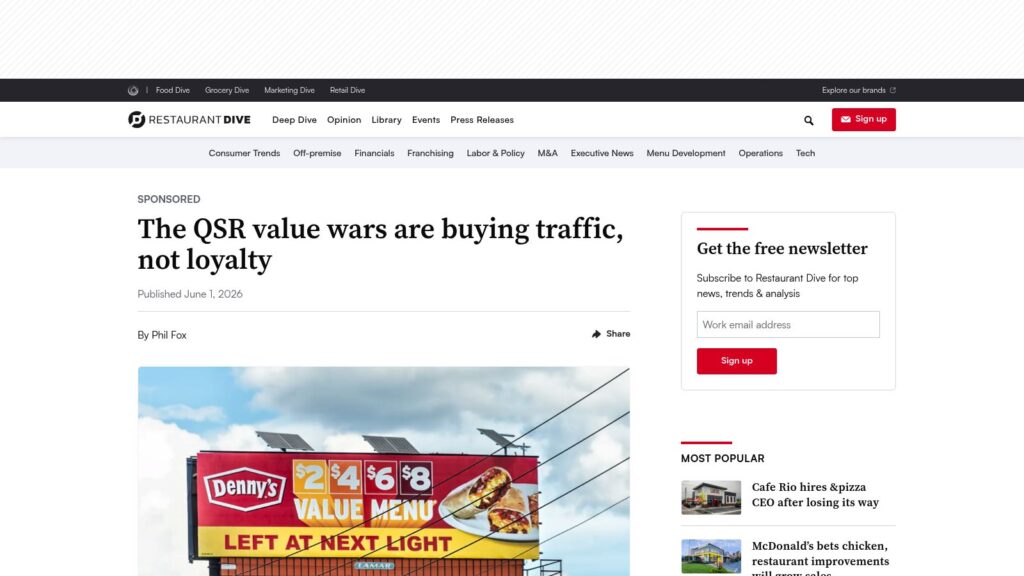
The QSR Value Wars Are Buying Traffic, Not Loyalty

The article analyzes the impact of aggressive value-promotion campaigns launched by major quick-service restaurants (QSRs) starting in mid-2024, revealing that while these “value wars” boosted traffic and transactions for many brands, they largely failed to increase customer retention and loyalty. Data from 18 major QSRs show that 15 experienced declines in customer retention despite higher sales, indicating customers were attracted by discounts but did not become more loyal, highlighting the need for separate strategies and metrics for promotions and loyalty.

https://www.restaurantdive.com/spons/the-qsr-value-wars-are-buying-traffic-not-loyalty/821059/

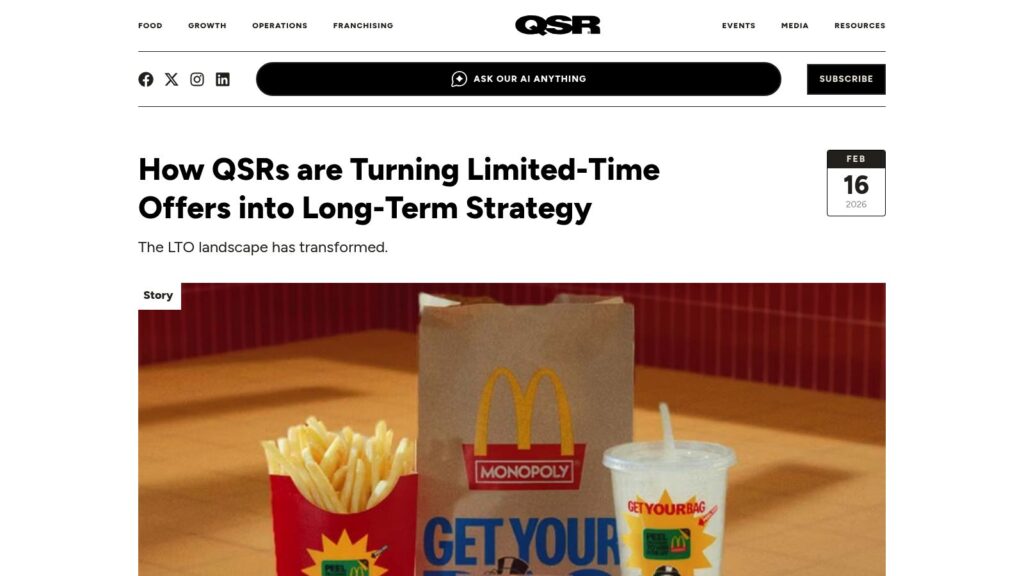
How QSRs Are Turning Limited-Time Offers Into Long-Term Strategy

QSR industry evolving: Limited-time offers (LTOs) shifting from seasonal items to fast, culturally engaging promotions. Brands must adapt to consumer demands for quick, appealing, and trend-driven products rather than relying solely on traditional menu cycles.

https://www.qsrmagazine.com/story/how-qsrs-are-turning-limited-time-offers-into-long-term-strategy/

Fast Food’s New Value Equation: Taste Beats Cheap

Fast food value now focuses on taste and quality over low prices, with 56% of consumers prioritizing flavor. Younger diners prefer snacks instead of full meals, and menu innovations that remix familiar items are favored. Poor quality drives customers away, signaling that quick-service restaurants must enhance flavor and consistency rather than rely on pricing strategies.

https://www.buzzfeed.com/business-news/qsr-consumers-prioritize-taste-quality

More Than Low Prices: How Consumers Define Value for QSRs

Consumers now define value in quick-service restaurants (QSRs) beyond low prices, focusing more on quality, taste, and emotional connection. According to Alvarez & Marsal's Crave Report, good value is increasingly seen as great-tasting food rather than just affordability, with a significant drop in loyalty linked to perceived quality. QSRs must prioritize food innovation and quality improvement over mere discounting, as quality has become crucial for retaining customers. Consumer preferences also vary based on nostalgia and familiarity, especially for breakfast items. Ultimately, navigating these dynamics is vital for QSRs to maintain competitiveness and consumer loyalty.

https://www.franchisetimes.com/franchise_news/more-than-low-prices-how-consumers-define-value-for-qsrs/article_60ec2f5e-6418-4cda-8e4b-c8af759f3876.html

What 2025’s Biggest QSR Traffic Surges Reveal About Dining Strategies for 2026

QSR trends in 2025 showed that standout discounts and culturally relevant promotions significantly boosted traffic for chains. Freebies and unique offers cut through competition, while pop-culture tie-ins generated momentum. Promotions such as Starbucks' Bearista merchandise demonstrated that premium items can also drive interest. Ultimately, while discounts dominate, food offerings still play a crucial role in attracting customers.

https://www.placer.ai/anchor/articles/what-2025s-biggest-qsr-traffic-surges-reveal-about-dining-strategies-for-2026

The QSR Growth Playbook: Strategies to Win in 2026

Q4 2025 saw rising competition and shifting consumer expectations in the QSR industry. To drive growth in 2026, QSRs should leverage dual limited-time offers, build loyalty ecosystems around routines, and capitalize on chicken’s versatility. Additionally, brands must innovate to compete on value and desire, while using beverage innovation as a high-frequency traffic driver.

https://www.numerator.com/resources/blog/qsr-growth-playbook/

Scroll to Top