digitalization

How AI Is Changing Quick-Service Restaurant Ordering in 2026
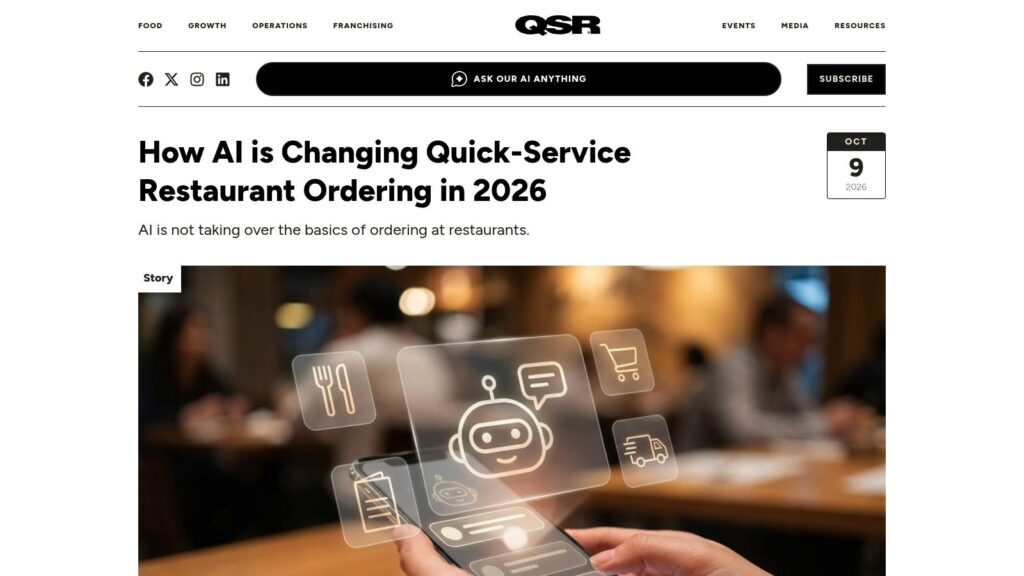
In 2026, AI is significantly enhancing quick-service restaurant (QSR) ordering by enabling personalized menu recommendations, conversational ordering interfaces, and smarter upselling suggestions based on customer preferences and purchasing patterns. AI-driven voice ordering and predictive analytics improve convenience and operational efficiency, while automated customer support addresses routine inquiries, helping staff focus on complex issues. However, QSRs must prioritize data privacy, accuracy, and human oversight to ensure AI delivers reliable, user-friendly ordering experiences without compromising customer trust.

https://www.qsrmagazine.com/story/how-ai-is-changing-quick-service-restaurant-ordering-in-2026/
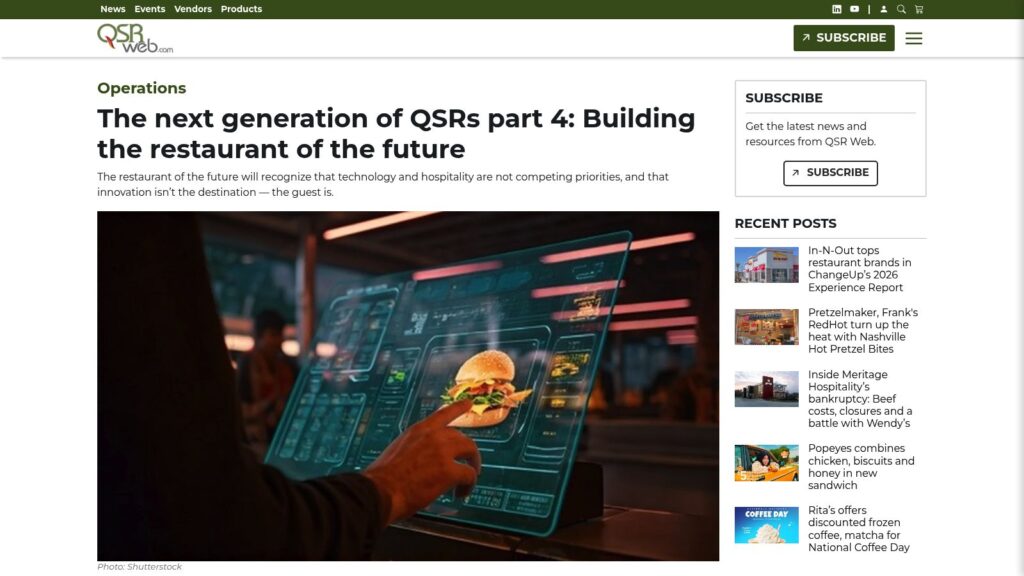
The Next Generation of QSRs Part 4: Building the Restaurant of the Future

The future of quick-service restaurants (QSRs) lies in integrating technology with human hospitality to enhance the overall guest experience rather than replacing employees. Burger King exemplifies this approach with its AI assistant “Patty,” which supports staff by managing operational tasks, allowing them to focus more on customer service and connection. This people-first strategy emphasizes empowering employees with tools and authority to foster genuine interactions, addressing challenges like labor turnover while strengthening customer loyalty through meaningful engagement.

https://www.qsrweb.com/articles/the-next-generation-of-qsrs-part-4-building-the-restaurant-of-the-future/

McDonald’s Head of Technology on Why Ready on Arrival Is a Customer Experience Story

McDonald’s Ready on Arrival system uses geofencing to detect when a mobile order customer is approaching and alerts the kitchen to start preparing food just in time, reducing wait times and easing pressure on restaurant operations. The technology enhances the mobile order experience by proactively managing demand, improving customer satisfaction and loyalty, and requires careful staff training to integrate into restaurant workflows. McDonald’s is scaling this initiative globally with a focus on consistent customer experience and operational readiness, emphasizing that the value lies in solving real customer problems rather than the technology itself.

https://www.retailgazette.co.uk/blog/2026/08/mcdonalds-head-of-technology-on-why-ready-on-arrival-is-a-customer-experience-story/

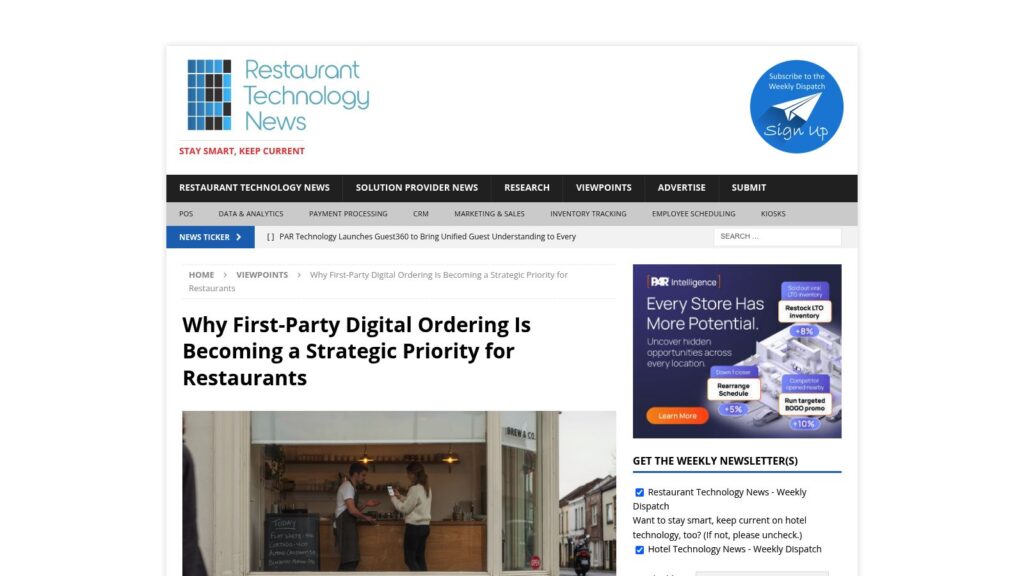
Why First-Party Digital Ordering Is Becoming a Strategic Priority for Restaurants

Restaurants are prioritizing first-party digital ordering to gain greater control over customer relationships, data, and order economics while complementing third-party marketplace channels. By integrating digital ordering with loyalty, marketing, and fulfillment systems, restaurants can enhance convenience, personalize guest engagement, and improve profitability. The strategic goal is to balance marketplace exposure for acquisition with owned channels that build direct, long-term customer connections.

https://restauranttechnologynews.com/2026/08/why-first-party-digital-ordering-is-becoming-a-strategic-priority-for-restaurants/

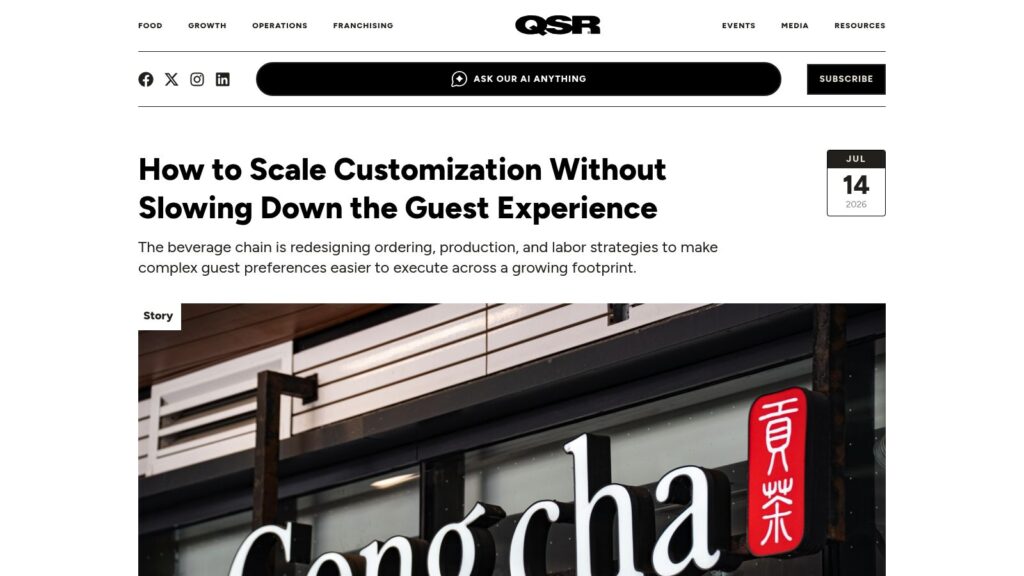
How to Scale Customization Without Slowing Down the Guest Experience

Gong cha of the Americas is addressing the challenge of scaling complex customization without sacrificing speed or consistency by redesigning ordering, production, and labor strategies. Their approach includes kiosk-first ordering to streamline guest customization, strategic automation to simplify workflows without replacing employees, and redeploying labor toward higher-value tasks to improve efficiency and hospitality. This operational reset responds to rising off-premise demand and volume variability, emphasizing technology and labor integration as critical factors for sustainable growth and guest experience.

https://www.qsrmagazine.com/story/how-to-scale-customization-without-slowing-down-the-guest-experience/

The Next Generation of QSR, Part 1: The New Economics of Value

Quick-service restaurant chains like McDonald’s, Taco Bell, and Burger King are redefining value amid rising dining costs and shifting consumer behavior by emphasizing meal bundles and affordable options that balance price, quality, and choice. This new approach addresses a K-shaped economy where lower-income consumers are more price-sensitive, requiring operators to communicate clear value through flexible offerings and strong marketing to maintain traffic and loyalty. Operators who adapt to these economic pressures with strategic value propositions are better positioned to drive long-term growth.

https://www.qsrweb.com/articles/the-next-generation-of-qsr-part-1-the-new-economics-of-value/

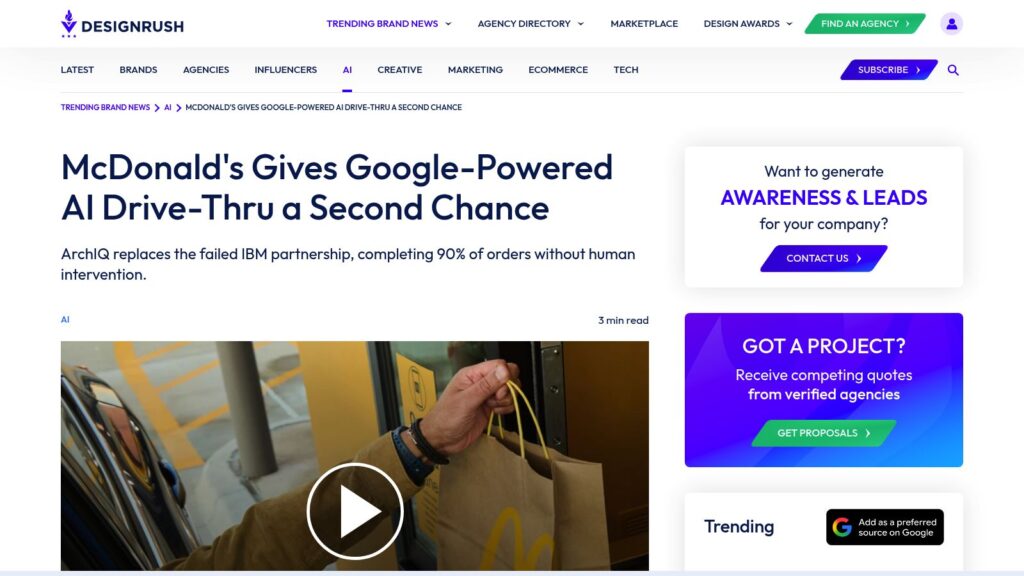
McDonald’s Gives Google-Powered AI Drive-Thru a Second Chance

McDonald’s is testing a new Google-powered AI drive-thru voice assistant called ArchIQ, which has completed around 90% of orders without human intervention across five U.S. restaurants. This initiative is part of the broader McDonald’s > NEXT strategy focused on operational efficiency, food quality, and hospitality, aiming to integrate AI automation as a core component rather than an isolated test, following a previous less successful partnership with IBM. The approach balances faster service through automation while emphasizing the importance of human interaction in enhancing customer hospitality.

https://news.designrush.com/mcdonalds-next-google-archiq-ai-drive-thru

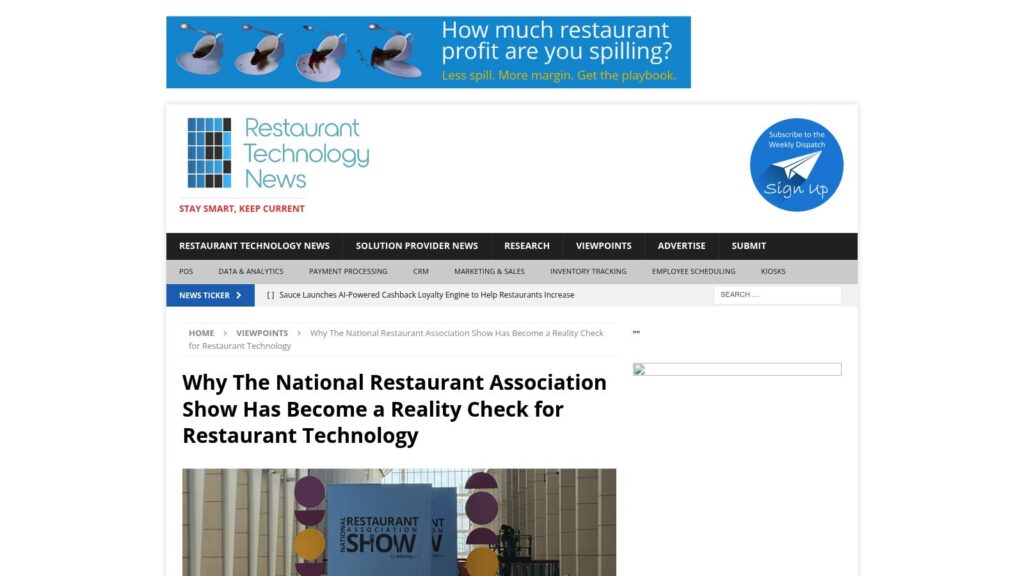
Why The National Restaurant Association Show Has Become a Reality Check for Restaurant Technology

The 2026 National Restaurant Association Show marks a shift in restaurant technology from futuristic innovation toward practical solutions aimed at stabilizing margins, simplifying operations, and managing labor shortages amid economic pressures. Operators are increasingly prioritizing integrated, interoperable systems that can deliver measurable financial improvements and operational resilience, such as handheld POS devices and self-service kiosks, while AI is becoming embedded in back-end operational tools rather than consumer-facing features. This evolution reflects a more disciplined, financially grounded approach to technology investment as restaurants seek simplification and operational effectiveness in a challenging business environment.

https://restauranttechnologynews.com/2026/05/why-the-national-restaurant-association-show-has-become-a-reality-check-for-restaurant-technology/

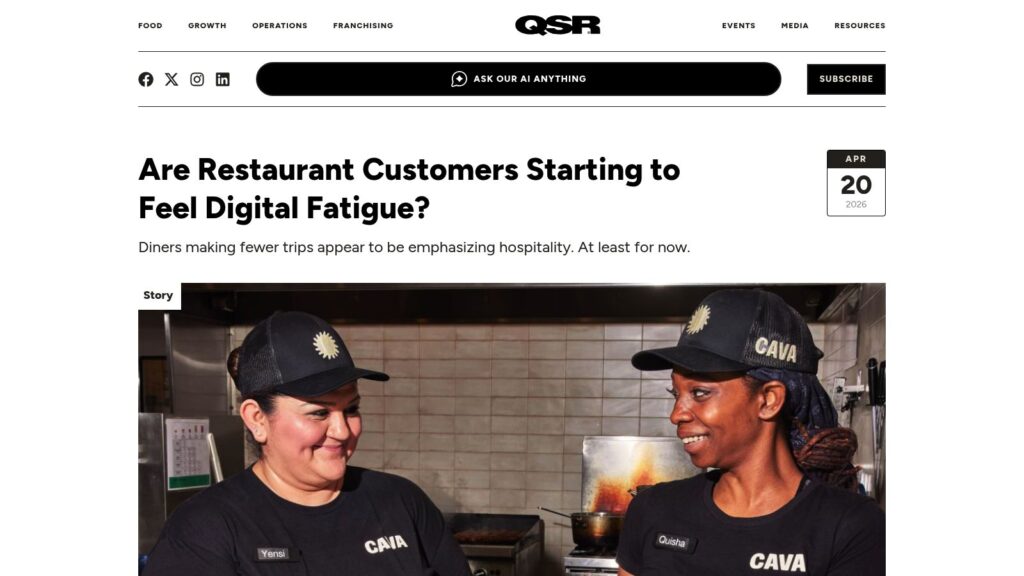
Are Restaurant Customers Starting to Feel Digital Fatigue?

The 14th edition of William Blair’s restaurant tracker reveals that consumer engagement with restaurants has declined, with fewer people dining out frequently and an increased preference for face-to-face interaction over digital ordering methods. Despite lower visit frequencies, average spending has risen, particularly among lower-income groups, while convenience and cost remain key factors influencing restaurant choice; the findings also suggest potential early signs of digital fatigue, with some consumers favoring traditional ordering over apps and kiosks.

https://www.qsrmagazine.com/story/are-restaurant-customers-starting-to-feel-digital-fatigue/

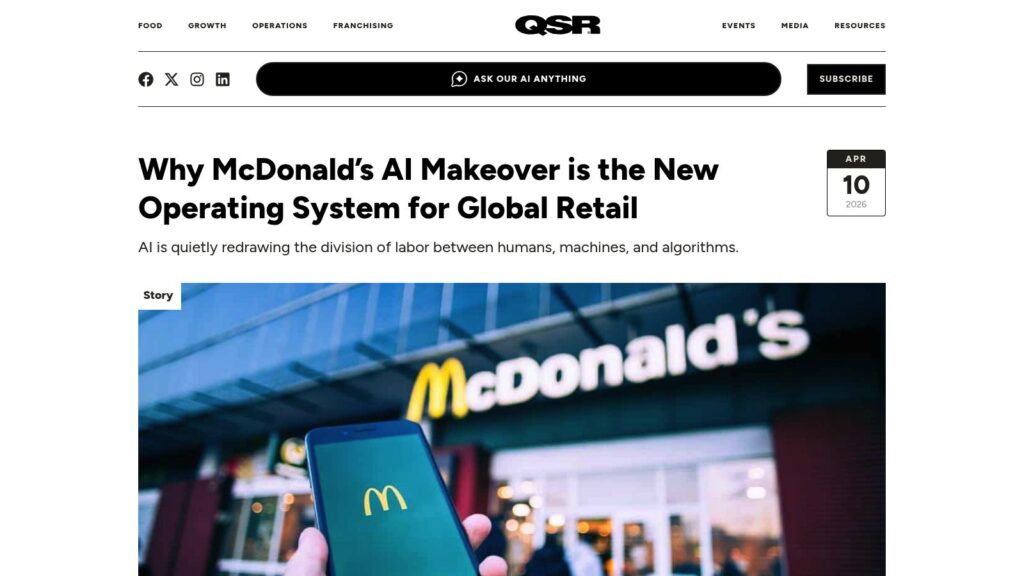
Why McDonald’s AI Makeover Is the New Operating System for Global Retail

McDonald’s is transforming its global retail operations by integrating AI to create a software-defined, data-driven system that optimizes everything from menu adjustments to labor scheduling in real time. This AI makeover shifts routine tasks to algorithms and automation, freeing human workers to focus on complex, high-empathy roles, signaling a significant evolution in quick-service restaurant management and offering a blueprint for broader retail industries.

https://www.qsrmagazine.com/story/why-mcdonalds-ai-makeover-is-the-new-operating-system-for-global-retail/

Scroll to Top