growth

The Next Generation of QSRs Part 4: Building the Restaurant of the Future
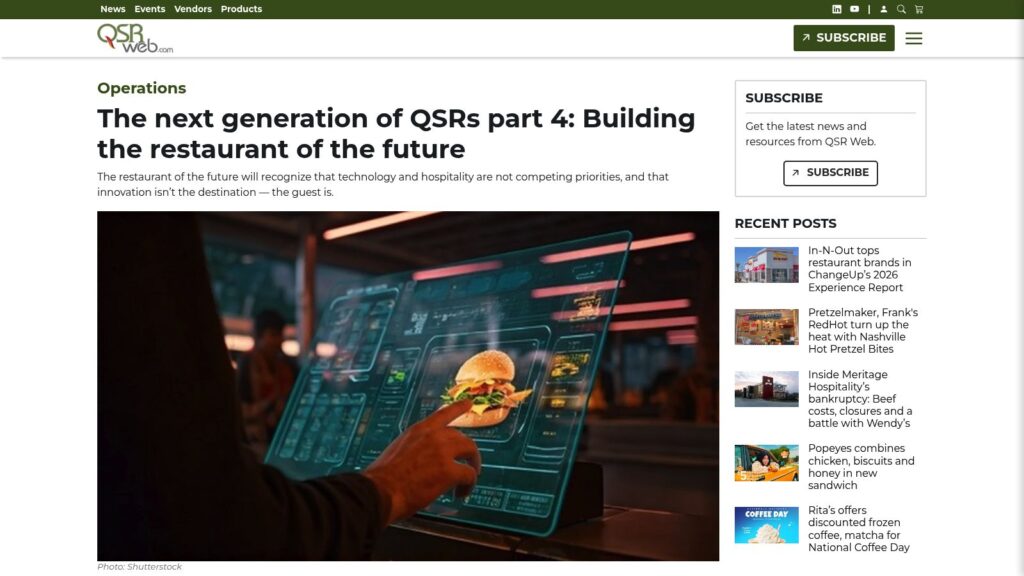
The future of quick-service restaurants (QSRs) lies in integrating technology with human hospitality to enhance the overall guest experience rather than replacing employees. Burger King exemplifies this approach with its AI assistant “Patty,” which supports staff by managing operational tasks, allowing them to focus more on customer service and connection. This people-first strategy emphasizes empowering employees with tools and authority to foster genuine interactions, addressing challenges like labor turnover while strengthening customer loyalty through meaningful engagement.
https://www.qsrweb.com/articles/the-next-generation-of-qsrs-part-4-building-the-restaurant-of-the-future/

The Next Generation of QSRs Part 3: Why Operational Excellence Is the Modern Competitive Advantage

Leading quick-service restaurant brands like McDonald’s and Wendy’s are shifting their growth strategies toward operational excellence, focusing on execution, technology integration, food quality, hospitality, and workforce development to drive customer satisfaction and profitability. This approach emphasizes productivity gains through better training, cross-training, and leveraging technology to improve efficiency and labor utilization, positioning operational execution as the key driver for long-term competitive advantage and sustained system growth.

https://www.qsrweb.com/articles/the-next-generation-of-qsrs-part-3-why-operational-excellence-is-the-modern-competitive-advantage/

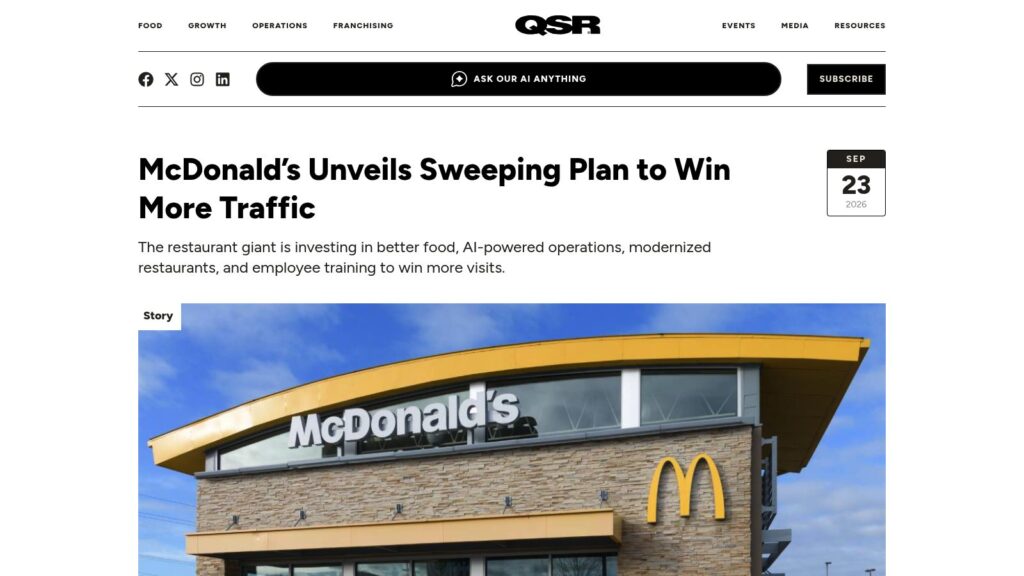
McDonald’s Unveils Sweeping Plan to Win More Traffic

McDonald’s unveiled a comprehensive strategy called McDonald’s > Next, aiming to boost traffic through menu quality upgrades, AI-driven operations, restaurant redesigns, and enhanced employee training. The plan targets growth in core categories like beef, chicken, and beverages, integrates AI tools to improve efficiency and order accuracy, and supports franchisees with $8.5 billion in financial aid through 2036 to fund investments in revamped restaurant experiences and operations.

https://www.qsrmagazine.com/story/mcdonalds-unveils-sweeping-plan-to-win-more-traffic/

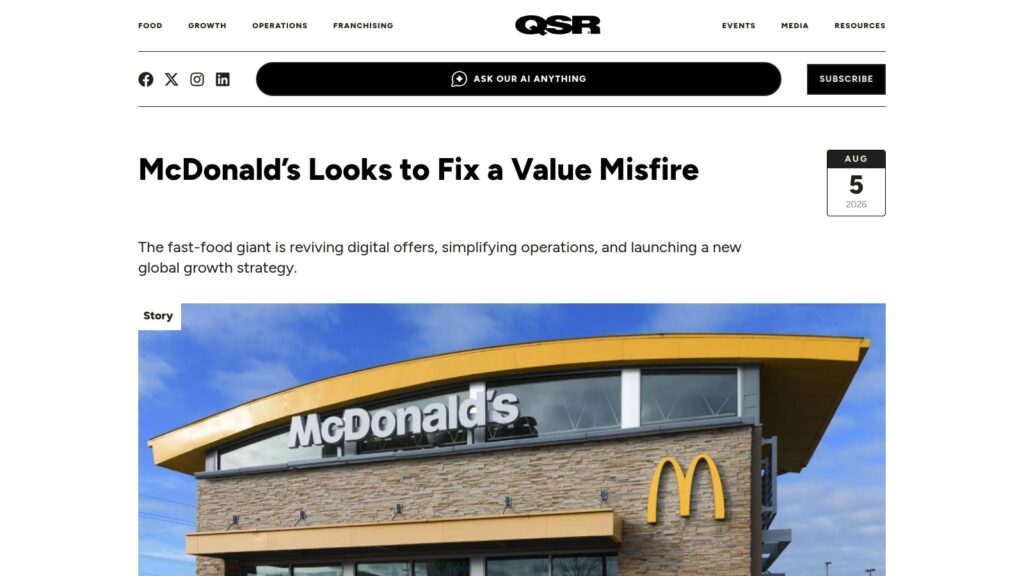
McDonald’s Looks to Fix a Value Misfire

McDonald’s U.S. same-store sales rose just 0.8 percent in Q2, falling short due to missteps in executing its new everyday affordability platform and reducing digital offers, which led to lower traffic and operational challenges. To address this, McDonald’s is enhancing pricing compliance, reviving digital promotions, simplifying its rollout calendar, and launching a new global growth strategy, McDonald’s > NEXT, focused on food quality, simplified operations, and hospitality to drive long-term growth and profitability.

https://www.qsrmagazine.com/story/mcdonalds-looks-to-fix-a-value-misfire/

The Next Generation of QSRs Part 2: How AI, Personalization Are Turning Loyalty Into a Growth Engine

QSR brands are leveraging AI and personalized loyalty programs to deepen customer connections and drive frequency amid softer traffic and rising prices. Companies like McDonald’s and Wendy’s use AI-driven personalization in apps and loyalty platforms to deliver relevant offers, while operators focus on seamless, integrated brand experiences across digital and physical touchpoints. AI-powered loyalty programs enable micro-level personalization, optimizing marketing efforts and customer engagement to build sustainable growth beyond broad discounting.

https://www.qsrweb.com/articles/the-next-generation-of-qsrs-part-2-how-ai-personalization-are-turning-loyalty-into-a-growth-engine/

The Next Generation of QSR, Part 1: The New Economics of Value

Quick-service restaurant chains like McDonald’s, Taco Bell, and Burger King are redefining value amid rising dining costs and shifting consumer behavior by emphasizing meal bundles and affordable options that balance price, quality, and choice. This new approach addresses a K-shaped economy where lower-income consumers are more price-sensitive, requiring operators to communicate clear value through flexible offerings and strong marketing to maintain traffic and loyalty. Operators who adapt to these economic pressures with strategic value propositions are better positioned to drive long-term growth.

https://www.qsrweb.com/articles/the-next-generation-of-qsr-part-1-the-new-economics-of-value/

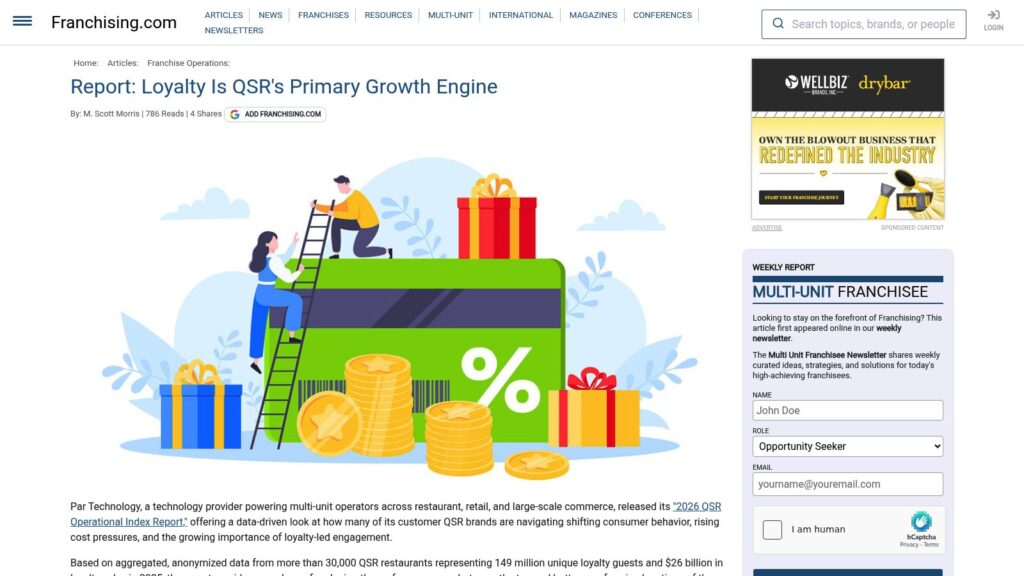
Report: Loyalty Is QSR’s Primary Growth Engine

Par Technology’s 2026 QSR Operational Index Report reveals that customer loyalty is now the primary growth driver for quick-service restaurants (QSR), with loyalty transactions growing 28.5% year-over-year and loyalty members spending more per visit than anonymous guests. The report highlights that digital channels, especially drive-thru and delivery, are reshaping sales patterns, while dinner and late-night periods generate the highest revenues, emphasizing the importance of integrating loyalty programs with operational efficiency and channel strategies to boost revenue amid rising costs.

https://www.franchising.com/articles/20260511_report_loyalty_is_qsrs_primary_growth_engine.html

Quick Service Restaurant It Market Analysis By Application, Type, Technology, and Geography – Global Industry Outlook and Forecast 2026-2033

The Quick Service Restaurant (QSR) IT market, valued at $11.99 billion in 2026, is expected to grow at a CAGR of 6.34% from 2026 to 2035, reaching approximately $19.61 billion. This growth is driven by increasing adoption of digital technologies such as mobile ordering, AI, and cloud computing to enhance operational efficiency and customer experience, alongside rising investments and expanding applications across key regions including North America and Asia-Pacific. The market is characterized by rapid digital transformation, integration of innovative IT solutions, and a focus on sustainability, with strategic partnerships and regulatory compliance shaping its competitive landscape.

https://www.openpr.com/news/4492066/quick-service-restaurant-it-market-analysis-by-application

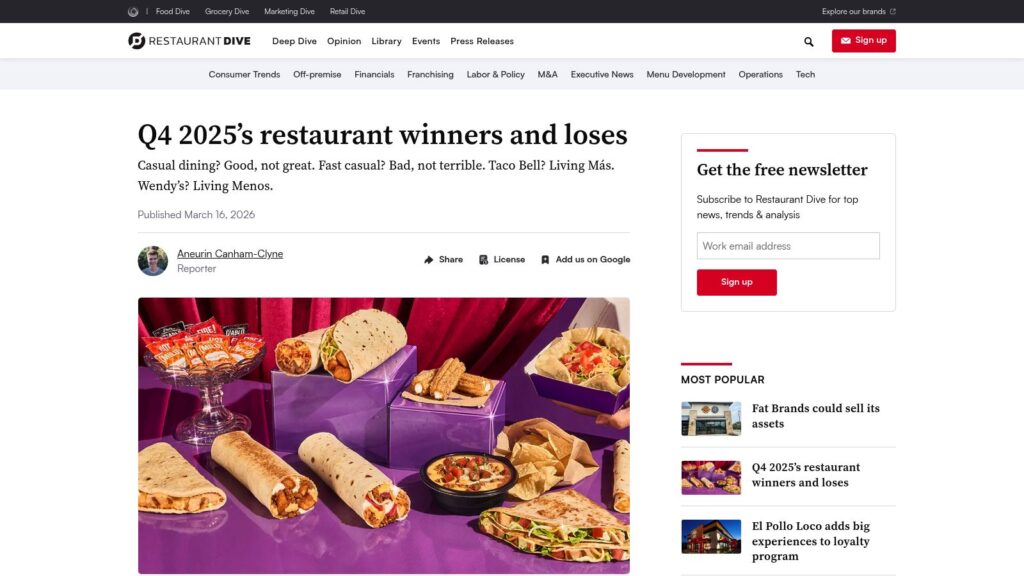
Q4 2025’s Restaurant Winners and Loses

Q4 2025 saw strong performances from several QSR brands, including McDonald’s, Taco Bell, Domino’s, and Starbucks, driven by value plays, new menu items, and marketing strategies. In contrast, Sweetgreen experienced its worst quarter, while Pizza Hut and Wendy’s also faced challenges. The QSR sector dominated the quarter’s earnings news, with casual dining and fast casual segments showing mixed results.

https://www.restaurantdive.com/news/restaurant-q4-2025-winners-losers-mcdonalds-starbucks-pizza-hut-papa-johns/814719/

Scroll to Top