Restaurant Brands Are Rebuilding Their Apps Around Loyalty, Personalization and Digital Guest Engagement

Leading restaurant brands are redesigning their mobile apps to focus on loyalty, personalization, and digital guest engagement beyond basic ordering convenience. These apps now serve as comprehensive platforms integrating gamification, targeted rewards, exclusive access, and community-building features to deepen customer relationships, gather first-party data, and drive repeat visits while reducing reliance on third-party channels. This shift reflects the growing importance of branded apps as strategic marketing tools and direct engagement hubs that personalize offers, track guest behavior, and support dynamic, seasonally-driven campaigns.

https://restauranttechnologynews.com/2026/07/restaurant-brands-are-rebuilding-their-apps-around-loyalty-personalization-and-digital-guest-engagement/

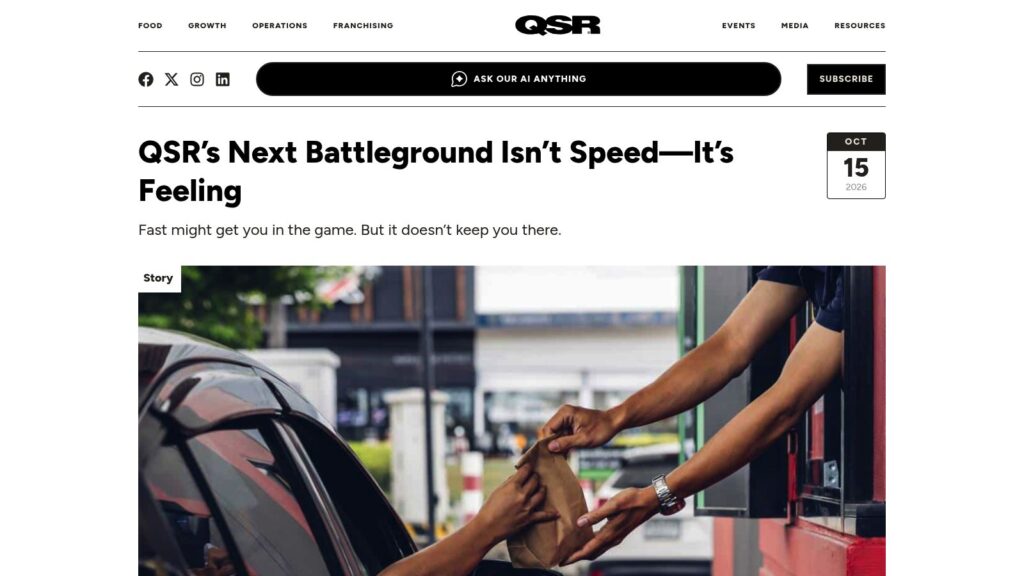
Why QSR Loyalty Needs a Reset in a K-shaped Economy

In a K-shaped economy where higher-income consumers maintain spending while lower-income consumers cut back, QSR loyalty programs must shift from merely rewarding transactions to building genuine, effortless customer relationships. Effective loyalty strategies focus on simplifying the customer experience through recognition and convenience rather than pushing more points or aggressive personalization, with AI tools serving to reduce ordering friction rather than to upsell. Programs that treat loyalty as an ongoing engagement platform and measure meaningful customer affinity, rather than just financial metrics, are better positioned to retain customers across diverse income segments.

https://www.qsrmagazine.com/story/why-qsr-loyalty-needs-a-reset-in-a-k-shaped-economy/

The Skills AI Can’t Steal, and Why Restaurants Matter More Than Ever

As artificial intelligence reshapes many entry-level jobs by automating routine tasks, restaurants are increasingly recognized as vital environments for developing essential human skills like judgment, communication, leadership, and emotional intelligence. The hospitality industry provides real-time, high-pressure experiences that cultivate teamwork, adaptability, and interpersonal collaboration—capabilities that AI cannot replicate. With restaurant employment projected to grow, this sector offers one of the most future-ready career pathways by fostering skills critical for the evolving workforce.

https://www.qsrmagazine.com/story/the-skills-ai-cant-steal-and-why-restaurants-matter-more-than-ever/

Value for Restaurants Is an Economics Discipline, Not a Coupon Strategy

Restaurant value should be treated as an economics discipline rather than just a coupon or discount strategy, as relying heavily on promotions can erode long-term profitability and customer loyalty. Operators face rising labor and food costs, and improving profitability requires focusing on operational efficiencies such as menu simplification and cost management instead of simply cutting prices. Sustainable growth depends on strong unit economics that balance delivering value customers perceive as worthwhile while maintaining healthy margins at the store level.

https://www.qsrmagazine.com/story/value-for-restaurants-is-an-economics-discipline-not-a-coupon-strategy/

What the 2026 National Restaurant Association Show Revealed About the Future of Restaurant Technology

The 2026 National Restaurant Association Show highlighted a shift in restaurant technology toward integrated, operational solutions that address labor challenges, cost management, and growing digital complexity. Innovations in AI, robotics, connected POS systems, and back-office tools focus on automating workflows, enhancing profitability, and improving consistency across kitchen operations, guest engagement, payments, and labor management. The event underscored that the future of restaurant technology lies in connected ecosystems simplifying management for operators rather than adding complexity.

https://restauranttechnologynews.com/2026/06/what-the-2026-national-restaurant-association-show-revealed-about-the-future-of-restaurant-technology/

Understaffing Top Stressor for Restaurant Workers, Study Finds

A 2026 study by 7shifts identifies understaffing as the top stressor for restaurant workers, with interpersonal relationships now serving as the primary daily motivator over financial incentives. The report highlights that difficult managers and low pay remain leading reasons for employee turnover, while gaps in desired benefits like paid time off and schedule visibility persist. The findings suggest that improving staffing levels, communication, and aligning benefits with employee preferences can enhance job satisfaction and retention in the restaurant industry.

https://www.qsrweb.com/news/understaffing-top-stressor-for-restaurant-workers-study-finds/

When AI Ordering Becomes More Hype Than Help

Quick-service restaurants (QSRs) adopting AI ordering must focus on reducing friction, improving accuracy, and integrating seamlessly with store operations to enhance convenience rather than simply adding novelty. Effective AI should manage contextual recommendations, inventory, and order accuracy behind the scenes, supporting operational efficiency and consistent customer experiences rather than requiring customers to engage in more complex ordering interactions. Brands that connect AI to real-time systems like POS, inventory, and kitchen capacity will build trust and simplify ordering, while isolated AI implementations risk increasing customer effort and dissatisfaction.

https://www.qsrmagazine.com/story/when-ai-ordering-becomes-more-hype-than-help/

Seven QSR Trends Shaping Strategy in 2026

The UK quick service restaurant (QSR) sector is projected to exceed £85 billion by 2026, driven largely by delivery and drive-thru formats despite ongoing cost pressures from labor and food inflation. Key trends shaping strategy include advanced AI integration for demand forecasting and labour scheduling, multi-channel customer engagement emphasizing seamless digital and physical experiences, localized value pricing, increased focus on sustainability, and tailored health-conscious menu options. Operators are prioritizing data-driven, locally optimized decisions and balancing automation with human interaction to enhance speed, accuracy, and service quality amidst evolving consumer behaviors.

https://qsrmedia.co.uk/research/in-focus/seven-qsr-trends-shaping-strategy-in-2026

Plant-based Burgers Made with Vegetables

Fast-food chains like White Castle, Culver’s, and Shake Shack are shifting from plant-based meat analogs to more vegetable-focused burgers, reflecting consumer demand for natural ingredients and distinctive flavors. This trend follows a decline in popularity of faux meat patties from brands like Impossible Foods and Beyond Meat, with data indicating an 8.9% drop in imitation meat burger offerings year over year, as QSRs introduce items made from real vegetables and local produce.

https://www.nrn.com/fast-casual/plant-based-burgers-are-becoming-more-vegetable-focused-at-qsrs

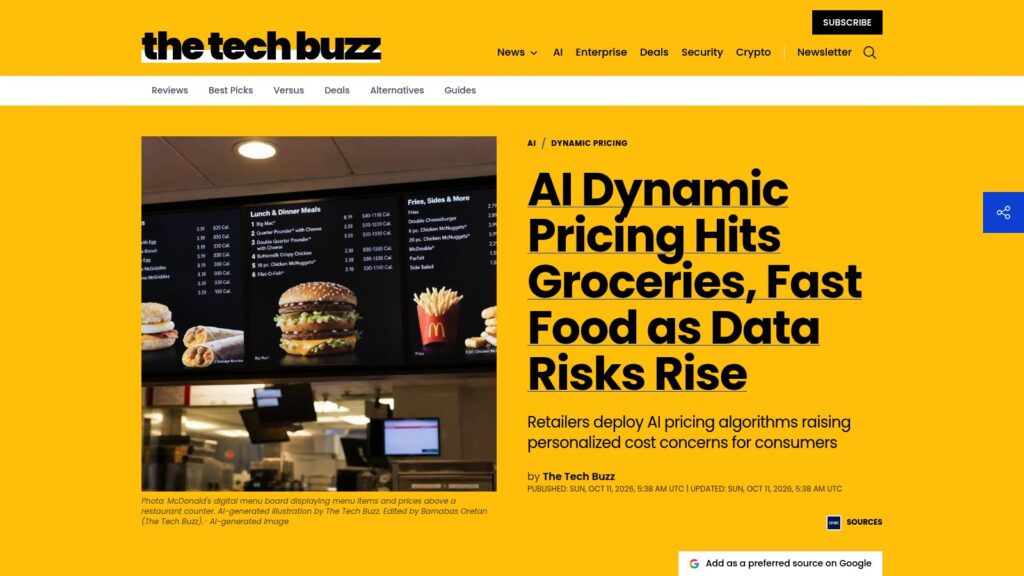
McDonald’s Says Its New AI Drive-Thru Handled 1 Million Orders with Humans Stepping in Just 10% of the Time

McDonald's is testing a new AI drive-thru ordering system called ArchIQ, developed with Google, at five U.S. locations, where it has already handled over 1 million orders with human intervention needed only about 10% of the time. The system not only processes orders in English and Spanish but also monitors restaurant operations to identify bottlenecks, aiming to enhance efficiency and speed up service as part of McDonald's broader “NEXT” growth plan.

https://www.thecooldown.com/green-tech/mcdonalds-ai-drive-thru-ordering-system/

Scroll to Top