workforce

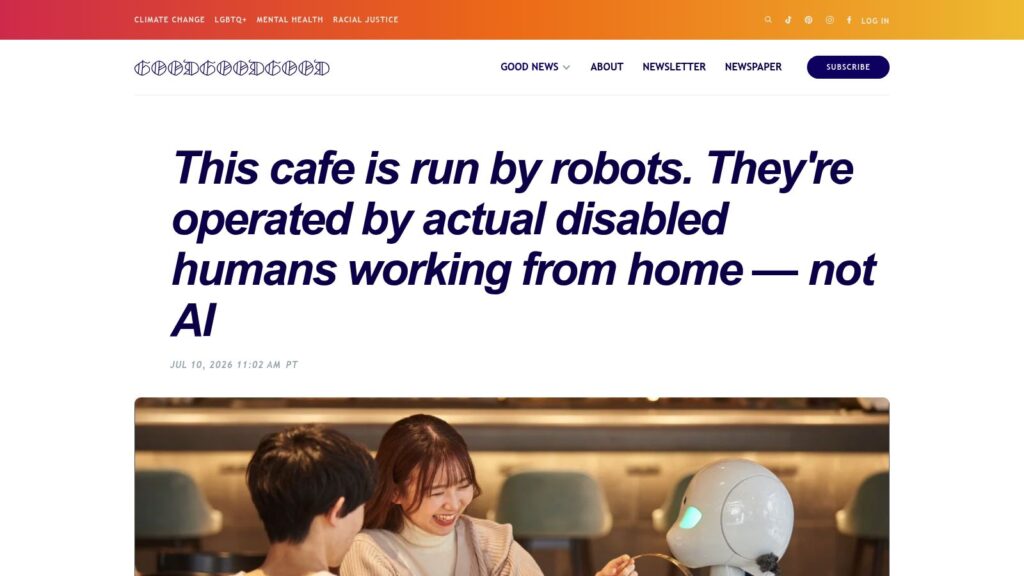
This Cafe Is Run by Robots. They’re Controlled by Actual Disabled Humans Working From Home — Not AI

The Dawn Avatar Robot Cafe in Tokyo operates with robots serving customers, but these robots are remotely controlled in real time by disabled workers working from home, enabling them to participate in the workforce despite physical limitations. Founded by robotics expert Ory Yoshifuji, the cafe uses OriHime robots piloted by about 100 individuals with conditions like ALS or heart failure, allowing them to interact with customers and earn income safely and autonomously. This model demonstrates how technology can be leveraged not to replace humans but to create inclusive work opportunities for those with disabilities.

https://www.goodgoodgood.co/articles/tokyo-dawn-robot-cafe-disabled-workers

The Skills AI Can’t Steal, and Why Restaurants Matter More Than Ever

As artificial intelligence reshapes many entry-level jobs by automating routine tasks, restaurants are increasingly recognized as vital environments for developing essential human skills like judgment, communication, leadership, and emotional intelligence. The hospitality industry provides real-time, high-pressure experiences that cultivate teamwork, adaptability, and interpersonal collaboration—capabilities that AI cannot replicate. With restaurant employment projected to grow, this sector offers one of the most future-ready career pathways by fostering skills critical for the evolving workforce.

https://www.qsrmagazine.com/story/the-skills-ai-cant-steal-and-why-restaurants-matter-more-than-ever/

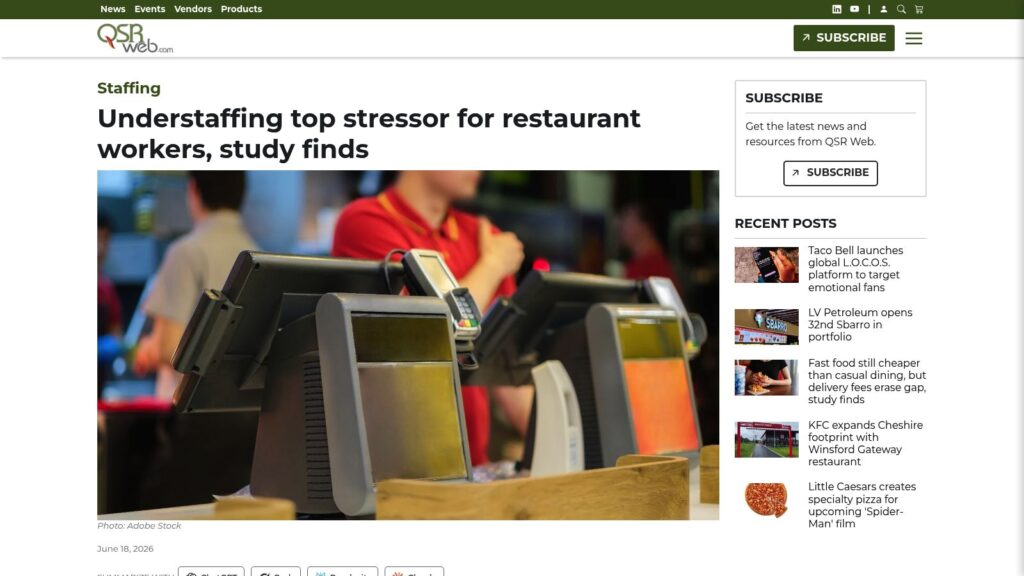
Understaffing Top Stressor for Restaurant Workers, Study Finds

A 2026 study by 7shifts identifies understaffing as the top stressor for restaurant workers, with interpersonal relationships now serving as the primary daily motivator over financial incentives. The report highlights that difficult managers and low pay remain leading reasons for employee turnover, while gaps in desired benefits like paid time off and schedule visibility persist. The findings suggest that improving staffing levels, communication, and aligning benefits with employee preferences can enhance job satisfaction and retention in the restaurant industry.

https://www.qsrweb.com/news/understaffing-top-stressor-for-restaurant-workers-study-finds/

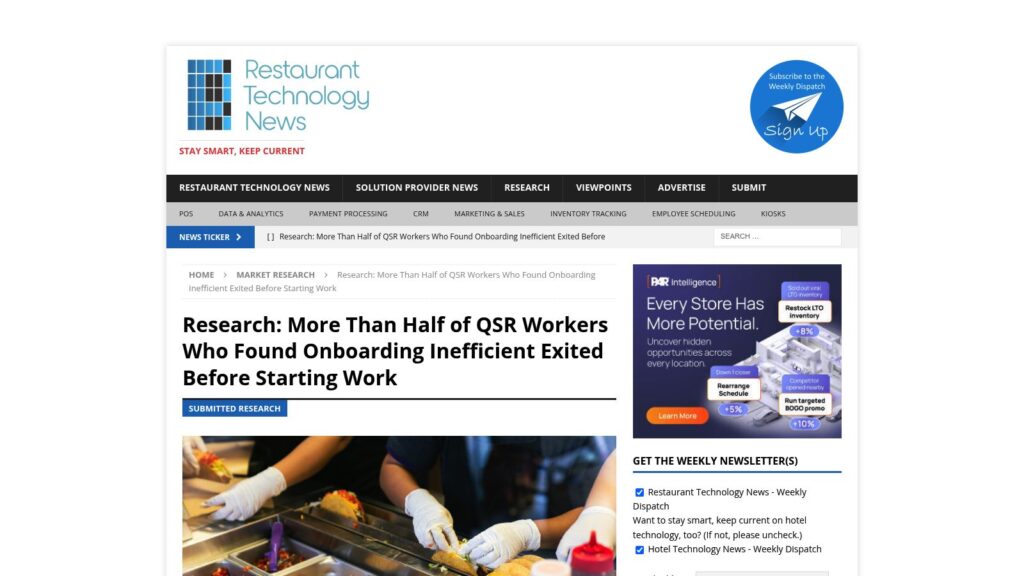
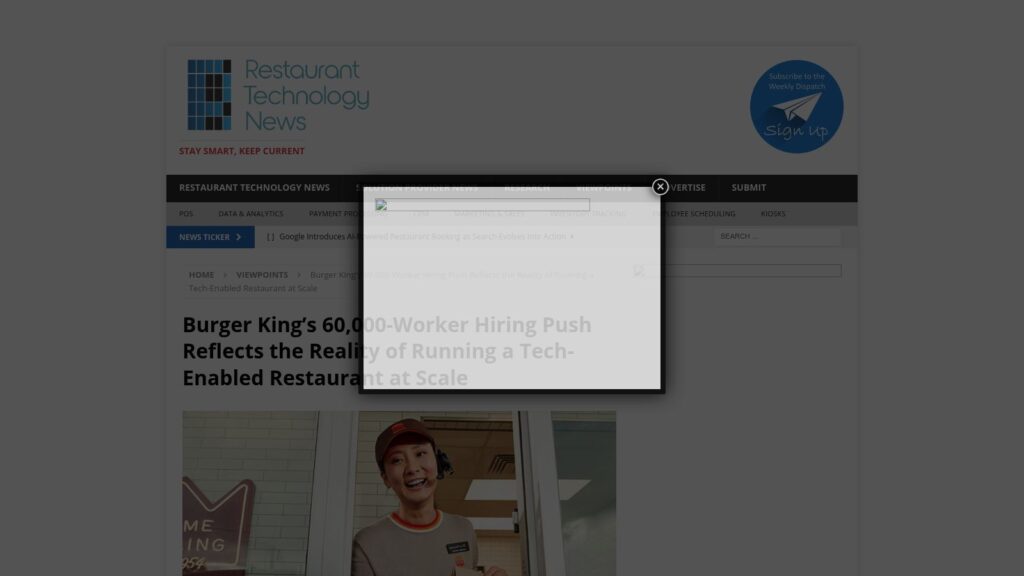
Burger King’s 60,000-Worker Hiring Push Reflects the Reality of Running a Tech-Enabled Restaurant at Scale

Burger King’s recent announcement to hire up to 60,000 workers across nearly 6,500 U.S. restaurants highlights the reality that increasing technology in quick-service restaurants often drives higher demand, requiring more staff rather than fewer. As Burger King modernizes with digital ordering, AI tools, and upgraded kitchen systems, improved speed and accuracy are boosting guest traffic, necessitating well-trained, digitally fluent employees and managers to manage complex workflows and maintain service quality.

https://restauranttechnologynews.com/2026/04/burger-kings-60000-worker-hiring-push-reflects-the-reality-of-running-a-tech-enabled-restaurant-at-scale/

QSRs Moving Beyond the Tech Vs. Human Debate

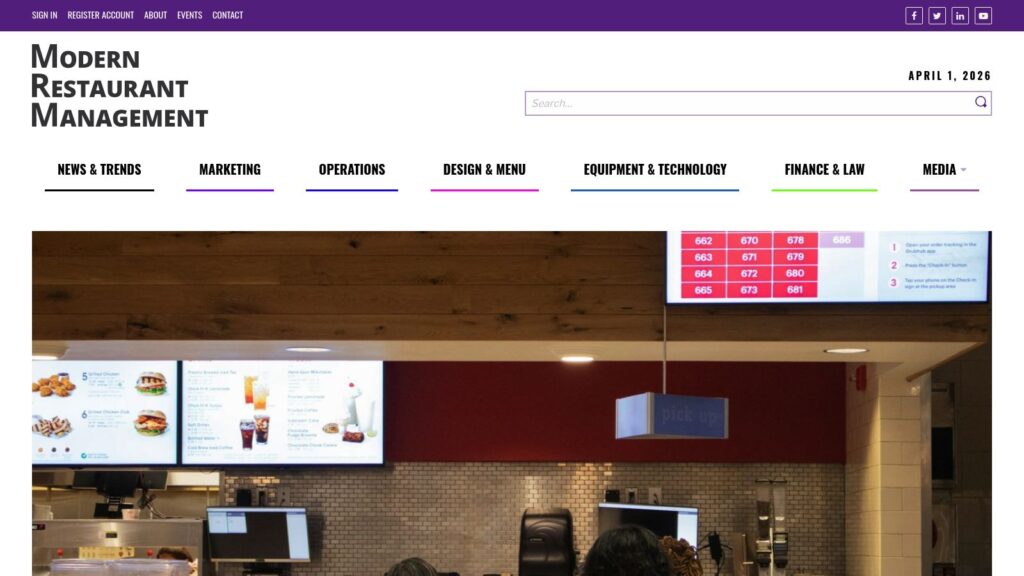
QSR operators are shifting from viewing technology and human labor as competing forces to a “marriage of convenience,” focusing on integrating technology with staff support and training to enhance both the guest and employee experience. Successful brands design tech systems that work together seamlessly, balancing automation with human interaction to improve speed, accuracy, and customer loyalty while optimizing operations.

https://modernrestaurantmanagement.com/qsrs-moving-beyond-the-tech-vs-human-debate/

Restaurants Say Tech Innovation Isn’t Taking Away Jobs

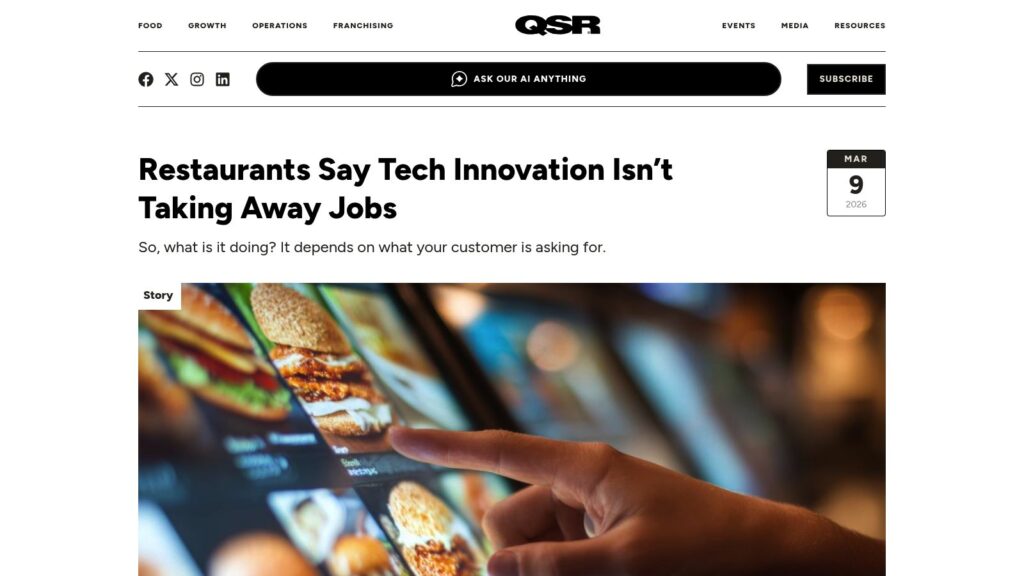
Tech in restaurants boosts efficiency, improves customer experience, and adds jobs. Operators keen on tech saw minimal job loss, with 80% appreciating its competitive edge. AI usage is growing, especially in marketing. Consumers, especially younger ones, prefer tech for ordering. Sentiment on tech's impact on hospitality varies; many feel it enhances service, although some worry about losing personal touch. Balancing automation and human interaction remains crucial.

https://www.qsrmagazine.com/story/restaurants-say-tech-innovation-isnt-taking-away-jobs/

China Mobile Showed Off a Robot-Only Restaurant At MWC 2026

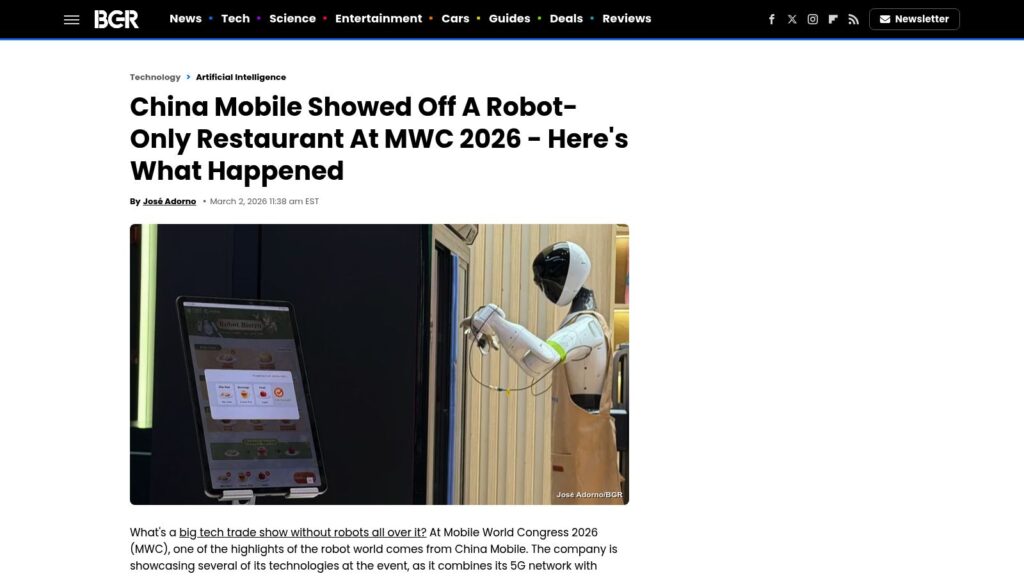
China Mobile showcased a robot-only restaurant at MWC 2026, demonstrating its technologies through a streamlined process where a main robot coordinated tasks performed by others. The restaurant achieved a 92% accuracy rate, with robots handling food orders and drinks efficiently, although they were slower than humans. The initiative aimed to highlight advancements in AI and real-time scheduling systems but indicated that robots won't replace human jobs soon. The project represents a push towards automating fast food service while remaining quieter than traditional restaurant environments.

https://www.bgr.com/2113530/china-mobile-robot-only-restaurant-experience-mwc-2026/

How ‘Low-hire, Low-hire’ Puts QSR Employee Experience in the Hot Seat

QSRs must enhance the employee experience to achieve workforce stability in a “low-hire, low-fire” market, leveraging AI for flexible scheduling and modern benefits such as on-demand pay. While turnover rates are declining, economic pressures and labor shortages complicate staffing. Retention strategies should focus on employee satisfaction by providing autonomy in scheduling and reducing financial stress through flexible pay. Prioritizing employee needs is essential for QSRs to foster loyalty and a productive work environment.

https://www.qsrweb.com/blogs/how-low-hire-low-hire-puts-qsr-employee-experience-in-the-hot-seat/

Burger King AI Bot Will Check up on Staffs’ Please and Thank Yous

Burger King is piloting AI headsets, the BK Assistant, in 500 US locations to monitor staff interactions and generate “friendliness scores” without recording conversations. The headsets, powered by an AI chatbot named “Patty,” help employees with menu queries and operational tasks, but raise concerns over surveillance. Customer reactions are mixed, with some seeing it as intrusive or dystopian despite the company's claim that it aims to enhance service. All US locations are expected to adopt the technology by 2026.

https://www.bbc.com/news/articles/cgk2zygg0k3o

“Robots Instead of Chefs? Faster and More Precise: They Are an Aid to Business, Not a Threat.”

Jim Block's CEO emphasizes automation in restaurants as a supportive ally, not a replacement for chefs. Humanoid robots enhance efficiency, handling repetitive tasks while humans retain crucial customer interactions and creativity. This partnership ensures speed and precision, allowing employees to focus on hospitality, balancing technology and human warmth in fast food service.

https://reportergourmet.com/en/news/9767-robots-instead-of-chefs-they-are-a-help-not-a-threat-jim-block-innovates-the-restaurant-industry

Scroll to Top