marketing

Evolution of the LTO: How TikTok Is Driving Menu Innovation

TikTok has revolutionized limited-time offers (LTOs) in quick-service restaurants by enabling customers to drive menu innovation through viral videos showcasing creative customizations and secret menu hacks. This shift has accelerated LTO development timelines, forcing brands to adopt agile marketing strategies, invest in social listening teams, and adapt operations quickly to capitalize on trends sparked by consumer-generated content. As a result, visual appeal and authenticity have become crucial, with customers now significantly influencing brand perception and marketing success.

https://www.qsrweb.com/articles/evolution-of-the-lto-how-tiktok-is-driving-menu-innovation/

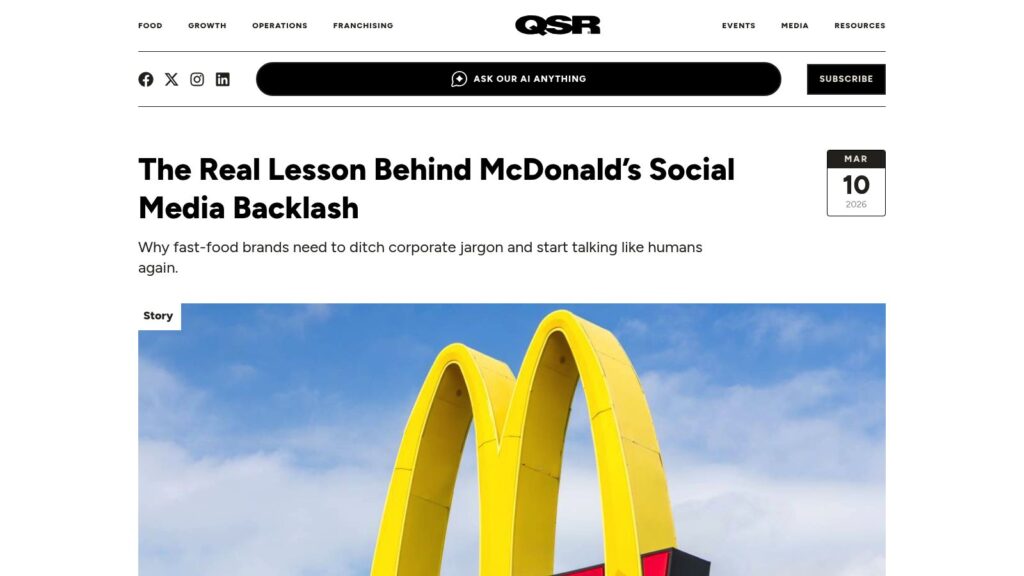
The Real Lesson Behind McDonald’s Social Media Backlash

McDonald's social media backlash highlights the disconnect between corporate jargon and customer engagement, as CEO's terms like “product” alienated audiences. Fast-food marketing should prioritize authentic communication, focusing on real people and their experiences rather than data-driven language. Successful brands, like Wendy's and Chili's, engage with culture and humor, fostering genuine connections rather than merely selling. To resonate with customers, QSRs must embrace authenticity, participate in culture, and avoid constant sales tactics.

https://www.qsrmagazine.com/story/the-real-lesson-behind-mcdonalds-social-media-backlash/

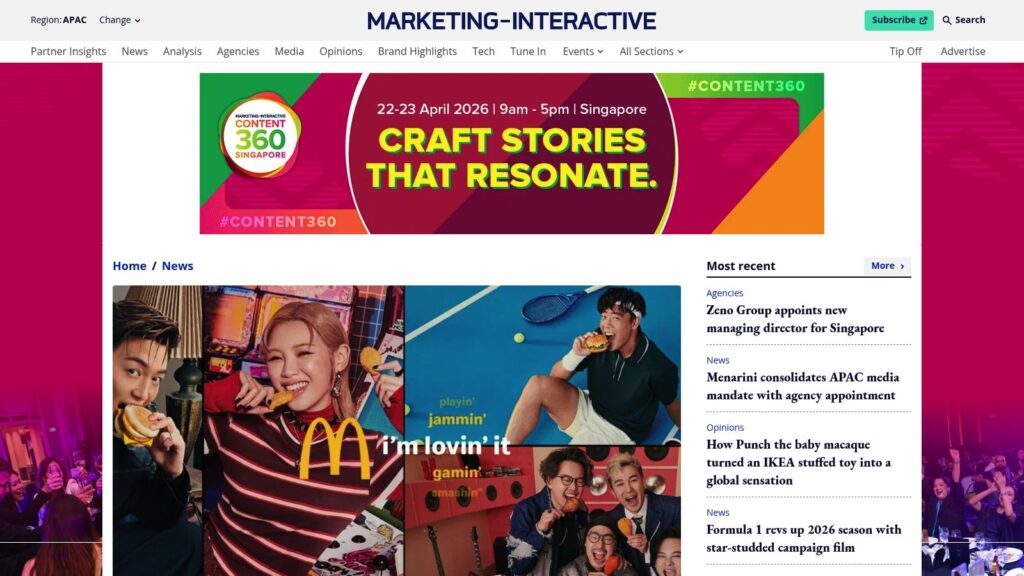
McDonald’s HK Enters New Chapter With ‘i’m lovin’ it’ Refresh

McDonald's Hong Kong launches a new campaign updating its “i'm lovin' it” brand message with fresh insights and diverse talent, marking a shift in creative direction. The campaign aims to resonate with local audiences by celebrating authenticity, launching on 20 February 2026, alongside a renewed partnership with BBDO Hong Kong following a long-term collaboration with DDB.

https://www.marketing-interactive.com/mcdonald-s-hk-enters-new-chapter-with-im-lovin-it-refresh

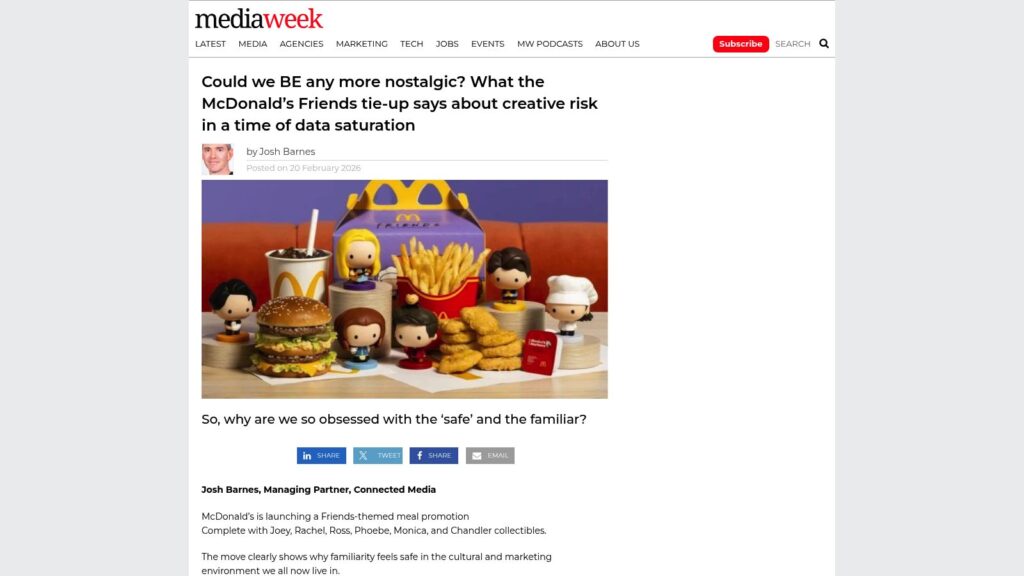
McDonald’s Friends Meal: Why Familiarity Rules Marketing

McDonald's launches a Friends-themed meal, highlighting nostalgia as a marketing strategy amid data-driven creative risks. Familiarity in content, like retro franchises, drives consumer comfort but may stifle true originality in advertising. The piece advocates for balancing data insights with creative risks to foster innovation, suggesting that nostalgia is rooted in past creative courage.

https://www.mediaweek.com.au/mcdonalds-friends-meal-nostalgia-vs-originality/

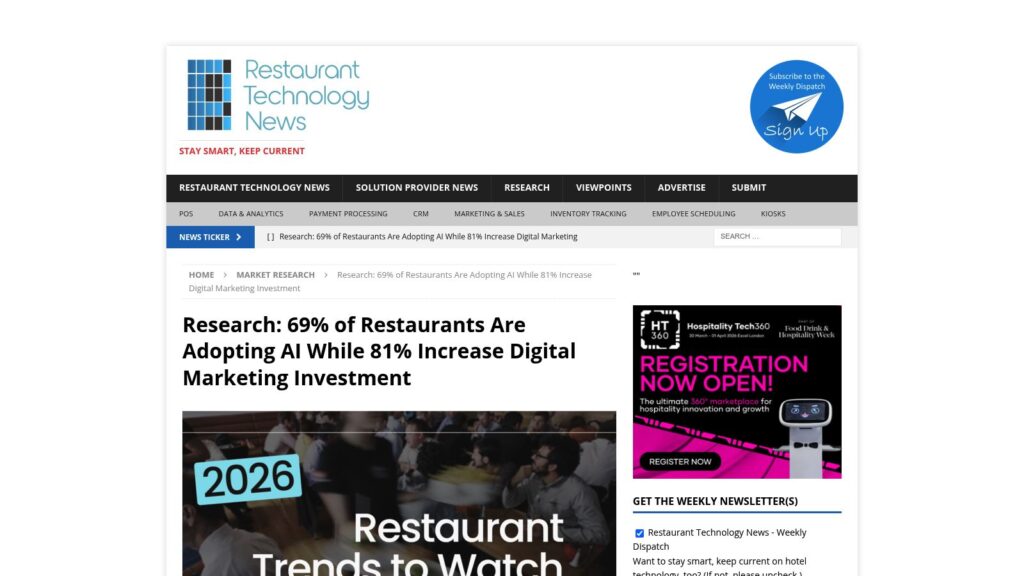
Research: 69% of Restaurants Are Adopting AI While 81% Increase Digital Marketing Investment

69% of restaurants are adopting AI and 81% are increasing digital marketing despite declining consumer spending. Technology is crucial for improving efficiency and guest engagement as operators strive to protect margins. New trends include AI for marketing and operations, personalized guest experiences, and modern pricing strategies. Restaurant technology is becoming foundational for long-term competitiveness.

https://restauranttechnologynews.com/2026/02/research-69-of-restaurants-are-adopting-ai-while-81-increase-digital-marketing-investment/

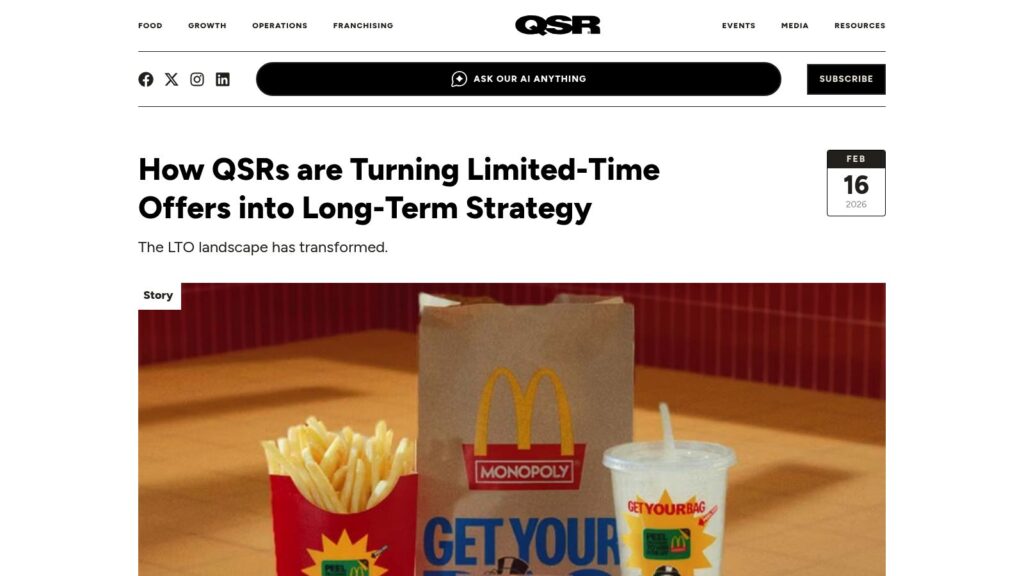
How QSRs Are Turning Limited-Time Offers Into Long-Term Strategy

QSR industry evolving: Limited-time offers (LTOs) shifting from seasonal items to fast, culturally engaging promotions. Brands must adapt to consumer demands for quick, appealing, and trend-driven products rather than relying solely on traditional menu cycles.

https://www.qsrmagazine.com/story/how-qsrs-are-turning-limited-time-offers-into-long-term-strategy/

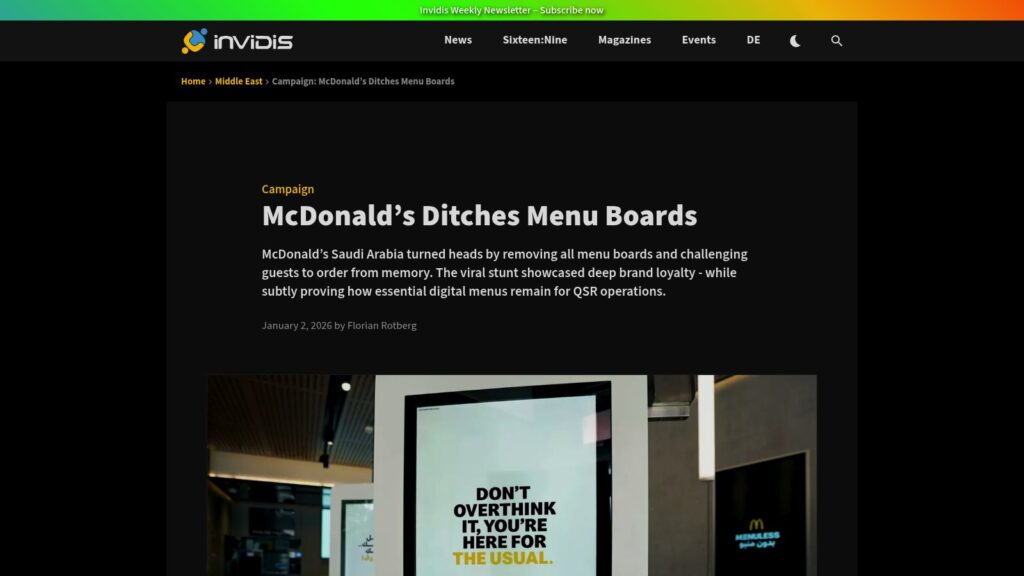
Campaign: McDonald’s Ditches Menu Boards

McDonald's Saudi Arabia launched the “McMenuless Challenge,” removing menu boards to highlight brand loyalty and customer memory. The viral campaign demonstrated the emotional connection to the brand but also underscored the importance of digital menu boards in quick service restaurants for operations, guidance, and upselling. Despite its success, the stunt reaffirmed the necessity of menu boards in QSR operations.

https://invidis.com/news/2026/01/qsr-mcdonalds-ditches-menu-boards-temporarily/

McDonald’s Netherlands Pulls AI Ad: Is the Market Ready for Iconic Brands to Go Generative?

McDonald’s Netherlands pulled its AI-driven Christmas ad that humorously reimagined holiday stress, sparking backlash for its eerie visuals and AI-generated characters. Critics feel it lacked emotional resonance, with the campaign failing to meet audience expectations. Experts argue that while AI can enhance creativity, brands must thoughtfully integrate it into storytelling. Successful AI advertising should connect emotionally and maintain strong narrative clarity, rather than overshadow the core message.

https://www.marketing-interactive.com/mcdonald-s-netherlands-pulls-ai-ad-is-the-market-ready-for-iconic-brands-to-go-generative

The Uncomfortable Truth About QSR Loyalty: Why Design, Not Customers, Is the Problem

QSR loyalty programs need deeper transformation beyond mere updates, as current strategies focus too heavily on transactional rewards and fail to foster true customer engagement. While Merkle suggests shifts to emotional loyalty, it overlooks essential design aspects that could enhance customer interaction and experience. The industry faces critical threats from AI alternatives, which could disrupt traditional loyalty systems, necessitating a focus on psychological engagement and meaningful choices. QSRs should prioritize creating choices with consequences and time-based dynamics to differentiate themselves effectively in a market increasingly driven by AI and consumer expectations.

https://thewisemarketer.com/the-uncomfortable-truth-about-qsr-loyalty/

Scroll to Top