strategy

How Restaurants Use Kiosks Without Losing the Human Touch
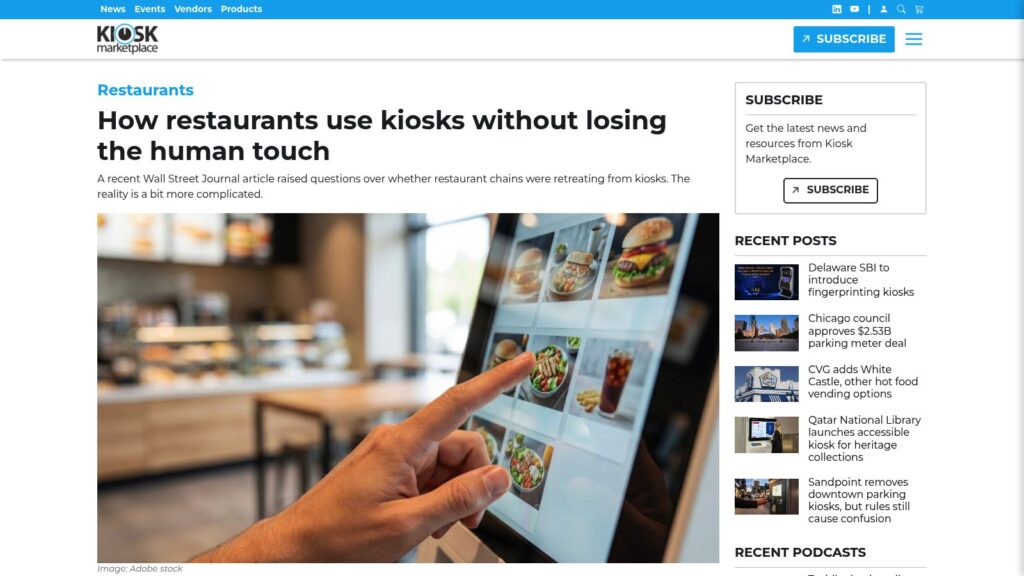
Restaurants like Gong cha integrate kiosks with personalized service by greeting customers at arrival and using staff to assist with questions and order pickups, ensuring technology complements rather than replaces human interaction. Industry data shows customers appreciate kiosks for convenience and control, but operators recognize the need for clear signage, staff support, and managing where and how human contact occurs during orders. Investments in kiosk technology continue alongside efforts to balance automation with hospitality, emphasizing flexibility and attention at key service moments.

https://www.kioskmarketplace.com/articles/how-restaurants-use-kiosks-without-losing-the-human-touch/
The Next Generation of QSRs Part 3: Why Operational Excellence Is the Modern Competitive Advantage

Leading quick-service restaurant brands like McDonald’s and Wendy’s are shifting their growth strategies toward operational excellence, focusing on execution, technology integration, food quality, hospitality, and workforce development to drive customer satisfaction and profitability. This approach emphasizes productivity gains through better training, cross-training, and leveraging technology to improve efficiency and labor utilization, positioning operational execution as the key driver for long-term competitive advantage and sustained system growth.

https://www.qsrweb.com/articles/the-next-generation-of-qsrs-part-3-why-operational-excellence-is-the-modern-competitive-advantage/

McDonald’s Unveils Sweeping Plan to Win More Traffic

McDonald’s unveiled a comprehensive strategy called McDonald’s > Next, aiming to boost traffic through menu quality upgrades, AI-driven operations, restaurant redesigns, and enhanced employee training. The plan targets growth in core categories like beef, chicken, and beverages, integrates AI tools to improve efficiency and order accuracy, and supports franchisees with $8.5 billion in financial aid through 2036 to fund investments in revamped restaurant experiences and operations.

https://www.qsrmagazine.com/story/mcdonalds-unveils-sweeping-plan-to-win-more-traffic/

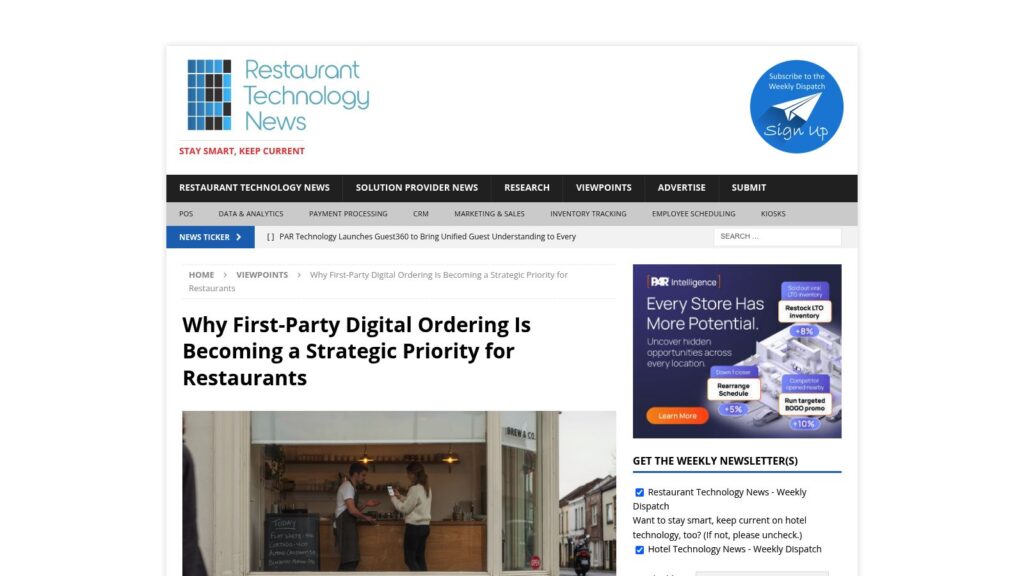
Why First-Party Digital Ordering Is Becoming a Strategic Priority for Restaurants

Restaurants are prioritizing first-party digital ordering to gain greater control over customer relationships, data, and order economics while complementing third-party marketplace channels. By integrating digital ordering with loyalty, marketing, and fulfillment systems, restaurants can enhance convenience, personalize guest engagement, and improve profitability. The strategic goal is to balance marketplace exposure for acquisition with owned channels that build direct, long-term customer connections.

https://restauranttechnologynews.com/2026/08/why-first-party-digital-ordering-is-becoming-a-strategic-priority-for-restaurants/

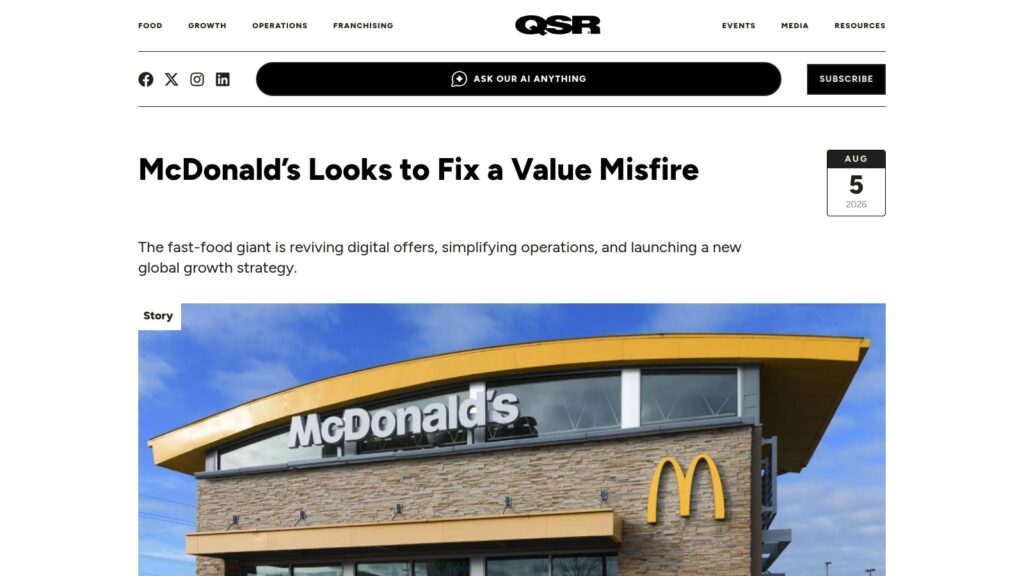
McDonald’s Looks to Fix a Value Misfire

McDonald’s U.S. same-store sales rose just 0.8 percent in Q2, falling short due to missteps in executing its new everyday affordability platform and reducing digital offers, which led to lower traffic and operational challenges. To address this, McDonald’s is enhancing pricing compliance, reviving digital promotions, simplifying its rollout calendar, and launching a new global growth strategy, McDonald’s > NEXT, focused on food quality, simplified operations, and hospitality to drive long-term growth and profitability.

https://www.qsrmagazine.com/story/mcdonalds-looks-to-fix-a-value-misfire/

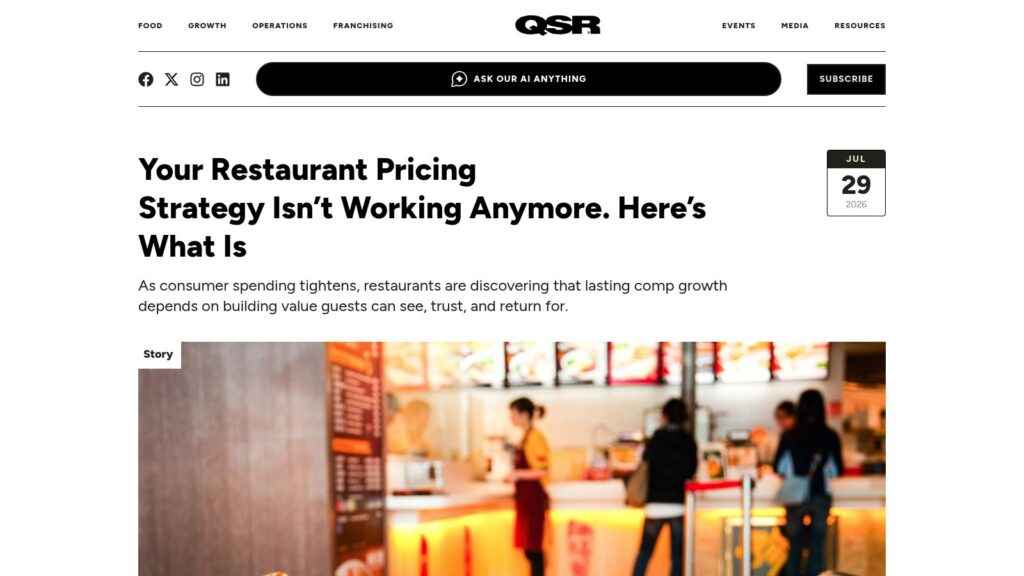
Your Restaurant Pricing Strategy Isn’t Working Anymore. Here’s What Is

As consumer spending tightens, traditional restaurant pricing strategies focused on raising prices to boost revenue are losing effectiveness, often suppressing traffic and comparable sales. Successful restaurants now prioritize delivering clear, honest value by aligning pricing with customer preferences, making quality visible, ensuring operational excellence, building meaningful loyalty beyond coupons, leveraging technology to enhance experience, and targeting specific market occasions. This strategic approach, emphasizing tangible value over cheapness, is enabling brands like Chili’s, Taco Bell, and McDonald’s to drive growth amid challenging economic conditions.

https://www.qsrmagazine.com/story/your-restaurant-pricing-strategy-isnt-working-anymore-heres-what-is/

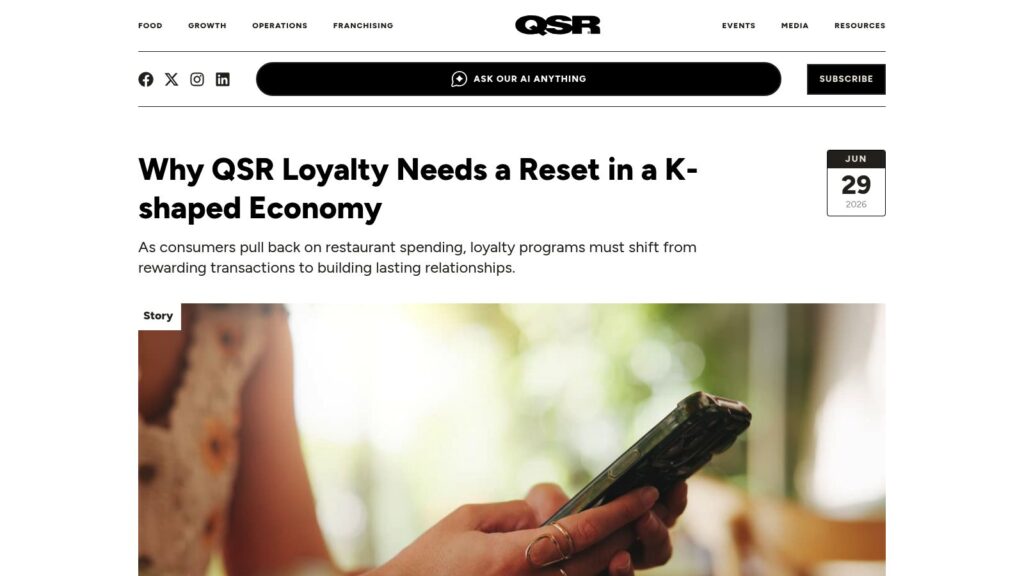
Why QSR Loyalty Needs a Reset in a K-shaped Economy

In a K-shaped economy where higher-income consumers maintain spending while lower-income consumers cut back, QSR loyalty programs must shift from merely rewarding transactions to building genuine, effortless customer relationships. Effective loyalty strategies focus on simplifying the customer experience through recognition and convenience rather than pushing more points or aggressive personalization, with AI tools serving to reduce ordering friction rather than to upsell. Programs that treat loyalty as an ongoing engagement platform and measure meaningful customer affinity, rather than just financial metrics, are better positioned to retain customers across diverse income segments.

https://www.qsrmagazine.com/story/why-qsr-loyalty-needs-a-reset-in-a-k-shaped-economy/

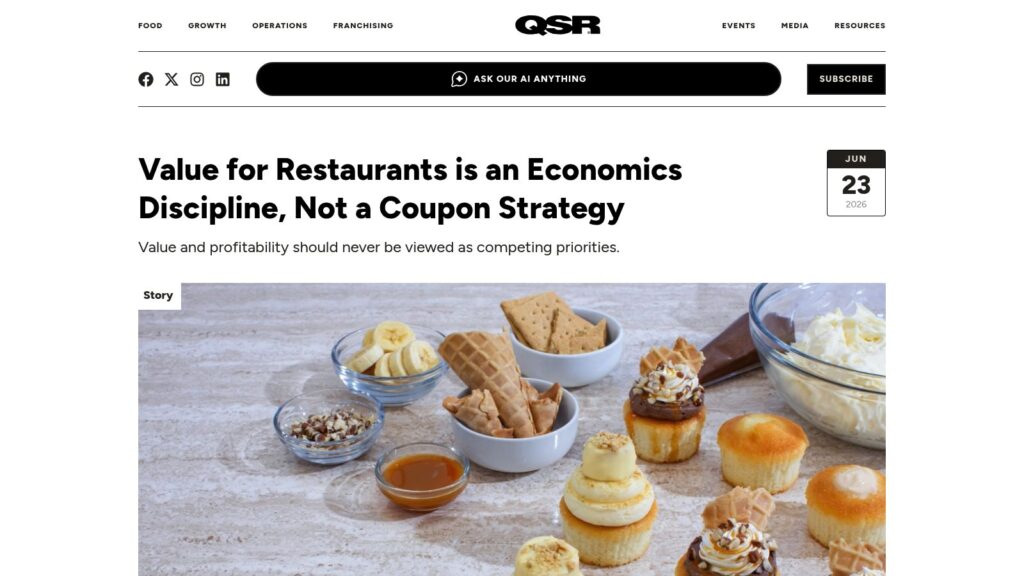
Value for Restaurants Is an Economics Discipline, Not a Coupon Strategy

Restaurant value should be treated as an economics discipline rather than just a coupon or discount strategy, as relying heavily on promotions can erode long-term profitability and customer loyalty. Operators face rising labor and food costs, and improving profitability requires focusing on operational efficiencies such as menu simplification and cost management instead of simply cutting prices. Sustainable growth depends on strong unit economics that balance delivering value customers perceive as worthwhile while maintaining healthy margins at the store level.

https://www.qsrmagazine.com/story/value-for-restaurants-is-an-economics-discipline-not-a-coupon-strategy/

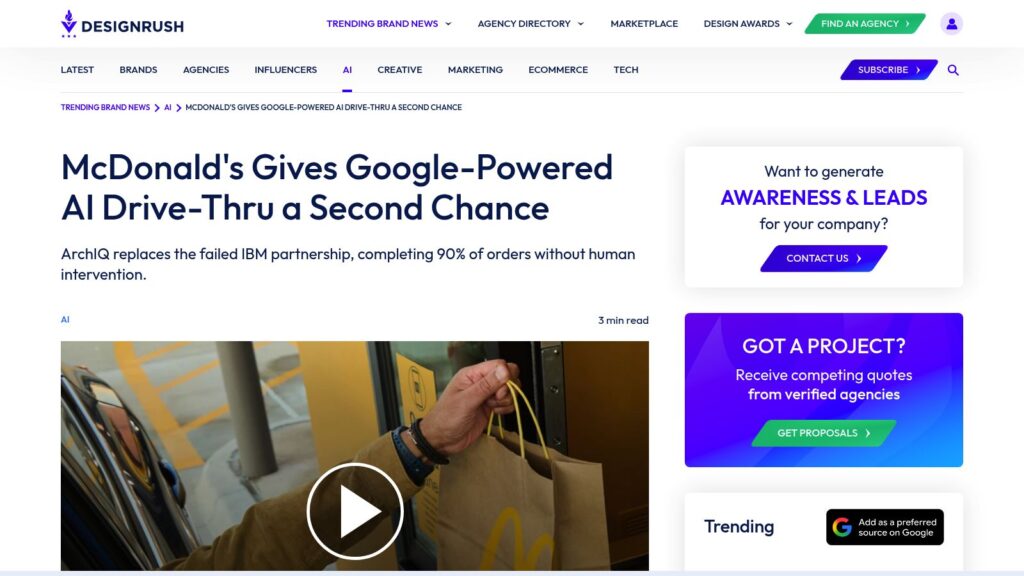
McDonald’s Gives Google-Powered AI Drive-Thru a Second Chance

McDonald’s is testing a new Google-powered AI drive-thru voice assistant called ArchIQ, which has completed around 90% of orders without human intervention across five U.S. restaurants. This initiative is part of the broader McDonald’s > NEXT strategy focused on operational efficiency, food quality, and hospitality, aiming to integrate AI automation as a core component rather than an isolated test, following a previous less successful partnership with IBM. The approach balances faster service through automation while emphasizing the importance of human interaction in enhancing customer hospitality.

https://news.designrush.com/mcdonalds-next-google-archiq-ai-drive-thru

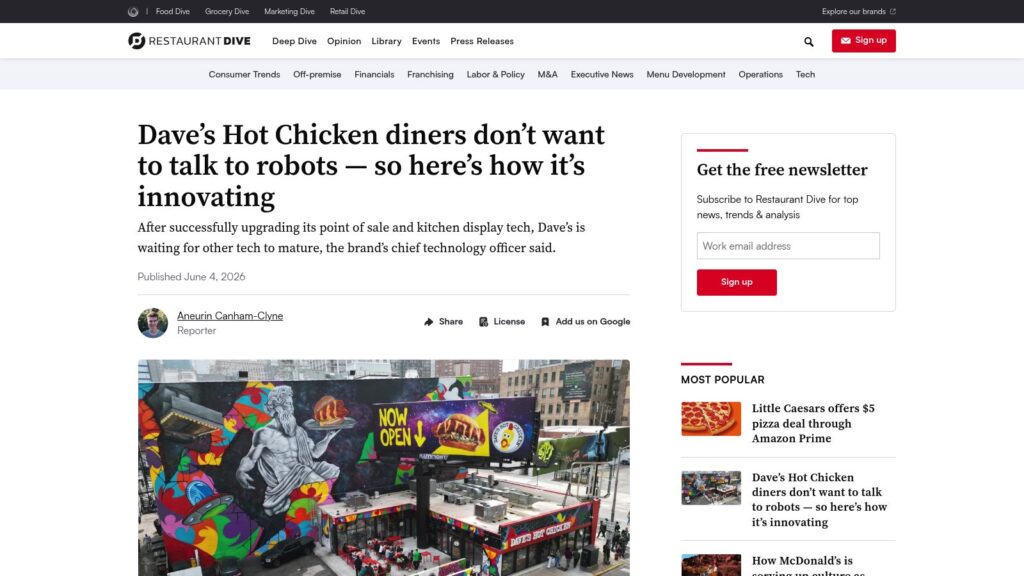
Dave’s Hot Chicken Diners Don’t Want to Talk to Robots — so Here’s How It’s Innovating

Dave’s Hot Chicken is innovating through a multi-year technology initiative called Dave’s of the Future, focusing on enhancing its point of sale and kitchen display systems to improve operations and customer experience. While the chain has embraced kiosks and is testing technologies like robotic fry cooks and drone deliveries, it remains cautious about adopting technologies such as drive-thru voice AI or computer vision until they meet consumer preferences and operational readiness.

https://www.restaurantdive.com/news/daves-hot-chicken-future-technology-strategy-pos-kds-robots/821929/

Scroll to Top