robotization

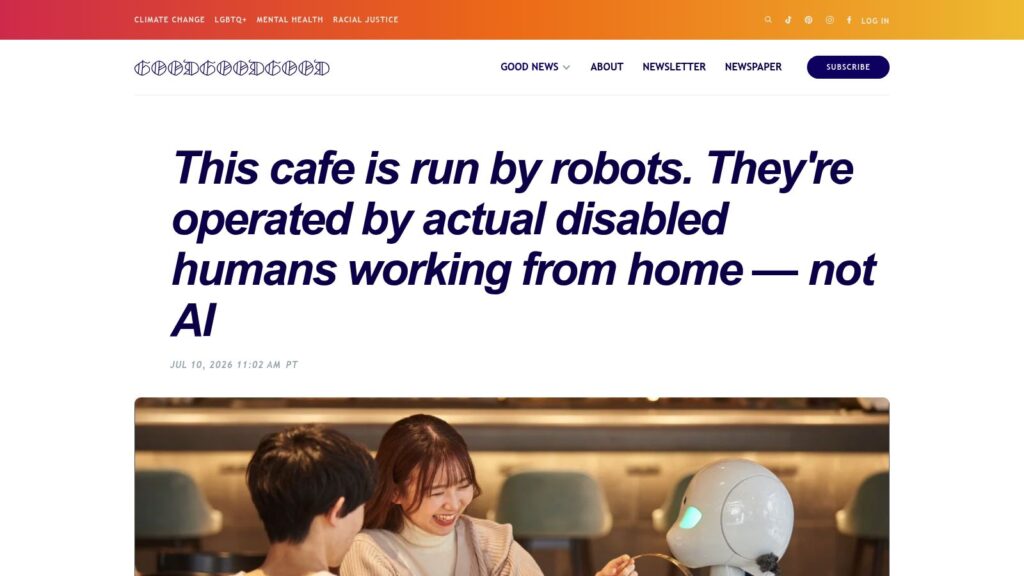
This Cafe Is Run by Robots. They’re Controlled by Actual Disabled Humans Working From Home — Not AI

The Dawn Avatar Robot Cafe in Tokyo operates with robots serving customers, but these robots are remotely controlled in real time by disabled workers working from home, enabling them to participate in the workforce despite physical limitations. Founded by robotics expert Ory Yoshifuji, the cafe uses OriHime robots piloted by about 100 individuals with conditions like ALS or heart failure, allowing them to interact with customers and earn income safely and autonomously. This model demonstrates how technology can be leveraged not to replace humans but to create inclusive work opportunities for those with disabilities.

https://www.goodgoodgood.co/articles/tokyo-dawn-robot-cafe-disabled-workers

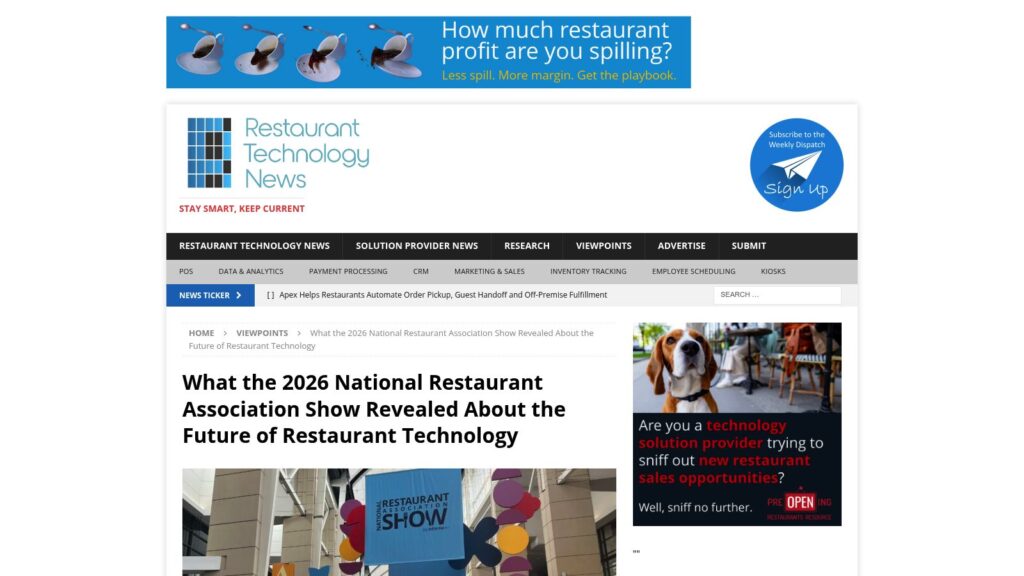
What the 2026 National Restaurant Association Show Revealed About the Future of Restaurant Technology

The 2026 National Restaurant Association Show highlighted a shift in restaurant technology toward integrated, operational solutions that address labor challenges, cost management, and growing digital complexity. Innovations in AI, robotics, connected POS systems, and back-office tools focus on automating workflows, enhancing profitability, and improving consistency across kitchen operations, guest engagement, payments, and labor management. The event underscored that the future of restaurant technology lies in connected ecosystems simplifying management for operators rather than adding complexity.

https://restauranttechnologynews.com/2026/06/what-the-2026-national-restaurant-association-show-revealed-about-the-future-of-restaurant-technology/

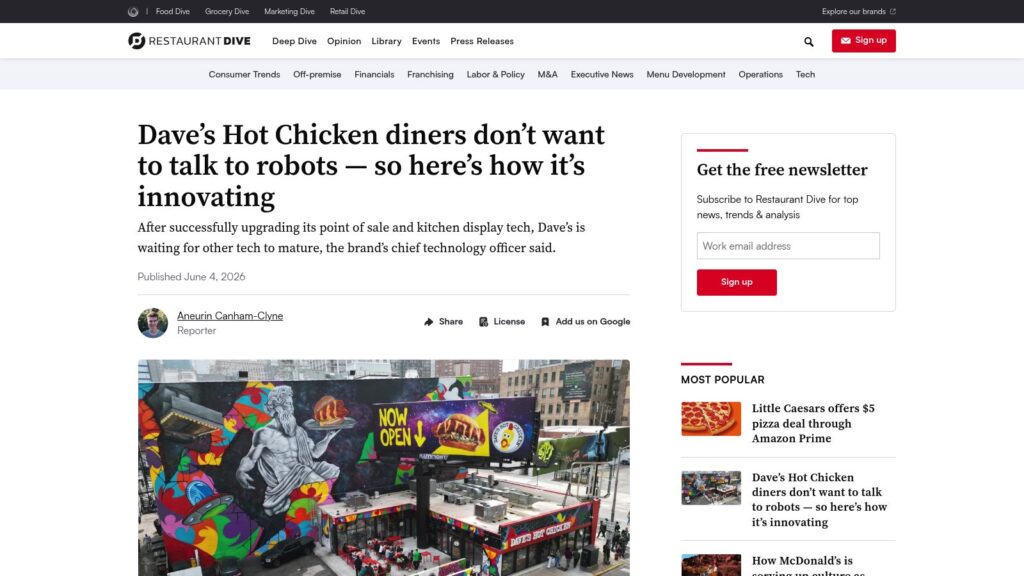
Dave’s Hot Chicken Diners Don’t Want to Talk to Robots — so Here’s How It’s Innovating

Dave’s Hot Chicken is innovating through a multi-year technology initiative called Dave’s of the Future, focusing on enhancing its point of sale and kitchen display systems to improve operations and customer experience. While the chain has embraced kiosks and is testing technologies like robotic fry cooks and drone deliveries, it remains cautious about adopting technologies such as drive-thru voice AI or computer vision until they meet consumer preferences and operational readiness.

https://www.restaurantdive.com/news/daves-hot-chicken-future-technology-strategy-pos-kds-robots/821929/

A Day In The ‘Life’ Of a Food Delivery Robot: Lots Of Waiting And a Few Collisions

A Block Club Chicago reporter and photographer spent a day following a Coco food delivery robot in Lakeview, documenting its activity over seven hours, during which it made four deliveries while experiencing periods of waiting and a few minor collisions. The article highlights the robot’s cautious navigation of busy pedestrian areas, varied public reactions, and ongoing concerns about safety and job displacement amid Chicago’s pilot program for personal delivery devices.

https://blockclubchicago.org/2026/04/28/a-day-in-the-life-of-a-food-delivery-robot-lots-of-waiting-and-a-few-collisions/

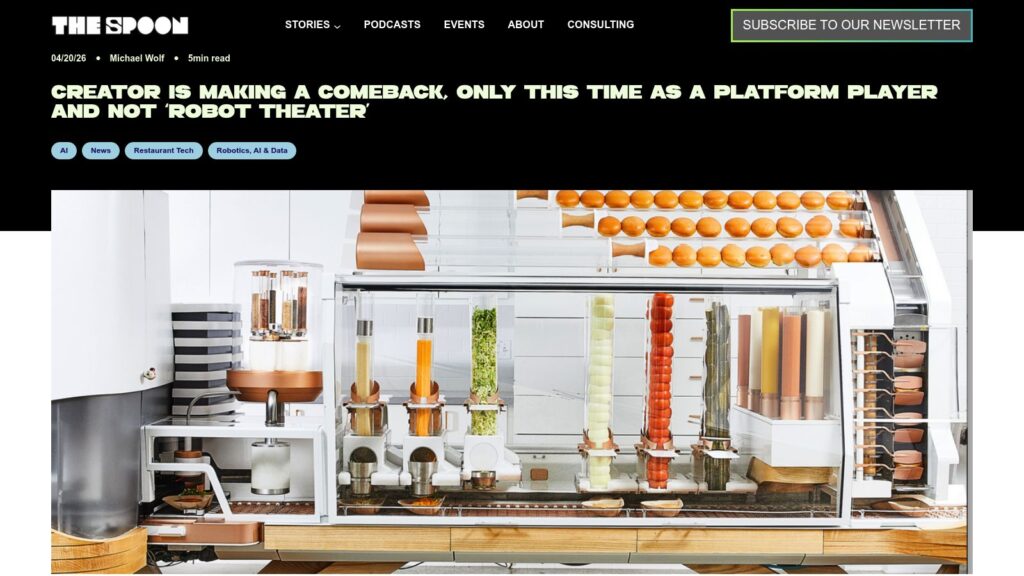
Creator Is Making a Comeback, Only This Time as a Platform Player and Not ‘Robot Theater’

Creator, a robotic restaurant company known for its consumer-facing automated burger-making, is making a comeback by pivoting from running its own locations to providing a robotic burger platform for existing restaurant brands. The company has redesigned its technology to integrate as back-of-house infrastructure for other operators, aiming to move beyond “robot theater” and scale through partnerships with established restaurants.

https://thespoon.tech/creator-is-making-a-comeback-only-this-time-as-a-platform-player-and-not-robot-theater/

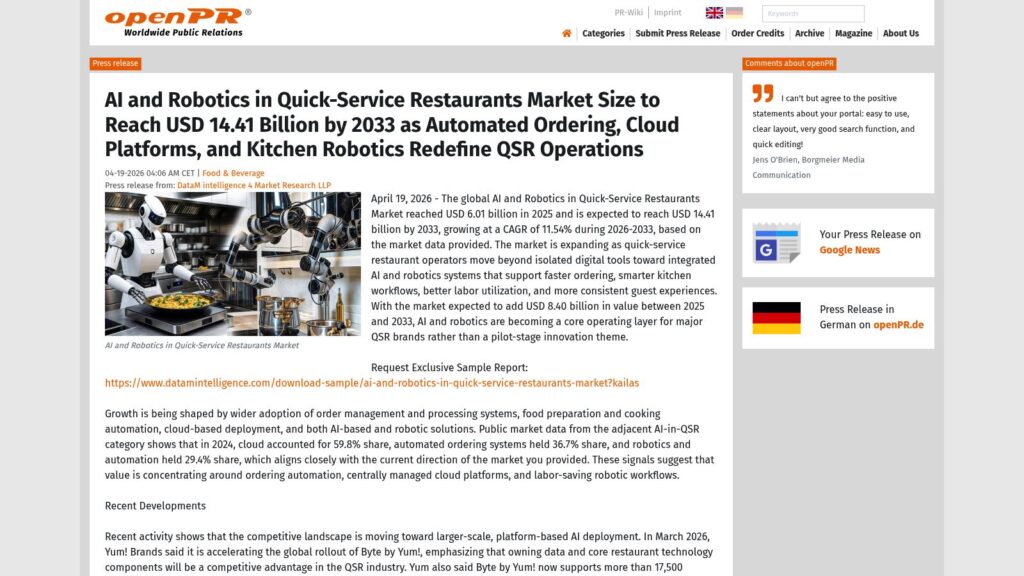
AI and Robotics in Quick-Service Restaurants Market Size to Reach USD 14.41 Billion by 2033 as Automated Ordering, Cloud Platforms, and Kitchen Robotics Redefine QSR Operations

The global AI and Robotics in Quick-Service Restaurants Market, valued at USD 6.01 billion in 2025, is projected to reach USD 14.41 billion by 2033 with a CAGR of 11.54%. This growth is driven by the widespread adoption of integrated AI and robotics systems—such as automated ordering, cloud platforms, and kitchen robotics—that enhance operational efficiency, customer experience, and labor utilization across major QSR brands. Key players like McDonald's and Yum! Brands are leading the market through large-scale AI deployments and proprietary technology platforms, highlighting a shift towards AI as a core component in QSR operations.

https://www.openpr.com/news/4478239/ai-and-robotics-in-quick-service-restaurants-market-size

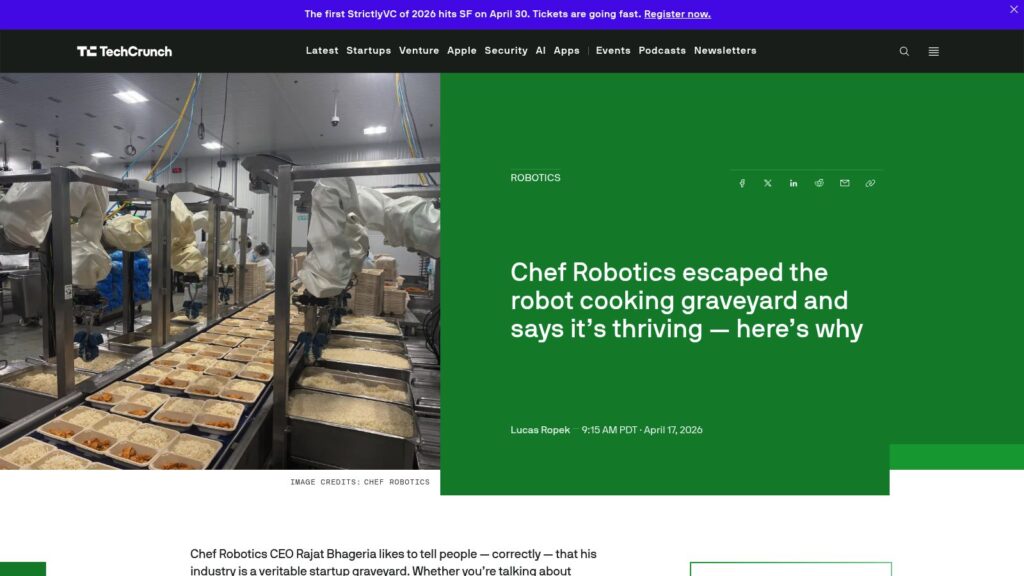
Chef Robotics Escaped the Robot Cooking Graveyard and Says It’s Thriving — Here’s Why

Chef Robotics, led by CEO Rajat Bhageria, has avoided the failures common in the food robotics startup space by pivoting from fast casual dining to large-scale food manufacturing, serving clients like Amy’s Kitchen and major school lunch providers. The company recently reached a milestone of 100 million servings — defined as portions deposited into meal trays by their AI-powered robot arms — and plans to expand into smaller kitchens, including airline catering and ghost kitchens, while continuously improving its AI models to better handle the complexities of food automation.

https://techcrunch.com/2026/04/17/chef-robotics-escaped-the-robot-cooking-graveyard-and-says-its-thriving-heres-why/

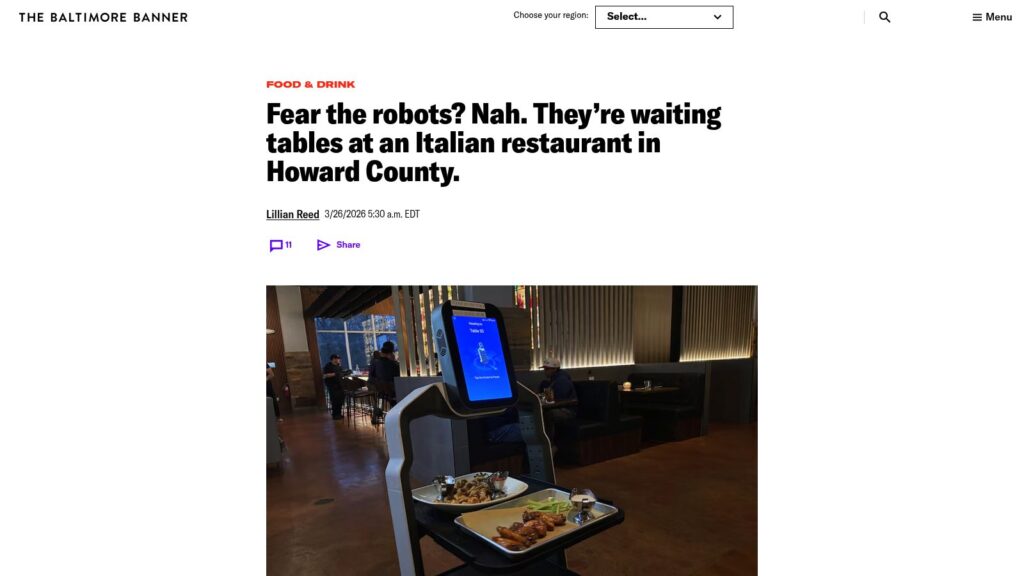
Robots Are Waiting Tables at an Italian Restaurant in Howard County

ViVa Ristorante in Elkridge, Howard County, employs autonomous robot waiters to deliver food and drinks, providing a futuristic dining experience that aims to address restaurant labor shortages and changing customer habits. Customers order via QR codes and robots handle deliveries while human staff assist with drinks, bussing, and other needs; despite some initial skepticism and minor service hiccups, the robots offer both efficiency and entertainment at the eatery.

https://www.thebanner.com/culture/food-drink/robot-waiters-dining-viva-ristorante-2GANMDEFT5D5DEBLTEYGAPYY7U/

More Problems at Serve Robotics (SERV)

Serve Robotics, a company testing self-driving robots for food delivery, faces challenges in Chicago due to resident opposition. Residents complain that the robots block sidewalks, inconvenience pedestrians, and pose safety hazards. Additionally, the company’s robots have been involved in incidents that have blocked firetrucks and trains and harassed the disabled.

https://thebearcave.substack.com/p/more-problems-at-serve-robotics-serv

Professor Explores Customer Reaction to Robot Service in Restaurants

ASU's Jong-Hyeong Kim studies customer reactions to restaurant robots, like Starship's delivery bots and Shiela, revealing impacts on dining experiences. His research shows that while robot novelty affects customer loyalty, balancing technology with human interaction is essential for a positive atmosphere. Robots can aid small restaurants, but costs and loss of personal touch are concerns. Cultural perceptions also influence how service robots are received.

https://news.asu.edu/20260304-business-and-entrepreneurship-associate-professor-explores-customer-reaction-robot-service

Scroll to Top