digitalization

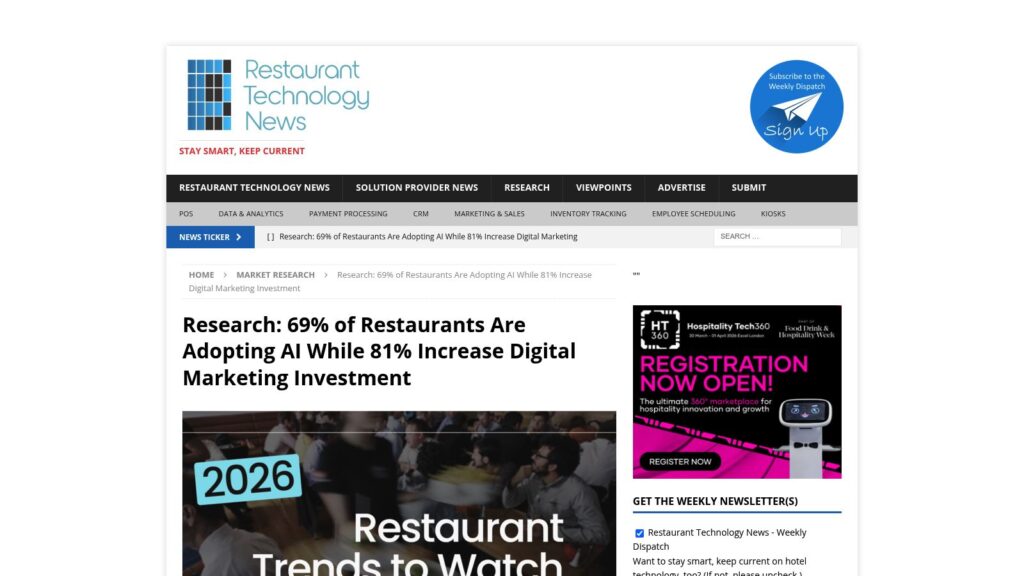
Research: 69% of Restaurants Are Adopting AI While 81% Increase Digital Marketing Investment

69% of restaurants are adopting AI and 81% are increasing digital marketing despite declining consumer spending. Technology is crucial for improving efficiency and guest engagement as operators strive to protect margins. New trends include AI for marketing and operations, personalized guest experiences, and modern pricing strategies. Restaurant technology is becoming foundational for long-term competitiveness.

https://restauranttechnologynews.com/2026/02/research-69-of-restaurants-are-adopting-ai-while-81-increase-digital-marketing-investment/

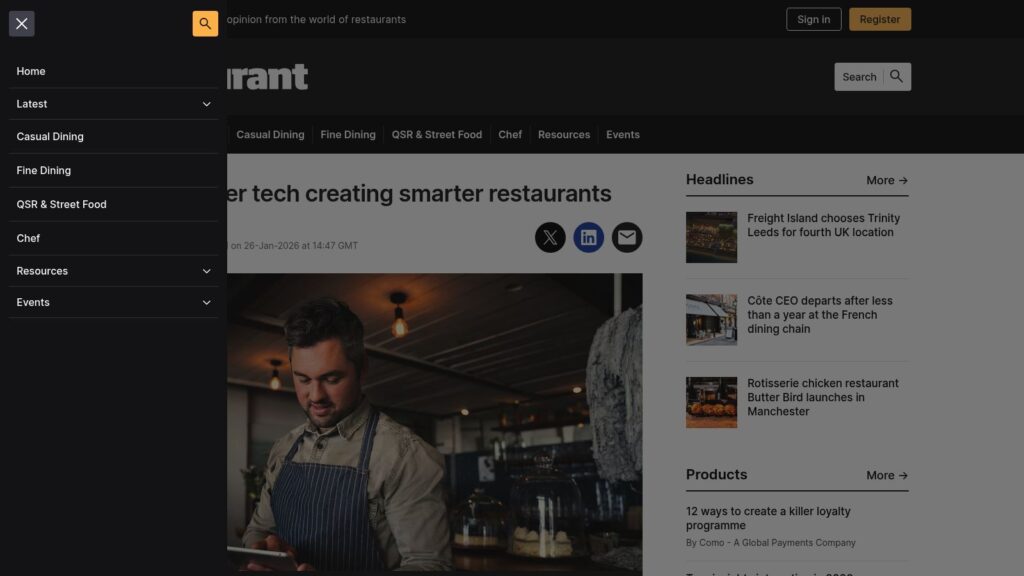
The Smarter Tech Creating Smarter Restaurants

AI is transforming restaurant technology, enhancing efficiency and decision-making across operations, from payments to workforce management. Intelligent systems now analyze data in real-time, predict outcomes, and suggest actions, enabling operators to improve performance and guest experiences amid tightening margins. AI tools are automating reservations, streamlining staff scheduling, optimizing deliveries, and integrating customer-facing systems, supporting a more agile operational model. Advances in data insights further bolster forecasting accuracy, reducing waste and labor costs. The focus is on using technology to empower staff rather than replace them, creating smarter restaurant environments.

https://www.restaurantonline.co.uk/Article/2026/01/26/how-ai-is-changing-restaurant-technology-and-pos-systems/

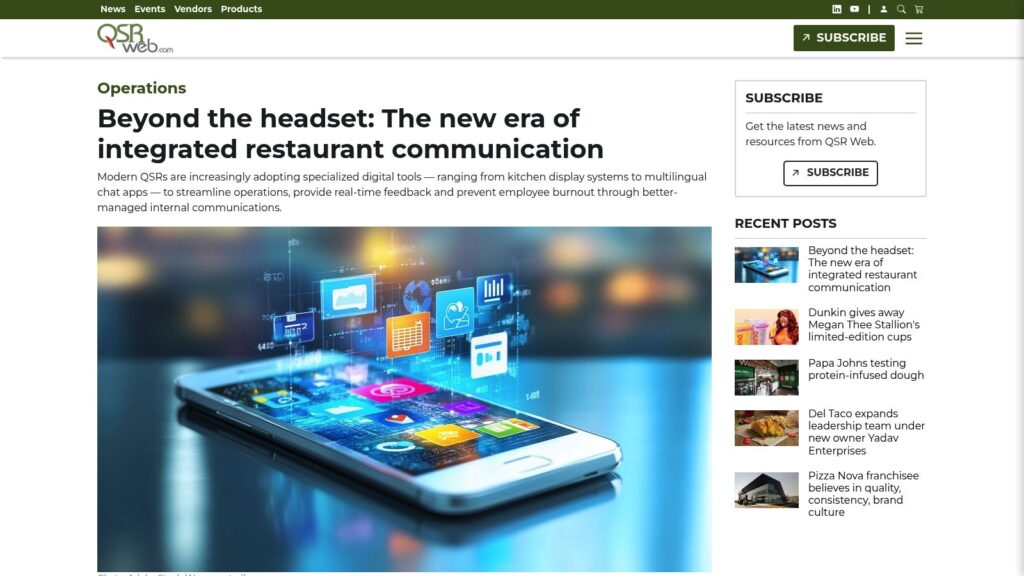
Beyond the Headset: The New Era of Integrated Restaurant Communication

QSRs are integrating digital communication tools like headsets and kitchen display systems to streamline operations and enhance employee communication, reducing burnout and improving efficiency. Transparent communication, real-time feedback, and effective internal apps are key for training, support, and retaining staff. Using specialized platforms instead of personal messaging apps helps prevent data leaks and communication chaos. Managers should prioritize training and employee engagement to foster a supportive work environment.

https://www.qsrweb.com/articles/beyond-the-headset-the-new-era-of-integrated-restaurant-communication/

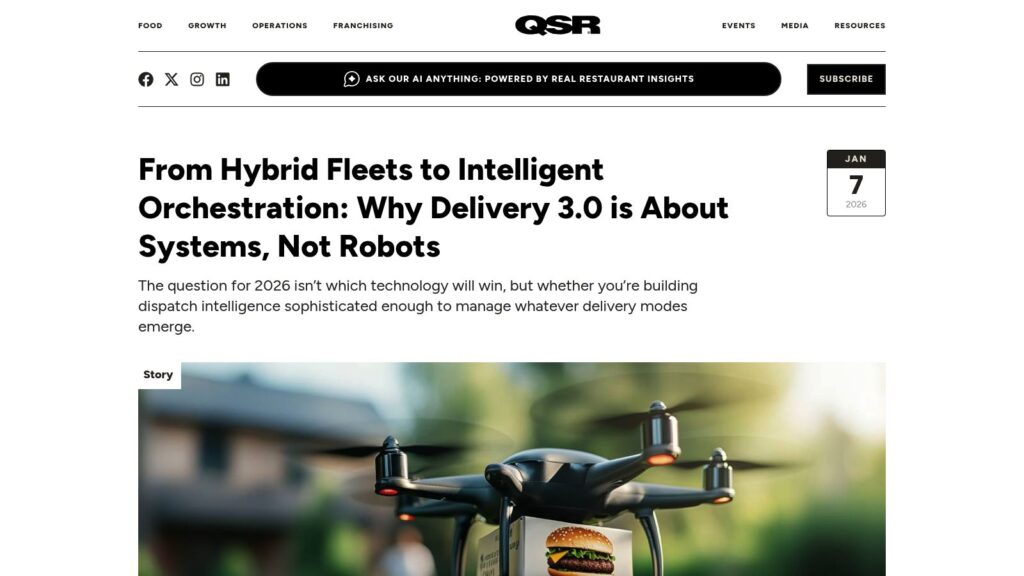
From Hybrid Fleets to Intelligent Orchestration: Why Delivery 3.0 Is About Systems, Not Robots

Delivery 3.0 revolutionizes restaurant logistics through hybrid orchestration, integrating autonomous technologies like drones and robots with existing delivery systems. This shift requires operators to build sophisticated dispatch intelligence to manage varied delivery modes effectively. Successful adaptation hinges on their ability to enhance real-time decision-making across diverse fleets, maximizing efficiency and profitability while meeting customer expectations for tracking and service. Fast-casual and pizza chains are likely to lead this transition due to their operational infrastructure and delivery needs. Operators must invest now in advanced systems to stay competitive as autonomous delivery evolves.

https://www.qsrmagazine.com/story/from-hybrid-fleets-to-intelligent-orchestration-why-delivery-3-0-is-about-systems-not-robots/

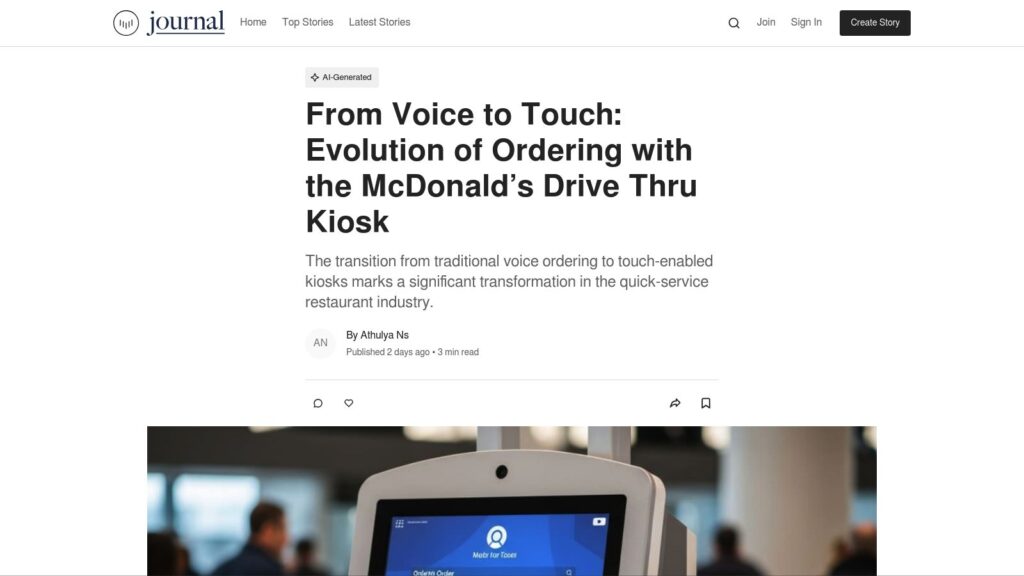
From Voice to Touch: Evolution of Ordering With the McDonald’s Drive Thru Kiosk

McDonald's drive-thru has evolved from voice-based ordering to touch-enabled kiosks, improving accuracy and customer experience. Traditional voice ordering faced issues like miscommunication and longer wait times. The introduction of digital menu boards marked the first automation step, leading to the smart kiosk that allows customization and reduces staff workload. These kiosks enhance accessibility and feed into customer loyalty programs. The future may integrate AI and voice technology for a hybrid experience, redefining convenience in quick-service dining.

https://vocal.media/journal/from-voice-to-touch-evolution-of-ordering-with-the-mc-donald-s-drive-thru-kiosk

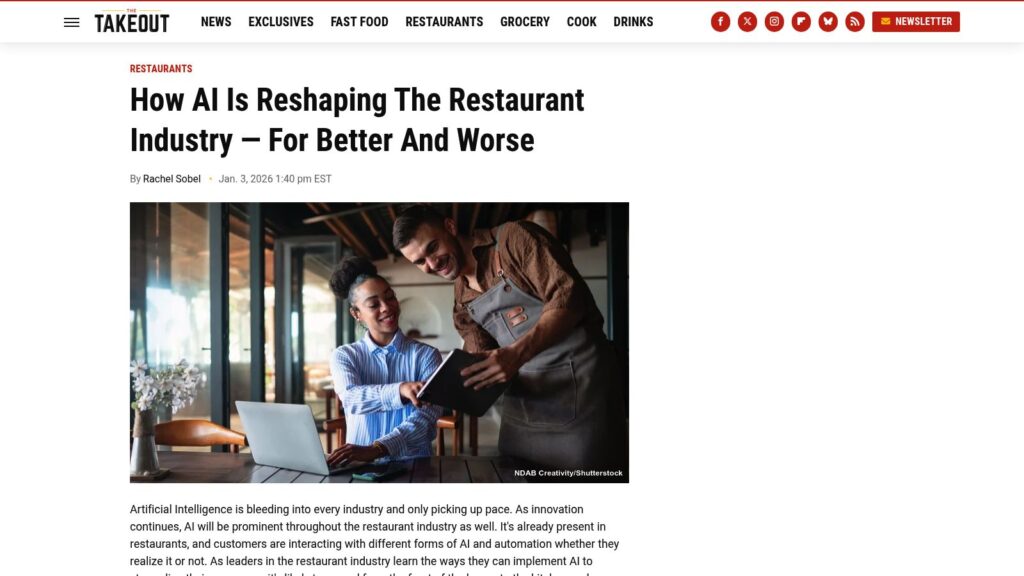
How AI Is Reshaping The Restaurant Industry — For Better And Worse

AI is increasingly integrated into the restaurant industry, enhancing customer service, streamlining operations, and personalizing experiences. Key changes include improved mobile app interactions, smoother drive-thrus through automation, and personalized kiosks. In kitchens, robots assist with food preparation, while AI handles menu design, pricing adjustments, and inventory management, decreasing waste and improving efficiency. AI advances marketing strategies, creates targeted promotions, and enhances delivery systems, ultimately increasing safety standards and expediting staff training. Overall, AI aims to improve restaurant profitability and customer satisfaction while reshaping workforce roles.

https://www.thetakeout.com/2064901/ai-changing-restaurant-industry-pros-cons/

Campaign: McDonald’s Ditches Menu Boards

McDonald's Saudi Arabia launched the “McMenuless Challenge,” removing menu boards to highlight brand loyalty and customer memory. The viral campaign demonstrated the emotional connection to the brand but also underscored the importance of digital menu boards in quick service restaurants for operations, guidance, and upselling. Despite its success, the stunt reaffirmed the necessity of menu boards in QSR operations.

https://invidis.com/news/2026/01/qsr-mcdonalds-ditches-menu-boards-temporarily/

Why Some Restaurants Are Rethinking Automation and Relearning the Value of Human Hospitality

Restaurants, like Panera, are shifting focus from automation to enhancing human hospitality, realizing that efficiency alone doesn’t ensure customer loyalty. Many are reintroducing staff and personal interactions, adapting technology to support rather than replace human service. This strategy acknowledges that while digital options are convenient, customers value personal engagement, particularly when issues arise. Operators are learning to balance automation with meaningful human connections to create a more resonant guest experience.

https://restauranttechnologynews.com/2025/12/why-some-restaurants-are-rethinking-automation-and-relearning-the-value-of-human-hospitality/

The Rise of Digital Menus: How McDonald’s Drive-Thru Kiosks Boost Sales

McDonald's digital transformation in the QSR industry, featuring self-ordering kiosks and AI-powered menus, enhances efficiency, customer engagement, and sales. Digital menus allow real-time updates, vibrant visuals, and tailored promotions, improving decision-making and reducing errors. Kiosks boost average order values, customization, and satisfaction. This seamless experience positions McDonald's as a market leader, and ongoing innovations signify a future trend towards more automated, personalized ordering systems.

https://vocal.media/journal/the-rise-of-digital-menus-how-mc-donald-s-drive-thru-kiosks-boost-sales

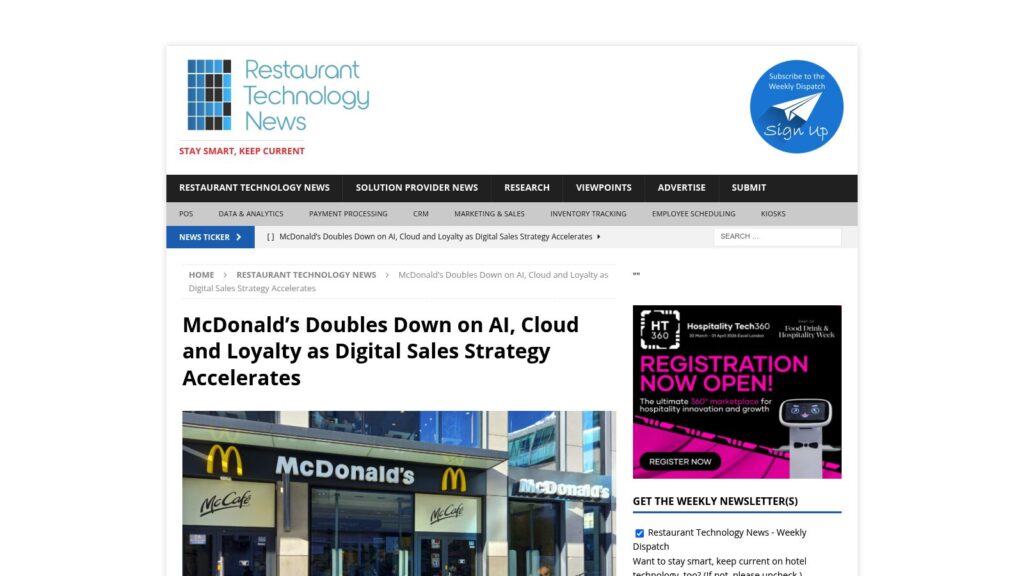
McDonald’s Rolls Out ‘Order Ahead’ App Feature Nationwide

McDonald’s is launching its ‘Order Ahead’ app feature nationwide in the UK, allowing customers to avoid queues by ordering directly through the app. Utilizing geofencing technology, orders will start cooking as customers approach the restaurant. This initiative is part of McDonald’s broader digital transformation strategy, aimed at enhancing customer experience and operational efficiency.
https://www.thegrocer.co.uk/news/mcdonalds-rolls-out-order-ahead-app-feature-nationwide/711875.article

Scroll to Top