More Problems at Serve Robotics (SERV)

Serve Robotics, a company testing self-driving robots for food delivery, faces challenges in Chicago due to resident opposition. Residents complain that the robots block sidewalks, inconvenience pedestrians, and pose safety hazards. Additionally, the company’s robots have been involved in incidents that have blocked firetrucks and trains and harassed the disabled.

https://thebearcave.substack.com/p/more-problems-at-serve-robotics-serv

Professor Explores Customer Reaction to Robot Service in Restaurants

ASU's Jong-Hyeong Kim studies customer reactions to restaurant robots, like Starship's delivery bots and Shiela, revealing impacts on dining experiences. His research shows that while robot novelty affects customer loyalty, balancing technology with human interaction is essential for a positive atmosphere. Robots can aid small restaurants, but costs and loss of personal touch are concerns. Cultural perceptions also influence how service robots are received.

https://news.asu.edu/20260304-business-and-entrepreneurship-associate-professor-explores-customer-reaction-robot-service

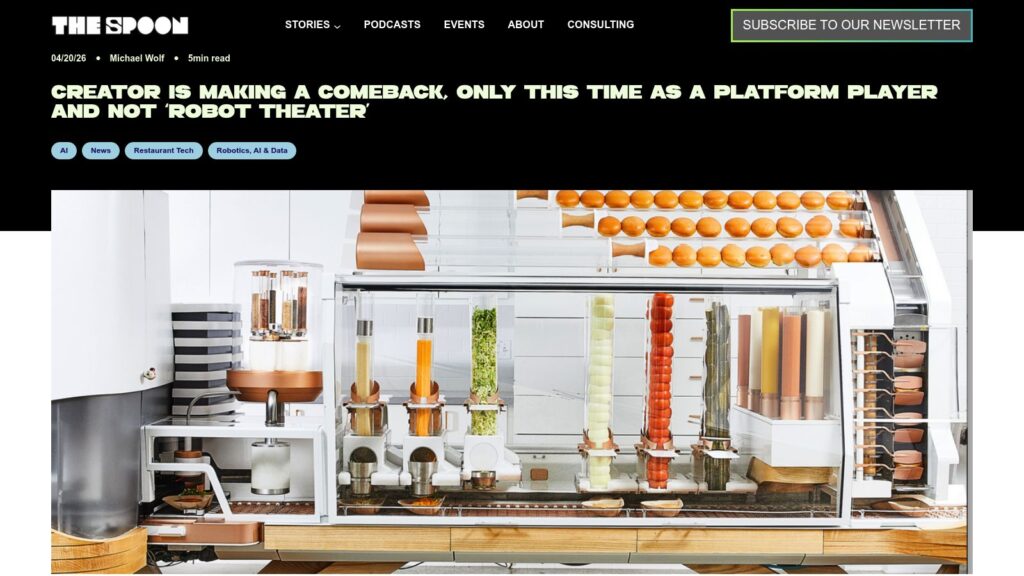
China Mobile Showed Off a Robot-Only Restaurant At MWC 2026

China Mobile showcased a robot-only restaurant at MWC 2026, demonstrating its technologies through a streamlined process where a main robot coordinated tasks performed by others. The restaurant achieved a 92% accuracy rate, with robots handling food orders and drinks efficiently, although they were slower than humans. The initiative aimed to highlight advancements in AI and real-time scheduling systems but indicated that robots won't replace human jobs soon. The project represents a push towards automating fast food service while remaining quieter than traditional restaurant environments.

https://www.bgr.com/2113530/china-mobile-robot-only-restaurant-experience-mwc-2026/

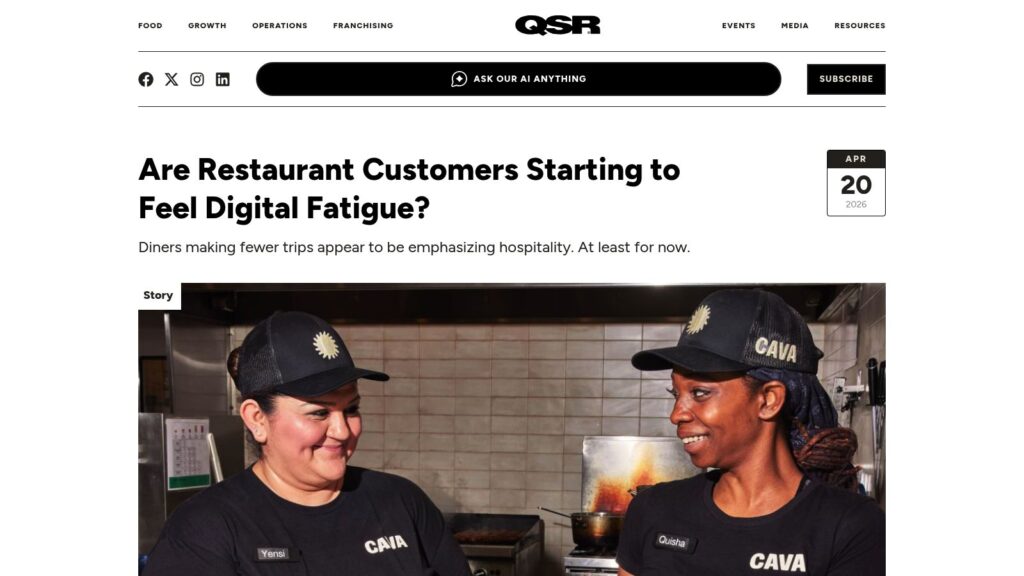
How ‘Low-hire, Low-hire’ Puts QSR Employee Experience in the Hot Seat

QSRs must enhance the employee experience to achieve workforce stability in a “low-hire, low-fire” market, leveraging AI for flexible scheduling and modern benefits such as on-demand pay. While turnover rates are declining, economic pressures and labor shortages complicate staffing. Retention strategies should focus on employee satisfaction by providing autonomy in scheduling and reducing financial stress through flexible pay. Prioritizing employee needs is essential for QSRs to foster loyalty and a productive work environment.

https://www.qsrweb.com/blogs/how-low-hire-low-hire-puts-qsr-employee-experience-in-the-hot-seat/

Burger King AI Bot Will Check up on Staffs’ Please and Thank Yous

Burger King is piloting AI headsets, the BK Assistant, in 500 US locations to monitor staff interactions and generate “friendliness scores” without recording conversations. The headsets, powered by an AI chatbot named “Patty,” help employees with menu queries and operational tasks, but raise concerns over surveillance. Customer reactions are mixed, with some seeing it as intrusive or dystopian despite the company's claim that it aims to enhance service. All US locations are expected to adopt the technology by 2026.

https://www.bbc.com/news/articles/cgk2zygg0k3o

McDonald’s HK Enters New Chapter With ‘i’m lovin’ it’ Refresh

McDonald's Hong Kong launches a new campaign updating its “i'm lovin' it” brand message with fresh insights and diverse talent, marking a shift in creative direction. The campaign aims to resonate with local audiences by celebrating authenticity, launching on 20 February 2026, alongside a renewed partnership with BBDO Hong Kong following a long-term collaboration with DDB.

https://www.marketing-interactive.com/mcdonald-s-hk-enters-new-chapter-with-im-lovin-it-refresh

Generation Alpha Food Trends: How Gen Alpha Eating Habits Are Reshaping Restaurants and Family Dining

Generation Alpha, born between 2011 and 2024, is influencing food trends and reshaping the restaurant industry. Characterized by digital connectivity and cultural change, they exhibit strong brand loyalty and play a significant role in family dining choices. Their eating habits blend curiosity for global cuisines with selective preferences, reflecting a paradox of adventurous exploration and pickiness. Gen Alpha enjoys cooking, engages with food-related content, and influences household food purchases, favoring convenience and interactive experiences. Understanding their preferences is crucial for foodservice operators and brands aiming to build lasting loyalty and cater to future consumer behavior.

https://datassential.com/resource/generation-alpha-food-trends/

McDonald’s Friends Meal: Why Familiarity Rules Marketing

McDonald's launches a Friends-themed meal, highlighting nostalgia as a marketing strategy amid data-driven creative risks. Familiarity in content, like retro franchises, drives consumer comfort but may stifle true originality in advertising. The piece advocates for balancing data insights with creative risks to foster innovation, suggesting that nostalgia is rooted in past creative courage.

https://www.mediaweek.com.au/mcdonalds-friends-meal-nostalgia-vs-originality/

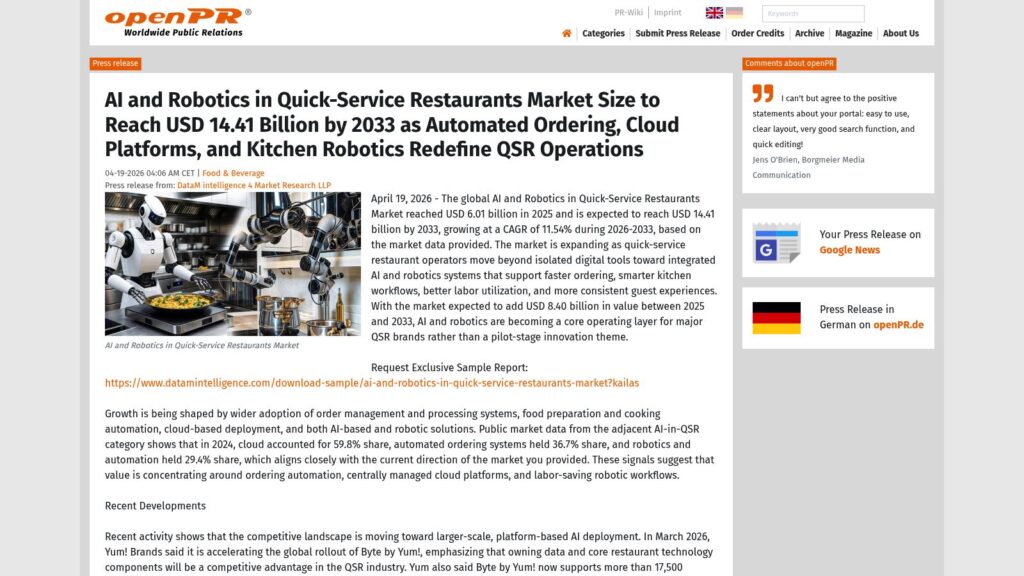
Research: 69% of Restaurants Are Adopting AI While 81% Increase Digital Marketing Investment

69% of restaurants are adopting AI and 81% are increasing digital marketing despite declining consumer spending. Technology is crucial for improving efficiency and guest engagement as operators strive to protect margins. New trends include AI for marketing and operations, personalized guest experiences, and modern pricing strategies. Restaurant technology is becoming foundational for long-term competitiveness.

https://restauranttechnologynews.com/2026/02/research-69-of-restaurants-are-adopting-ai-while-81-increase-digital-marketing-investment/

Scroll to Top