Chick-fil-A Wins on Order Accuracy, Experience at the Drive-thru

Chick-fil-A leads in drive-thru satisfaction (98%) despite longer wait times (over 7 minutes). Taco Bell topped in speed (average 4:16). Post-pandemic speed improvements have plateaued due to complex transactions like mobile orders. AI-assisted drive-thru orders were 21 seconds faster, yet faced issues with clarity and friendliness. Overall, convenience and speed are prioritized by customers.
https://www.restaurantdive.com/news/intouch-insight-drive-thru-ai-speed-satisfaction-taco-bell-chick-fil-a/801721/

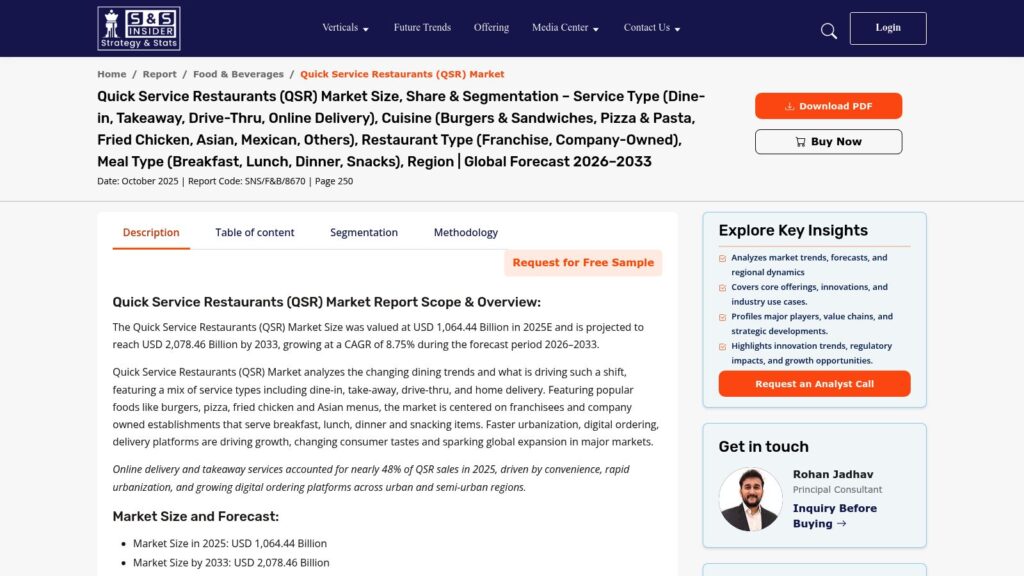
Quick Service Restaurants Market Size, Share & Growth Report 2033

QSR Market Overview:
2025 market size: $1,064.44B, projected to reach $2,078.46B by 2033 (CAGR 8.75%). Growth driven by online delivery (48% of sales), digital ordering, and changing consumer preferences. Key players include McDonald’s, Subway, KFC. Major trends: convenience, urbanization, mobile apps. Asia-Pacific fastest-growing region (CAGR 9.96%). Restraints: rising operational costs and supply chain issues. Opportunities in expanding digital platforms.

https://www.snsinsider.com/reports/quick-service-restaurants-market-8670

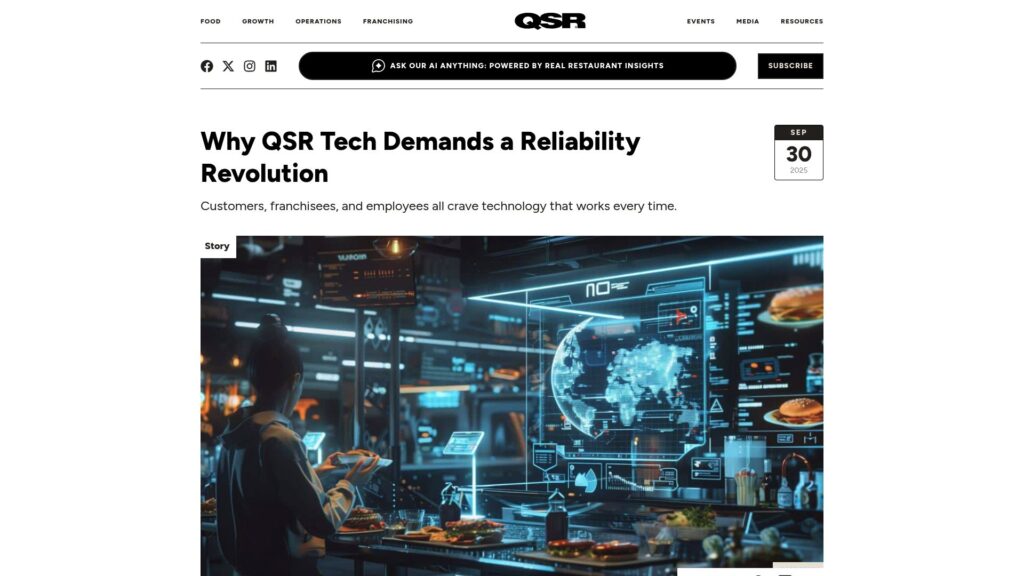
Why QSR Tech Demands a Reliability Revolution

QSR industry focuses on tech integration for efficiency. McDonald’s, Taco Bell, Chick-fil-A excel in tech use but face reliability issues (e.g., kiosk failures). Remote monitoring solutions are crucial for reducing downtime and optimizing operations, enhancing customer experiences. Proactive management of restaurant tech is vital as businesses evolve to meet increasing customer expectations.

https://www.qsrmagazine.com/story/why-qsr-tech-demands-a-reliability-revolution/

The 2025 QSR® Drive-Thru Report

QSR drive-thru market shows declining visits with a shift towards dine-in, delivery, and takeout. Consumers prioritize speed, accuracy, and hospitality, influenced by inflation and changing value perceptions. Brands like Taco Bell are leading with tech innovations like AI voice ordering to enhance efficiency while maintaining customer engagement. Drive-thrus need to evolve by improving customer experiences and embracing technology to retain their significance amidst rising competition and changing consumer preferences.

https://www.qsrmagazine.com/story/the-2025-qsr-drive-thru-report/

McDonald’s Drives Sustainable Growth Through Loyalty & Menu Innovation

McDonald’s drives growth through strong international sales, the $5 Meal Deal, and marketing innovations. The “Accelerating the Arches” strategy emphasizes value and unit expansion, targeting 50,000 global restaurants by 2027. Key drivers include a successful loyalty program, menu adaptations, and ongoing promotions. However, challenges include inflation in Europe and declining foot traffic in the U.S. Competitors like DoorDash, Chipotle, and Yum! Brands are also performing well despite market pressures.

https://www.nasdaq.com/articles/mcdonalds-drives-sustainable-growth-through-loyalty-menu-innovation

The Top 3 Fastest-Growing QSR Categories of 2025

Fastest-Growing QSR Categories of 2025: Coffee shops, chicken chains, and Mexican-inspired brands saw growth in visits during the first half of 2025, while traditional fast-food segments like burgers and sandwiches declined. Despite growth, average visits per location decreased, suggesting potential market saturation as chains expand rapidly. However, summer trends hint at declining foot traffic and rising coffee prices, which may impact consumer habits.

https://foodinstitute.com/focus/the-top-3-fastest-growing-qsr-categories-of-2025/

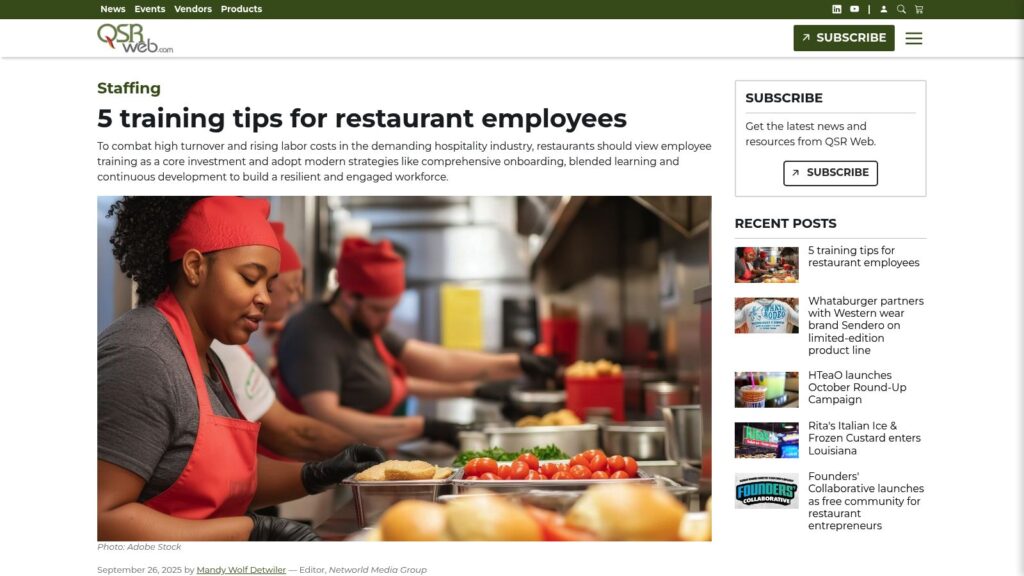
5 Training Tips for Restaurant Employees

Training tips for restaurant employees: Prioritize onboarding to reduce turnover, blend learning approaches, utilize experienced staff as trainers, and ensure continuous learning. Adapt training to combat high turnover and labor costs in the hospitality industry by making it an investment. Focus on engaging new hires, using a mix of in-person and digital training, and leveraging real-time data for improving employee engagement and reducing burnout. Successful training can transform restaurant chaos into efficiency.

https://www.qsrweb.com/articles/5-training-tips-for-restaurant-employees/

Why Specialty Beverages Are the Key to Unlocking Snacking Sales

Specialty beverages, like smoothies and milkshakes, are becoming popular snack alternatives among consumers, driven by convenience and health perceptions. Limited-service restaurants can capitalize on this trend by offering customizable, visually appealing drinks that cater to preferences of younger demographics. Emphasizing unique flavors and innovative presentations can boost sales and customer engagement, making beverages a key to future growth and snacking in foodservice.

https://www.qsrmagazine.com/story/why-specialty-beverages-are-the-key-to-unlocking-snacking-sales/

The Human Touch: How Kiosks Are Transforming Retail, Restaurants

Self-service kiosks have become vital in retail and restaurants, shifting from a novelty to a key operational tool. They allow staff to focus on complex and personal customer service by taking over repetitive tasks like orders and payments. Good kiosk design emphasizes user-friendly interfaces that mimic positive human interactions. Success is measured not only by transaction speed but also by user satisfaction, error rates, and repeat usage. Kiosks are most successful when they complement employees, help build brand loyalty, and are continuously improved through testing and customer feedback.

https://www.retailcustomerexperience.com/articles/the-human-touch-how-kiosks-are-transforming-retail-restaurants/

How Small Hospitality Brands Are Keeping Guests Coming Back

Small hospitality brands focus on offline connections to drive growth, with 62% aiming to enhance community engagement. Effective branding extends beyond the meal, using promotional products and loyalty programs to foster relationships. Though online presence is vital for discovery, in-person interactions build loyalty, as consumers prefer face-to-face connections. This human element cultivates trust and advocacy, showing that successful strategies stem from creating meaningful experiences. Ultimately, small brands thrive by serving not just food, but community and identity.

https://www.qsrmagazine.com/story/how-small-hospitality-brands-are-keeping-guests-coming-back/

Scroll to Top