McDonald’s Halves Its Workforce in 10 Years: the Strategy Behind It
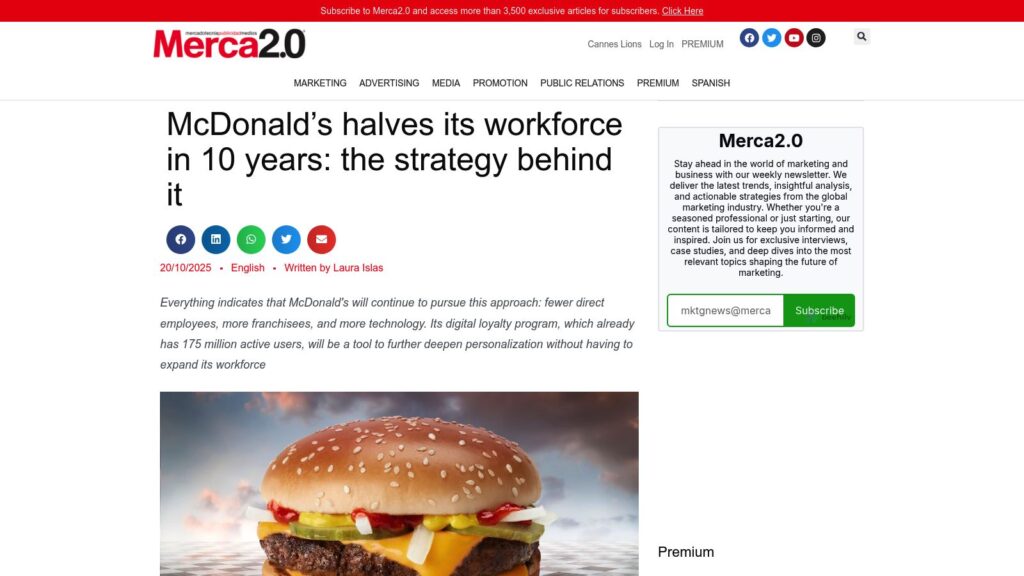
McDonald’s has halved its direct workforce from over 400,000 in 2013 to 150,000 by 2024, driven by a strategy focusing on franchising and automation. This shift facilitates lower labor costs, increased operational efficiency, and higher profitability, with rent and royalty income contributing over 60% of total profits. The company continues to invest in technology like digital kiosks and AI, allowing franchises to operate with fewer employees while enhancing customer experiences.

https://www.merca20.com/mcdonalds-halves-its-workforce-in-10-years-the-strategy-behind-it/

White Castle Debuts Futuristic Restaurant Model Featuring AI, Robotics and Mobile Ordering Technology

White Castle has launched a new futuristic restaurant model that integrates AI, robotics, and mobile ordering, named the “Castle of Tomorrow.” The design retains the brand’s classic castle aesthetic but features modern elements like adaptive signage and improved flow for digital orders. The layout enhances both customer comfort and staff efficiency, with self-service kiosks and AI-driven systems like a robotic fry assistant. This initiative reflects a broader trend among quick-service restaurants to blend technology with a focus on in-person dining experiences amid a shifting consumer preference towards holistic value in dining.

https://restauranttechnologynews.com/2025/10/white-castle-debuts-futuristic-restaurant-model-featuring-ai-robotics-and-mobile-ordering-technology/

Starship Technologies Boosts Restaurant Delivery Automation With $50 Million to Expand Robot Fleet Across the U.S.

Starship Technologies secures $50M funding to expand its U.S. autonomous delivery robot fleet from 2,700 to 12,000 by 2027, enhancing its operational capabilities across over 55 campuses and European cities. With more than 8 million deliveries completed, the company aims to refine delivery efficiency and navigate competitive challenges in urban environments.

https://restauranttechnologynews.com/2025/10/starship-technologies-boosts-restaurant-delivery-automation-with-50-million-to-expand-robot-fleet-across-the-u-s/

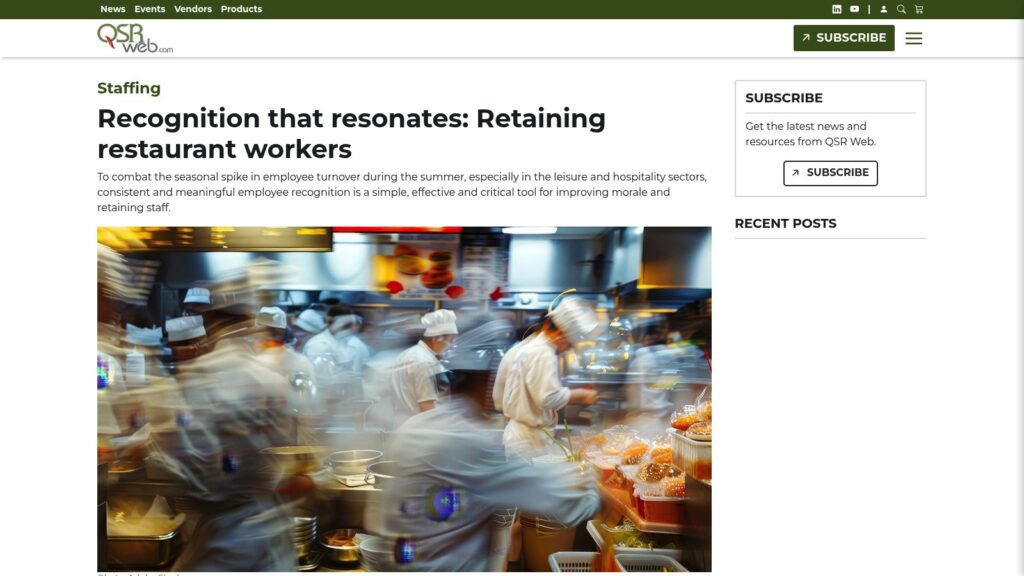
Recognition That Resonates: Retaining Restaurant Workers

TLDR: To reduce summer employee turnover in the restaurant and hospitality sectors, consistent and meaningful recognition is vital. Recognizing staff with specific, timely, and authentic praise improves morale and loyalty, especially during high-pressure seasons. Strategies include personalizing recognition, encouraging peer acknowledgment, and utilizing structured praise methods like the S.T.A.R. framework. Although higher pay and benefits are important, sincere recognition can significantly enhance retention and performance.

https://www.qsrweb.com/blogs/recognition-that-resonates-retaining-restaurant-workers/

How AI Is Powering McDonald’s Global Supply Chain

McDonald’s leverages AI and Google Cloud for efficient supply chain management. Through predictive analytics, it forecasts demand, reduces risks, and enhances procurement, enabling a proactive approach to supply chain challenges. This tech integration allows for real-time adjustments, improving operational resilience and efficiency globally.

https://technologymagazine.com/news/how-ai-is-powering-mcdonalds-global-supply-chain

How McDonald’s, Bp, and Visa Build In-store Loyalty Through Digital Experiences

McDonald’s, bp, and Visa shared strategies for enhancing customer loyalty through digital experiences at Advertising Week New York. McDonald’s emphasizes ‘holistic value’ in its loyalty program, aiming for 250 million active users by 2027, while bp’s “earnify” app focuses on seamless customer rewards at gas stations. Experts highlight the need for emotional connections alongside transactional value to foster brand loyalty, with Gap Inc. attributing its campaign success to cultural relevance rather than data alone.

https://www.emarketer.com/content/how-mcdonald-s–bp–visa-build-in-store-loyalty-through-digital-experiences

How Simulation Training Is Closing the Competency Gap in Digitized Quick-Service Restaurant Operations

Simulation training enhances QSR employee skills amid rising tech demands. Realistic, immersive simulations bridge competency gaps, boosting confidence and improving service. This approach fosters faster proficiency, retention, and operational efficiency through tailored AI-driven training, ultimately maximizing tech ROI for restaurants.

https://restauranttechnologynews.com/2025/10/how-simulation-training-is-closing-the-competency-gap-in-digitized-quick-service-restaurant-operations/

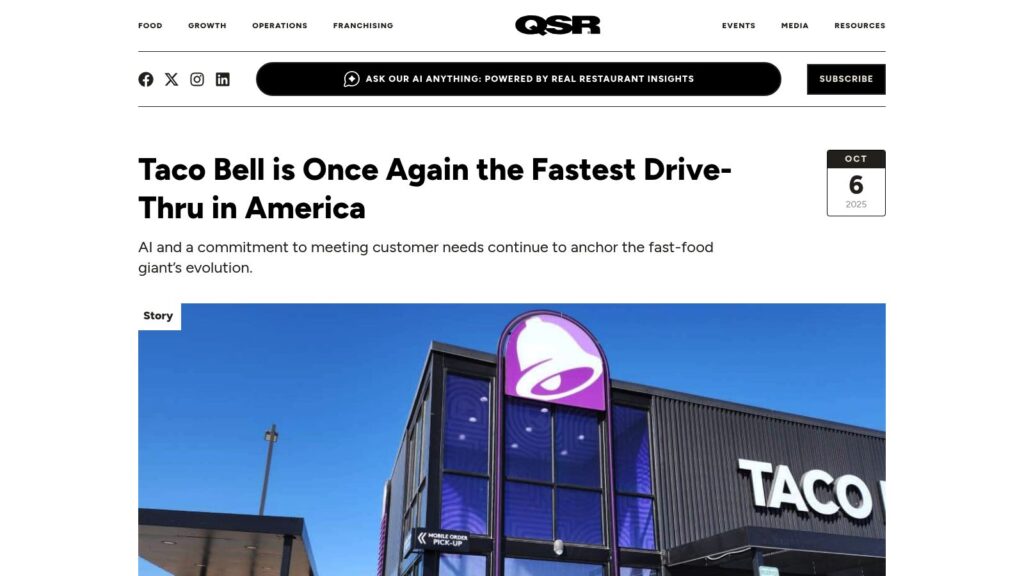
Taco Bell Is Once Again the Fastest Drive-Thru in America

Taco Bell has maintained its title as the fastest drive-thru in America for five years, with continued sales growth and the implementation of advanced AI technologies to enhance customer experience. The brand is focusing on speed, accuracy, and hospitality while integrating innovations like Voice AI and loyalty programs. Taco Bell’s drive-thru strategy emphasizes technology to improve operational efficiency and customer interaction, promising a future of intuitive and memorable service experiences.

https://www.qsrmagazine.com/story/taco-bell-is-once-again-the-fastest-drive-thru-in-america/

The Growth Strategy Behind Two Big McDonald’s Hires

McDonald’s appointed Emily Reasor as Senior Vice President and Chief Strategy Officer and Das Dasgupta as Chief Data Analytics and AI Officer to enhance growth and transformation. Reasor’s experience in B2C sectors and Dasgupta’s background in data analytics from major companies like Amazon and Starbucks are expected to drive strategic initiatives and operational efficiency, reinforcing McDonald’s competitive edge.

https://fooddigital.com/news/how-mcdonalds-is-strengthening-its-c-suite-to-unlock-growth

No More Stock Surprises: How AI Is Changing Food Service Inventory

AI revolutionizes food service inventory by automating stock counts, enhancing accuracy, reducing waste, and boosting profitability. Traditional manual inventory management is outdated, leading to errors and inefficiencies. AI-powered devices streamline inventory processes, enabling quick, accurate counts while allowing staff to focus on customer service. Restaurants using AI achieve better visibility, smarter labor use, reduced waste, and improved decision-making, establishing a competitive edge. The shift to AI is essential for enhancing operational efficiency and customer experience in the food service industry.

https://www.qsrweb.com/blogs/no-more-stock-surprises-how-ai-is-changing-food-service-inventory/

Scroll to Top