workforce

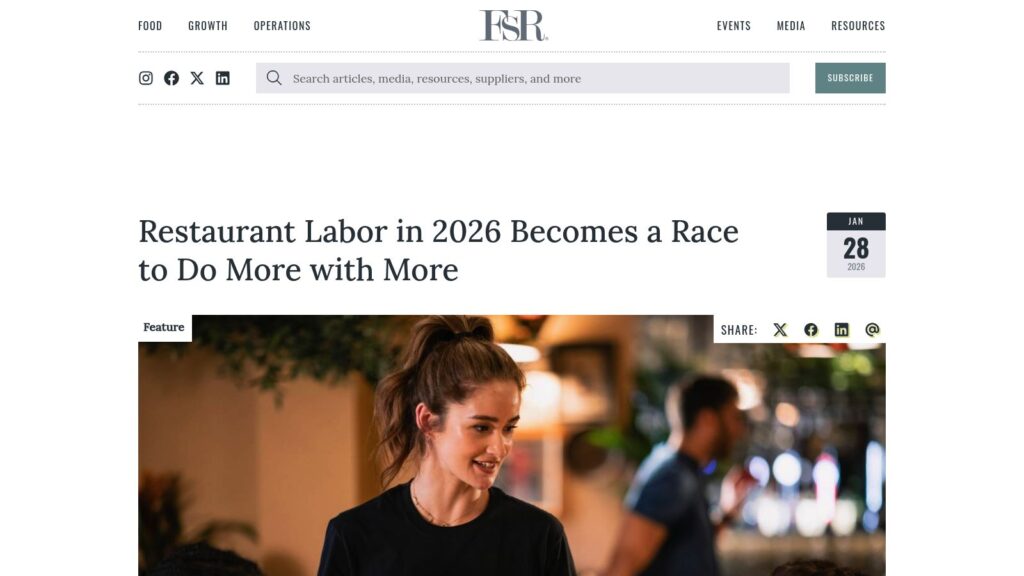
Restaurant Labor in 2026 Becomes a Race to Do More With More

Restaurant labor costs are rising, with 96% of operators reporting increased expenditures. Strategies to cope include improving employee productivity (35%), cross-training (34%), and retaining staff (30%). Technology adoption focuses on efficiency—using tools like order-ahead systems and QR codes—rather than replacing staff. Staffing challenges persist, with many restaurants short on servers and turnover rates slightly increasing. Operators are optimizing labor management and enhancing employee satisfaction through competitive wages and flexible scheduling.

https://www.fsrmagazine.com/feature/restaurant-labor-in-2026-becomes-a-race-to-do-more-with-more/

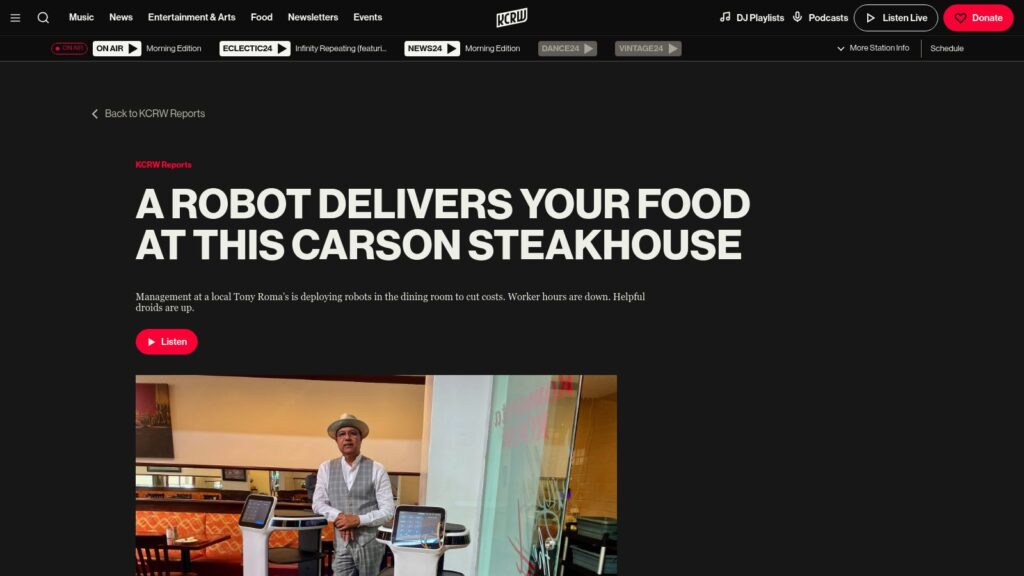
A Robot Delivers Your Food at This Carson Steakhouse

Tony’s Roma’s steakhouse in Carson employs robots to deliver food and collect dishes, responding to decreased business after immigration raids. The robots cost $1100 monthly and have led to reduced work hours for staff. While they make operations more efficient, robots aren’t completely replacing humans. Analysts expect the service robot industry to grow, which may reduce jobs and increase pressure on remaining employees.

https://www.kcrw.com/shows/kcrw-reports/stories/a-robot-delivers-your-food-at-this-carson-steakhouse

Newcastle Software Firm With Clients Including McDonald’s Launches AI Product for Analysis of Workplace Accidents

Newcastle's Notify Technology launched AI software for analyzing workplace accidents, enhancing safety reporting. Founded in 2017, it supports over 250,000 employees globally, including clients like McDonald's and Siemens. The AI tool, Notify Spark, simplifies incident reporting, offers actionable insights, and improves safety communications. Investors include Mercia Ventures and Calculus Capital. Co-founder Duncan Davies highlights its innovative impact, while industry experts praise its potential to enhance safety management.

https://www.insidermedia.com/news/north-east/newcastle-software-firm-with-clients-including-mcdonalds-launches-ai-software-for-analysis-of-workplace-accidents

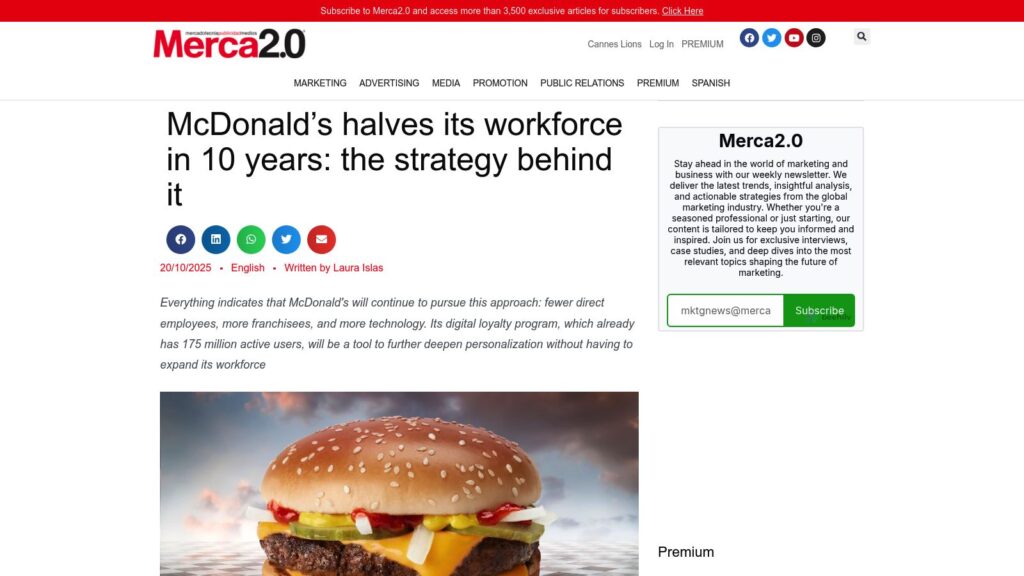
McDonald’s Halves Its Workforce in 10 Years: the Strategy Behind It

McDonald's has halved its direct workforce from over 400,000 in 2013 to 150,000 by 2024, driven by a strategy focusing on franchising and automation. This shift facilitates lower labor costs, increased operational efficiency, and higher profitability, with rent and royalty income contributing over 60% of total profits. The company continues to invest in technology like digital kiosks and AI, allowing franchises to operate with fewer employees while enhancing customer experiences.

https://www.merca20.com/mcdonalds-halves-its-workforce-in-10-years-the-strategy-behind-it/

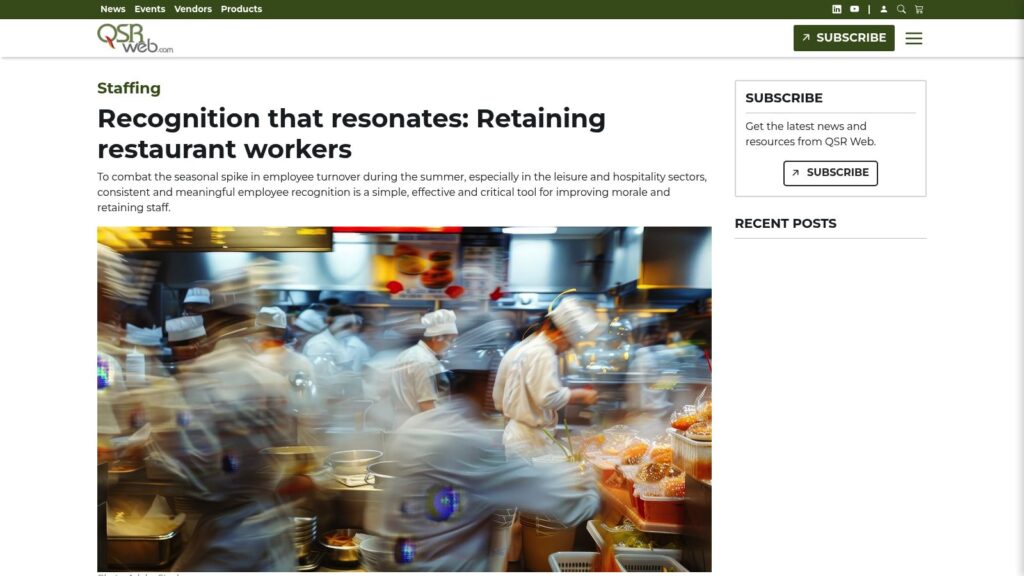
Recognition That Resonates: Retaining Restaurant Workers

TLDR: To reduce summer employee turnover in the restaurant and hospitality sectors, consistent and meaningful recognition is vital. Recognizing staff with specific, timely, and authentic praise improves morale and loyalty, especially during high-pressure seasons. Strategies include personalizing recognition, encouraging peer acknowledgment, and utilizing structured praise methods like the S.T.A.R. framework. Although higher pay and benefits are important, sincere recognition can significantly enhance retention and performance.

https://www.qsrweb.com/blogs/recognition-that-resonates-retaining-restaurant-workers/

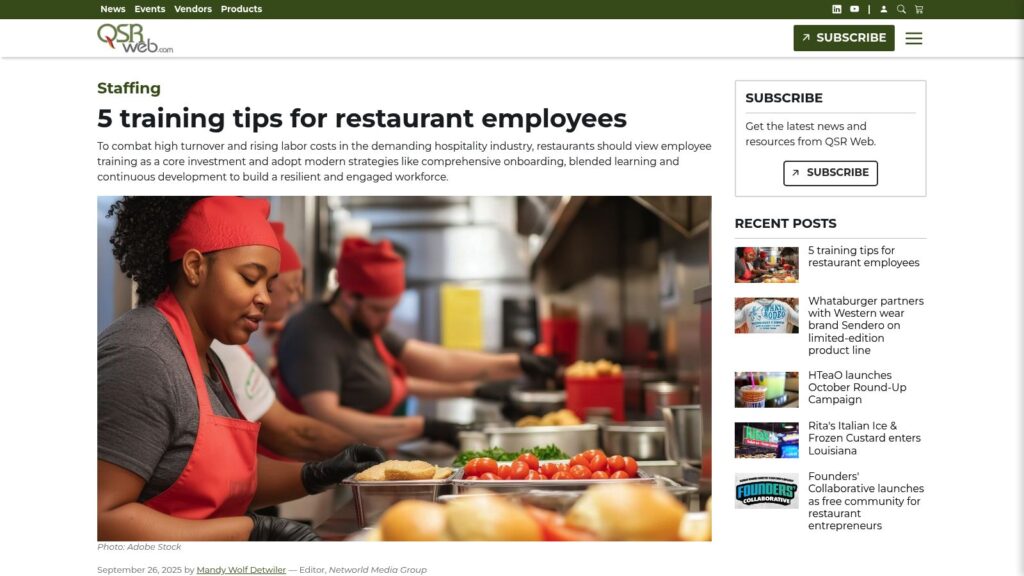
5 Training Tips for Restaurant Employees

Training tips for restaurant employees: Prioritize onboarding to reduce turnover, blend learning approaches, utilize experienced staff as trainers, and ensure continuous learning. Adapt training to combat high turnover and labor costs in the hospitality industry by making it an investment. Focus on engaging new hires, using a mix of in-person and digital training, and leveraging real-time data for improving employee engagement and reducing burnout. Successful training can transform restaurant chaos into efficiency.

https://www.qsrweb.com/articles/5-training-tips-for-restaurant-employees/

How AI Turning Labor From Cost Center Into Growth Driver for QSRs

AI is transforming labor management in QSRs from a cost center to a growth driver by optimizing staffing and scheduling through accurate demand forecasting. A webinar will cover how AI can enhance workforce productivity and compliance while improving service and sales. Additionally, it will address labor optimization techniques using unique demand data, hosted by experts from Deputy and QSRweb.com.

https://www.qsrweb.com/articles/how-ai-turning-labor-from-cost-center-into-growth-driver-for-qsrs/

To Retain Workers, Restaurants Need More Than Wage Increases

Restaurants must focus on more than just wage increases to retain employees; they need to invest in education and career development. Many workers view their roles as temporary due to a lack of advancement opportunities, leading to high turnover rates. By fostering clear career pathways and upskilling programs, QSR leaders can enhance employee engagement and retention, creating a more skilled workforce crucial for success amidst industry automation and tech advancements.

https://www.qsrmagazine.com/story/to-retain-workers-restaurants-need-more-than-wage-increases/

Scroll to Top