trends

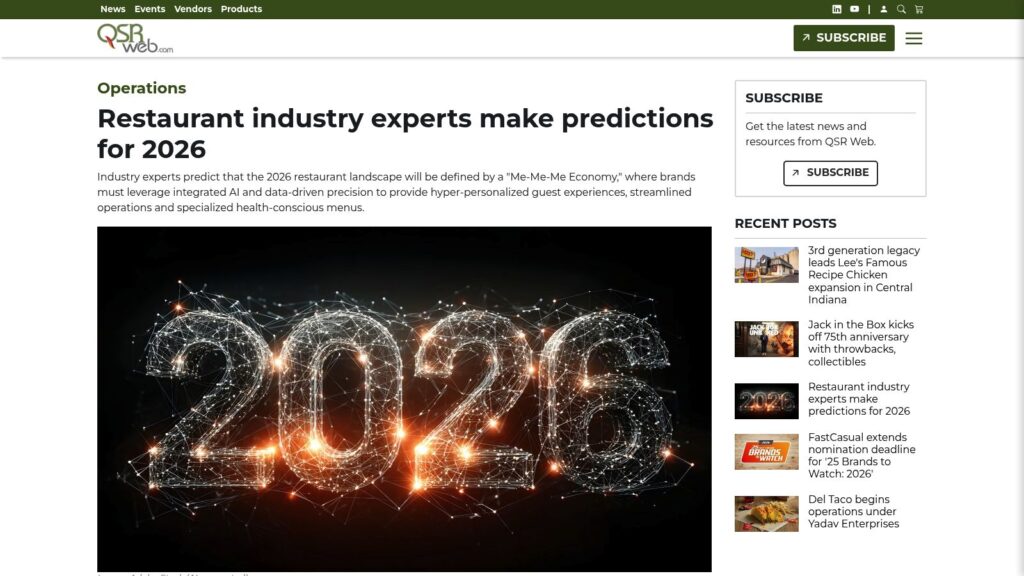
Restaurant Industry Experts Make Predictions for 2026

2026 restaurant trends shaped by “Me-Me-Me Economy” focus on hyper-personalization, AI integration, and health-oriented menus. Key predictions include: tech enhancing order accuracy, loyalty through personalization, emphasis on data integration, corporate catering as a marketing tool, utilizing guest feedback, evolving frontline roles, and inflation impacting operations and purchasing. Success hinges on integrating technology with hospitality to create a more personalized dining experience.

https://www.qsrweb.com/articles/restaurant-industry-experts-make-predictions-for-2026/

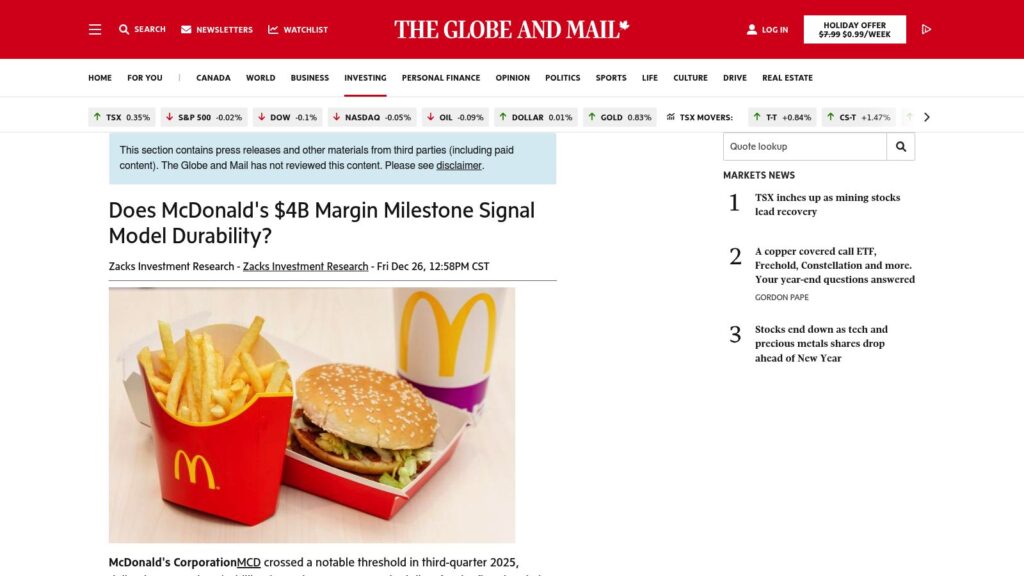
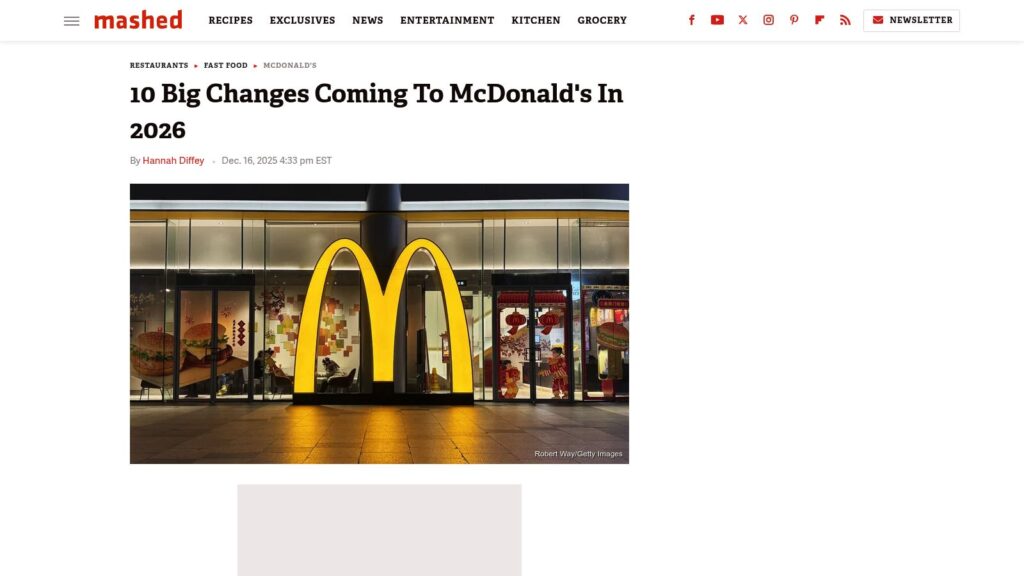
Does McDonald’s $4B Margin Milestone Signal Model Durability?

McDonald's surpassed $4 billion in restaurant margins for the first time, demonstrating enduring profitability amid economic pressures. Sales rose globally despite inflation, aided by a focus on value offerings. This success contrasts with competitors like Starbucks and Yum! Brands, showcasing McDonald's balance of scale and cash flow resilience. Despite recent estimates lowering, McDonald's stock performance remains positive compared to industry peers.

https://www.theglobeandmail.com/investing/markets/stocks/YUM/pressreleases/36797082/does-mcdonalds-4b-margin-milestone-signal-model-durability/

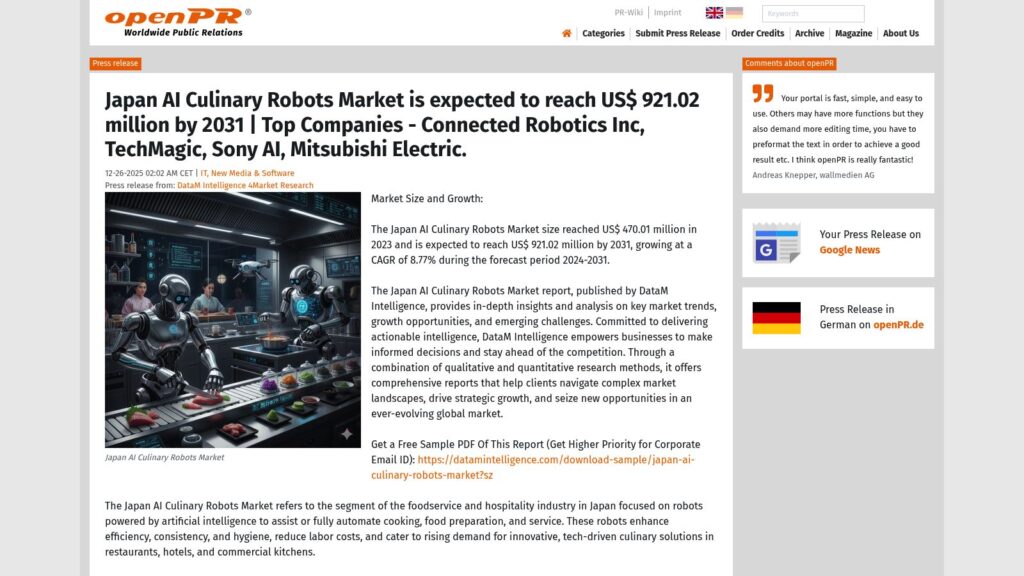
Japan AI Culinary Robots Market Is Expected to Reach US$ 921.02 Million by 2031

Japan AI Culinary Robots Market projected to grow from $470.01M in 2023 to $921.02M by 2031 (CAGR 8.77%). Key players include Connected Robotics, TechMagic, Sony AI, and Mitsubishi Electric. Robotics improve efficiency, reduce costs, and meet demand in foodservice. Notable developments: SoftBank's service robots, NSK's humanoid actuators, and Yoshinoya's AI cooking systems. Comprehensive report offers insights on market trends, competitive landscape, and segments.

https://www.openpr.com/news/4328862/japan-ai-culinary-robots-market-is-expected-to-reach-us-921-02

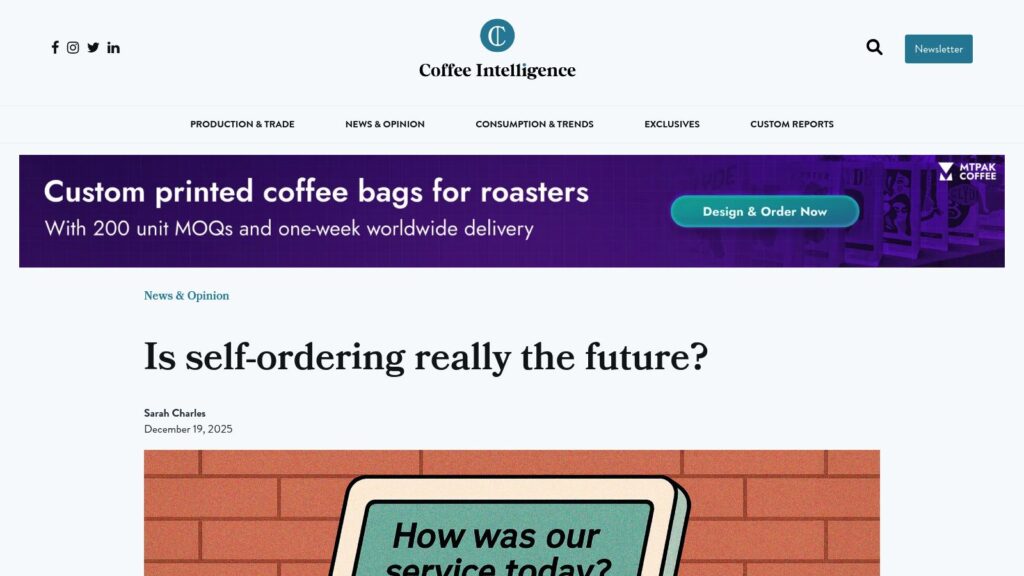
Is Self-ordering Really the Future?

Self-ordering technology, such as kiosks and apps, boosts sales and efficiency but risks diminishing personal connections in hospitality. Data shows a majority of customers prefer these systems for convenience, yet many still value human interaction, highlighting a tension between efficiency and the need for meaningful service. Companies like Starbucks are reevaluating automation's role to enhance customer experiences, indicating a potential shift toward a hybrid model that balances technology's benefits with the warmth of human service.

https://intelligence.coffee/2025/12/is-self-ordering-really-the-future/

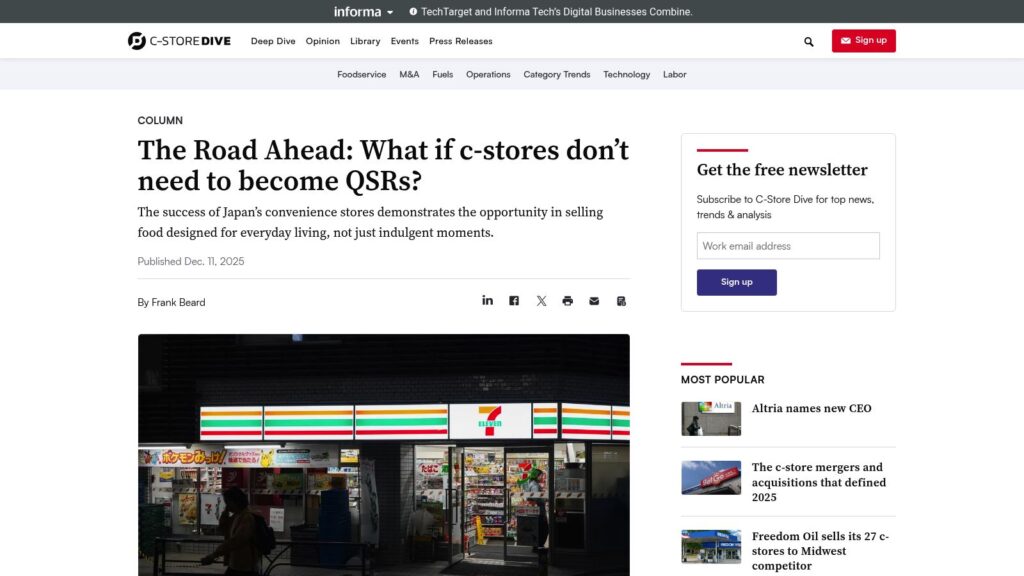
The Road Ahead: What if C-stores Don’t Need to Become QSRs?

Japanese convenience stores excel in providing fresh, high-quality food for everyday consumption, differing from U.S. quick-service restaurants, which focus on indulgent options. This model serves a wide demographic, making convenience stores essential for daily life rather than just snacks. U.S. retailers may benefit by prioritizing quality, variety, and nourishment instead of imitating fast food models, potentially leading to stronger growth and customer loyalty. Ultimately, convenience stores have the potential to redefine fast food by serving affordable, nutritious options that fit into modern living.

https://www.cstoredive.com/news/the-road-ahead-japanese-c-stores-not-qsrs/807307/

Why Some Restaurants Are Rethinking Automation and Relearning the Value of Human Hospitality

Restaurants, like Panera, are shifting focus from automation to enhancing human hospitality, realizing that efficiency alone doesn’t ensure customer loyalty. Many are reintroducing staff and personal interactions, adapting technology to support rather than replace human service. This strategy acknowledges that while digital options are convenient, customers value personal engagement, particularly when issues arise. Operators are learning to balance automation with meaningful human connections to create a more resonant guest experience.

https://restauranttechnologynews.com/2025/12/why-some-restaurants-are-rethinking-automation-and-relearning-the-value-of-human-hospitality/

AI and Robotics Are Powering a New Predictive Age in QSR

QSR industry entering “Predictive Shift,” moving from reactive to anticipatory service via AI and robotics. This transformation focuses on sustainable kitchens, relevant menus, faster drive-thru experiences, and enhancing human connection in service. As data usage increases, QSRs will streamline operations and personalize customer interactions, setting a new standard in hospitality.

https://www.qsrmagazine.com/story/ai-and-robotics-are-powering-a-new-predictive-age-in-qsr/

How Are the UK and US Dining Cultures Converging?

UK and US dining cultures are converging, prioritizing sustainability, provenance, and immersive hospitality. A report indicates shared consumer expectations regarding food quality and environmental impact, with both markets evolving towards responsible sourcing and community-focused venues. UK diners value food quality over cost, while US demand for organic options rises. Both cultures emphasize social dining experiences, increasing average spend and loyalty through immersive practices. Future shifts may include AI-driven dietary diversity and a focus on fiber-rich foods by 2030.

https://qsrmedia.co.uk/research/in-focus/how-are-uk-and-us-dining-cultures-converging

Scroll to Top