trends

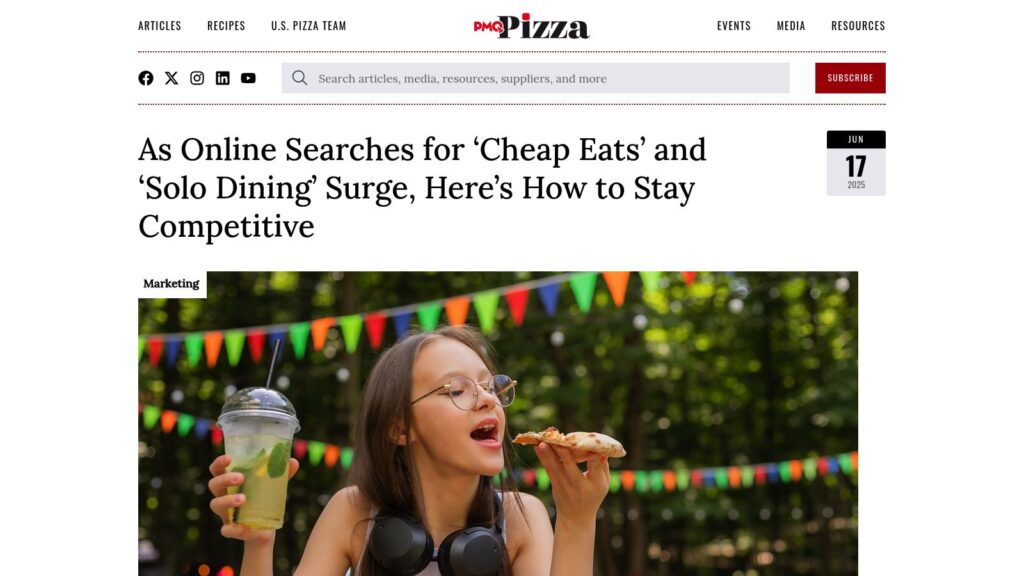
As Online Searches for ‘Cheap Eats’ and ‘Solo Dining’ Surge, Here’s How to Stay Competitive

Rising searches for “cheap eats” and “solo dining” reflect changing consumer behaviors, emphasizing value and unique dining experiences as priorities in 2025. Pizzerias should offer affordable meal bundles and welcoming environments for solo diners. Innovative concepts like personal pizzas and themed promotions can attract customers. The market trend indicates that restaurants excelling in value, experience, and innovation will thrive amidst economic shifts.

https://www.pmq.com/as-online-searches-for-cheap-eats-and-solo-dining-surge-heres-how-to-stay-competitive/

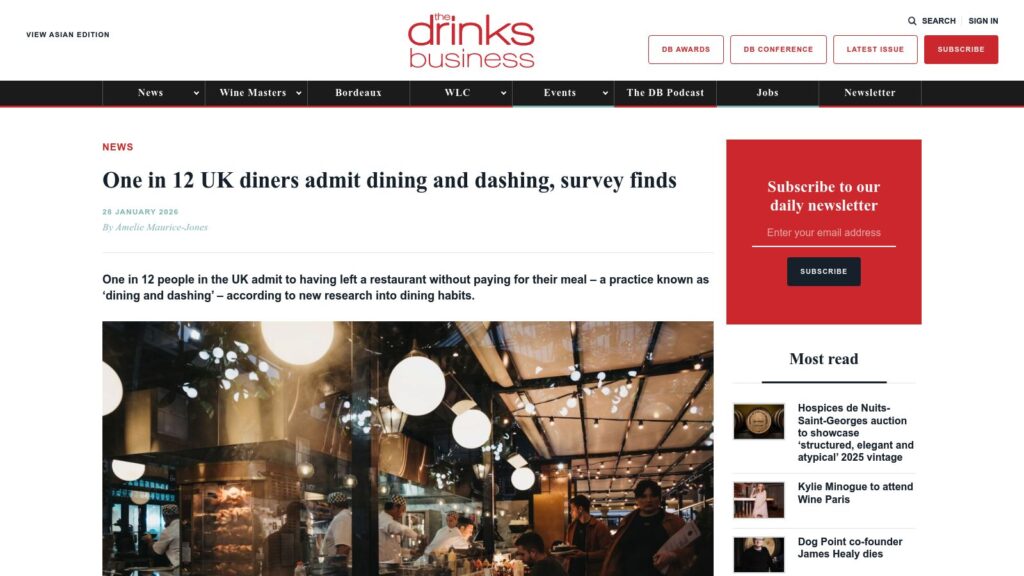
One in 12 UK Diners Admit Dining and Dashing, Survey Finds

1 in 12 UK diners have admitted to ‘dining and dashing,' with a survey finding 8% confessing to leaving a restaurant without paying. The trend, attributed to factors like booking issues and payment preferences, could cost the industry £13.6 billion. Men (9%) and those aged 35-44 are most likely to engage in this behavior. While London has the highest incidents, overall consumer preferences indicate a desire for human interaction over technology in dining experiences. Transparency about tipping and service charges is deemed essential to strengthen customer trust.

https://www.thedrinksbusiness.com/2026/01/one-in-12-uk-diners-admit-dining-and-dashing-survey-finds/

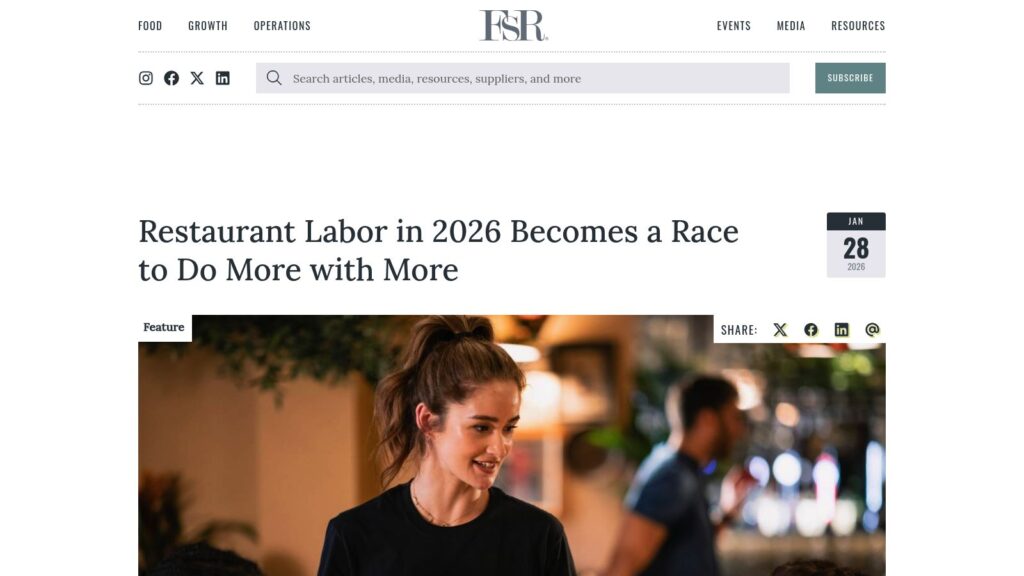
Restaurant Labor in 2026 Becomes a Race to Do More With More

Restaurant labor costs are rising, with 96% of operators reporting increased expenditures. Strategies to cope include improving employee productivity (35%), cross-training (34%), and retaining staff (30%). Technology adoption focuses on efficiency—using tools like order-ahead systems and QR codes—rather than replacing staff. Staffing challenges persist, with many restaurants short on servers and turnover rates slightly increasing. Operators are optimizing labor management and enhancing employee satisfaction through competitive wages and flexible scheduling.

https://www.fsrmagazine.com/feature/restaurant-labor-in-2026-becomes-a-race-to-do-more-with-more/

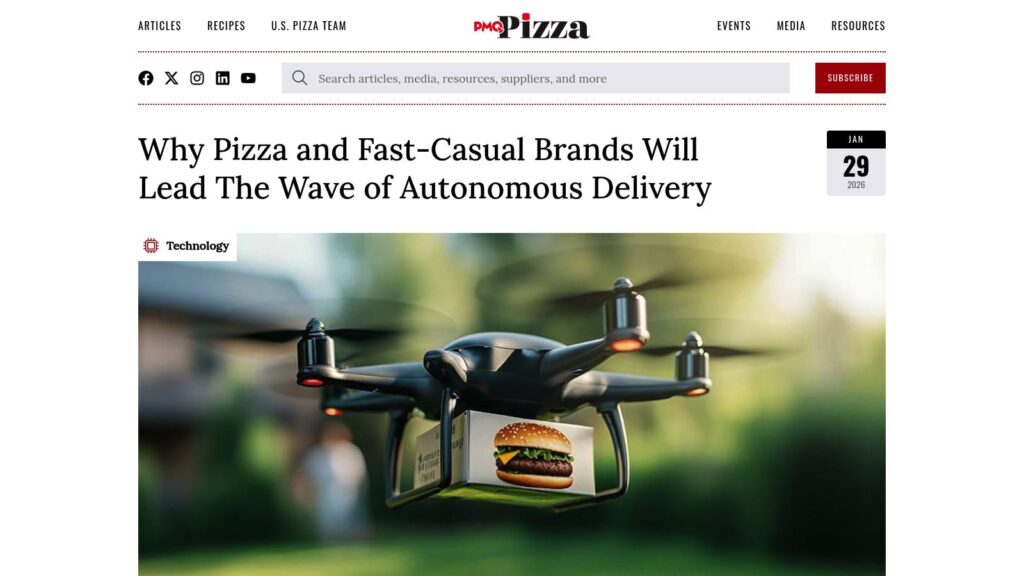
Why Pizza and Fast-Casual Brands Will Lead The Wave of Autonomous Delivery

Pizza and fast-casual brands are poised to lead in autonomous delivery due to their infrastructure, order density, and hybrid dispatch systems. Current delivery evolution has reached Delivery 2.0 with intelligent software for routing orders, while Delivery 3.0 will integrate autonomous vehicles and AI for improved logistics. The key to success will be sophisticated dispatch intelligence to manage diverse delivery methods. Operators must invest in hybrid orchestration and API systems now to avoid falling behind as technology rapidly advances.

https://www.pmq.com/why-pizza-and-fast-casual-brands-will-lead-the-wave-of-autonomous-delivery/

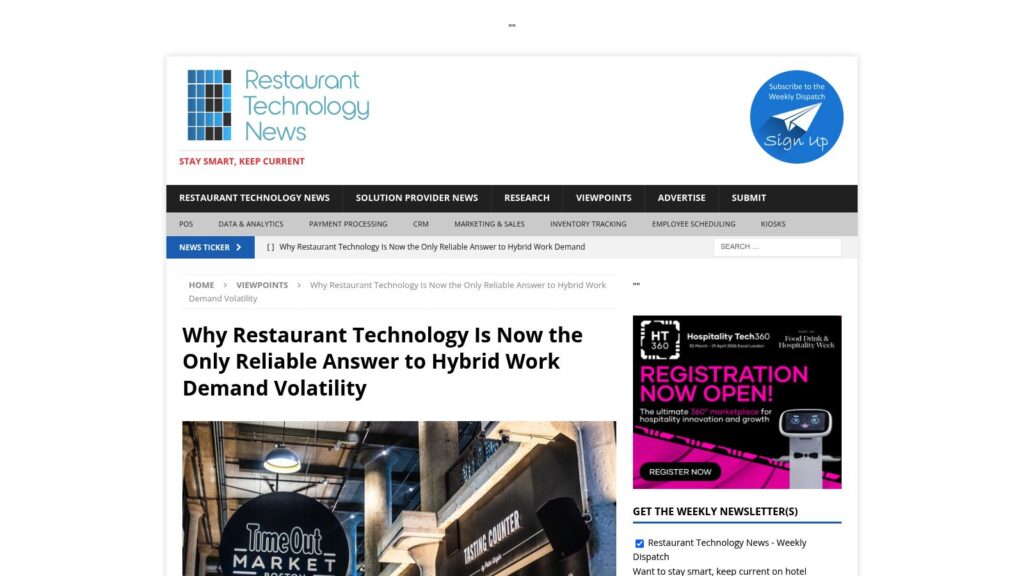
Why Restaurant Technology Is Now the Only Reliable Answer to Hybrid Work Demand Volatility

Hybrid work has disrupted restaurant demand, creating unpredictability and forcing businesses to adapt. Time Out Market in Boston faced imminent closure due to inconsistent foot traffic but secured new management to continue operations. The industry is shifting toward technology for demand forecasting, diversified channels, and improved customer experiences as businesses adjust to new dining behaviors. The overarching challenge is no longer appetite but the irregularity in customer patterns, emphasizing the need for tech-driven solutions to thrive.

https://restauranttechnologynews.com/2026/01/why-restaurant-technology-is-now-the-only-reliable-answer-to-hybrid-work-demand-volatility/

New Findings Highlight the Technologies Driving Restaurant Profitability in 2026 and Beyond

New eBook reveals restaurant tech trends for profitability in 2026. Many operators lack confidence in forecasting despite high data access. Key findings: forecasting remains weak (only 18% very confident), handheld POS boosts performance, self-service kiosks increase revenue, and demand for faster insights is high. AI tools are expected to aid decision-making. Operators seek integrated tech systems to better manage operations amidst volatility in demand and costs. Full insights available in “The Restaurant Optimization Playbook.”

https://restauranttechnologynews.com/2026/01/new-findings-highlight-the-technologies-driving-restaurant-profitability-in-2026-and-beyond/

What 2025’s Biggest QSR Traffic Surges Reveal About Dining Strategies for 2026

QSR trends in 2025 showed that standout discounts and culturally relevant promotions significantly boosted traffic for chains. Freebies and unique offers cut through competition, while pop-culture tie-ins generated momentum. Promotions such as Starbucks' Bearista merchandise demonstrated that premium items can also drive interest. Ultimately, while discounts dominate, food offerings still play a crucial role in attracting customers.

https://www.placer.ai/anchor/articles/what-2025s-biggest-qsr-traffic-surges-reveal-about-dining-strategies-for-2026

What’s Driving the Beverage Boom, and How Restaurants Can Take Advantage

Beverage market booming; chains like Taco Bell and Chick-fil-A innovate. Non-alcoholic drinks projected over $25.5B in 2025. Success requires community connection, wellness trends, and flavor innovation. Effective marketing strategies are essential for standing out amidst competition, focusing on insights, engaging omnichannel efforts, and real-time optimization. Adaptation to customer needs drives long-term growth in the beverage sector.

https://www.qsrmagazine.com/story/whats-driving-the-beverage-boom-and-how-restaurants-can-take-advantage/

From Hybrid Fleets to Intelligent Orchestration: Why Delivery 3.0 Is About Systems, Not Robots

Delivery 3.0 revolutionizes restaurant logistics through hybrid orchestration, integrating autonomous technologies like drones and robots with existing delivery systems. This shift requires operators to build sophisticated dispatch intelligence to manage varied delivery modes effectively. Successful adaptation hinges on their ability to enhance real-time decision-making across diverse fleets, maximizing efficiency and profitability while meeting customer expectations for tracking and service. Fast-casual and pizza chains are likely to lead this transition due to their operational infrastructure and delivery needs. Operators must invest now in advanced systems to stay competitive as autonomous delivery evolves.

https://www.qsrmagazine.com/story/from-hybrid-fleets-to-intelligent-orchestration-why-delivery-3-0-is-about-systems-not-robots/

Scroll to Top