trends

Running Fast Vs. Running Smart: How QSRs Stay Ahead With Technology and Precision
QSRs thrive on speed but must also operate smartly to manage costs, comply with regulations, and enhance customer experience. Key challenges include inventory mismanagement, rising operational costs, and the need for effective technology. The article emphasizes the importance of real-time tracking and automation to optimize inventory, reduce waste, and ensure service efficiency, highlighting how partnerships with tech providers like Lowry and Zebra can help QSRs deliver superior customer experiences while maintaining operational control.
https://www.restaurantdive.com/spons/running-fast-vs-running-smart-how-qsrs-stay-ahead-with-technology-and-pre/743000/

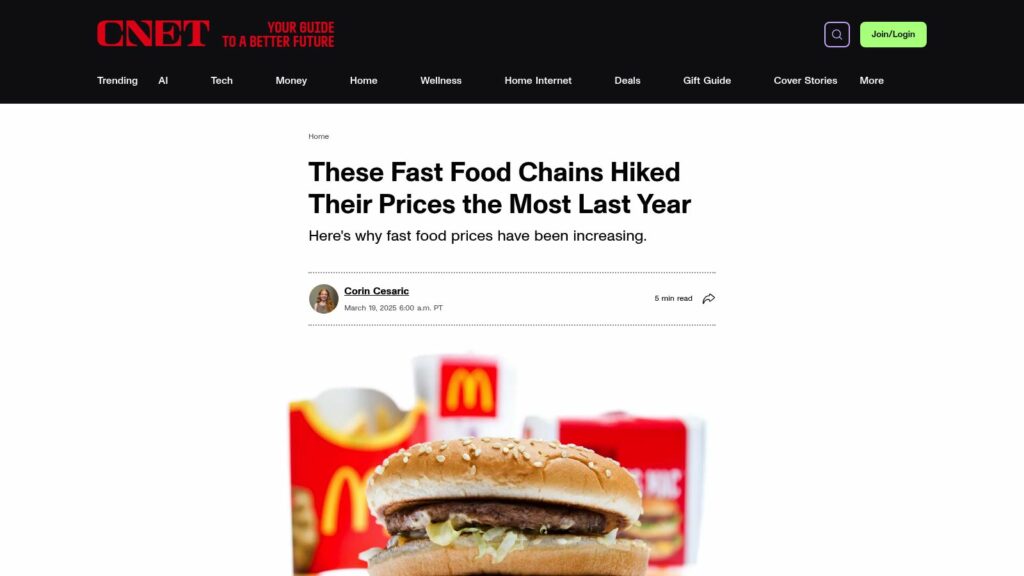
These Fast Food Chains Hiked Their Prices the Most Last Year

Fast food prices have surged significantly, with major chains like McDonald’s, Popeyes, and Taco Bell increasing menu prices by up to 132% in the last decade. Many consumers now view fast food as a luxury meal. Factors contributing to this inflation include rising wages, increased food prices, and tariffs affecting supply chains. As economists predict continued price hikes, consumers may opt for home-cooked meals to save money.

https://www.cnet.com/home/these-fast-food-chains-hiked-their-prices-the-most-last-year/

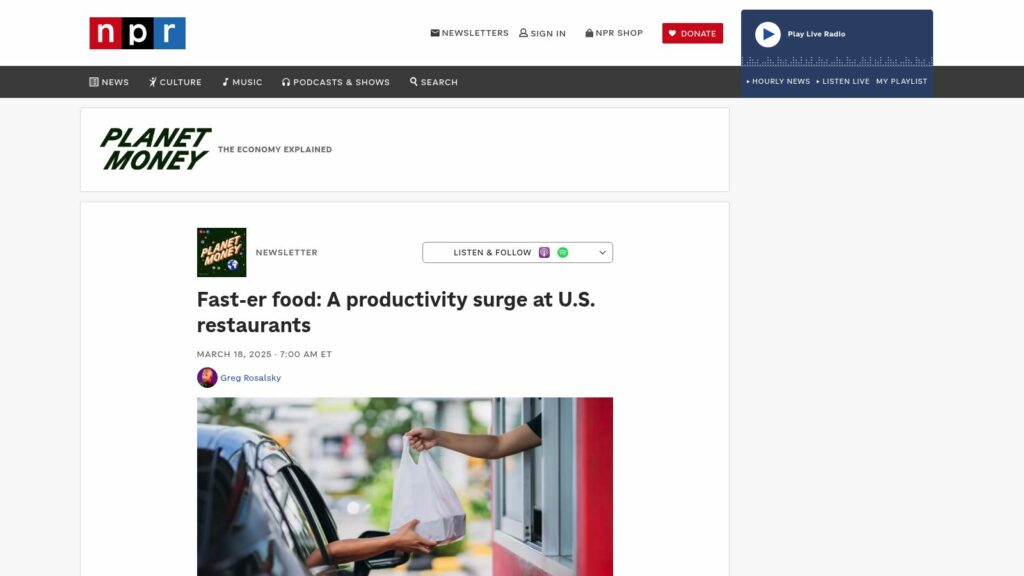
Fast-er Food: a Productivity Surge at U.S. Restaurants : Planet Money : NPR

U.S. restaurants, after decades of stagnant productivity (1992-2019), experienced a significant surge during COVID-19, with productivity rising 15% above pre-pandemic levels. Factors include increased demand for takeout and delivery, and innovations in operations. Despite potential challenges for workers, higher productivity often leads to wage growth, benefiting both employees and consumers through lower prices. The shift towards technologies like smartphone ordering simplifies customer interactions, although some customers find self-service annoying. Overall, economists view this productivity boost positively for the economy’s future.

https://www.npr.org/sections/planet-money/2025/03/18/g-s1-53844/faster-food-productivity-surge-us-restaurants

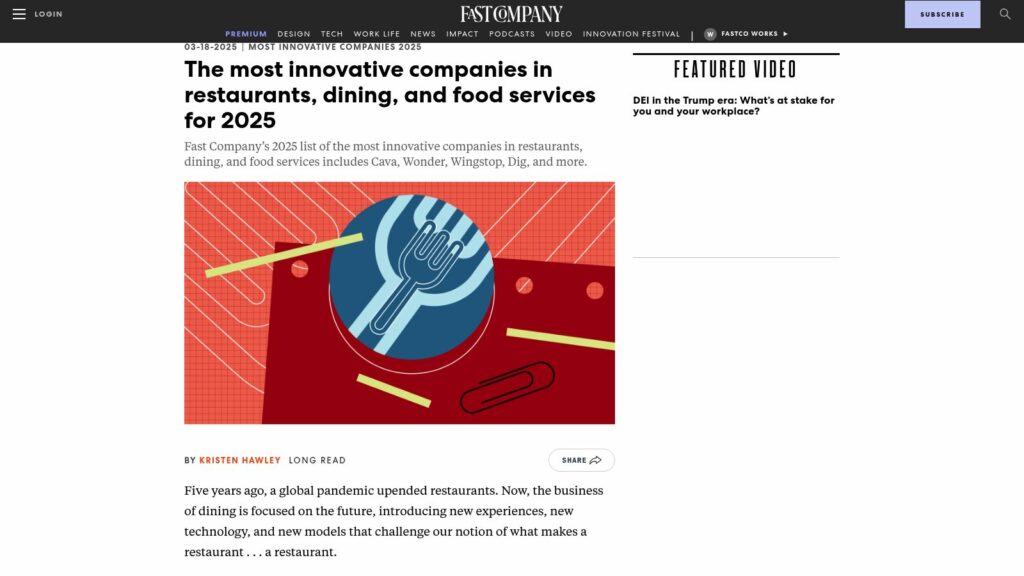
The Most Innovative Companies in Restaurants and Dining

Fast Company’s 2025 list highlights innovative restaurants and food services, including Cava, Wonder, Wingstop, Dig, and others, adapting to post-pandemic dining trends. Cava enhances in-person experiences; Wingstop modernizes tech for personalized orders; and Salad and Go offers affordable drive-through salads. Wonder redefines food delivery by acquiring Grubhub, while Dig creates cold meals for airlines. Resident excels in private dining events and Smoodi promotes robot-made smoothies. Blackbird Labs utilizes blockchain for restaurant loyalty, and Bite enhances touchscreen ordering experiences. Lastly, Oyster Master Guild educates on oysters, boosting industry expertise.

https://www.fastcompany.com/91269900/restaurants-dining-food-services-most-innovative-companies-2025-cava-wonder-wingstop-resident-salad-and-go-dig-smoodi-blackbird-labs-bit-oyster-master-guild

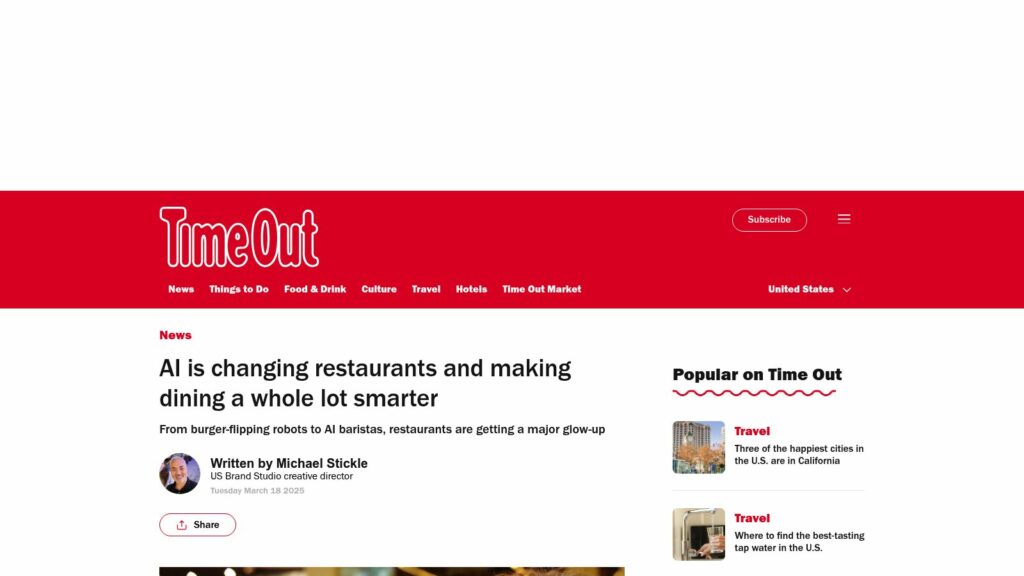
Here’s How AI Is Changing Restaurants and Making Dining a Whole Lot Smarter

AI revolutionizes the restaurant industry with robots and smart tech, improving service amid labor shortages and costs. Innovations include AI chatbots, self-service kiosks, and data tracking for customer preferences, enhancing efficiency and sustainability. Automation risks displacing some jobs, but many workers are willing to reskill. Future trends predict increased tech spending, including AI voice assistants and drone deliveries, while balancing automation with human interaction remains crucial.

https://www.timeout.com/usa/news/ai-is-changing-restaurants-and-making-dining-a-whole-lot-smarter-031825

Revolutionizing Asia’s QSR Scene: How Indian Brands Are Leading the Charge

Indian brands are revolutionizing Asia’s Quick Service Restaurant (QSR) market through innovation, technology, and culturally infused offerings. They excel in localizing traditional flavors, integrating AI and automation for efficiency, and prioritizing sustainability. Merging heritage with global trends, Indian QSRs are expanding successfully across markets while setting new industry standards. Their adaptability positions them as leaders in shaping the future of QSRs in Asia.

https://qsrmedia.asia/food-services/commentary/revolutionizing-asias-qsr-scene-how-indian-brands-are-leading-charge

Saudi Arabia Quick Service Restaurants (QSR) Market

Saudi Arabia’s Quick Service Restaurant (QSR) market is projected to grow from $9.23 billion in 2024 to $16.62 billion by 2033, with a CAGR of 6.78%. Drivers include a young, tech-savvy population, increasing disposable incomes, and government support via initiatives like Vision 2030. The sector is competitive, with global brands like McDonald’s and KFC alongside local adaptions. Challenges include rising operational costs and intense competition. Technological advancements in delivery and service systems are enhancing customer experience. New market entries are expanding rapidly, exemplified by recent openings from Dunkin’ and Gong Cha.

https://www.globenewswire.com/news-release/2025/03/11/3040388/28124/en/Saudi-Arabia-Quick-Service-Restaurants-QSR-Market-Forecasts-2025-2033-Fierce-Rivalry-Between-Global-Chains-and-Regional-Players-Defines-the-Landscape-and-Spurs-Innovations.html

Top 10 Restaurant Business Ideas You Can’t Ignore in 2025

Top 10 innovative restaurant business ideas for 2025 focus on technology and customer experience. Key concepts include cloud kitchens, food trucks, baby food services, food tasting tours, catering, personal chefs, themed dining, pet-friendly cafes, airport meal pickups, and eco-friendly dining. Leveraging advanced tech can enhance efficiency and meet modern consumer demands. Success hinges on strategic planning, funding, building a digital presence, and tech partnerships.

https://appinventiv.com/blog/restaurant-business-ideas/

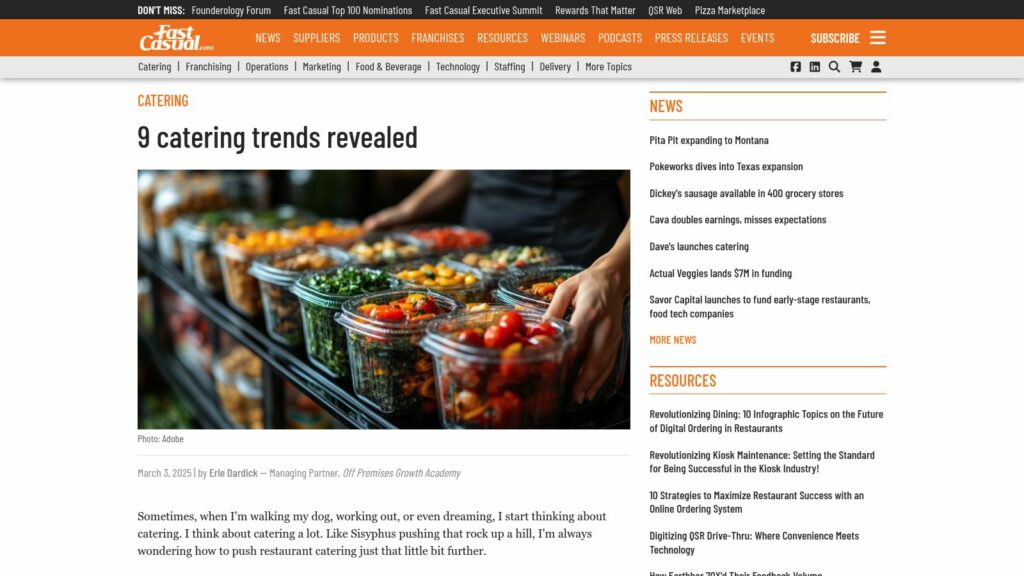
9 Catering Trends Revealed

9 key catering trends:
1. Sustainability is essential.
2. Wellness-focused meals boost productivity.
3. Hybrid catering models combine delivery and experiences.
4. Data drives personalized catering.
5. Digital ordering is preferred.
6. Menu inclusivity for dietary restrictions is crucial.
7. B2B catering demand is increasing.
8. Tech firms invest in catering solutions.
9. Community knowledge sharing is vital for success.

https://www.fastcasual.com/blogs/9-catering-trends-revealed/

Fast Food & Quick Service Restaurants Business Report 2025:

TLDR: Fast Food & Quick Service Restaurants market projected to grow from $316.1B in 2024 to $384B by 2030 (CAGR 3.3%). Growth driven by urbanization, convenience demand, digital ordering, health-conscious menus, and sustainability practices in emerging markets. Technology enhances customer experience, operational efficiency, and menu variety, including plant-based options.

https://www.globenewswire.com/news-release/2025/02/28/3034816/0/en/Fast-Food-Quick-Service-Restaurants-Business-Report-2025-Global-Market-to-Reach-384-Billion-by-2030-Emerging-Markets-Fuels-Industry-Growth-Through-New-Franchises-and-Regional-Speci.html

Scroll to Top