trends

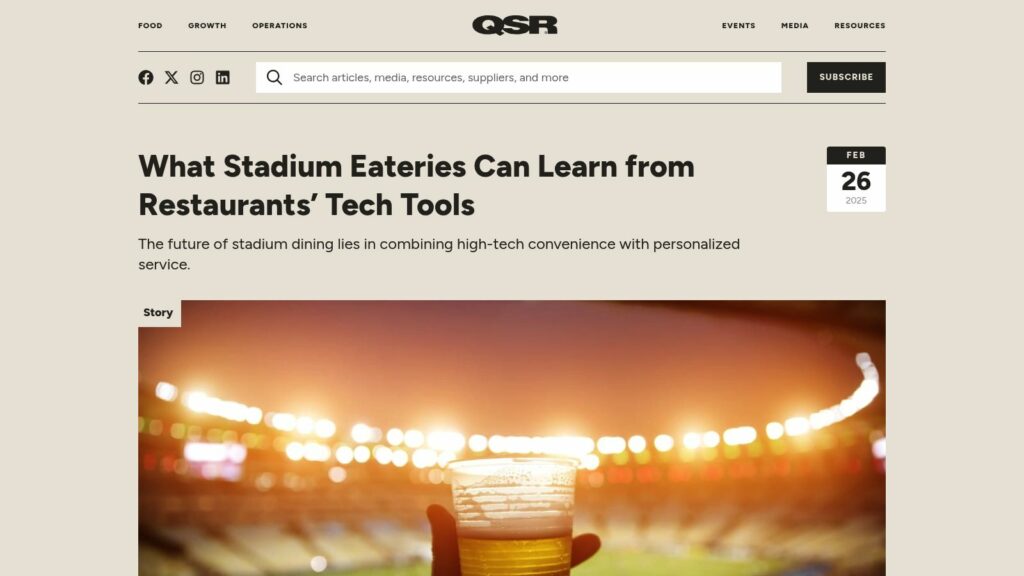
What Stadium Eateries Can Learn From Restaurants’ Tech Tools

Stadium eateries can enhance fan experiences by adopting restaurant technology such as mobile ordering and self-service kiosks, aimed at reducing wait times and boosting satisfaction. Implementing these tools can streamline service, improve menu offerings, and leverage data analytics for better operational decisions. It's crucial to balance technological innovations with personal service, particularly in premium areas. Overall, integrating tech with a human touch can create memorable dining experiences for fans.

https://www.qsrmagazine.com/story/what-stadium-eateries-can-learn-from-restaurants-tech-tools/

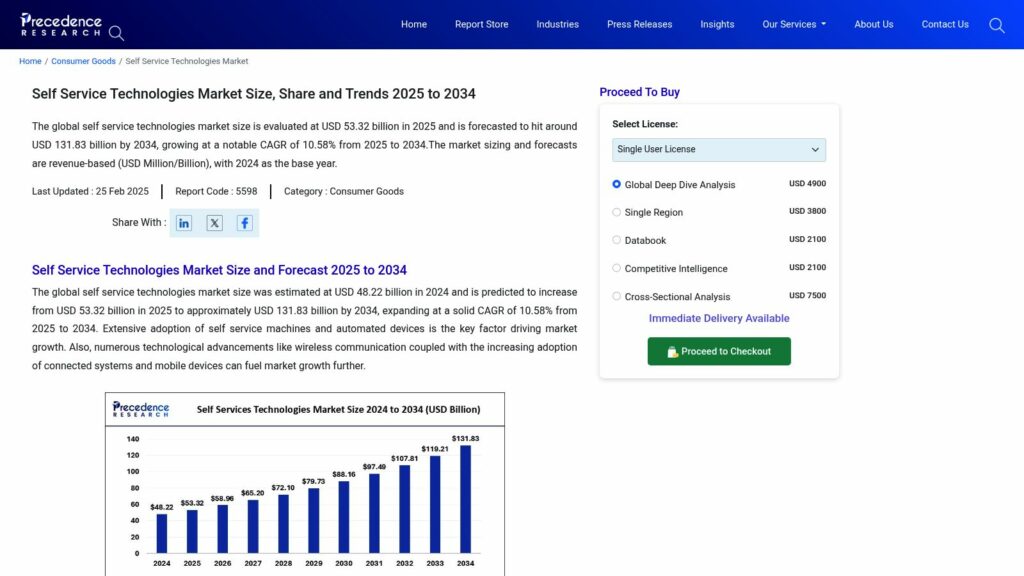
Self Service Technologies Market Size to Hit USD 131.83 Billion by 2034

Self service technologies market expected to grow from USD 53.32B in 2025 to USD 131.83B by 2034, with a CAGR of 10.58%. Key growth drivers include increased adoption of automation, AI, and demand for contactless solutions. North America leads the market, while Asia Pacific shows fastest growth. Major segments include ATMs and vending machines. Consumer preference for speed and convenience presents opportunities, despite data security concerns.

https://www.precedenceresearch.com/self-service-technologies-market

Inside the Convenience-Store Playbook to Beat QSRs

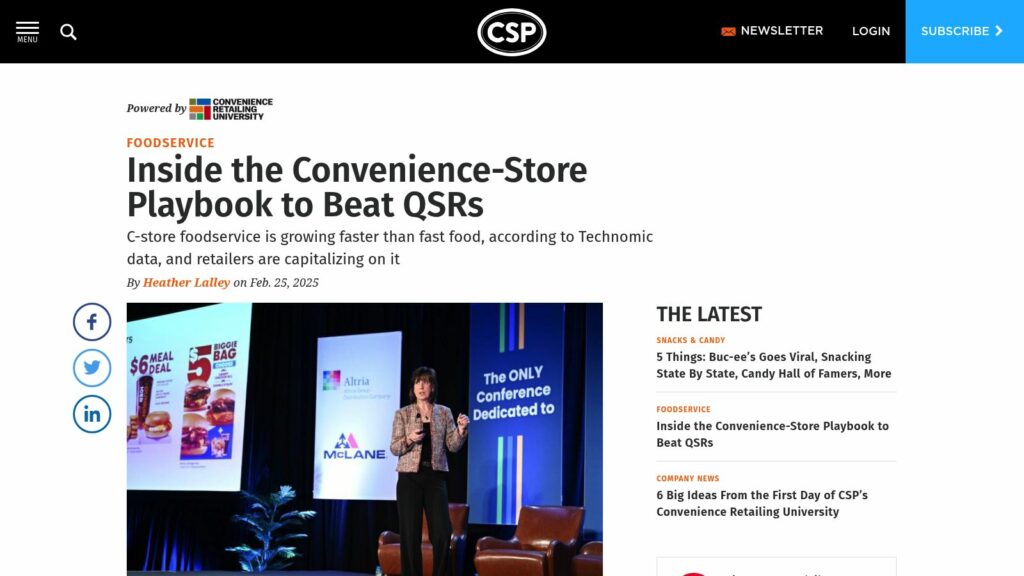
C-stores are outpacing fast food in foodservice growth. Donna Hood Crecca of Technomic highlighted their competitive edge at the Convenience Retailing University. C-stores are now considered viable options for meals and beverages, appealing to consumers seeking quality and value. With nearly 140,000 c-stores offering foodservice and expected spending hitting $27 billion, c-stores can leverage their format variety and multi-tasking convenience to attract customers. To compete against QSRs, they must emphasize price, quality, and innovation, while developing signature menu items. They’re gaining ground in “share of stomach” from fast-food chains.

https://www.cspdailynews.com/foodservice/inside-convenience-store-playbook-beat-qsrs

Trends & Strategies Shaping the $663 Billion Fast Food Industry, 2025

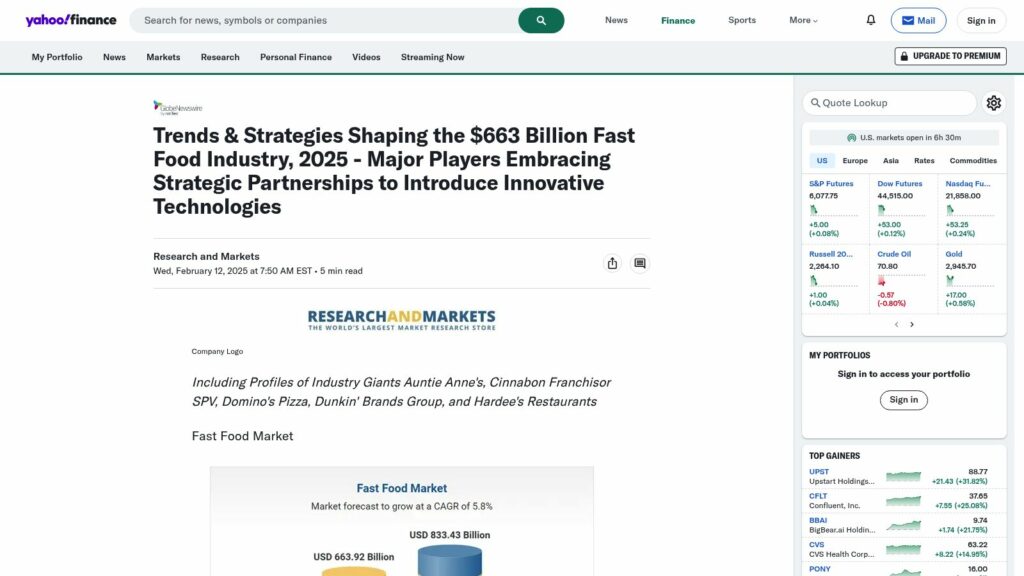
Fast food industry projected to grow from $645.2B in 2024 to $663.9B in 2025 (2.9% CAGR), driven by consumer preferences and urbanization. Major trends include plant-based options, ghost kitchens, and online delivery advancements. Strategic partnerships enhancing technology in service and order accuracy. Notable players include McDonald's, Domino's, and Burger King, integrating automation to tackle staffing challenges. Expected growth to $833.4B by 2029 (5.8% CAGR).

https://finance.yahoo.com/news/trends-strategies-shaping-663-billion-125000971.html

Popmenu Releases Restaurant Dining Trends to Watch in 2025

Popmenu predicts 2025 U.S. restaurant trends post-2024's challenges. Operators focus on engaging guests with new pricing, ordering strategies, and AI use. 62% of operators are cautiously optimistic; 32% plan expansion. Consumers dine less frequently (69% weekly) but prioritize affordable meals. Expected trends: fewer price hikes (57% will raise menu prices), reduced online fees (75% aim to cut them), increased AI adoption (34% current, 48% planned), more tailored marketing, diverse menu options, and unique dining experiences (74% to enhance atmosphere).

https://www.qsrmagazine.com/news/popmenu-releases-restaurant-dining-trends-to-watch-in-2025/

Beyond Burgers: Fast Food Trends for 2025

TLDR: Fast food trends for 2025 include a rise in healthier options, sustainability efforts, focus on chicken, innovative condiments, strategic partnerships with convenience stores, smarter location choices, automation in food prep, AI integration, expanded breakfast offerings, and increasing private equity investments. Fast food is evolving rapidly.

https://streetfightmag.com/2025/01/22/beyond-burgers-fries-10-fast-food-trends-for-2025/

Fast Food Global Market Forecast and Competitive Analysis

Fast Food Market Report 2024-2033 Summary:
Global fast-food market projected to grow from $788.72 billion in 2024 to $1.25 trillion by 2033 (CAGR 5.28%). Growth driven by demand for convenience, urbanization, busy lifestyles, and increased disposable incomes. Key players include Starbucks, Domino's, and Yum! Brands. Fast-casual restaurants and healthier menu options are notable trends, affecting competition and consumer preferences. Regional insights highlight strong growth in the U.S., India, Germany, and UAE due to lifestyle changes and expanding QSR choices.

https://www.globenewswire.com/news-release/2025/01/21/3012374/0/en/Fast-Food-Global-Market-Forecast-and-Competitive-Analysis-Report-2024-2033-Featuring-Starbucks-Papa-John-s-Domino-s-Wendy-s-Performance-Food-Group-Yum-Brands-Restaurant-Brands-Inte.html

2025 Dining Trends That Will Keep Guests Coming Back

2025 Dining Trends: U.S. foodservice focuses on reimagined classics (e.g., chili crisp) to engage diners. Key drivers include indulgence, convenience, and value. Surveys show diners prioritize new experiences and quick options, especially Gen Z. Restaurants are innovating through technology and menu variety, balancing indulgent and convenient offerings. Value perceptions hinge on quality, health options, and loyalty programs. Smaller portions and tasting menus gain popularity, while consumers show willingness to support fair wages for workers.

https://www.qsrmagazine.com/story/2025-dining-trends-that-will-keep-guests-coming-back/

Top 2025 QSR Trends: AI , Global Flavors, And Experiential Dining

2025 QSR Trends: AI integration, global flavors, experiential dining. QSRs evolve to meet consumer demands for personalized, convenient experiences while balancing innovation with practicality. Leaders emphasize data-driven loyalty, flexible dining, and cost-efficient technology adoption. The focus on quality, sustainability, and immersive experiences shapes the future of fast dining.

https://www.forbes.com/sites/garyocchiogrosso/2025/01/15/top-2025-qsr-trends-ai–global-flavors-and-experiential-dining/

Scroll to Top