qsr

AI and Robotics in Quick-Service Restaurants Market Size to Reach USD 14.41 Billion by 2033 as Automated Ordering, Cloud Platforms, and Kitchen Robotics Redefine QSR Operations
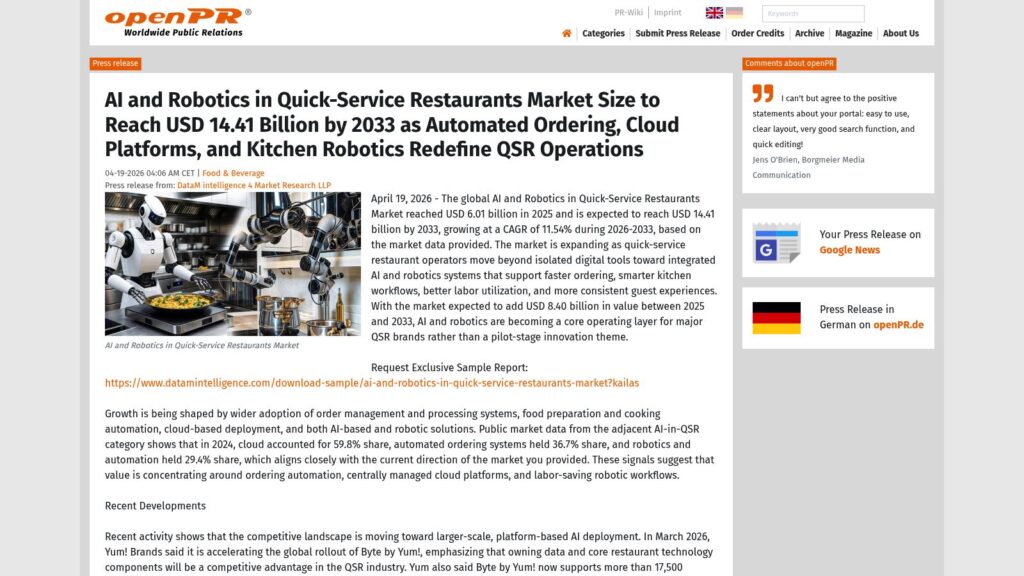
The global AI and Robotics in Quick-Service Restaurants Market, valued at USD 6.01 billion in 2025, is projected to reach USD 14.41 billion by 2033 with a CAGR of 11.54%. This growth is driven by the widespread adoption of integrated AI and robotics systems—such as automated ordering, cloud platforms, and kitchen robotics—that enhance operational efficiency, customer experience, and labor utilization across major QSR brands. Key players like McDonald’s and Yum! Brands are leading the market through large-scale AI deployments and proprietary technology platforms, highlighting a shift towards AI as a core component in QSR operations.

https://www.openpr.com/news/4478239/ai-and-robotics-in-quick-service-restaurants-market-size
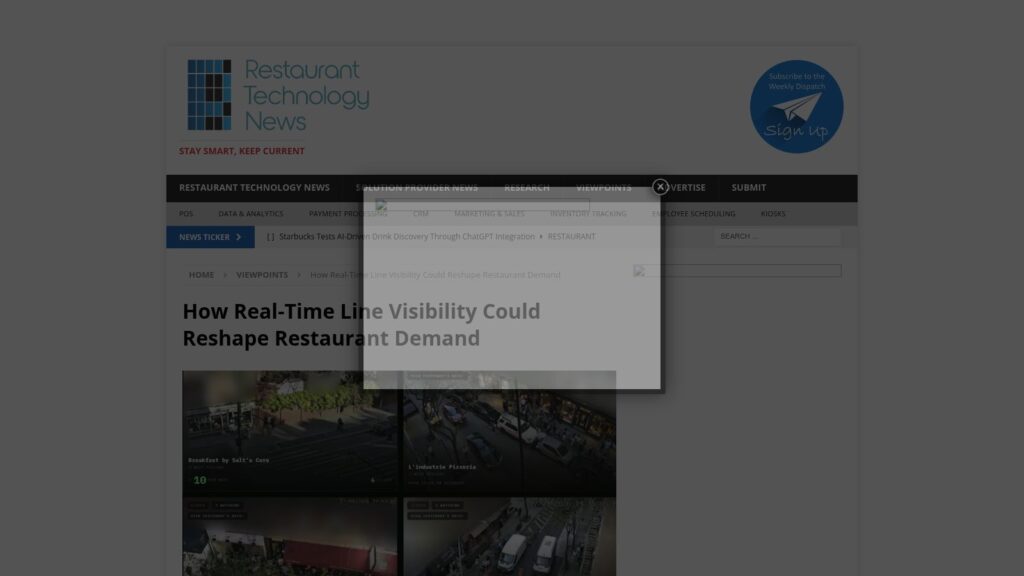
How Real-Time Line Visibility Could Reshape Restaurant Demand

A new platform called Damn Lines streams real-time video of queues outside popular Manhattan restaurants, providing customers advance visibility of wait times along with historical data and notifications. This emerging technology shifts how restaurant demand is understood and managed by making waiting lines a visible, measurable data point that influences customer behavior before they even arrive, posing new challenges and opportunities for operators in controlling demand and shaping visit patterns.

https://restauranttechnologynews.com/2026/04/how-real-time-line-visibility-could-reshape-restaurant-demand/

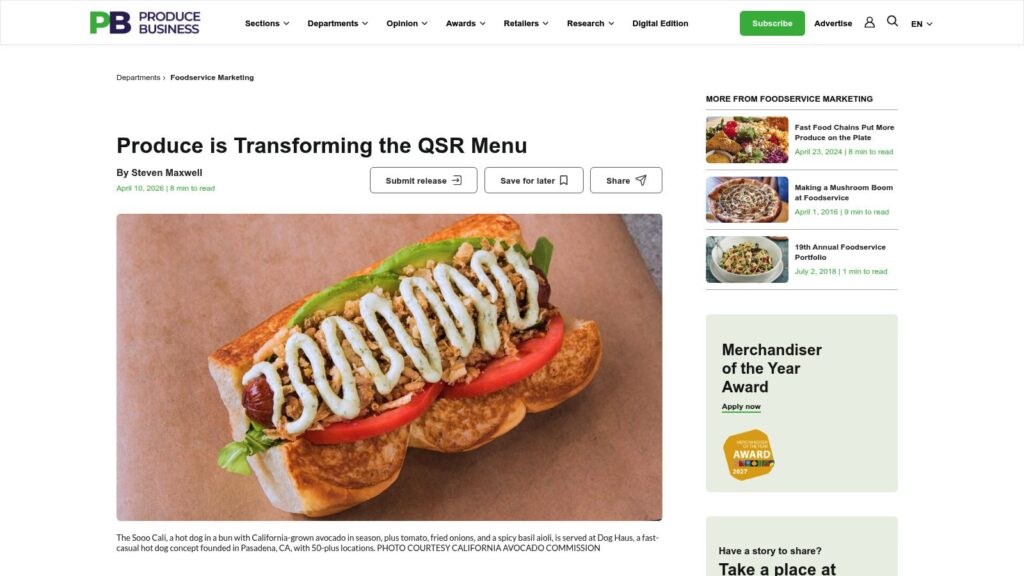
Produce Is Transforming the QSR Menu

Quick Service Restaurants (QSRs) in North America are increasingly incorporating fresh produce into their menus to offer healthier eating options and address growing consumer concerns about ultra-processed foods. This trend is driving innovation with ingredients like avocados, potatoes, watermelons, and mushrooms, supported by industry groups that provide education and marketing to promote fresh produce adoption in fast-casual and QSR segments. Operators focus on quality and transparency to build consumer trust and differentiate their offerings amid economic challenges.

https://producebusiness.com/produce-is-transforming-the-qsr-menu/

Burger King’s 60,000-Worker Hiring Push Reflects the Reality of Running a Tech-Enabled Restaurant at Scale

Burger King’s recent announcement to hire up to 60,000 workers across nearly 6,500 U.S. restaurants highlights the reality that increasing technology in quick-service restaurants often drives higher demand, requiring more staff rather than fewer. As Burger King modernizes with digital ordering, AI tools, and upgraded kitchen systems, improved speed and accuracy are boosting guest traffic, necessitating well-trained, digitally fluent employees and managers to manage complex workflows and maintain service quality.

https://restauranttechnologynews.com/2026/04/burger-kings-60000-worker-hiring-push-reflects-the-reality-of-running-a-tech-enabled-restaurant-at-scale/

How the Ozempic Era Will Reshape QSR

The rise of GLP-1 drugs like Ozempic, widely used for weight loss and health, is reshaping the quick-service restaurant (QSR) industry by creating a customer base that desires smaller portions without sacrificing convenience, flavor, or social dining experiences. QSR brands are adapting by offering clear, benefit-focused menu options with smaller, nutrient-dense meals and redesigning spaces to enhance emotional and ritualistic elements of dining, thus redefining value beyond volume to meet the needs of more mindful consumers.

https://www.qsrmagazine.com/story/how-the-ozempic-era-will-reshape-qsr/

An Intouch Insight Study on the In-Person QSR Guest Experience

The 2026 QSR On-Premises Study by Intouch Insight evaluates ten leading quick-service restaurant brands, revealing gaps in human connection such as inconsistent greetings and parting remarks, with 27.9% of guests not greeted and 27.4% receiving no closing remark. The study highlights suggestive selling as the largest missed revenue opportunity, averaging just 60.6% execution, and identifies dinner as the slowest daypart, with service times averaging over four minutes, impacting overall customer satisfaction.

https://www.intouchinsight.com/resources/studies/on-premises-qsr-study/

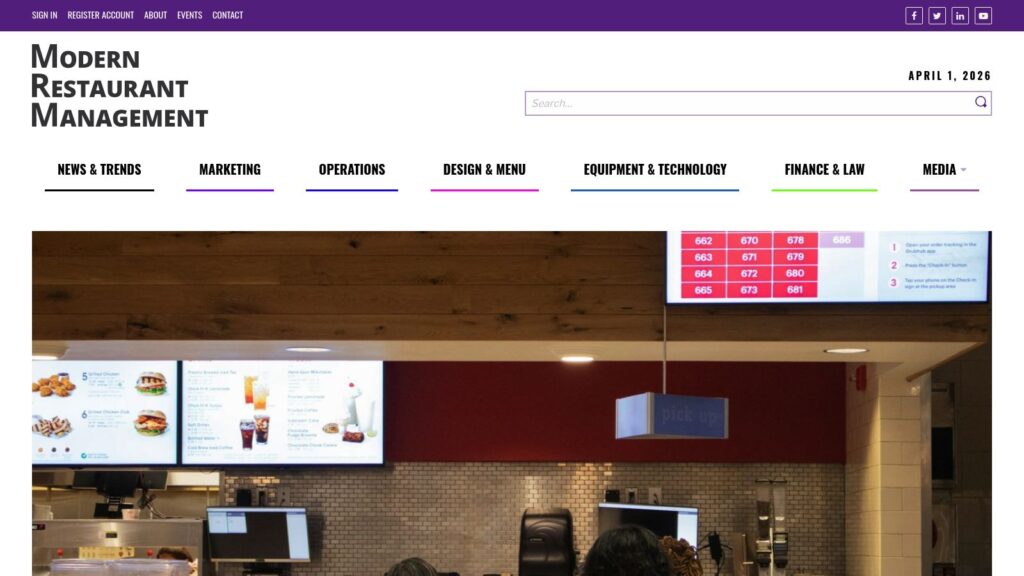
QSRs Moving Beyond the Tech Vs. Human Debate

QSR operators are shifting from viewing technology and human labor as competing forces to a “marriage of convenience,” focusing on integrating technology with staff support and training to enhance both the guest and employee experience. Successful brands design tech systems that work together seamlessly, balancing automation with human interaction to improve speed, accuracy, and customer loyalty while optimizing operations.

https://modernrestaurantmanagement.com/qsrs-moving-beyond-the-tech-vs-human-debate/

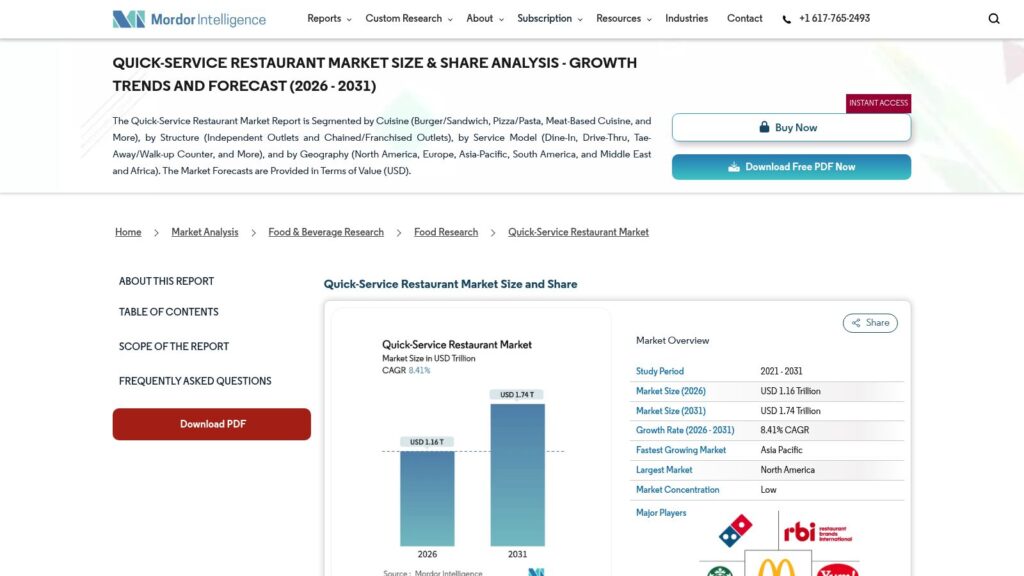
QSR Market Size, Trends, Analysis & Growth Report 2031

The Quick-Service Restaurant (QSR) market is projected to grow from USD 1.16 trillion in 2026 to USD 1.74 trillion by 2031, at a CAGR of 8.41%, driven by digital ordering, off-premise formats, and rapid urbanization. North America remains the largest market, while Asia-Pacific is the fastest-growing region, with innovations like AI-powered drive-thrus and subscription loyalty programs enhancing convenience and profitability. Key players like McDonald’s and Yum! Brands lead a fragmented market adapting to rising labor costs, health regulations, and competition from fast-casual and delivery services.

https://www.mordorintelligence.com/industry-reports/quick-service-restaurants-market?utm_source=marketersmedia

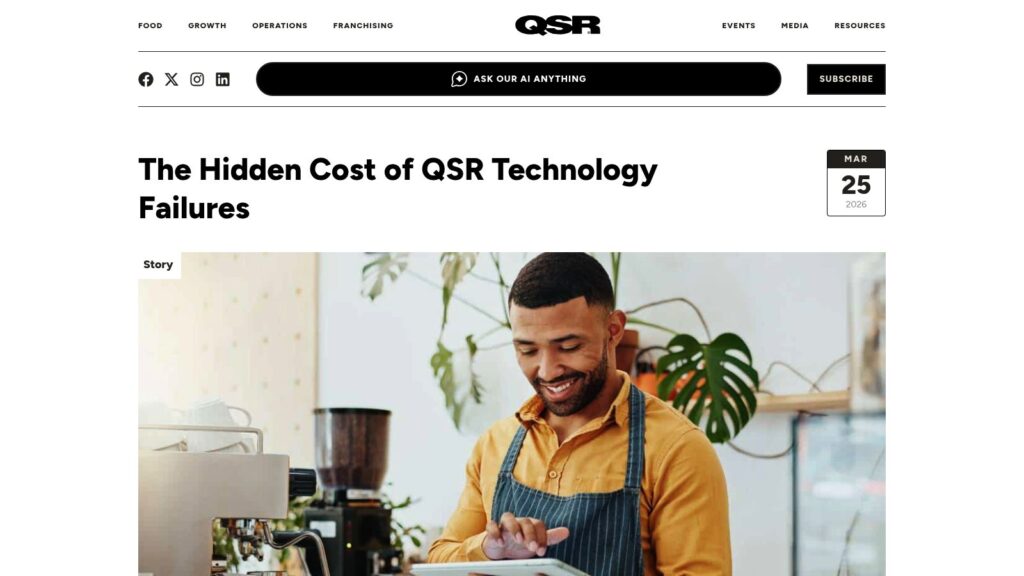
The Hidden Cost of QSR Technology Failures

Quick-service restaurants (QSRs) invest heavily in technology like drive-thru systems, kiosks, and mobile apps to deliver fast, consistent customer experiences; however, frequent tech failures—such as payment terminal malfunctions and offline POS systems—cause delays, revenue loss, and increased employee workload. Surveys show that technology issues are common and negatively impact customer loyalty, prompting leading QSRs to adopt integrated remote monitoring and management software to reduce downtime and improve operational efficiency.

https://www.qsrmagazine.com/operations/outside-insights/the-hidden-cost-of-qsr-technology-failures/

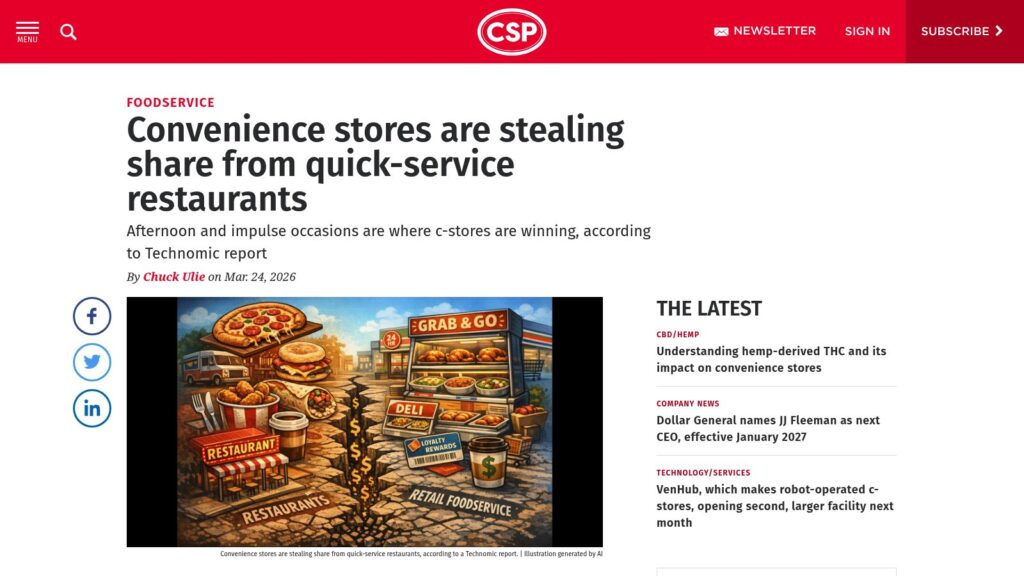
Convenience Stores Are Stealing Share From Quick-Service Restaurants

A Technomic report reveals that convenience stores are increasingly capturing market share from quick-service restaurants (QSRs), particularly during afternoon and impulse visits. Data from 2025 shows 15% of c-store visits were occasions where consumers considered QSRs but chose convenience stores instead, with notable shares lost from major QSR chains like McDonald’s and Burger King. The report also indicates that convenience stores are closing the gap in consumer perceptions of food quality and brand loyalty compared to QSRs.

https://www.cspdailynews.com/foodservice/convenience-stores-are-stealing-share-quick-service-restaurants

Scroll to Top