customer experience

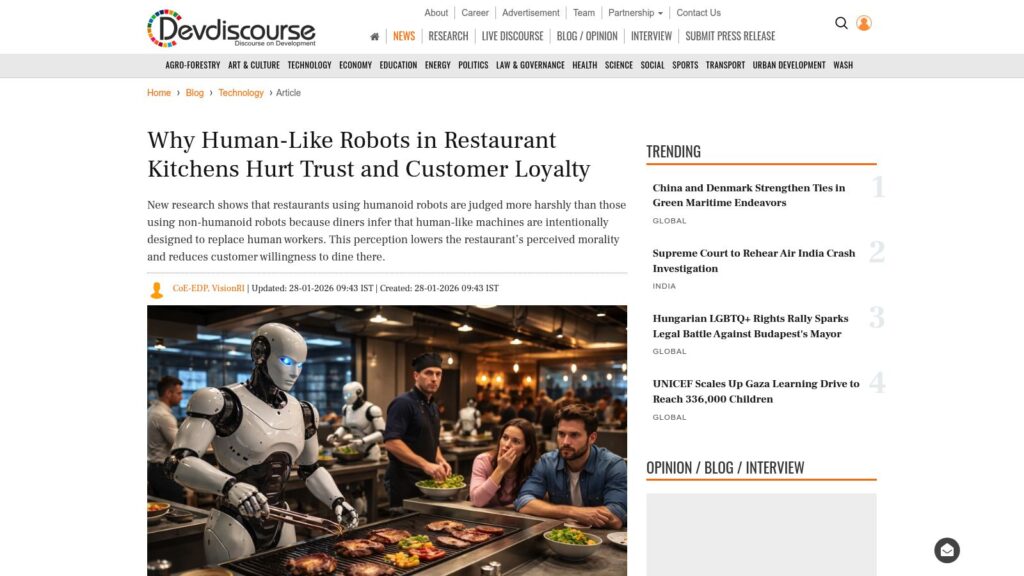
Why Human-Like Robots in Restaurant Kitchens Hurt Trust and Customer Loyalty

Humanoid robots in restaurants provoke negative reactions from diners, who perceive them as threats to human jobs. Studies show that people view these robots as morally unethical compared to non-humanoid ones, lowering their willingness to dine at such establishments. This suggests that robot design impacts customer trust and loyalty, challenging the assumption that human-like features make robots more acceptable in foodservice.

https://www.devdiscourse.com/article/technology/3781909-why-human-like-robots-in-restaurant-kitchens-hurt-trust-and-customer-loyalty

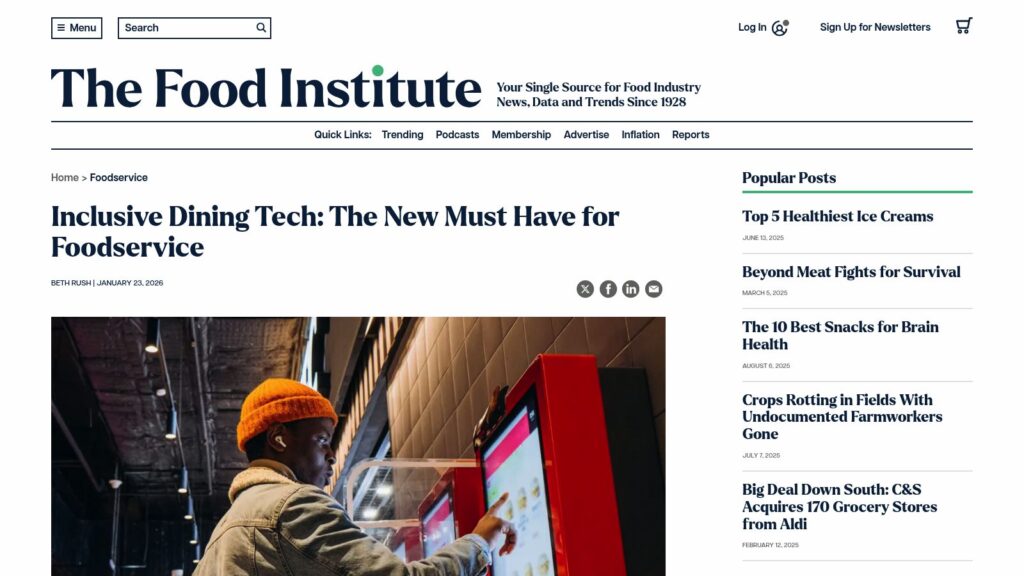
Inclusive Dining Tech: The New Must Have for Foodservice

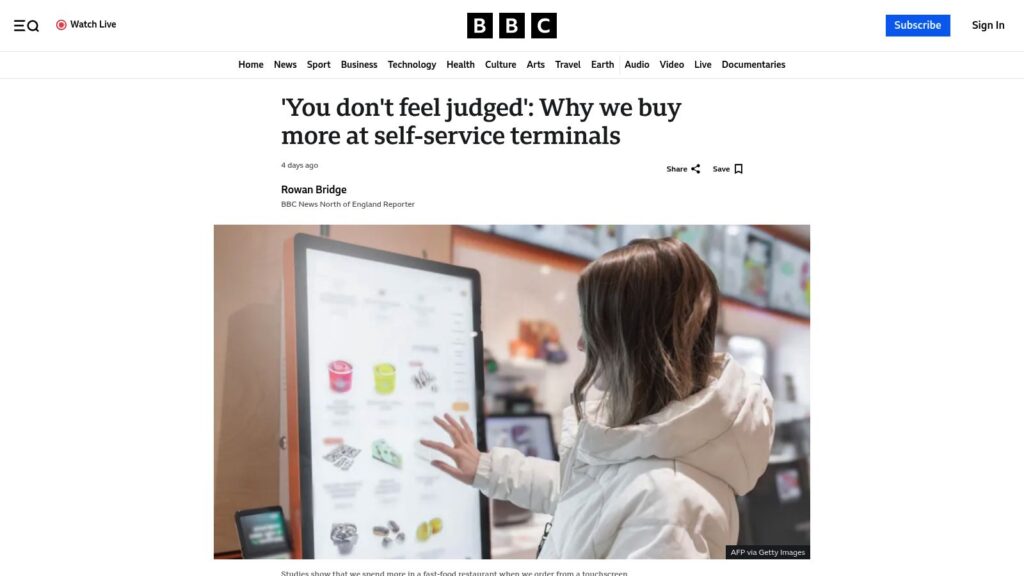
Inclusive dining technology is vital for modern foodservice, enhancing accessibility and guest experience. It encompasses tools like digital menus and self-service kiosks, addressing needs of diverse diners, including those with disabilities or dietary restrictions. This tech not only streamlines orders but also supports sustainability and empowers guests who may struggle with traditional ordering. Ultimately, it aids staff efficiency and aligns with evolving consumer expectations.

https://foodinstitute.com/focus/inclusive-dining-tech-the-new-must-have-for-foodservice/

Panera Pilots New Loyalty Program Built Around Transparency and Value

Panera is piloting a new points-based loyalty program beginning January 28 in Dallas, allowing customers to earn 10 points per dollar spent, enhancing control and choice. The updated MyPanera program aims for greater transparency and value, incorporating personalization based on customer preferences. The initiative is part of the chain's broader transformation strategy called “Panera RISE,” focusing on menu refreshment and enhanced guest experiences. The pilot will be extended to multiple markets with a larger rollout expected later in 2026.

https://www.qsrmagazine.com/story/panera-pilots-new-loyalty-program-built-around-transparency-and-value/

How AI Can Bring Humanity Back to Sit-Down Dining

AI enhances sit-down dining by automating routine tasks, enabling personalized service, and improving order accuracy. It allows patrons to order at their own pace, reduces server stress, and strengthens customer-service interactions. By streamlining operations, AI empowers staff to offer quality, attentive service, creating a balance between technology and human touch, ultimately enhancing the dining experience.

https://www.qsrmagazine.com/story/how-ai-can-bring-humanity-back-to-sit-down-dining/

The New King of Customer Experience? McDonald’s. Seriously.

Customer experience (CX) has become overly complex and less accountable, with organizations focusing on customer sentiment rather than operational competence. This shift has led to increased churn, as customers leave due to broken systems rather than lack of delight. The key to customer retention is consistent execution and reliability, as exemplified by McDonald’s, which prioritizes predictability and process control over novelty and surprise.

https://www.cmswire.com/customer-experience/the-new-king-of-customer-experience-mcdonalds-seriously/

McDonald’s Making Major Drive-thru Change

McDonald's is leveraging technology, specifically AI, to enhance drive-thru efficiency and accuracy, addressing common customer complaints like slow service and order errors. By partnering with Google Cloud, McDonald's aims to improve operations across its 43,000 restaurants, utilizing AI tools to streamline processes. Initiatives include AI-powered systems for better order accuracy and plans for broader technological integration by 2026. This investment aligns with McDonald’s strategy to enhance digital services and customer experiences, amidst growing competition in the fast-food sector.

https://www.thestreet.com/restaurants/mcdonalds-bets-on-ai-in-2026-to-fix-a-major-problem

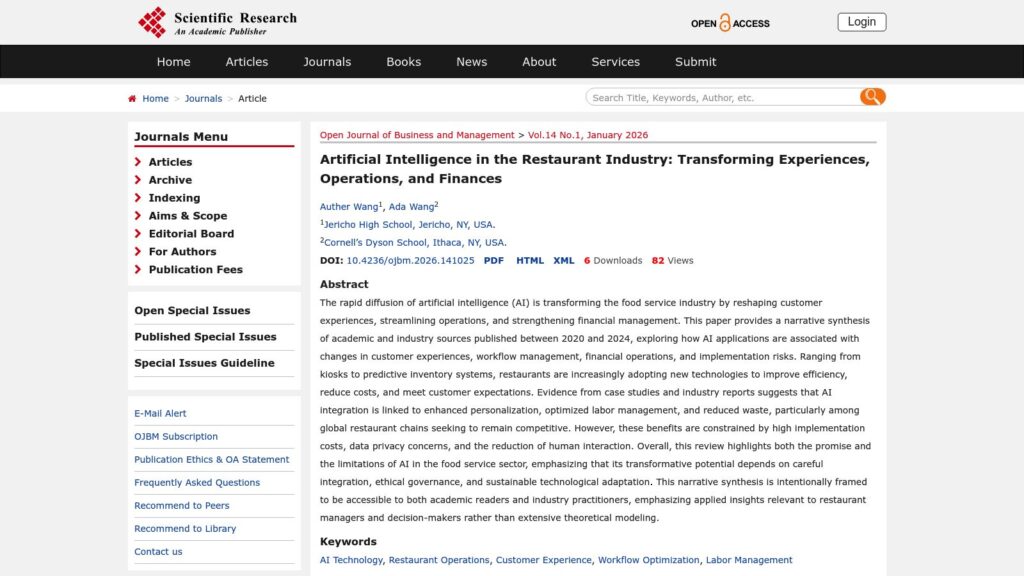
Artificial Intelligence in the Restaurant Industry Transforming Experiences, Operations, and Finances

Artificial intelligence (AI) is transforming the restaurant industry by enhancing customer experiences, optimizing operations, and improving financial management. AI tools like kiosks, chatbots, and predictive systems streamline workflows, reduce costs, and personalize service. However, challenges such as high implementation costs, data privacy concerns, and potential impacts on human interaction and employee morale remain significant barriers to widespread adoption.

https://www.scirp.org/journal/paperinformation?paperid=148794

How McDonald’s Is Integrating AI Across Restaurants Globally

McDonald's plans to integrate AI in 43,000 restaurants globally, partnering with Google for enhanced order accuracy, staff efficiency, and customer satisfaction. AI will help manage customer interactions and optimize kitchen equipment maintenance. Initiatives include voice AI for drive-throughs and computer vision for order verification. The collaboration with Google Cloud aims to accelerate technology adoption and improve customer engagement through modernized platforms.

https://technologymagazine.com/articles/how-mcdonalds-is-using-ai-to-boost-efficiency-and-workflows

What 2025’s Biggest QSR Traffic Surges Reveal About Dining Strategies for 2026

QSR trends in 2025 showed that standout discounts and culturally relevant promotions significantly boosted traffic for chains. Freebies and unique offers cut through competition, while pop-culture tie-ins generated momentum. Promotions such as Starbucks' Bearista merchandise demonstrated that premium items can also drive interest. Ultimately, while discounts dominate, food offerings still play a crucial role in attracting customers.

https://www.placer.ai/anchor/articles/what-2025s-biggest-qsr-traffic-surges-reveal-about-dining-strategies-for-2026

The QSR Growth Playbook: Strategies to Win in 2026

Q4 2025 saw rising competition and shifting consumer expectations in the QSR industry. To drive growth in 2026, QSRs should leverage dual limited-time offers, build loyalty ecosystems around routines, and capitalize on chicken’s versatility. Additionally, brands must innovate to compete on value and desire, while using beverage innovation as a high-frequency traffic driver.

https://www.numerator.com/resources/blog/qsr-growth-playbook/

Scroll to Top