Restaurant Industry Experts Make Predictions for 2026
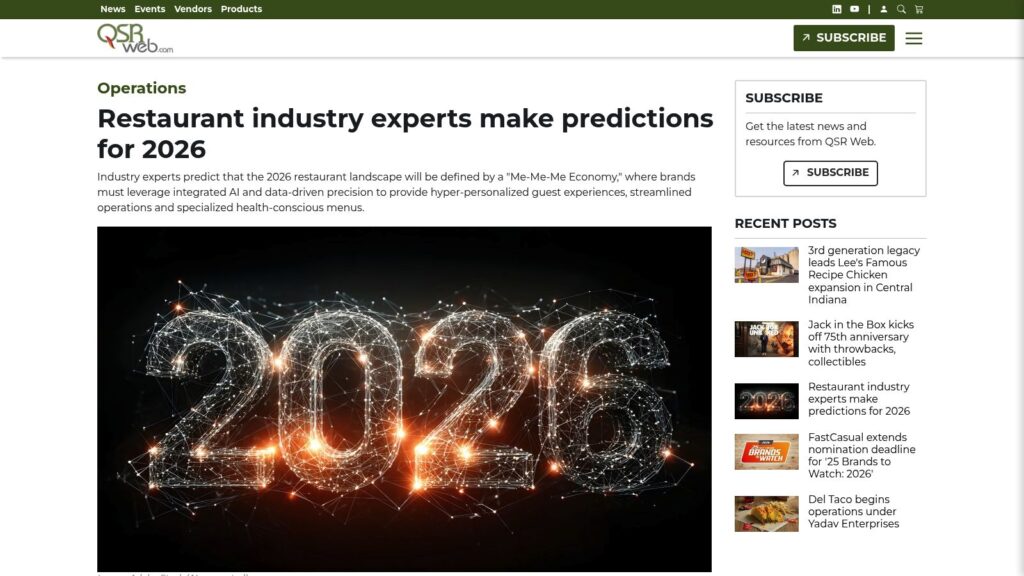
2026 restaurant trends shaped by “Me-Me-Me Economy” focus on hyper-personalization, AI integration, and health-oriented menus. Key predictions include: tech enhancing order accuracy, loyalty through personalization, emphasis on data integration, corporate catering as a marketing tool, utilizing guest feedback, evolving frontline roles, and inflation impacting operations and purchasing. Success hinges on integrating technology with hospitality to create a more personalized dining experience.

https://www.qsrweb.com/articles/restaurant-industry-experts-make-predictions-for-2026/
The $162 Billion Question: Why Restaurant Operators Confuse Activity With Efficiency

Article highlights $162B restaurant efficiency crisis due to 4-10% food waste and 144% turnover, linked to flawed kitchen design. Automation tech enhances productivity by 11% and reduces labor costs by 30%. Past inefficiencies now critical with rising wages; automation provides exact portions and consistency, addressing systemic waste.

https://www.qsrweb.com/press-releases/the-162-billion-question-why-restaurant-operators-confuse-activity-with-efficiency/

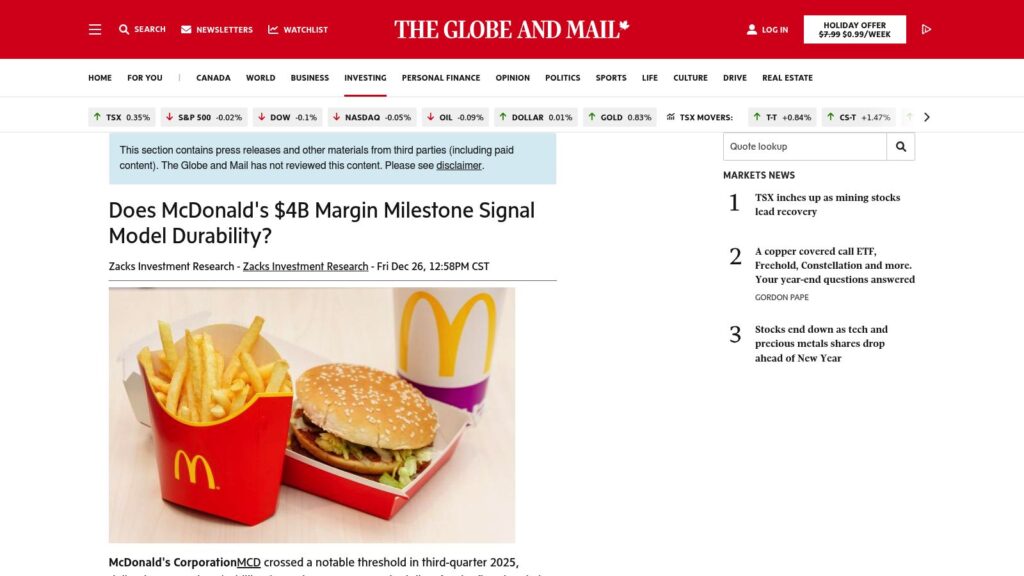
Does McDonald’s $4B Margin Milestone Signal Model Durability?

McDonald’s surpassed $4 billion in restaurant margins for the first time, demonstrating enduring profitability amid economic pressures. Sales rose globally despite inflation, aided by a focus on value offerings. This success contrasts with competitors like Starbucks and Yum! Brands, showcasing McDonald’s balance of scale and cash flow resilience. Despite recent estimates lowering, McDonald’s stock performance remains positive compared to industry peers.

https://www.theglobeandmail.com/investing/markets/stocks/YUM/pressreleases/36797082/does-mcdonalds-4b-margin-milestone-signal-model-durability/

Japan AI Culinary Robots Market Is Expected to Reach US$ 921.02 Million by 2031

Japan AI Culinary Robots Market projected to grow from $470.01M in 2023 to $921.02M by 2031 (CAGR 8.77%). Key players include Connected Robotics, TechMagic, Sony AI, and Mitsubishi Electric. Robotics improve efficiency, reduce costs, and meet demand in foodservice. Notable developments: SoftBank’s service robots, NSK’s humanoid actuators, and Yoshinoya’s AI cooking systems. Comprehensive report offers insights on market trends, competitive landscape, and segments.

https://www.openpr.com/news/4328862/japan-ai-culinary-robots-market-is-expected-to-reach-us-921-02

4 Changes Coming To McDonald’s Drive-Thrus In 2026

McDonald’s drive-thrus will see significant changes in 2026, focusing on increased efficiency and customer satisfaction. Key updates include AI-driven order accuracy checks, the introduction of AI chatbots for taking orders, expanded multi-lane drive-thrus to enhance speed, and the growth of the Ready on Arrival program utilizing geo-fencing technology to reduce wait times. These advancements aim to boost overall performance and customer experience at McDonald’s locations.

https://www.yahoo.com/news/articles/4-changes-coming-mcdonalds-drive-190300006.html

Explained: Why Ordering at McDonald’s Is Designed to Make You Stop Thinking

McDonald’s menu design reduces decision-making time, encouraging quick choices. Items are strategically placed for visibility, prioritizing higher-margin products and familiar bundles. The environment fosters compliance through low-effort prompts, reinforcing predictability in consumer behavior, enhancing efficiency and simplicity as competitive advantages.

https://www.storyboard18.com/how-it-works/explained-why-ordering-at-mcdonalds-is-designed-to-make-you-stop-thinking-86523.htm

Why 2026 Is the Year of the AI-driven Restaurant

By 2026, AI in restaurants will shift from novelty to essential, addressing labor shortages and tight margins. Innovations like back-of-house automation and personalized customer tools will enhance operations and customer experience. Experts agree that AI adoption is crucial for success, as technology streamlines processes and drives growth amid economic changes, redefining hospitality through enhanced personalization without replacing human staff.

https://www.qsrweb.com/articles/why-2026-is-the-year-of-the-ai-driven-restaurant/

Is Self-ordering Really the Future?

Self-ordering technology, such as kiosks and apps, boosts sales and efficiency but risks diminishing personal connections in hospitality. Data shows a majority of customers prefer these systems for convenience, yet many still value human interaction, highlighting a tension between efficiency and the need for meaningful service. Companies like Starbucks are reevaluating automation’s role to enhance customer experiences, indicating a potential shift toward a hybrid model that balances technology’s benefits with the warmth of human service.

https://intelligence.coffee/2025/12/is-self-ordering-really-the-future/

What Google’s New Merchant Extortion Tool Means for Restaurant Operators

Google now offers a dedicated “merchant extortion” reporting tool for restaurants targeted by organized fake review extortion attempts on Google Maps. Businesses facing sudden clusters of 1- and 2-star reviews, often from fake accounts, can report not just the reviews but the extortion threats as well. This improved process helps alert Google’s Trust & Safety team to active threats. Operators are advised to document evidence and avoid paying ransoms, as reviews have become a weapon for malicious actors and need to be defended as digital assets.

https://restauranttechnologynews.com/2025/12/what-googles-new-merchant-extortion-tool-means-for-restaurant-operators/

Scroll to Top