trends

Quick Service Restaurant It Market Analysis By Application, Type, Technology, and Geography – Global Industry Outlook and Forecast 2026-2033

The Quick Service Restaurant (QSR) IT market, valued at $11.99 billion in 2026, is expected to grow at a CAGR of 6.34% from 2026 to 2035, reaching approximately $19.61 billion. This growth is driven by increasing adoption of digital technologies such as mobile ordering, AI, and cloud computing to enhance operational efficiency and customer experience, alongside rising investments and expanding applications across key regions including North America and Asia-Pacific. The market is characterized by rapid digital transformation, integration of innovative IT solutions, and a focus on sustainability, with strategic partnerships and regulatory compliance shaping its competitive landscape.

https://www.openpr.com/news/4492066/quick-service-restaurant-it-market-analysis-by-application

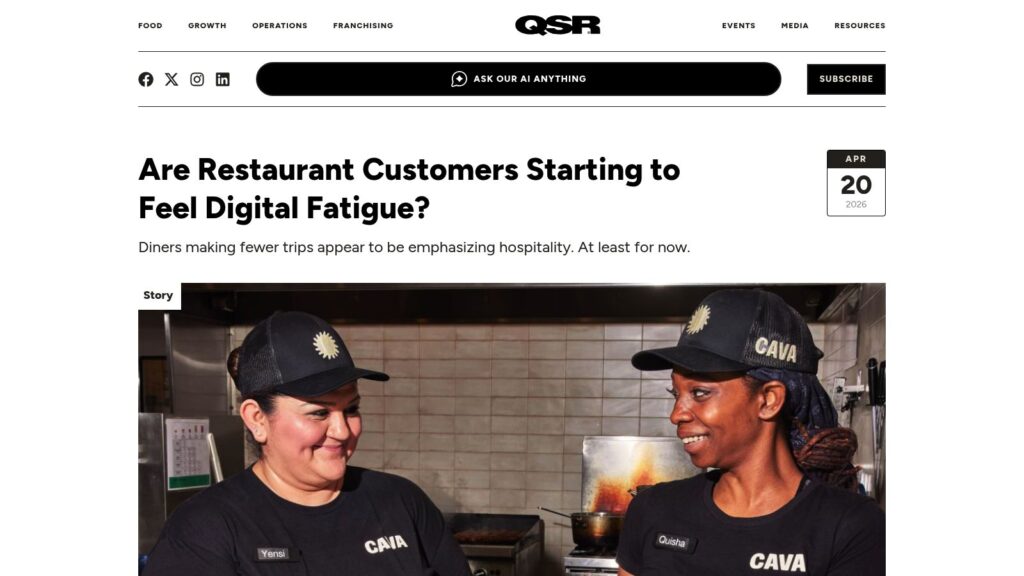
Are Restaurant Customers Starting to Feel Digital Fatigue?

The 14th edition of William Blair’s restaurant tracker reveals that consumer engagement with restaurants has declined, with fewer people dining out frequently and an increased preference for face-to-face interaction over digital ordering methods. Despite lower visit frequencies, average spending has risen, particularly among lower-income groups, while convenience and cost remain key factors influencing restaurant choice; the findings also suggest potential early signs of digital fatigue, with some consumers favoring traditional ordering over apps and kiosks.

https://www.qsrmagazine.com/story/are-restaurant-customers-starting-to-feel-digital-fatigue/

Nearly Half of Consumers Say Their Favorite Restaurant Chain Has Changed in The Last Year, According to New Report

Tillster’s 2026 Phygital Index Report reveals that 45% of U.S. consumers say their favorite restaurant chain has changed in the past year, signaling a sharp decline in diner loyalty. The report highlights that diners are prioritizing food quality, convenience, and speed over price, leading to a shift away from traditional fast-food and fast-casual chains toward convenience and grocery stores, and emphasizing the need for restaurants to focus on seamless, personalized experiences rather than discounting to retain customers.

https://www.streetinsider.com/Globe+Newswire/Nearly+Half+of+Consumers+Say+Their+Favorite+Restaurant+Chain+Has+Changed+in+The+Last+Year%2C+According+to+New+Report/26332963.html

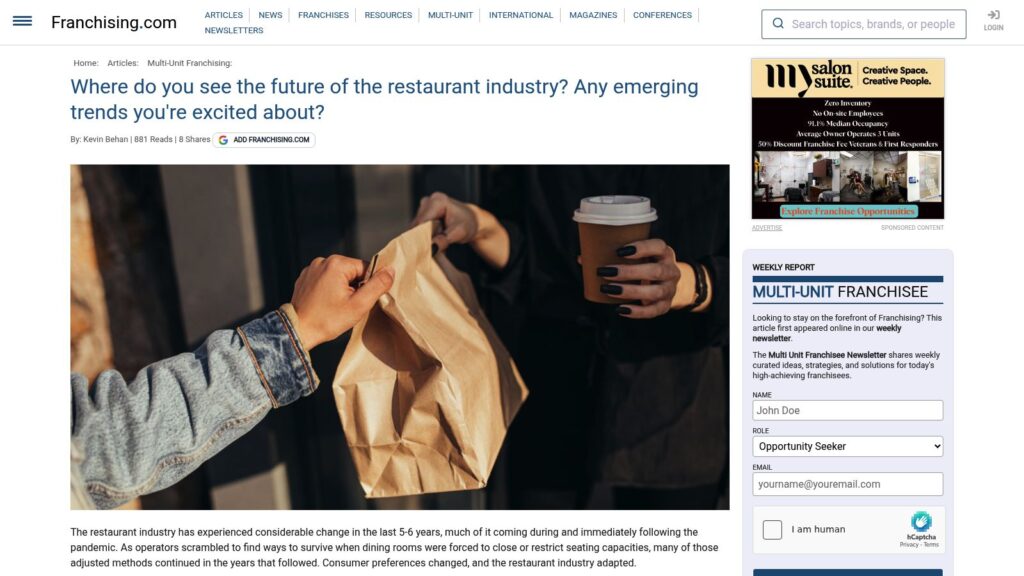
Where Do You See the Future of the Restaurant Industry? Any Emerging Trends You’re Excited About?

The restaurant industry has undergone significant changes in recent years, especially in response to the pandemic, with a notable shift toward off-premise dining, carryout, and third-party delivery services. Multi-unit franchisees highlight the growing role of technology, including AI and predictive analytics, to improve operations, customer experience, and labor management, while emerging trends focus on convenience, diverse global flavors, and new dining formats blending quick service with fine dining.

https://www.franchising.com/articles/20260420_where_do_you_see_the_future_of_the_restaurant_industry_any_emerging_tre.html

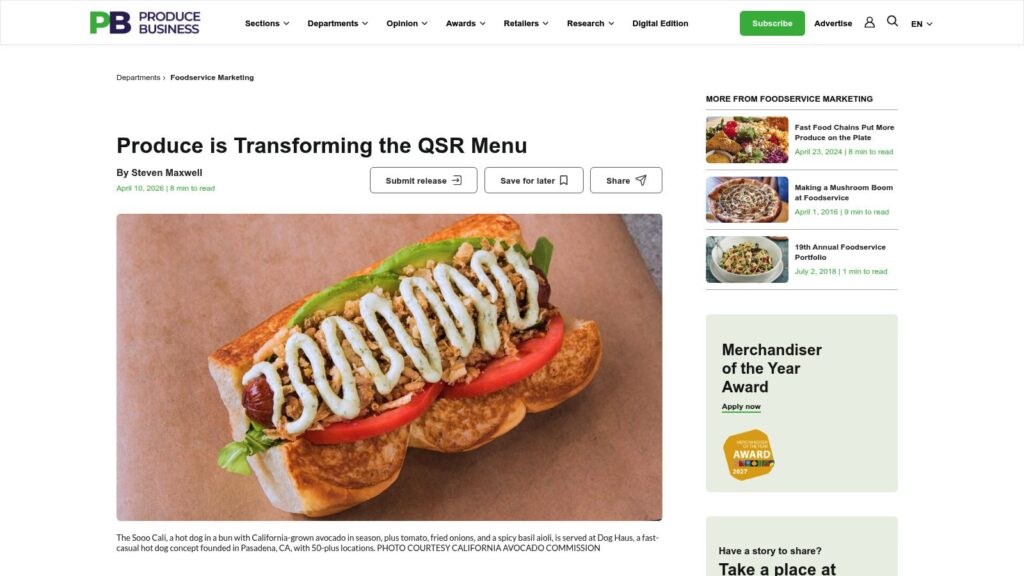
Produce Is Transforming the QSR Menu

Quick Service Restaurants (QSRs) in North America are increasingly incorporating fresh produce into their menus to offer healthier eating options and address growing consumer concerns about ultra-processed foods. This trend is driving innovation with ingredients like avocados, potatoes, watermelons, and mushrooms, supported by industry groups that provide education and marketing to promote fresh produce adoption in fast-casual and QSR segments. Operators focus on quality and transparency to build consumer trust and differentiate their offerings amid economic challenges.

https://producebusiness.com/produce-is-transforming-the-qsr-menu/

How the Ozempic Era Will Reshape QSR

The rise of GLP-1 drugs like Ozempic, widely used for weight loss and health, is reshaping the quick-service restaurant (QSR) industry by creating a customer base that desires smaller portions without sacrificing convenience, flavor, or social dining experiences. QSR brands are adapting by offering clear, benefit-focused menu options with smaller, nutrient-dense meals and redesigning spaces to enhance emotional and ritualistic elements of dining, thus redefining value beyond volume to meet the needs of more mindful consumers.

https://www.qsrmagazine.com/story/how-the-ozempic-era-will-reshape-qsr/

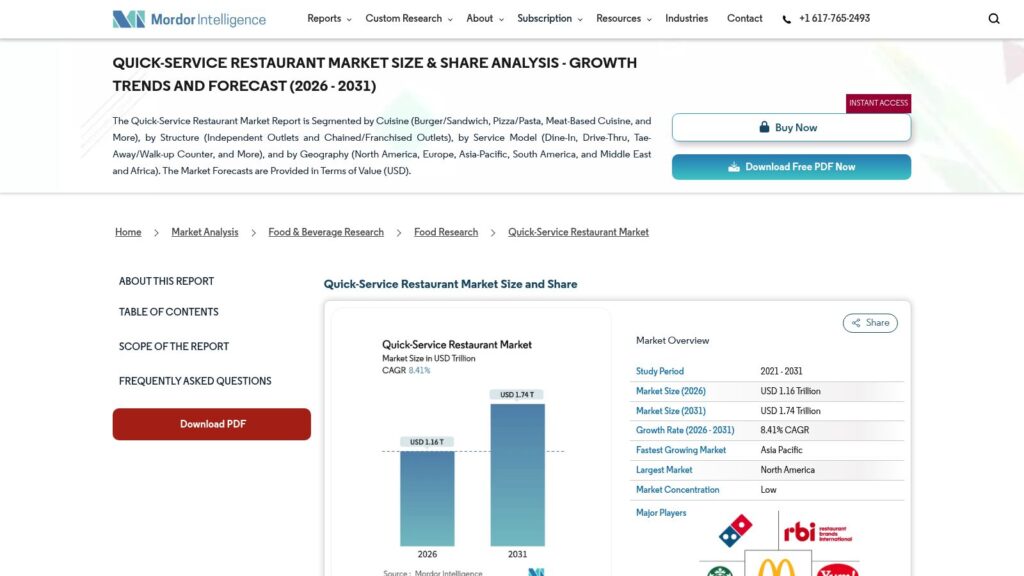
QSR Market Size, Trends, Analysis & Growth Report 2031

The Quick-Service Restaurant (QSR) market is projected to grow from USD 1.16 trillion in 2026 to USD 1.74 trillion by 2031, at a CAGR of 8.41%, driven by digital ordering, off-premise formats, and rapid urbanization. North America remains the largest market, while Asia-Pacific is the fastest-growing region, with innovations like AI-powered drive-thrus and subscription loyalty programs enhancing convenience and profitability. Key players like McDonald's and Yum! Brands lead a fragmented market adapting to rising labor costs, health regulations, and competition from fast-casual and delivery services.

https://www.mordorintelligence.com/industry-reports/quick-service-restaurants-market?utm_source=marketersmedia

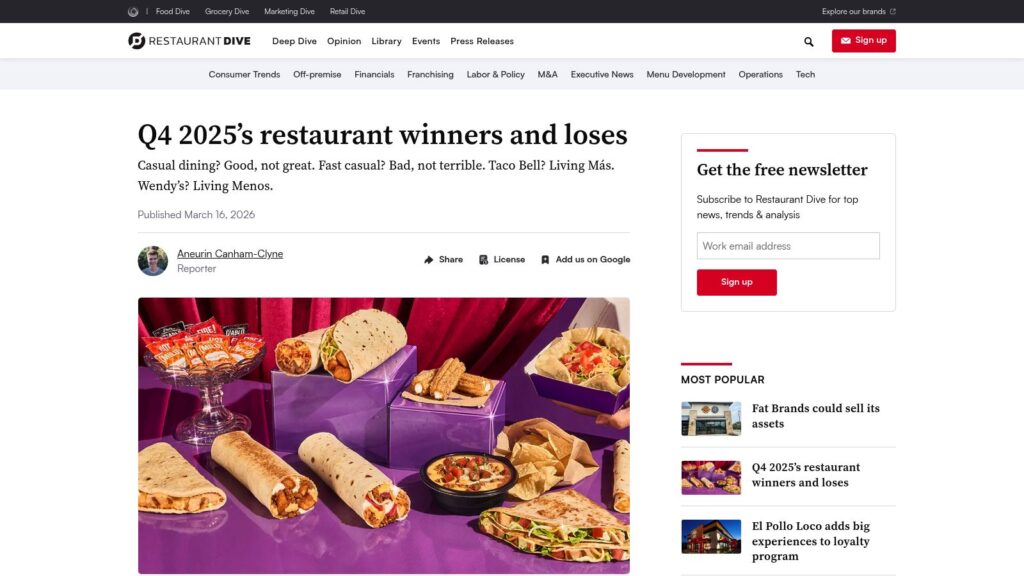
Q4 2025’s Restaurant Winners and Loses

Q4 2025 saw strong performances from several QSR brands, including McDonald’s, Taco Bell, Domino’s, and Starbucks, driven by value plays, new menu items, and marketing strategies. In contrast, Sweetgreen experienced its worst quarter, while Pizza Hut and Wendy’s also faced challenges. The QSR sector dominated the quarter’s earnings news, with casual dining and fast casual segments showing mixed results.

https://www.restaurantdive.com/news/restaurant-q4-2025-winners-losers-mcdonalds-starbucks-pizza-hut-papa-johns/814719/

Why AI Chatbots Are the Next Frontier in Restaurant Technology

AI-powered chatbots are rapidly advancing as a major innovation in restaurant technology, with major chains like Yum Brands, Burger King, Starbucks, and Papa Johns implementing AI assistants to enhance labor efficiency, back-of-house operations, and customer ordering experiences. Technology vendors such as Olo and Miso Robotics are developing AI tools—like Olo’s AI agent modeled after Shopify’s system and Miso’s AI-powered Zippy platform—to provide accessible, intelligent automation and insights for restaurants of varying sizes, signaling a significant shift toward agentic AI as the next frontier in the industry.

https://www.nrn.com/restaurant-technology/tech-tracker-ai-chatbots-are-the-next-frontier-in-restaurant-technology

Fast Food & Quick Service Restaurants Strategic Business Market Report 2026

Fast food and Quick Service Restaurants (QSR) market analysis: Valued at $316.1B in 2024, expected to grow to $384B by 2030 (CAGR 3.3%). Growth driven by urbanization, demand for convenience, tech advancements (digital ordering, delivery apps), and health-conscious menu diversification (plant-based options). Technological innovations enhance customer experience and operational efficiency. QSRs increasingly adopt sustainable practices and focus on transparency in ingredient sourcing to meet consumer demands.

https://sg.finance.yahoo.com/news/fast-food-quick-restaurants-strategic-123100400.html

Scroll to Top