robotization

A Robot Delivers Your Food at This Carson Steakhouse
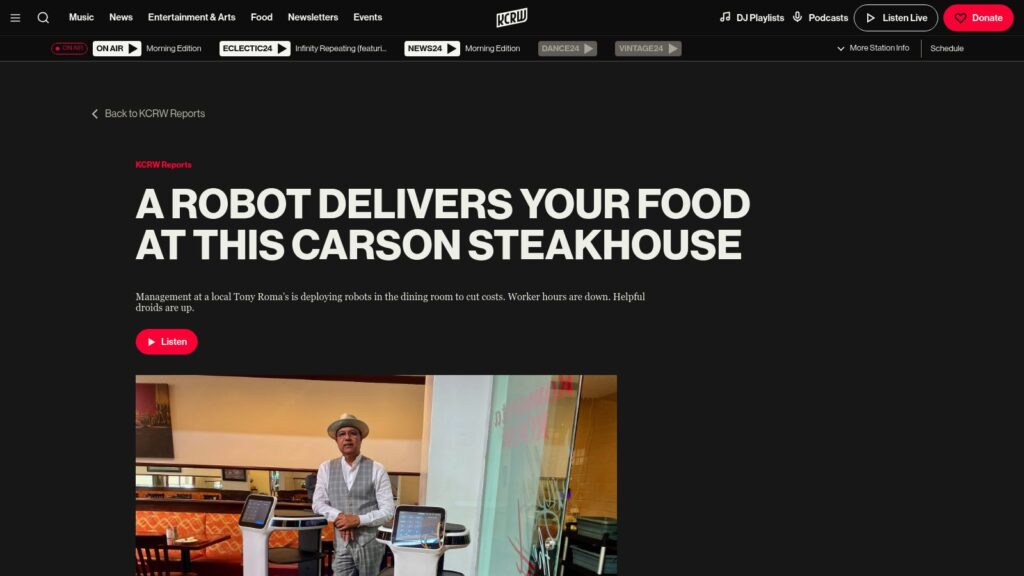
Tony’s Roma’s steakhouse in Carson employs robots to deliver food and collect dishes, responding to decreased business after immigration raids. The robots cost $1100 monthly and have led to reduced work hours for staff. While they make operations more efficient, robots aren’t completely replacing humans. Analysts expect the service robot industry to grow, which may reduce jobs and increase pressure on remaining employees.

https://www.kcrw.com/shows/kcrw-reports/stories/a-robot-delivers-your-food-at-this-carson-steakhouse
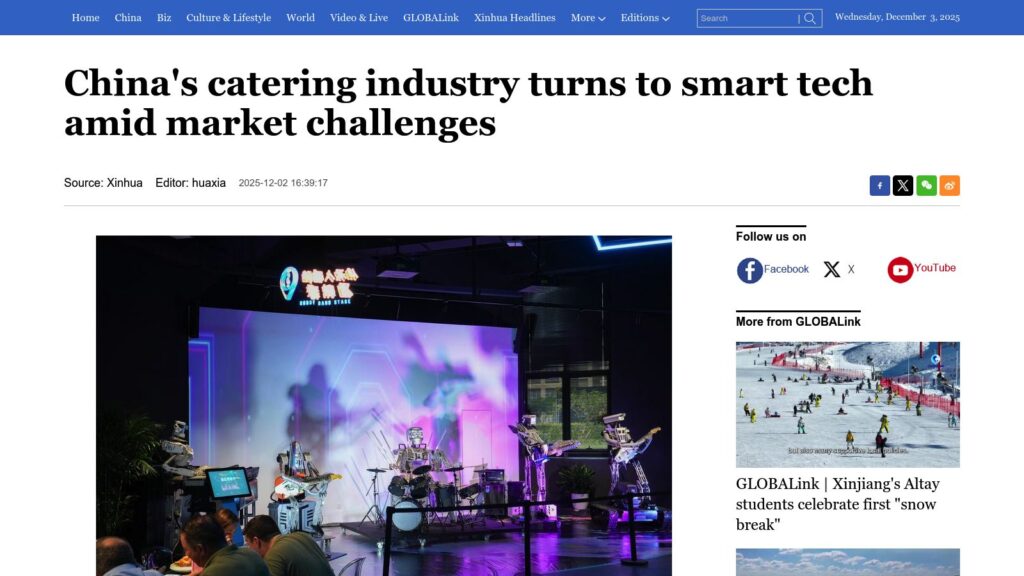
China’s Catering Industry Turns to Smart Tech Amid Market Challenges

China's catering industry embraces smart technology like AI assistants and robotic chefs to enhance customer experience and address operational challenges amid fierce competition. Despite modest revenue growth, restaurants face issues like high costs and product similarity, pushing them to adopt intelligent solutions for efficiency and better service. New regulations promote this tech integration, targeting significant advancement in smart restaurant ecosystems by 2028.

https://english.news.cn/20251202/5e710c2c59e94a92819e66ece507ede4/c.html

Coco Robotics, Shake Shack Roll Out Autonomous Delivery Partnership in Chicago

Coco Robotics, in partnership with Uber Eats and Shake Shack, launched autonomous food delivery in Chicago, utilizing delivery robots at select Shake Shack locations. This collaboration aims to streamline the delivery process, especially during peak times, and is targeted towards the tech-savvy consumer market in dense urban areas. Coco's robots efficiently navigate various weather conditions and are designed to maintain food quality. The company plans to expand its Chicago operations and create 10,000 robots by 2026, responding to growing demand for convenient delivery solutions. Coco envisions democratizing delivery services to make them more accessible.

https://foodondemand.com/12022025/coco-robotics-shake-shack-roll-out-autonomous-delivery-partnership-in-chicago/

Can Intelligent Cooking Machines Invade the Kitchen and “Eliminate” a Group of Chefs?

Stir-frying robots are rapidly entering the catering industry, prompting questions about whether they will replace chefs. Advantages include fast cooking times and stable outputs, with robots taking just a few minutes to prepare dishes. However, chefs emphasize their creativity and expertise remain competitive, suggesting robots can assist rather than replace. Despite potential cost benefits, robots face challenges in practical kitchen operations and require human oversight. Overall, the integration of stir-frying robots may shift chef roles rather than eliminate them, creating opportunities for chefs to focus on creative aspects and management.

https://eu.36kr.com/en/p/3572154393483394

Embracing Automation in Restaurants

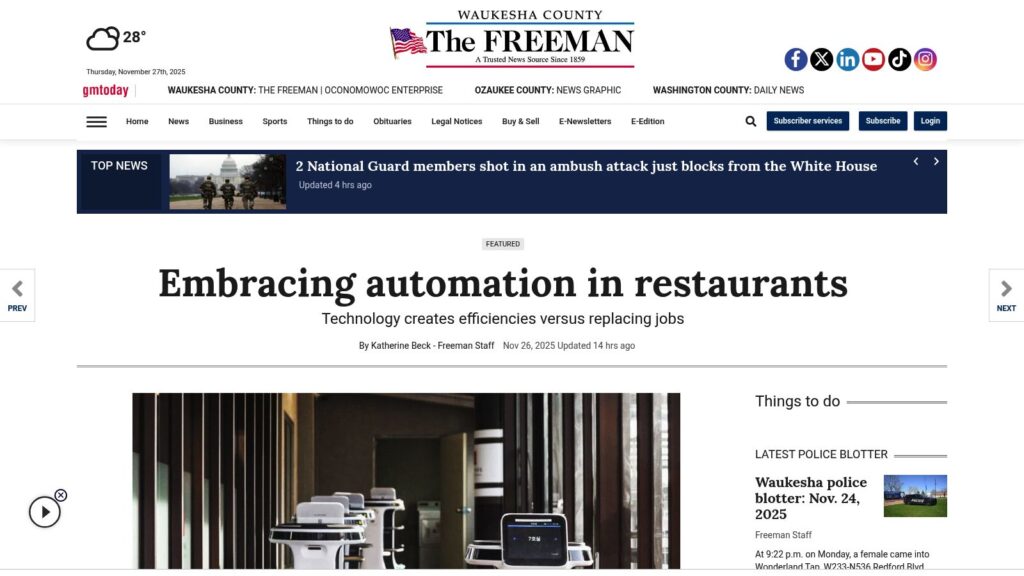
Automation in Restaurants: Waukesha County chefs see automation as a means to enhance efficiency without replacing jobs. Digital tools and robots in operations aim to improve the customer experience and streamline tasks. The restaurant automation market is expected to grow significantly, emphasizing the balance between human interaction and technological support. This movement encourages hiring, operational safety, and skill growth. Chefs believe automation facilitates better quality and consistency, making life easier for employees while still requiring human oversight.

https://www.gmtoday.com/the_freeman/business/embracing-automation-in-restaurants/article_3f6018b9-20e8-59d3-9b6b-7fde2c8a09aa.html

China’s Restaurant Chains Turn to Robots After Backlash Against Pre-made Dishes

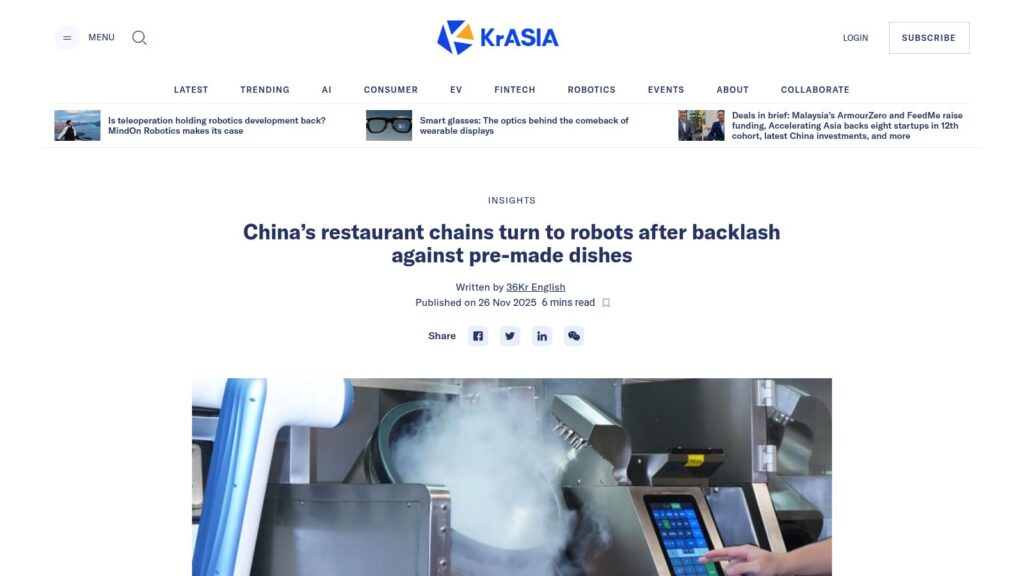
China's restaurant industry is shifting from pre-prepared dishes to cooking robots due to consumer backlash. Automation in kitchens improves efficiency, reduces labor costs, and maintains food quality. Robot use is becoming mainstream as diners prefer fresh meals made by machines over reheated options. This trend is extending to workplace cafeterias, helping companies meet demand while minimizing waste and labor costs. The adoption of cooking robots reflects the industry's need for standardization and efficiency.

https://kr-asia.com/chinas-restaurant-chains-turn-to-robots-after-backlash-against-pre-made-dishes

Uber Expands Robotic Delivery With New Global Partnership

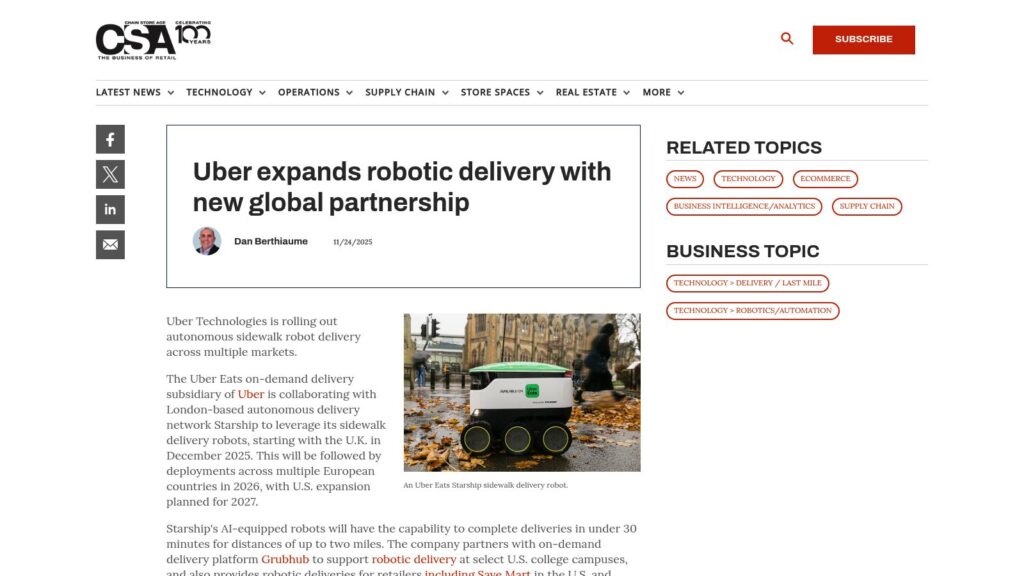
Uber collaborates with Starship for global sidewalk robot deliveries, starting in the U.K. in December 2025 and expanding to Europe in 2026 and the U.S. in 2027. Starship’s robots can deliver within 30 minutes over two miles. Uber has previously used various robotic delivery methods, enhancing its service through partnerships and technology investment.

https://chainstoreage.com/uber-expands-robotic-delivery-new-global-partnership

Self-driving Robots to Deliver Uber Eats Takeaways in the UK

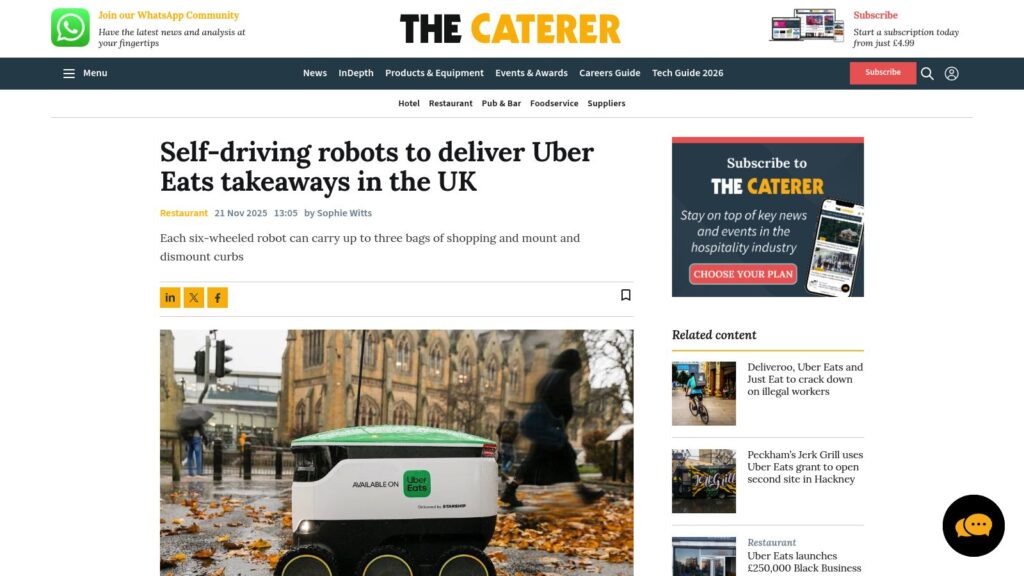
Uber Eats launching self-driving robots for takeaway delivery in the UK, starting in Leeds and expanding to Sheffield. Robots can carry three shopping bags, navigate curbs, and maintain food temperature. Partnership with Starship Technologies aims for efficient deliveries and potential future replacement of human couriers. Expansion planned for Europe in 2026 and the US in 2027 after securing funding.

https://www.thecaterer.com/news/self-driving-robots-to-deliver-uber-eats-takeaways-in-the-uk

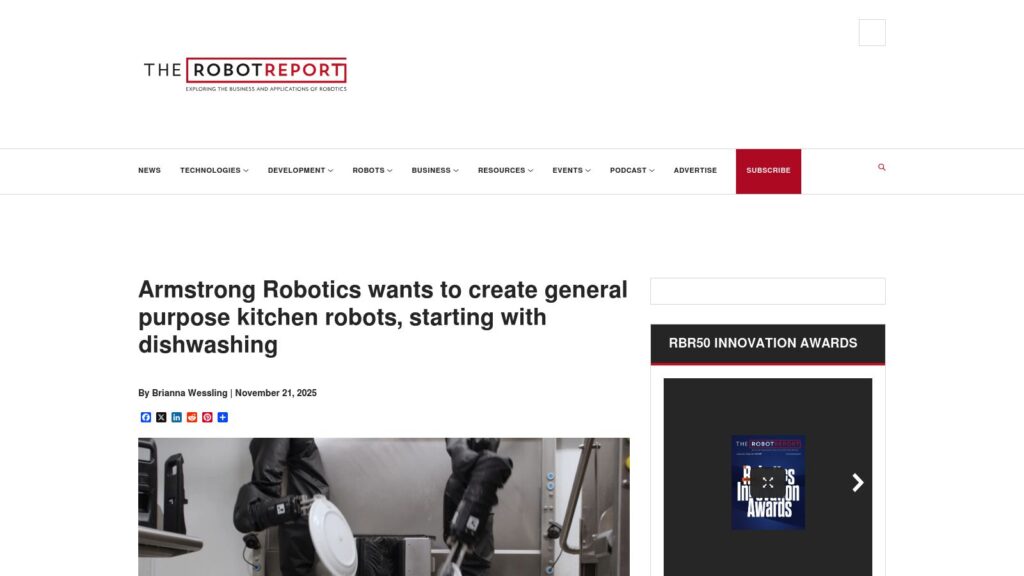
Armstrong Robotics Wants to Create General Purpose Kitchen Robots, Starting With Dishwashing

Armstrong Robotics aims to automate dishwashing in restaurants using AI and robotics, addressing labor shortages and freeing staff for customer service. Their robot features advanced sensors and customizable grippers to handle diverse dish types, overcoming challenges in perception and grip. Backed by a $12 million funding round, Armstrong has started deploying robots in restaurants, enhancing their reliability and efficiency. The company's focus is on expanding to general-purpose kitchen tasks after solidifying their dishwashing solution.

https://www.therobotreport.com/armstrong-robotics-creating-general-purpose-kitchen-robots-starting-dishwashing/

Scroll to Top