customer experience

Nearly Half of Consumers Say Their Favorite Restaurant Chain Has Changed in The Last Year, According to New Report

Tillster’s 2026 Phygital Index Report reveals that 45% of U.S. consumers say their favorite restaurant chain has changed in the past year, signaling a sharp decline in diner loyalty. The report highlights that diners are prioritizing food quality, convenience, and speed over price, leading to a shift away from traditional fast-food and fast-casual chains toward convenience and grocery stores, and emphasizing the need for restaurants to focus on seamless, personalized experiences rather than discounting to retain customers.

https://www.streetinsider.com/Globe+Newswire/Nearly+Half+of+Consumers+Say+Their+Favorite+Restaurant+Chain+Has+Changed+in+The+Last+Year%2C+According+to+New+Report/26332963.html

Where Do You See the Future of the Restaurant Industry? Any Emerging Trends You’re Excited About?

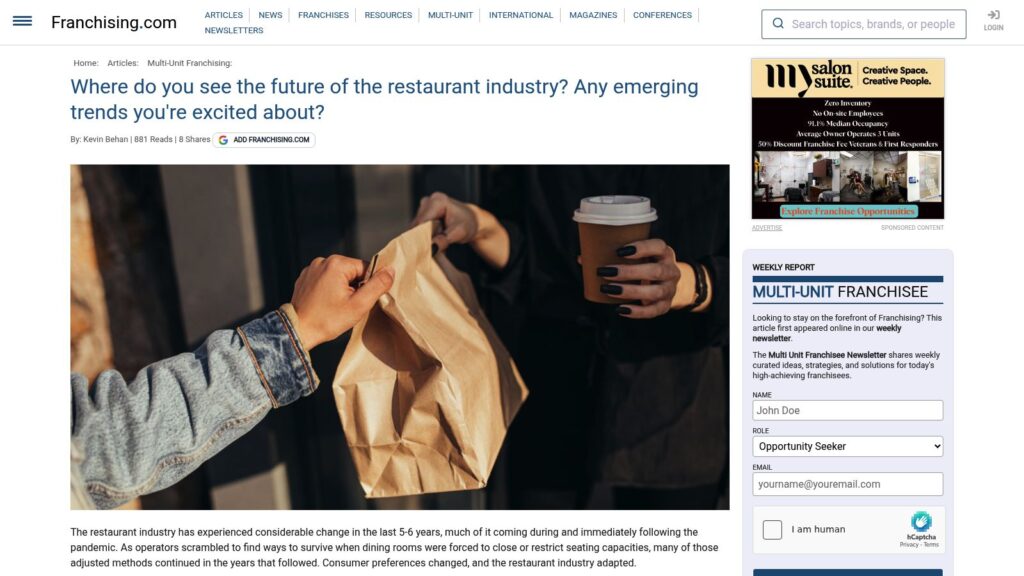
The restaurant industry has undergone significant changes in recent years, especially in response to the pandemic, with a notable shift toward off-premise dining, carryout, and third-party delivery services. Multi-unit franchisees highlight the growing role of technology, including AI and predictive analytics, to improve operations, customer experience, and labor management, while emerging trends focus on convenience, diverse global flavors, and new dining formats blending quick service with fine dining.

https://www.franchising.com/articles/20260420_where_do_you_see_the_future_of_the_restaurant_industry_any_emerging_tre.html

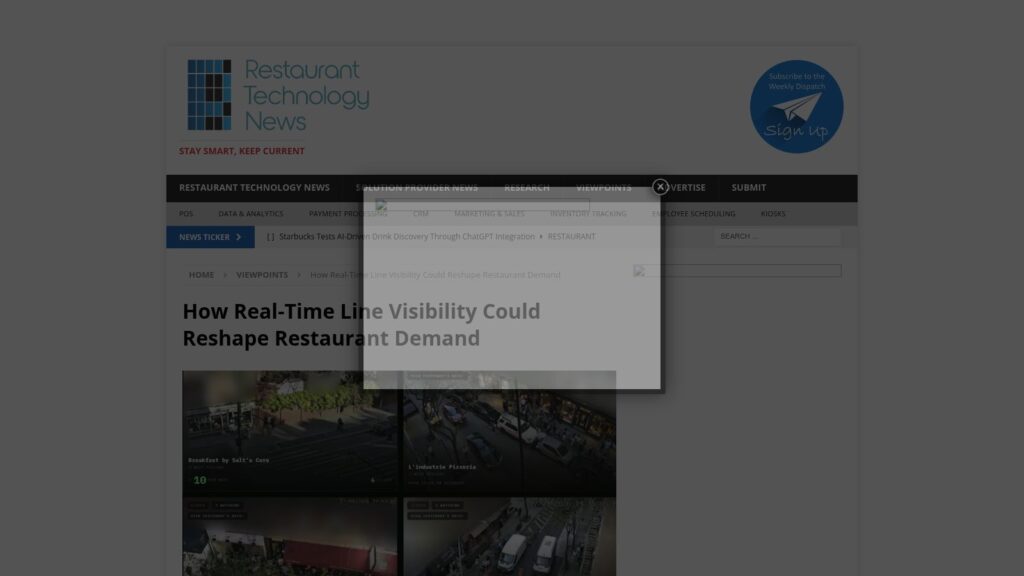
How Real-Time Line Visibility Could Reshape Restaurant Demand

A new platform called Damn Lines streams real-time video of queues outside popular Manhattan restaurants, providing customers advance visibility of wait times along with historical data and notifications. This emerging technology shifts how restaurant demand is understood and managed by making waiting lines a visible, measurable data point that influences customer behavior before they even arrive, posing new challenges and opportunities for operators in controlling demand and shaping visit patterns.

https://restauranttechnologynews.com/2026/04/how-real-time-line-visibility-could-reshape-restaurant-demand/

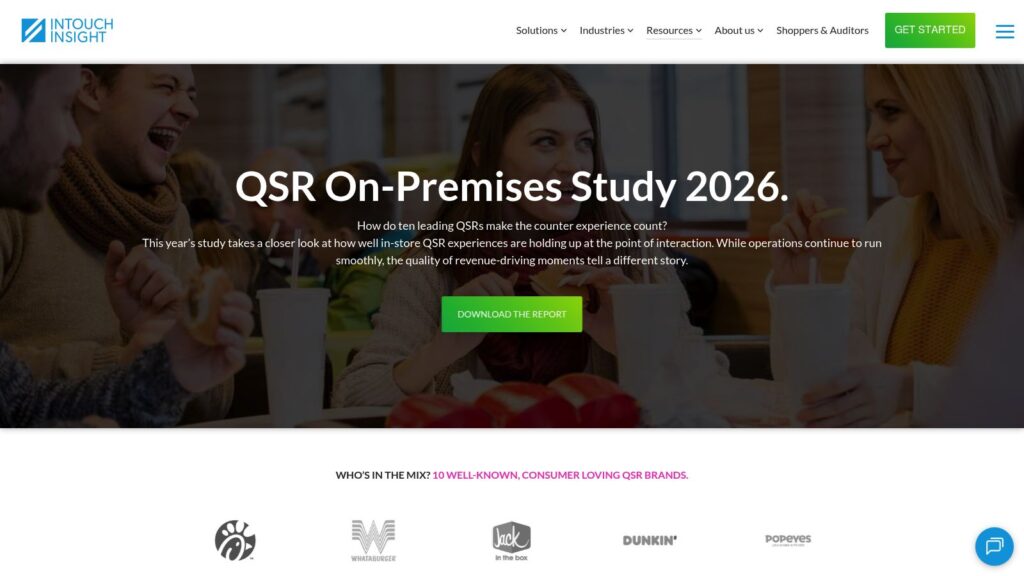
An Intouch Insight Study on the In-Person QSR Guest Experience

The 2026 QSR On-Premises Study by Intouch Insight evaluates ten leading quick-service restaurant brands, revealing gaps in human connection such as inconsistent greetings and parting remarks, with 27.9% of guests not greeted and 27.4% receiving no closing remark. The study highlights suggestive selling as the largest missed revenue opportunity, averaging just 60.6% execution, and identifies dinner as the slowest daypart, with service times averaging over four minutes, impacting overall customer satisfaction.

https://www.intouchinsight.com/resources/studies/on-premises-qsr-study/

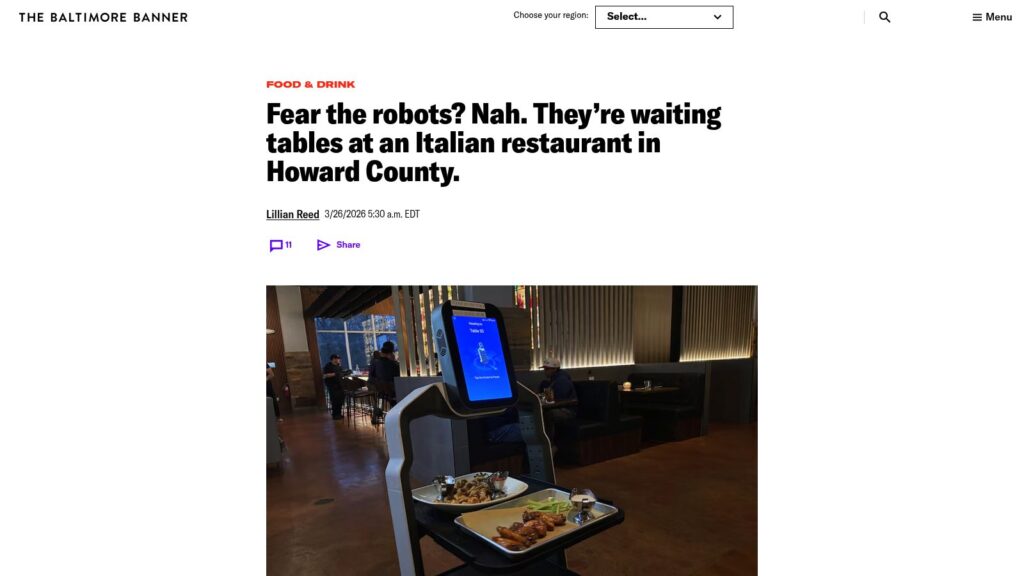
Robots Are Waiting Tables at an Italian Restaurant in Howard County

ViVa Ristorante in Elkridge, Howard County, employs autonomous robot waiters to deliver food and drinks, providing a futuristic dining experience that aims to address restaurant labor shortages and changing customer habits. Customers order via QR codes and robots handle deliveries while human staff assist with drinks, bussing, and other needs; despite some initial skepticism and minor service hiccups, the robots offer both efficiency and entertainment at the eatery.

https://www.thebanner.com/culture/food-drink/robot-waiters-dining-viva-ristorante-2GANMDEFT5D5DEBLTEYGAPYY7U/

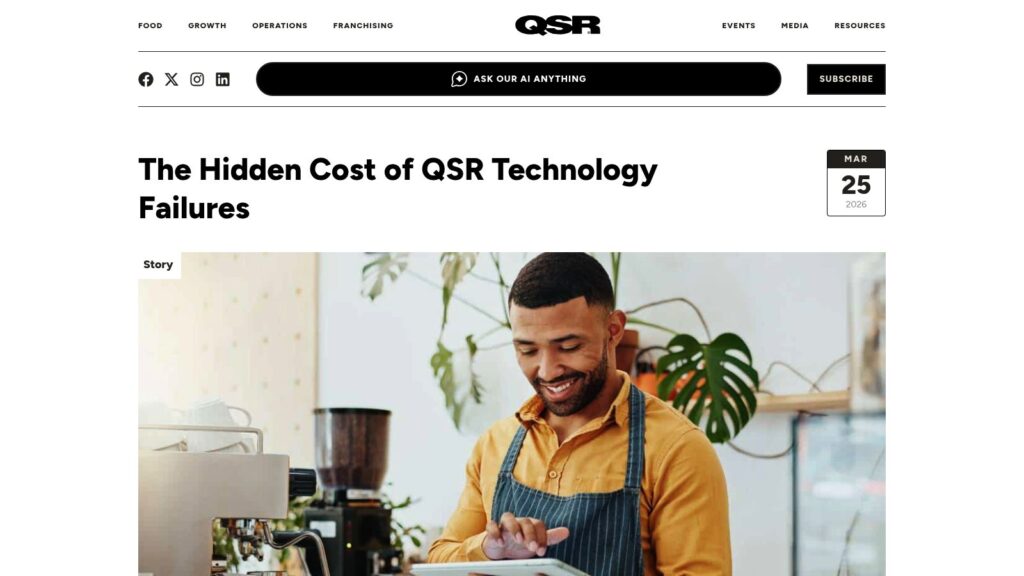
The Hidden Cost of QSR Technology Failures

Quick-service restaurants (QSRs) invest heavily in technology like drive-thru systems, kiosks, and mobile apps to deliver fast, consistent customer experiences; however, frequent tech failures—such as payment terminal malfunctions and offline POS systems—cause delays, revenue loss, and increased employee workload. Surveys show that technology issues are common and negatively impact customer loyalty, prompting leading QSRs to adopt integrated remote monitoring and management software to reduce downtime and improve operational efficiency.

https://www.qsrmagazine.com/operations/outside-insights/the-hidden-cost-of-qsr-technology-failures/

Capgemini and McDonald’s Extend Partnership to Advance AI-Driven Restaurant Technology

Capgemini has extended its strategic partnership with McDonald’s for five years to support the ongoing modernization of restaurant operations and digital customer experiences worldwide. The collaboration focuses on advancing McDonald’s digital transformation through AI, cloud-based technologies, and enhanced consumer platforms, aligning with McDonald’s goal to expand loyalty programs and generate significant sales growth by 2027.

https://www.foodbeverage-outlook.com/food-beverage-insights/capgemini-and-mcdonalds-extend-partnership-to-advance-ai-driven-restaurant-technology

Why AI Chatbots Are the Next Frontier in Restaurant Technology

AI-powered chatbots are rapidly advancing as a major innovation in restaurant technology, with major chains like Yum Brands, Burger King, Starbucks, and Papa Johns implementing AI assistants to enhance labor efficiency, back-of-house operations, and customer ordering experiences. Technology vendors such as Olo and Miso Robotics are developing AI tools—like Olo’s AI agent modeled after Shopify’s system and Miso’s AI-powered Zippy platform—to provide accessible, intelligent automation and insights for restaurants of varying sizes, signaling a significant shift toward agentic AI as the next frontier in the industry.

https://www.nrn.com/restaurant-technology/tech-tracker-ai-chatbots-are-the-next-frontier-in-restaurant-technology

Professor Explores Customer Reaction to Robot Service in Restaurants

ASU's Jong-Hyeong Kim studies customer reactions to restaurant robots, like Starship's delivery bots and Shiela, revealing impacts on dining experiences. His research shows that while robot novelty affects customer loyalty, balancing technology with human interaction is essential for a positive atmosphere. Robots can aid small restaurants, but costs and loss of personal touch are concerns. Cultural perceptions also influence how service robots are received.

https://news.asu.edu/20260304-business-and-entrepreneurship-associate-professor-explores-customer-reaction-robot-service

Generation Alpha Food Trends: How Gen Alpha Eating Habits Are Reshaping Restaurants and Family Dining

Generation Alpha, born between 2011 and 2024, is influencing food trends and reshaping the restaurant industry. Characterized by digital connectivity and cultural change, they exhibit strong brand loyalty and play a significant role in family dining choices. Their eating habits blend curiosity for global cuisines with selective preferences, reflecting a paradox of adventurous exploration and pickiness. Gen Alpha enjoys cooking, engages with food-related content, and influences household food purchases, favoring convenience and interactive experiences. Understanding their preferences is crucial for foodservice operators and brands aiming to build lasting loyalty and cater to future consumer behavior.

https://datassential.com/resource/generation-alpha-food-trends/

Scroll to Top