QSR

QSR Market Size, Trends, Analysis & Growth Report 2031
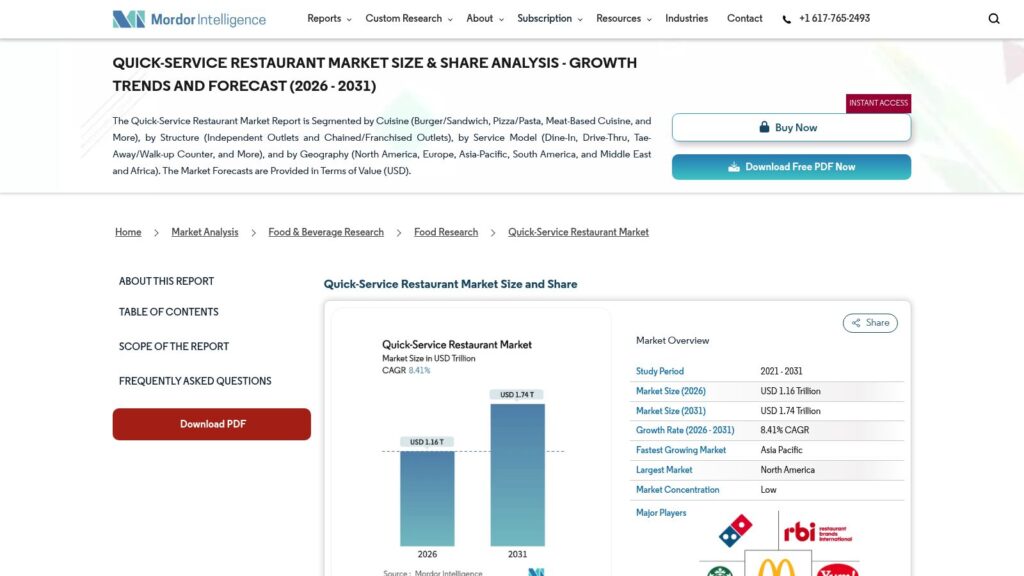
The Quick-Service Restaurant (QSR) market is projected to grow from USD 1.16 trillion in 2026 to USD 1.74 trillion by 2031, at a CAGR of 8.41%, driven by digital ordering, off-premise formats, and rapid urbanization. North America remains the largest market, while Asia-Pacific is the fastest-growing region, with innovations like AI-powered drive-thrus and subscription loyalty programs enhancing convenience and profitability. Key players like McDonald's and Yum! Brands lead a fragmented market adapting to rising labor costs, health regulations, and competition from fast-casual and delivery services.
https://www.mordorintelligence.com/industry-reports/quick-service-restaurants-market?utm_source=marketersmedia

The Hidden Cost of QSR Technology Failures

Quick-service restaurants (QSRs) invest heavily in technology like drive-thru systems, kiosks, and mobile apps to deliver fast, consistent customer experiences; however, frequent tech failures—such as payment terminal malfunctions and offline POS systems—cause delays, revenue loss, and increased employee workload. Surveys show that technology issues are common and negatively impact customer loyalty, prompting leading QSRs to adopt integrated remote monitoring and management software to reduce downtime and improve operational efficiency.

https://www.qsrmagazine.com/operations/outside-insights/the-hidden-cost-of-qsr-technology-failures/

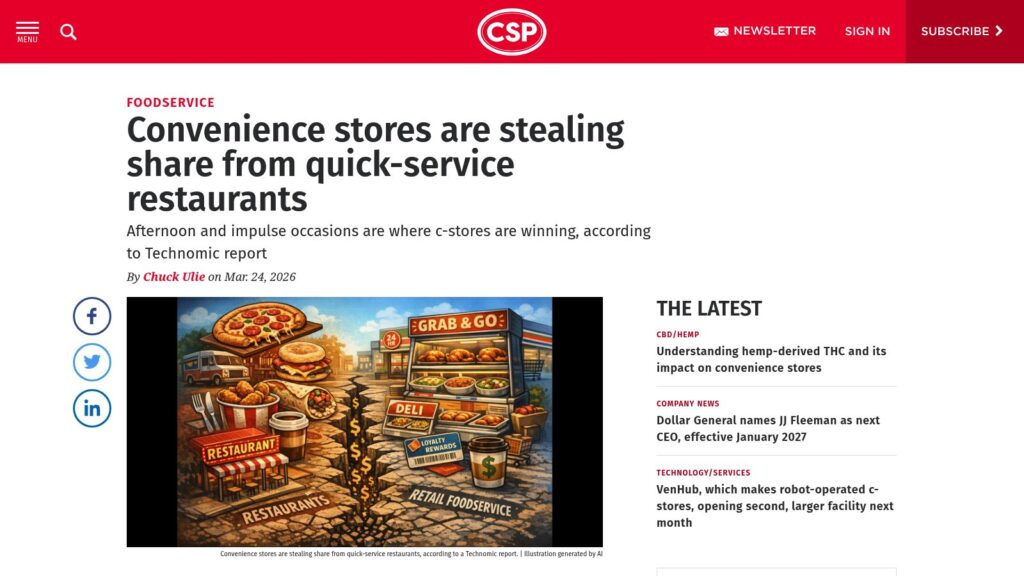
Convenience Stores Are Stealing Share From Quick-Service Restaurants

A Technomic report reveals that convenience stores are increasingly capturing market share from quick-service restaurants (QSRs), particularly during afternoon and impulse visits. Data from 2025 shows 15% of c-store visits were occasions where consumers considered QSRs but chose convenience stores instead, with notable shares lost from major QSR chains like McDonald’s and Burger King. The report also indicates that convenience stores are closing the gap in consumer perceptions of food quality and brand loyalty compared to QSRs.

https://www.cspdailynews.com/foodservice/convenience-stores-are-stealing-share-quick-service-restaurants

Alone but Not Lonely: Why Americans Choose To Eat in Restaurants by Themselves

A significant portion of Americans—about 62%—dine alone at restaurants at least occasionally, with 21% doing so weekly or more, often as a form of self-care. Solo diners typically choose casual dining options and prioritize diverse menus, atmosphere, and speed, with midday being the prime time for solo meals; this trend, notably driven by Millennials, reflects a shift in how people relate to eating out and themselves.

https://civicscience.com/alone-but-not-lonely-why-americans-choose-to-eat-in-restaurants-by-themselves/

Travis Kalanick Returns With a Plan to Rewire the Restaurant Tech Stack

Travis Kalanick has rebranded his portfolio of restaurant, logistics, and automation ventures under the umbrella of Atoms, aiming to transform food production, fulfillment, and delivery through integrated technology and infrastructure. Building on his earlier CloudKitchens concept, Atoms combines real estate, software like the Otter platform for managing off-premise dining, and automation initiatives such as Lab37, which develops modular robotic kitchen tools to improve efficiency and control costs in delivery-focused kitchens. This unified ecosystem reflects Kalanick’s vision to reshape the restaurant tech stack amid industry challenges like labor costs and fragmented operations.

https://restauranttechnologynews.com/2026/03/travis-kalanick-returns-with-a-plan-to-rewire-the-restaurant-tech-stack/

Capgemini and McDonald’s Extend Partnership to Advance AI-Driven Restaurant Technology

Capgemini has extended its strategic partnership with McDonald’s for five years to support the ongoing modernization of restaurant operations and digital customer experiences worldwide. The collaboration focuses on advancing McDonald’s digital transformation through AI, cloud-based technologies, and enhanced consumer platforms, aligning with McDonald’s goal to expand loyalty programs and generate significant sales growth by 2027.

https://www.foodbeverage-outlook.com/food-beverage-insights/capgemini-and-mcdonalds-extend-partnership-to-advance-ai-driven-restaurant-technology

Q4 2025’s Restaurant Winners and Loses

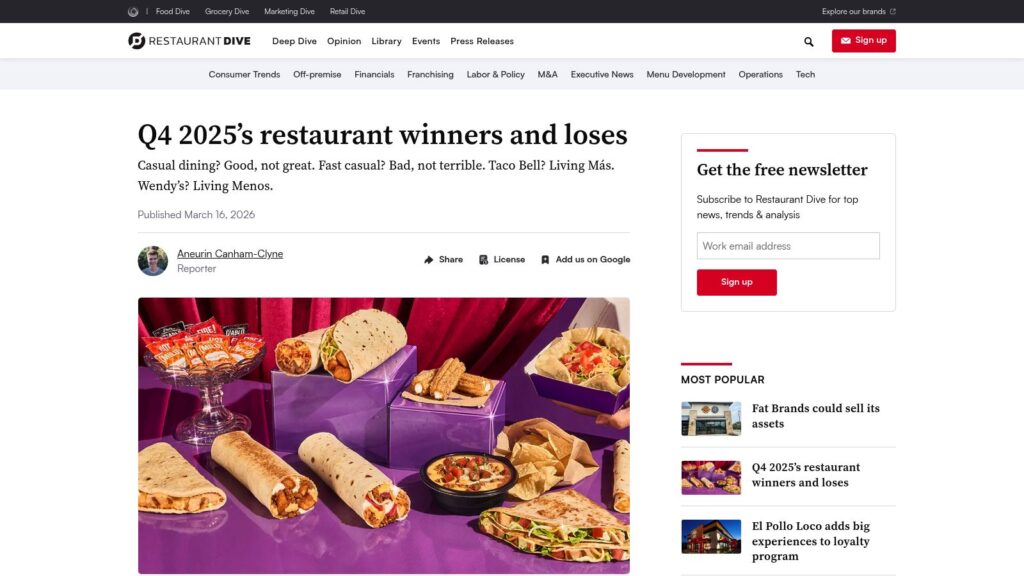
Q4 2025 saw strong performances from several QSR brands, including McDonald’s, Taco Bell, Domino’s, and Starbucks, driven by value plays, new menu items, and marketing strategies. In contrast, Sweetgreen experienced its worst quarter, while Pizza Hut and Wendy’s also faced challenges. The QSR sector dominated the quarter’s earnings news, with casual dining and fast casual segments showing mixed results.

https://www.restaurantdive.com/news/restaurant-q4-2025-winners-losers-mcdonalds-starbucks-pizza-hut-papa-johns/814719/

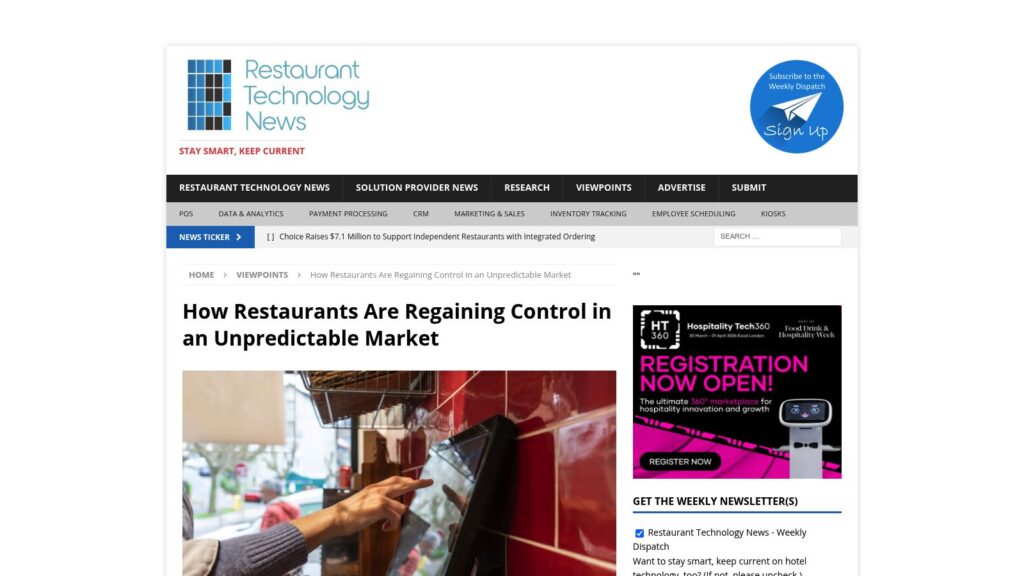
How Restaurants Are Regaining Control in an Unpredictable Market

Despite having access to more data than ever, many restaurant operators in 2026 struggle with acting on real-time information to manage sales, labor, and profitability effectively. Technologies like handheld POS devices and self-service kiosks are helping by capturing real-time operational data, enabling faster decision-making and better control at the point of service—shifting the focus from just generating data to using it proactively to improve restaurant performance and margin forecasting amid an unpredictable market.

https://restauranttechnologynews.com/2026/03/how-restaurants-are-regaining-control-in-an-unpredictable-market/

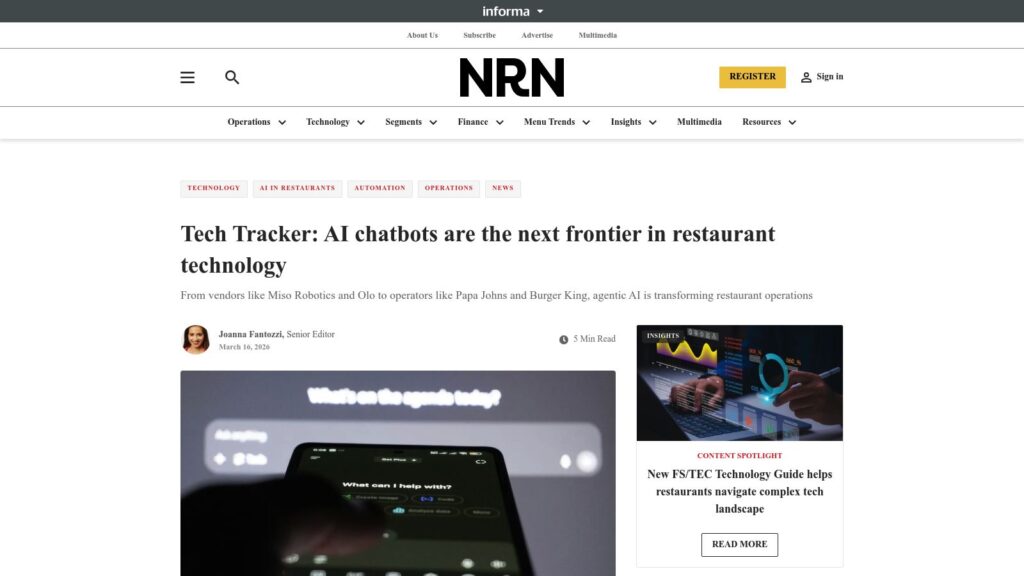
Why AI Chatbots Are the Next Frontier in Restaurant Technology

AI-powered chatbots are rapidly advancing as a major innovation in restaurant technology, with major chains like Yum Brands, Burger King, Starbucks, and Papa Johns implementing AI assistants to enhance labor efficiency, back-of-house operations, and customer ordering experiences. Technology vendors such as Olo and Miso Robotics are developing AI tools—like Olo’s AI agent modeled after Shopify’s system and Miso’s AI-powered Zippy platform—to provide accessible, intelligent automation and insights for restaurants of varying sizes, signaling a significant shift toward agentic AI as the next frontier in the industry.

https://www.nrn.com/restaurant-technology/tech-tracker-ai-chatbots-are-the-next-frontier-in-restaurant-technology

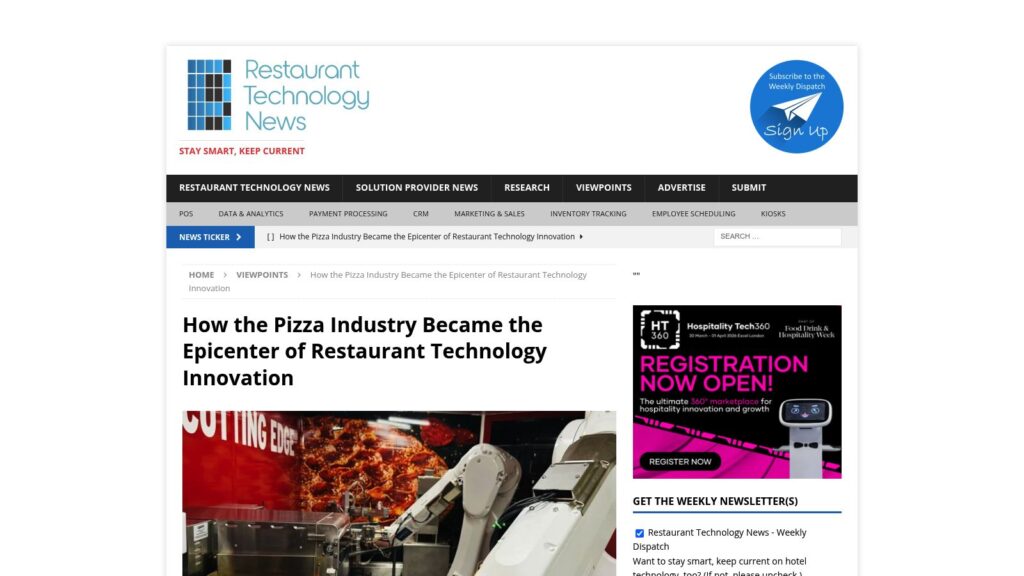
How the Pizza Industry Became the Epicenter of Restaurant Technology Innovation

Pizza industry leads in restaurant tech innovation, employing AI, robotics, and automation for efficiency in ordering and operations. Companies like Jet’s Pizza and Donatos experiment with automated systems, improving workflow and customer engagement. Domino’s and Papa Johns also invest in digital platforms and AI for personalized marketing. Innovations in predictive analytics and delivery automation signal evolving consumer expectations for speed and convenience, positioning pizza restaurants as key testing grounds for future tech in food service.

https://restauranttechnologynews.com/2026/03/how-the-pizza-industry-became-the-epicenter-of-restaurant-technology-innovation/

Scroll to Top