QSR

Robots in SoCal Restaurants

Robots, especially ‘Robby' by Next Robot, are increasingly used in Southern California restaurants to improve food production and consistency. Restaurant owners, like Tomas Su of Tigawok, report faster preparation and scalability, with Robby allowing anyone to cook with ease. Advanced models like Al Dente can handle complex dishes, using AI for precision. Despite concerns about job loss, the CEO emphasizes that robots are tools to enhance efficiency and growth in the industry, with 300 units currently in operation.

https://spectrumlocalnews.com/me/maine/business/2026/03/09/robots-in-restaurants
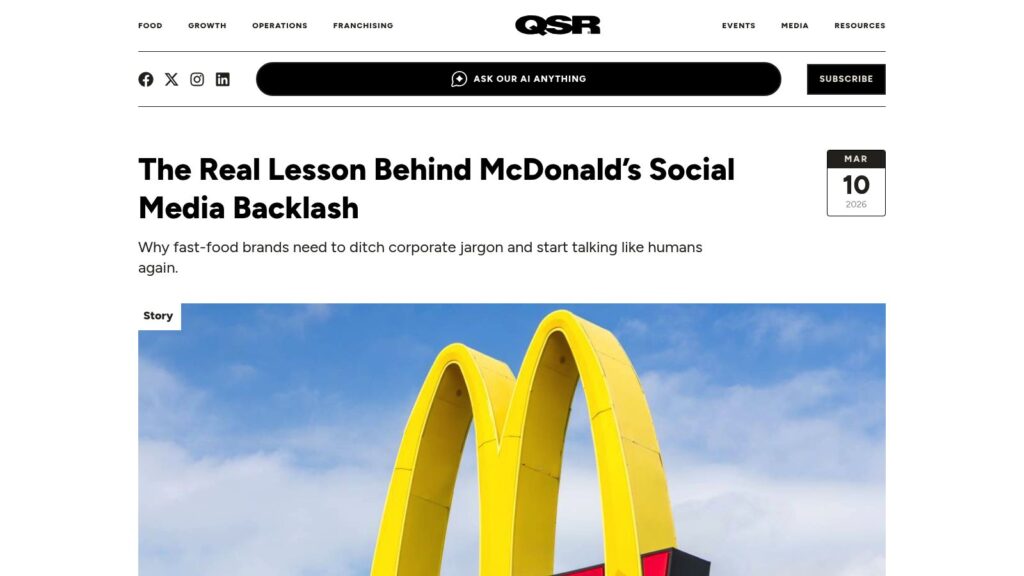
The Real Lesson Behind McDonald’s Social Media Backlash

McDonald's social media backlash highlights the disconnect between corporate jargon and customer engagement, as CEO's terms like “product” alienated audiences. Fast-food marketing should prioritize authentic communication, focusing on real people and their experiences rather than data-driven language. Successful brands, like Wendy's and Chili's, engage with culture and humor, fostering genuine connections rather than merely selling. To resonate with customers, QSRs must embrace authenticity, participate in culture, and avoid constant sales tactics.

https://www.qsrmagazine.com/story/the-real-lesson-behind-mcdonalds-social-media-backlash/

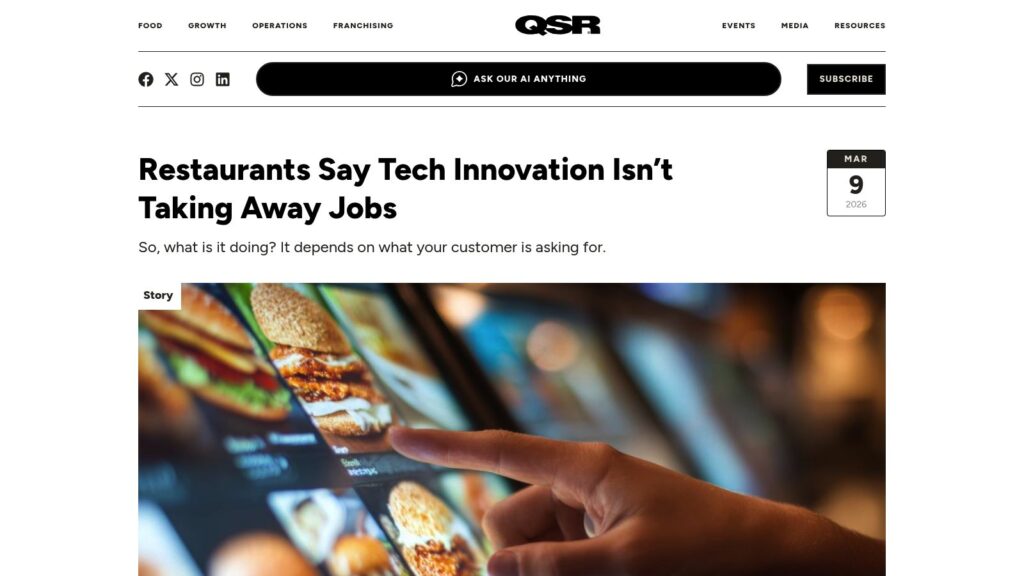
Restaurants Say Tech Innovation Isn’t Taking Away Jobs

Tech in restaurants boosts efficiency, improves customer experience, and adds jobs. Operators keen on tech saw minimal job loss, with 80% appreciating its competitive edge. AI usage is growing, especially in marketing. Consumers, especially younger ones, prefer tech for ordering. Sentiment on tech's impact on hospitality varies; many feel it enhances service, although some worry about losing personal touch. Balancing automation and human interaction remains crucial.

https://www.qsrmagazine.com/story/restaurants-say-tech-innovation-isnt-taking-away-jobs/

Fast Food & Quick Service Restaurants Strategic Business Market Report 2026

Fast food and Quick Service Restaurants (QSR) market analysis: Valued at $316.1B in 2024, expected to grow to $384B by 2030 (CAGR 3.3%). Growth driven by urbanization, demand for convenience, tech advancements (digital ordering, delivery apps), and health-conscious menu diversification (plant-based options). Technological innovations enhance customer experience and operational efficiency. QSRs increasingly adopt sustainable practices and focus on transparency in ingredient sourcing to meet consumer demands.

https://sg.finance.yahoo.com/news/fast-food-quick-restaurants-strategic-123100400.html

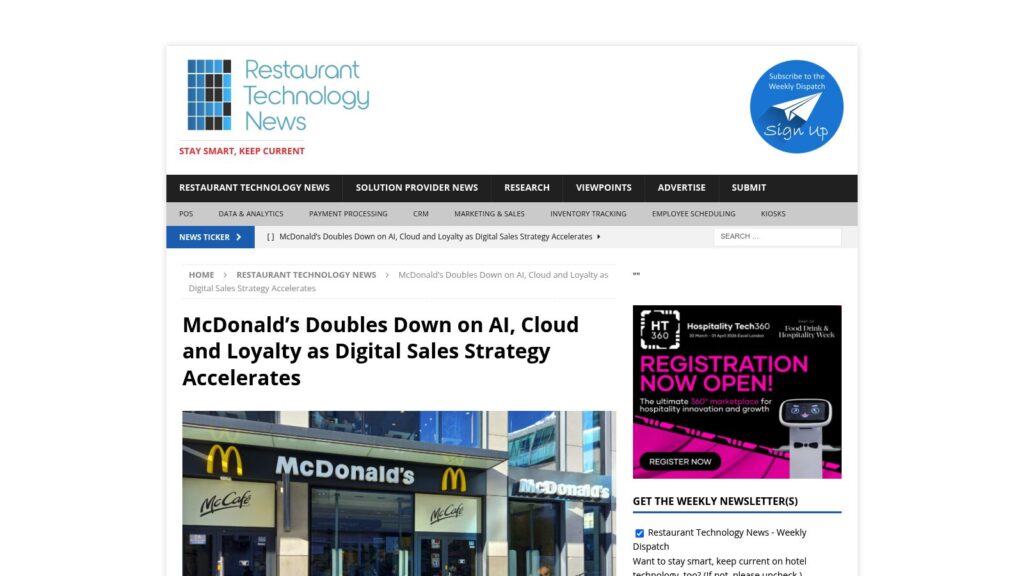
McDonald’s Doubles Down on AI, Cloud and Loyalty as Digital Sales Strategy Accelerates

McDonald’s is renewing its partnership with Capgemini for five more years to enhance technology, focusing on AI, cloud infrastructure, and customer engagement. This collaboration aims to modernize operations and improve efficiency across its global network of 40,000 restaurants. McDonald’s is targeting 250 million active loyalty users and $45 billion in annual sales from loyalty members by 2027. Recent innovations include AI tools for operational efficiency and customer personalization. Despite challenges with voice ordering technology, McDonald's continues to advance its digital strategy, emphasizing the importance of technology in future growth.

https://restauranttechnologynews.com/2026/03/mcdonalds-doubles-down-on-ai-cloud-and-loyalty-as-digital-sales-strategy-accelerates/

More Problems at Serve Robotics (SERV)

Serve Robotics, a company testing self-driving robots for food delivery, faces challenges in Chicago due to resident opposition. Residents complain that the robots block sidewalks, inconvenience pedestrians, and pose safety hazards. Additionally, the company’s robots have been involved in incidents that have blocked firetrucks and trains and harassed the disabled.

https://thebearcave.substack.com/p/more-problems-at-serve-robotics-serv

Professor Explores Customer Reaction to Robot Service in Restaurants

ASU's Jong-Hyeong Kim studies customer reactions to restaurant robots, like Starship's delivery bots and Shiela, revealing impacts on dining experiences. His research shows that while robot novelty affects customer loyalty, balancing technology with human interaction is essential for a positive atmosphere. Robots can aid small restaurants, but costs and loss of personal touch are concerns. Cultural perceptions also influence how service robots are received.

https://news.asu.edu/20260304-business-and-entrepreneurship-associate-professor-explores-customer-reaction-robot-service

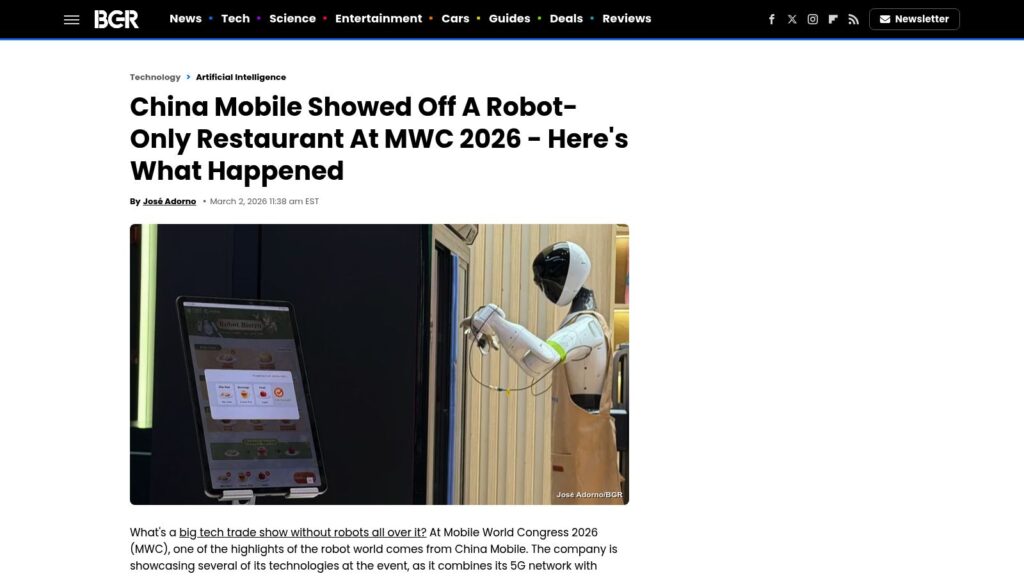
China Mobile Showed Off a Robot-Only Restaurant At MWC 2026

China Mobile showcased a robot-only restaurant at MWC 2026, demonstrating its technologies through a streamlined process where a main robot coordinated tasks performed by others. The restaurant achieved a 92% accuracy rate, with robots handling food orders and drinks efficiently, although they were slower than humans. The initiative aimed to highlight advancements in AI and real-time scheduling systems but indicated that robots won't replace human jobs soon. The project represents a push towards automating fast food service while remaining quieter than traditional restaurant environments.

https://www.bgr.com/2113530/china-mobile-robot-only-restaurant-experience-mwc-2026/

Scroll to Top