technology

Reshaping the Guest Experience
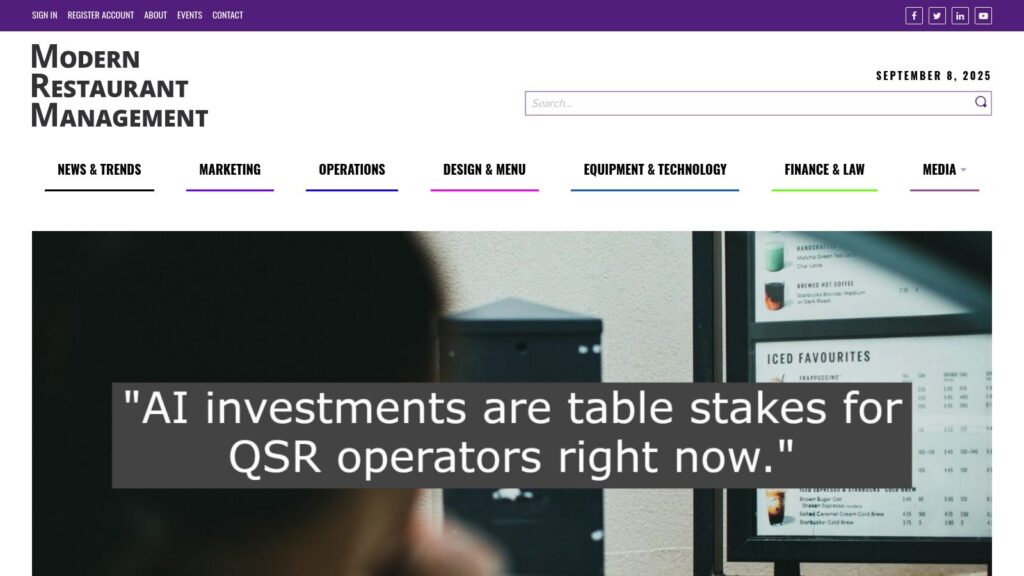
QSR operators must balance modernization and human connection, according to MX8 Labs’ report. Highlights include McDonald’s leading in brand awareness and regional preferences for certain brands. Comfort with AI ordering varies, but 61% of consumers are open to it. Operators should focus on both technology and maintaining customer relationships, as 66% prefer human interactions. Marketing should leverage social media, as nearly half of consumers try new eateries based on viral trends. Investments in AI are essential for driving efficiency and personalization in the fast-food sector.

https://modernrestaurantmanagement.com/reshaping-the-guest-experience/
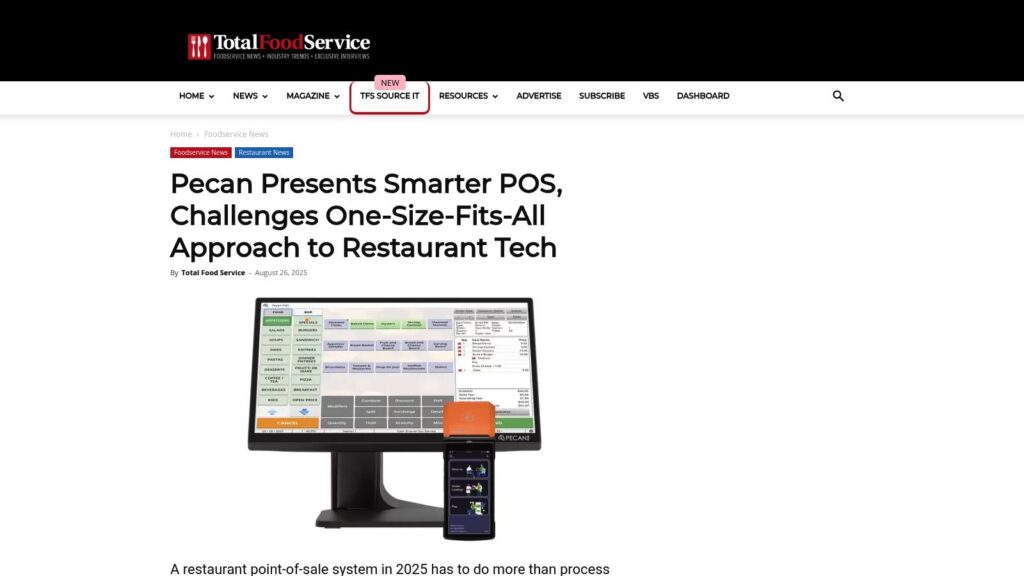
Pecan Presents Smarter POS, Challenges One-Size-Fits-All Approach to Restaurant Tech

Pecan POS offers a flexible, customizable point-of-sale system tailored for diverse restaurant operations, challenging one-size-fits-all tech. Founded in 2018, it prioritizes adaptability and dealer control, supporting modular integration and various business models. As the industry evolves under pressure, Pecan emphasizes service, relationships, and specific operator needs, providing innovative solutions like cost-efficient self-ordering kiosks. Its success stems from responsive development and empowering small to medium operators while maintaining focus on the unique challenges they face.

https://totalfood.com/pecan-smarter-pos-challenges-one-size-fits-all-tech/

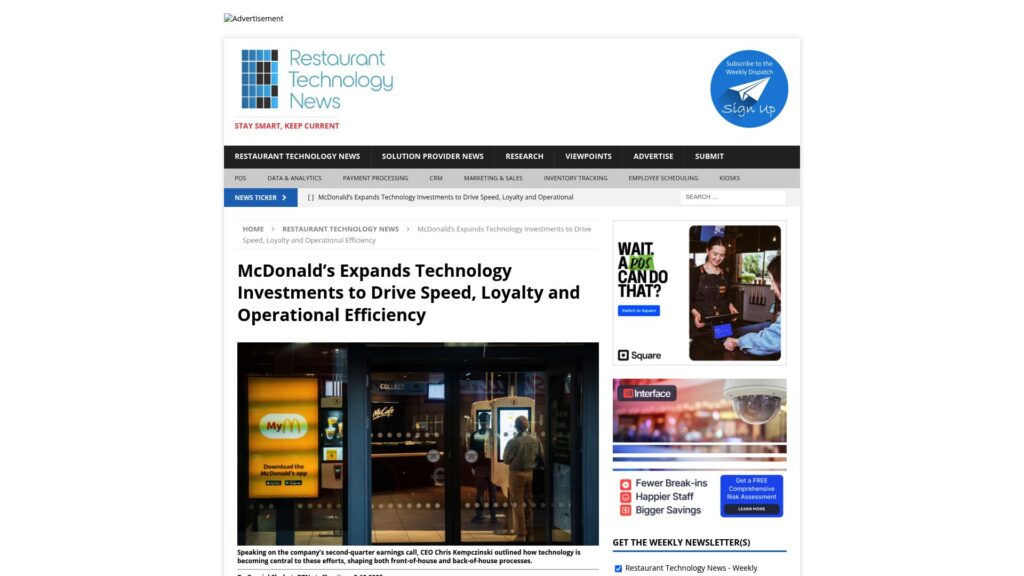
McDonald’s Expands Technology Investments to Drive Speed, Loyalty and Operational Efficiency |

McDonald’s is investing in technology to transform customer experience and operational efficiency. Through a partnership with Google Cloud, they are implementing edge computing, enhancing order processing like the “Ready on Arrival” program. The company aims for 250 million loyalty users by 2027, having already gained 185 million. Technology upgrades include replacing legacy systems with standardized platforms for better data management. Recent financial results reveal a rise in income and sales, emphasizing the impact of these technology investments. McDonald’s strategy illustrates the importance of integrating technology in the competitive fast-food industry.

https://restauranttechnologynews.com/2025/08/mcdonalds-expands-technology-investments-to-drive-speed-loyalty-and-operational-efficiency/

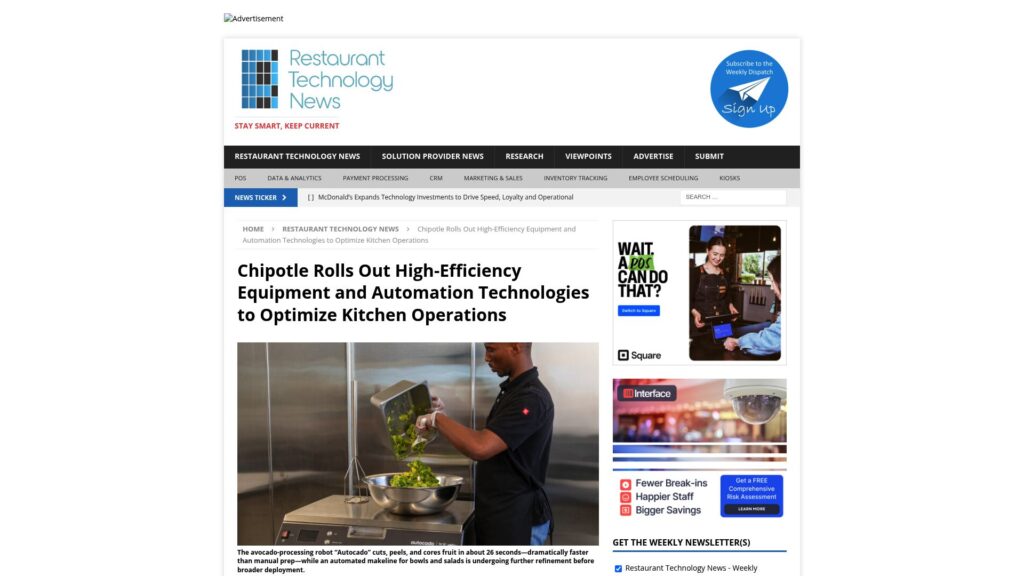
Chipotle Rolls Out High-Efficiency Equipment and Automation Technologies to Optimize Kitchen Operations |

Chipotle is enhancing kitchen efficiency by implementing high-tech equipment and automation, including the avocado-processing robot “Autocado” and new cooking tools that reduce prep time significantly. These upgrades aim to improve speed, consistency, and capacity as the company expands its catering services. With digital orders making up a large portion of sales, the focus is on modernizing operations to meet demand while maintaining culinary standards. As part of this strategy, the company also leverages a loyalty program to integrate customer data with kitchen operations, potentially redefining efficiency in fast-casual dining.

https://restauranttechnologynews.com/2025/08/chipotle-rolls-out-high-efficiency-equipment-and-automation-technologies-to-optimize-kitchen-operations/

The Intersection of Technology and Service to Help QSRs Win

QSRs face challenges but remain optimistic by adopting technology to enhance efficiency and customer satisfaction. They must integrate AI and digital solutions to manage diverse consumer demands and streamline operations. Updating technology, such as AI-powered kiosks and communication systems, can improve order accuracy and speed, addressing consumer expectations for reliability, variety, and personalization in a competitive market.

https://www.qsrmagazine.com/story/the-intersection-of-technology-and-service-to-help-qsrs-win/

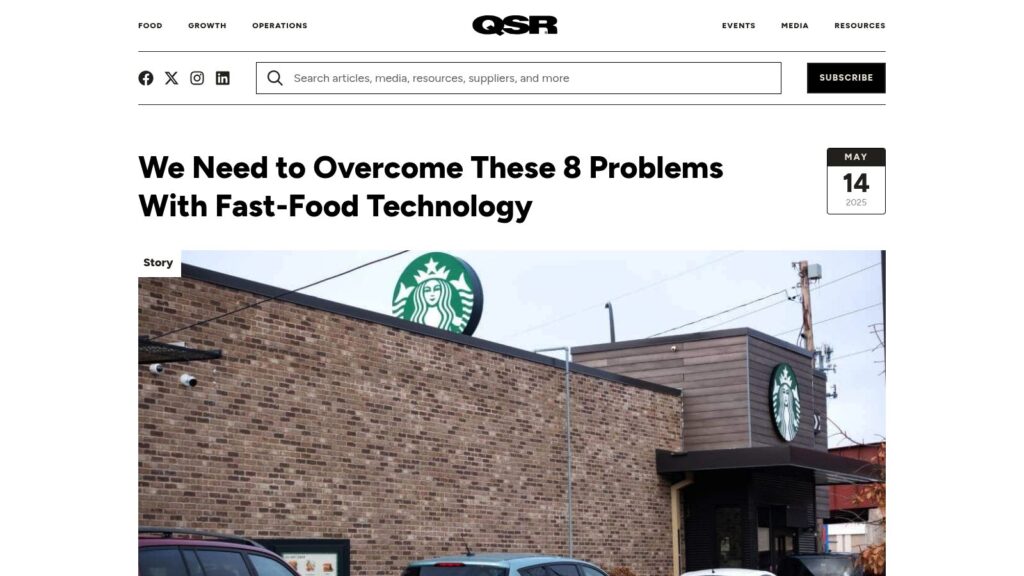
We Need to Overcome These 8 Problems With Fast-Food Technology

Fast-food technology can resolve key operational challenges, such as order inaccuracies, long drive-thru wait times, and labor shortages, by utilizing advanced tools like AI for ordering and real-time analytics. Solutions include improving order accuracy through automation, reducing drive-thru bottlenecks with predictive tools, addressing labor deficiencies with automation, minimizing food waste via smart inventory systems, optimizing staff scheduling with AI, consolidating siloed tech platforms, providing real-time operational insights, and ensuring a seamless omnichannel experience. These innovations enhance efficiency and customer satisfaction in the fast-food industry.

https://www.qsrmagazine.com/story/we-need-to-overcome-these-8-problems-with-fast-food-technology/

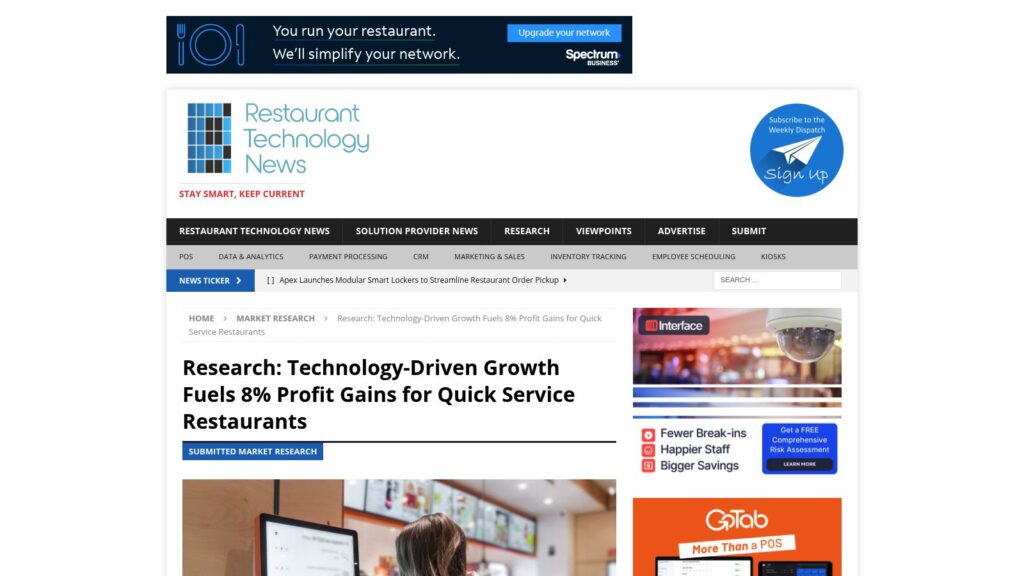
Research: Technology-Driven Growth Fuels 8% Profit Gains for Quick Service Restaurants |

Research indicates technology-driven growth has led to an 8% profit increase for quick service restaurants (QSRs). A report by PAR Technology highlights significant rises in digital transactions: kiosk usage up 27% yearly, mobile orders up 21%, and delivery volumes surged 383% since 2020. Despite rising labor costs, QSRs benefitted from digital engagement and integrated tech platforms, with recommendations to invest in first-party delivery and automate labor to enhance efficiency and profitability.

https://restauranttechnologynews.com/2025/05/research-technology-driven-growth-fuels-8-profit-gains-for-quick-service-restaurants/

ABB and BurgerBots Unveil Robotic Burger-making to Revolutionize Fast Food Prep

ABB and BurgerBots introduce an innovative automated burger-making restaurant in Los Gatos, California, featuring robots like IRB 360 FlexPicker® and YuMi®, which enhance meal assembly speed and hygiene. A survey shows strong support for automation in hospitality as a solution to labor challenges, with robots taking over repetitive tasks to improve employee focus on customer service. The BurgerBots concept promises consistent, efficient food service with real-time inventory management, paving the way for broader robotic adoption in the industry.

https://new.abb.com/news/detail/125513/prsrl-abb-and-burgerbots-unveil-robotic-burger-making-to-revolutionize-fast-food-prep

Square Debuts Restaurant Kiosk For Self-Serve Ordering

Square has launched the Square Kiosk, a self-service ordering tool for fast food restaurants, integrating software, hardware, and payment solutions. This kiosk allows diners to customize orders directly sent to kitchens, reducing wait times and improving order accuracy, while helping restaurants manage rising labor costs. Research indicates strong consumer preference for self-service in quick-service settings compared to full-service restaurants.

https://www.pymnts.com/restaurant-innovation/2024/square-debuts-restaurant-kiosk-for-self-serve-ordering

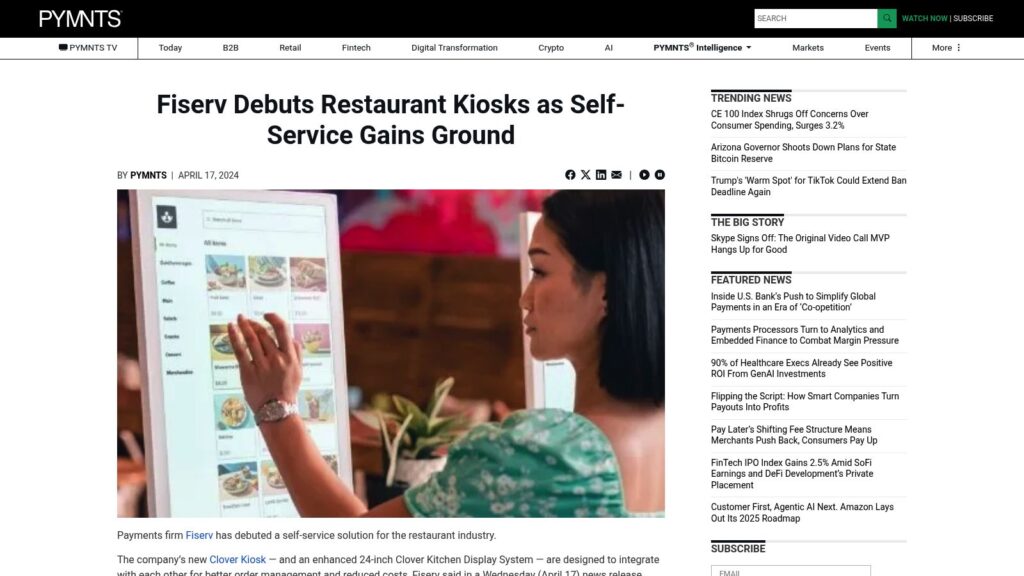
Fiserv Debuts Restaurant Kiosks as Self-Service Gains Ground

Fiserv launched a new self-service restaurant solution, the Clover Kiosk, aimed at improving order management and reducing costs amidst rising self-service trends in the food industry. The initiative supports restaurant operators in adapting to efficiency challenges while enhancing customer experiences. With increasing labor shortages and costs, self-service solutions are becoming essential, although some customers still prefer human interaction over technology in dining settings.

https://www.pymnts.com/restaurant-technology/2024/fiserv-debuts-restaurant-kiosks-as-self-service-gains-ground

Scroll to Top