technology

Why Restaurant Technology Is Now the Only Reliable Answer to Hybrid Work Demand Volatility
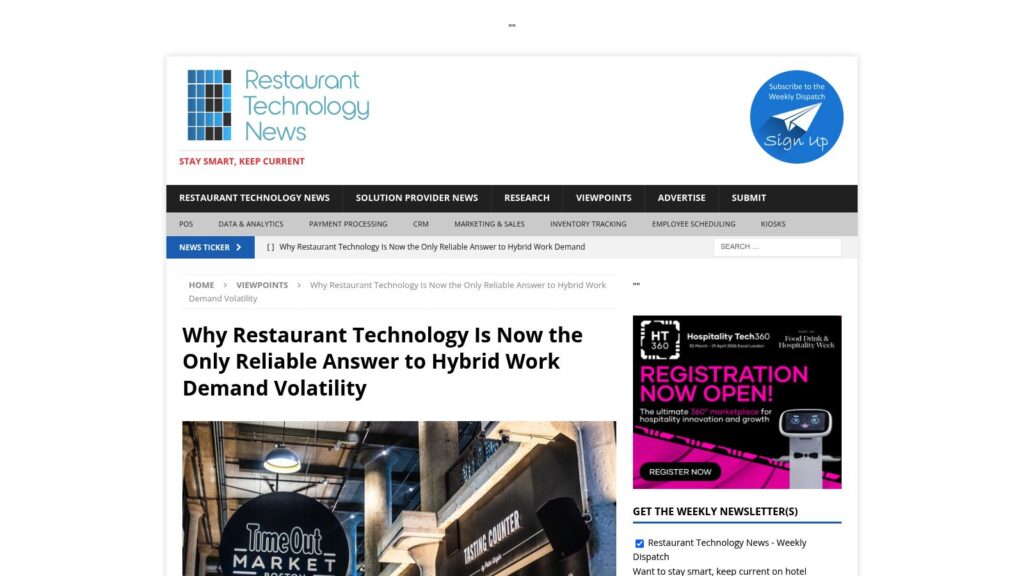
Hybrid work has disrupted restaurant demand, creating unpredictability and forcing businesses to adapt. Time Out Market in Boston faced imminent closure due to inconsistent foot traffic but secured new management to continue operations. The industry is shifting toward technology for demand forecasting, diversified channels, and improved customer experiences as businesses adjust to new dining behaviors. The overarching challenge is no longer appetite but the irregularity in customer patterns, emphasizing the need for tech-driven solutions to thrive.
https://restauranttechnologynews.com/2026/01/why-restaurant-technology-is-now-the-only-reliable-answer-to-hybrid-work-demand-volatility/

New Findings Highlight the Technologies Driving Restaurant Profitability in 2026 and Beyond

New eBook reveals restaurant tech trends for profitability in 2026. Many operators lack confidence in forecasting despite high data access. Key findings: forecasting remains weak (only 18% very confident), handheld POS boosts performance, self-service kiosks increase revenue, and demand for faster insights is high. AI tools are expected to aid decision-making. Operators seek integrated tech systems to better manage operations amidst volatility in demand and costs. Full insights available in “The Restaurant Optimization Playbook.”

https://restauranttechnologynews.com/2026/01/new-findings-highlight-the-technologies-driving-restaurant-profitability-in-2026-and-beyond/

Artificial Intelligence in the Restaurant Industry Transforming Experiences, Operations, and Finances

Artificial intelligence (AI) is transforming the restaurant industry by enhancing customer experiences, optimizing operations, and improving financial management. AI tools like kiosks, chatbots, and predictive systems streamline workflows, reduce costs, and personalize service. However, challenges such as high implementation costs, data privacy concerns, and potential impacts on human interaction and employee morale remain significant barriers to widespread adoption.

https://www.scirp.org/journal/paperinformation?paperid=148794

Creative Realities Launches Digital Drive-Thru 2.0, a Modular, Scalable Solution Designed to Improve Drive-Thru Efficiency and Flexibility

Creative Realities launched Digital Drive-Thru 2.0, a modular digital menu board system designed for flexibility and ease of installation in drive-thru environments. This system allows incremental expansions, complies with municipal regulations, and features lightweight design for simplified deployment. It’s tailored for quick-service restaurants and similar operators, enhancing operational efficiency while adapting to user needs. Early tests show positive feedback, with a broader rollout planned through 2026.

https://www.globenewswire.com/news-release/2026/01/07/3214430/0/en/Creative-Realities-Launches-Digital-Drive-Thru-2-0-a-Modular-Scalable-Solution-Designed-to-Improve-Drive-Thru-Efficiency-and-Flexibility.html

From Hybrid Fleets to Intelligent Orchestration: Why Delivery 3.0 Is About Systems, Not Robots

Delivery 3.0 revolutionizes restaurant logistics through hybrid orchestration, integrating autonomous technologies like drones and robots with existing delivery systems. This shift requires operators to build sophisticated dispatch intelligence to manage varied delivery modes effectively. Successful adaptation hinges on their ability to enhance real-time decision-making across diverse fleets, maximizing efficiency and profitability while meeting customer expectations for tracking and service. Fast-casual and pizza chains are likely to lead this transition due to their operational infrastructure and delivery needs. Operators must invest now in advanced systems to stay competitive as autonomous delivery evolves.

https://www.qsrmagazine.com/story/from-hybrid-fleets-to-intelligent-orchestration-why-delivery-3-0-is-about-systems-not-robots/

From Voice to Touch: Evolution of Ordering With the McDonald’s Drive Thru Kiosk

McDonald’s drive-thru has evolved from voice-based ordering to touch-enabled kiosks, improving accuracy and customer experience. Traditional voice ordering faced issues like miscommunication and longer wait times. The introduction of digital menu boards marked the first automation step, leading to the smart kiosk that allows customization and reduces staff workload. These kiosks enhance accessibility and feed into customer loyalty programs. The future may integrate AI and voice technology for a hybrid experience, redefining convenience in quick-service dining.

https://vocal.media/journal/from-voice-to-touch-evolution-of-ordering-with-the-mc-donald-s-drive-thru-kiosk

How AI Is Reshaping The Restaurant Industry — For Better And Worse

AI is increasingly integrated into the restaurant industry, enhancing customer service, streamlining operations, and personalizing experiences. Key changes include improved mobile app interactions, smoother drive-thrus through automation, and personalized kiosks. In kitchens, robots assist with food preparation, while AI handles menu design, pricing adjustments, and inventory management, decreasing waste and improving efficiency. AI advances marketing strategies, creates targeted promotions, and enhances delivery systems, ultimately increasing safety standards and expediting staff training. Overall, AI aims to improve restaurant profitability and customer satisfaction while reshaping workforce roles.

https://www.thetakeout.com/2064901/ai-changing-restaurant-industry-pros-cons/

Why Some Restaurants Are Rethinking Automation and Relearning the Value of Human Hospitality

Restaurants, like Panera, are shifting focus from automation to enhancing human hospitality, realizing that efficiency alone doesn’t ensure customer loyalty. Many are reintroducing staff and personal interactions, adapting technology to support rather than replace human service. This strategy acknowledges that while digital options are convenient, customers value personal engagement, particularly when issues arise. Operators are learning to balance automation with meaningful human connections to create a more resonant guest experience.

https://restauranttechnologynews.com/2025/12/why-some-restaurants-are-rethinking-automation-and-relearning-the-value-of-human-hospitality/

KFC Uses Rome Flagship to Advance Restaurant Technology and Experience Design

KFC opened a flagship restaurant in Rome, designed as a tech showcase for digital-first operations, automation, and customer experience. It reflects KFC’s strategy to expand in Europe by combining local culture with technology and aims to double its 2,200 locations in five years. The restaurant includes advanced features like self-service kiosks and a beverage concept called KWENCH, promoting efficiency and customization. Insights gained from this flagship will inform future designs across KFC’s European market amidst intense competition from other fast-food brands.

https://restauranttechnologynews.com/2025/12/kfc-uses-rome-flagship-to-advance-restaurant-technology-and-experience-design/

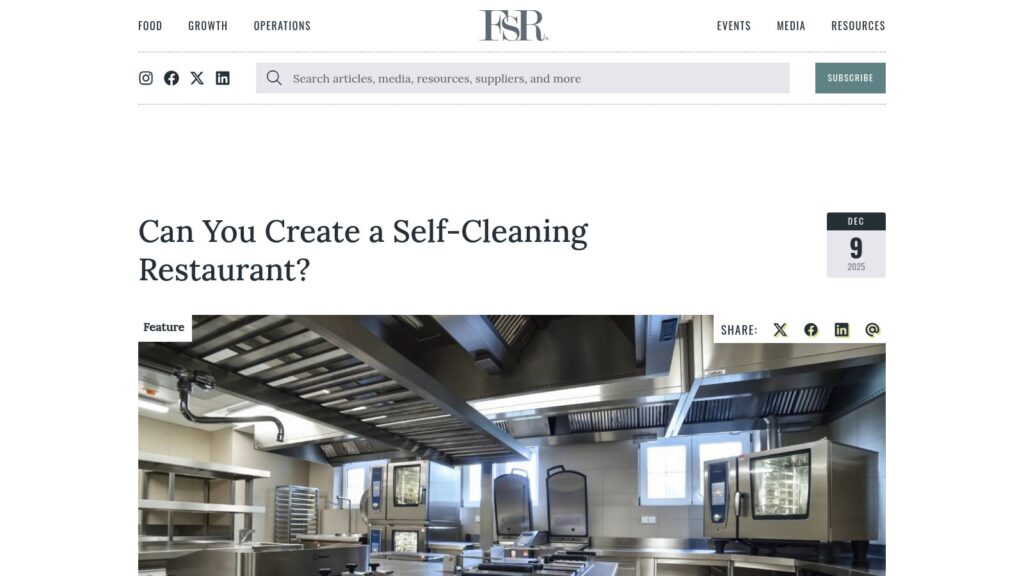
Can You Create a Self-Cleaning Restaurant?

Restaurant hygiene innovations: self-cleaning surfaces enhance safety and compliance, reduce manual labor, and improve customer perceptions. Key technologies include self-cleaning ovens, rotisseries, beverage dispensers, dishware, and UV light systems. These advancements promote a hygienic culture, boost employee morale, and ensure a high-quality dining experience.

https://www.fsrmagazine.com/feature/can-you-create-a-self-cleaning-restaurant/

Scroll to Top