qsr

Convenience Stores Are Stealing Share From Quick-Service Restaurants

A Technomic report reveals that convenience stores are increasingly capturing market share from quick-service restaurants (QSRs), particularly during afternoon and impulse visits. Data from 2025 shows 15% of c-store visits were occasions where consumers considered QSRs but chose convenience stores instead, with notable shares lost from major QSR chains like McDonald’s and Burger King. The report also indicates that convenience stores are closing the gap in consumer perceptions of food quality and brand loyalty compared to QSRs.

https://www.cspdailynews.com/foodservice/convenience-stores-are-stealing-share-quick-service-restaurants

Capgemini and McDonald’s Extend Partnership to Advance AI-Driven Restaurant Technology

Capgemini has extended its strategic partnership with McDonald’s for five years to support the ongoing modernization of restaurant operations and digital customer experiences worldwide. The collaboration focuses on advancing McDonald’s digital transformation through AI, cloud-based technologies, and enhanced consumer platforms, aligning with McDonald’s goal to expand loyalty programs and generate significant sales growth by 2027.

https://www.foodbeverage-outlook.com/food-beverage-insights/capgemini-and-mcdonalds-extend-partnership-to-advance-ai-driven-restaurant-technology

Q4 2025’s Restaurant Winners and Loses

Q4 2025 saw strong performances from several QSR brands, including McDonald’s, Taco Bell, Domino’s, and Starbucks, driven by value plays, new menu items, and marketing strategies. In contrast, Sweetgreen experienced its worst quarter, while Pizza Hut and Wendy’s also faced challenges. The QSR sector dominated the quarter’s earnings news, with casual dining and fast casual segments showing mixed results.

https://www.restaurantdive.com/news/restaurant-q4-2025-winners-losers-mcdonalds-starbucks-pizza-hut-papa-johns/814719/

Why AI Chatbots Are the Next Frontier in Restaurant Technology

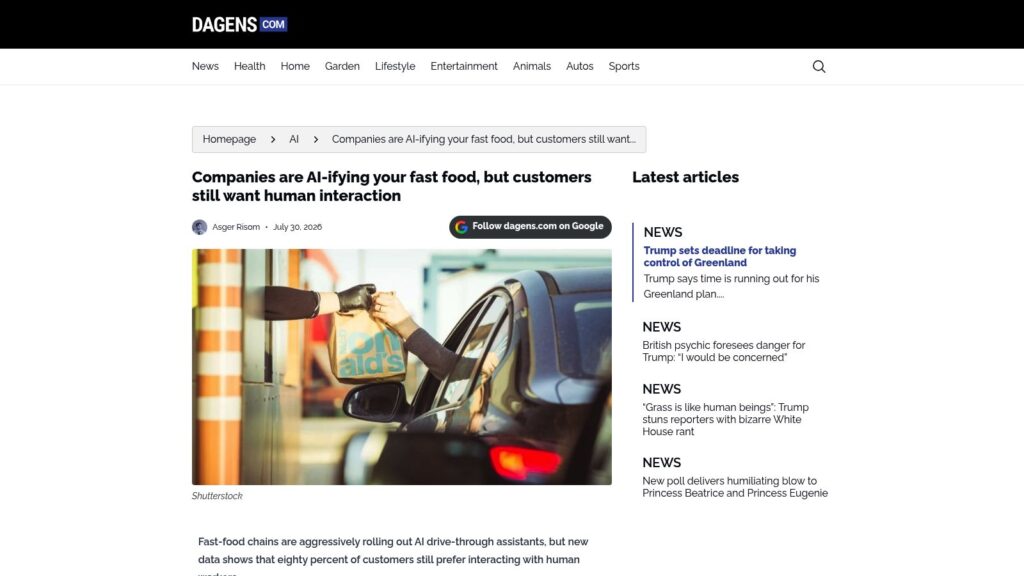
AI-powered chatbots are rapidly advancing as a major innovation in restaurant technology, with major chains like Yum Brands, Burger King, Starbucks, and Papa Johns implementing AI assistants to enhance labor efficiency, back-of-house operations, and customer ordering experiences. Technology vendors such as Olo and Miso Robotics are developing AI tools—like Olo’s AI agent modeled after Shopify’s system and Miso’s AI-powered Zippy platform—to provide accessible, intelligent automation and insights for restaurants of varying sizes, signaling a significant shift toward agentic AI as the next frontier in the industry.

https://www.nrn.com/restaurant-technology/tech-tracker-ai-chatbots-are-the-next-frontier-in-restaurant-technology

How the Pizza Industry Became the Epicenter of Restaurant Technology Innovation

Pizza industry leads in restaurant tech innovation, employing AI, robotics, and automation for efficiency in ordering and operations. Companies like Jet’s Pizza and Donatos experiment with automated systems, improving workflow and customer engagement. Domino’s and Papa Johns also invest in digital platforms and AI for personalized marketing. Innovations in predictive analytics and delivery automation signal evolving consumer expectations for speed and convenience, positioning pizza restaurants as key testing grounds for future tech in food service.

https://restauranttechnologynews.com/2026/03/how-the-pizza-industry-became-the-epicenter-of-restaurant-technology-innovation/

Fast Food & Quick Service Restaurants Strategic Business Market Report 2026

Fast food and Quick Service Restaurants (QSR) market analysis: Valued at $316.1B in 2024, expected to grow to $384B by 2030 (CAGR 3.3%). Growth driven by urbanization, demand for convenience, tech advancements (digital ordering, delivery apps), and health-conscious menu diversification (plant-based options). Technological innovations enhance customer experience and operational efficiency. QSRs increasingly adopt sustainable practices and focus on transparency in ingredient sourcing to meet consumer demands.

https://sg.finance.yahoo.com/news/fast-food-quick-restaurants-strategic-123100400.html

McDonald’s Doubles Down on AI, Cloud and Loyalty as Digital Sales Strategy Accelerates

McDonald’s is renewing its partnership with Capgemini for five more years to enhance technology, focusing on AI, cloud infrastructure, and customer engagement. This collaboration aims to modernize operations and improve efficiency across its global network of 40,000 restaurants. McDonald’s is targeting 250 million active loyalty users and $45 billion in annual sales from loyalty members by 2027. Recent innovations include AI tools for operational efficiency and customer personalization. Despite challenges with voice ordering technology, McDonald's continues to advance its digital strategy, emphasizing the importance of technology in future growth.

https://restauranttechnologynews.com/2026/03/mcdonalds-doubles-down-on-ai-cloud-and-loyalty-as-digital-sales-strategy-accelerates/

Professor Explores Customer Reaction to Robot Service in Restaurants

ASU's Jong-Hyeong Kim studies customer reactions to restaurant robots, like Starship's delivery bots and Shiela, revealing impacts on dining experiences. His research shows that while robot novelty affects customer loyalty, balancing technology with human interaction is essential for a positive atmosphere. Robots can aid small restaurants, but costs and loss of personal touch are concerns. Cultural perceptions also influence how service robots are received.

https://news.asu.edu/20260304-business-and-entrepreneurship-associate-professor-explores-customer-reaction-robot-service

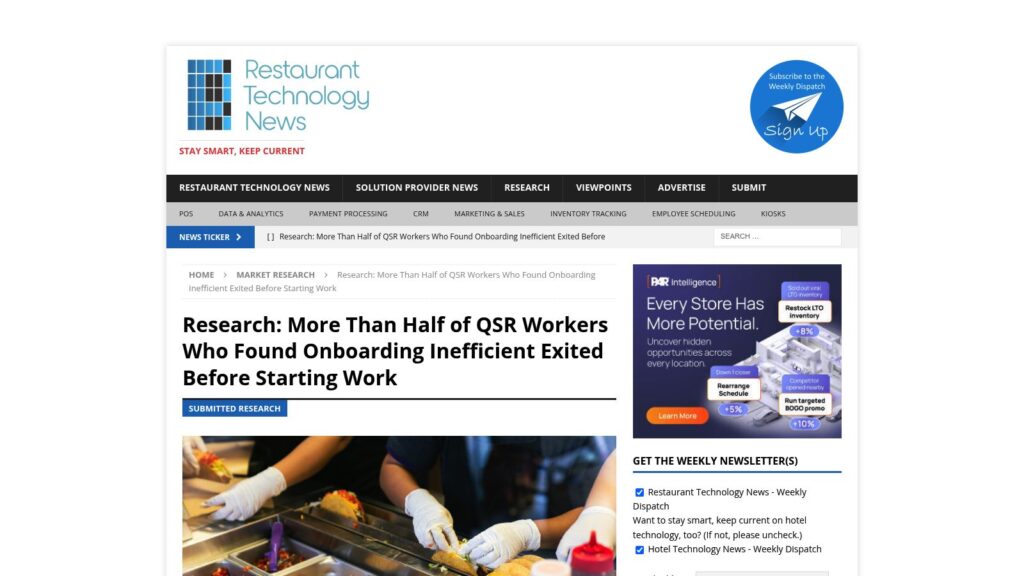
How ‘Low-hire, Low-hire’ Puts QSR Employee Experience in the Hot Seat

QSRs must enhance the employee experience to achieve workforce stability in a “low-hire, low-fire” market, leveraging AI for flexible scheduling and modern benefits such as on-demand pay. While turnover rates are declining, economic pressures and labor shortages complicate staffing. Retention strategies should focus on employee satisfaction by providing autonomy in scheduling and reducing financial stress through flexible pay. Prioritizing employee needs is essential for QSRs to foster loyalty and a productive work environment.

https://www.qsrweb.com/blogs/how-low-hire-low-hire-puts-qsr-employee-experience-in-the-hot-seat/

Scroll to Top