digitalization

McDonald’s and DoorDash Expand Global Partnership With New Online Ordering Experience in U.S.
McDonald’s and DoorDash launched a new online ordering system in the U.S., allowing customers to order McDelivery directly from McDonalds.com without app downloads or logins. This partnership enhances convenience and efficiency, reflecting both companies’ commitment to innovation and customer access, now supporting McDelivery in 29 countries.

https://about.doordash.com/en-us/news/doordash-mcdonalds-online-ordering
McDonald’s Expands Technology Investments to Drive Speed, Loyalty and Operational Efficiency |

McDonald’s is investing in technology to transform customer experience and operational efficiency. Through a partnership with Google Cloud, they are implementing edge computing, enhancing order processing like the “Ready on Arrival” program. The company aims for 250 million loyalty users by 2027, having already gained 185 million. Technology upgrades include replacing legacy systems with standardized platforms for better data management. Recent financial results reveal a rise in income and sales, emphasizing the impact of these technology investments. McDonald’s strategy illustrates the importance of integrating technology in the competitive fast-food industry.

https://restauranttechnologynews.com/2025/08/mcdonalds-expands-technology-investments-to-drive-speed-loyalty-and-operational-efficiency/

McDonald’s Reimagines Future of Loyalty With AI

McDonald’s introduces “Magic Stories,” an AI-driven feature in its app that transforms family visits into personalized animated narratives, enhancing engagement through storytelling. Developed by TBWA\Helsinki and TBWA\NEBOKO, this innovation aims to deepen brand loyalty by creating memorable experiences with every interaction, unlocking new story chapters and virtual collectibles. The project emphasizes collaboration across creative, tech, and legal teams to ensure quality and reliability in storytelling.

https://lbbonline.com/news/McDonalds-Future-Loyalty-AI

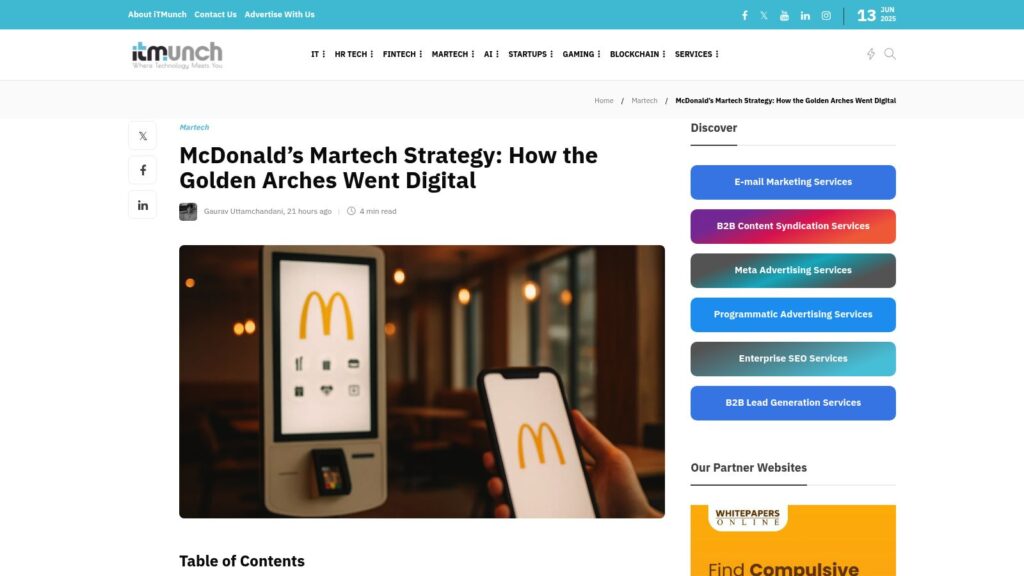
McDonald’s Martech Strategy: How the Golden Arches Went Digital

McDonald’s has digitally transformed into a leading QSR through a comprehensive Martech strategy that includes an advanced mobile app, AI-driven drive-thrus, and dynamic digital menus. Its focus on personalization, loyalty programs, and data analytics helps enhance customer interactions and streamline operations. Key features include personalized offers, gamified rewards, and optimized inventory management. By leveraging AI and data privacy measures, McDonald’s achieves localized marketing that resonates globally, improving customer engagement and retention.

https://itmunch.com/mcdonalds-martech-strategy-digital-transformation/

We Need to Overcome These 8 Problems With Fast-Food Technology

Fast-food technology can resolve key operational challenges, such as order inaccuracies, long drive-thru wait times, and labor shortages, by utilizing advanced tools like AI for ordering and real-time analytics. Solutions include improving order accuracy through automation, reducing drive-thru bottlenecks with predictive tools, addressing labor deficiencies with automation, minimizing food waste via smart inventory systems, optimizing staff scheduling with AI, consolidating siloed tech platforms, providing real-time operational insights, and ensuring a seamless omnichannel experience. These innovations enhance efficiency and customer satisfaction in the fast-food industry.

https://www.qsrmagazine.com/story/we-need-to-overcome-these-8-problems-with-fast-food-technology/

Research: Technology-Driven Growth Fuels 8% Profit Gains for Quick Service Restaurants |

Research indicates technology-driven growth has led to an 8% profit increase for quick service restaurants (QSRs). A report by PAR Technology highlights significant rises in digital transactions: kiosk usage up 27% yearly, mobile orders up 21%, and delivery volumes surged 383% since 2020. Despite rising labor costs, QSRs benefitted from digital engagement and integrated tech platforms, with recommendations to invest in first-party delivery and automate labor to enhance efficiency and profitability.

https://restauranttechnologynews.com/2025/05/research-technology-driven-growth-fuels-8-profit-gains-for-quick-service-restaurants/

Qu Develops Smarter Kitchen as Restaurants Prioritize Tech Stacks

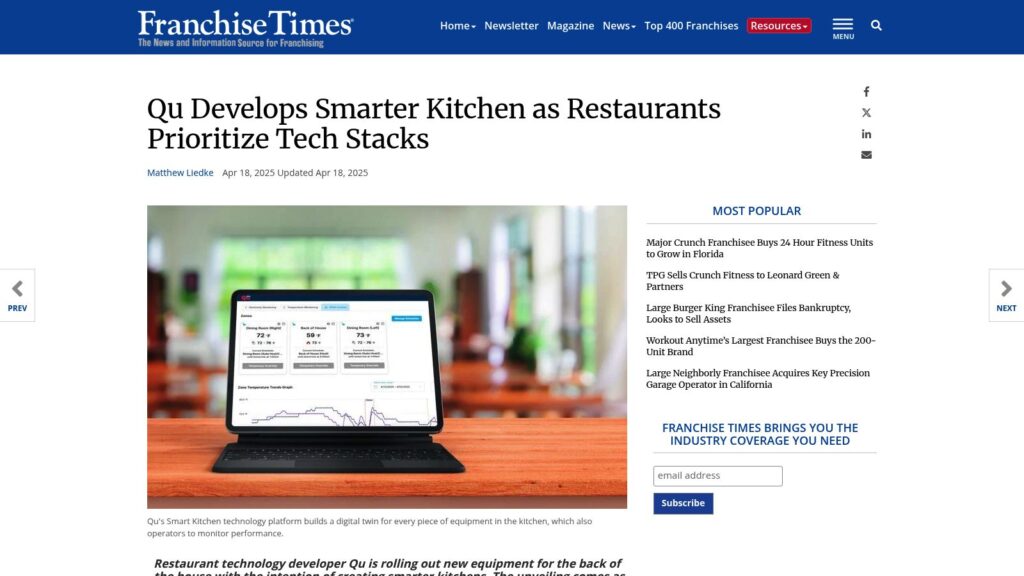
Qu’s Smart Kitchen enhances restaurant efficiency by optimizing equipment performance, energy use, and maintenance alerts. As restaurants prioritize technology, 64% aim to consolidate tech stacks and focus on first-party ordering. Qu introduces new front-of-house tech, including guest-facing boards, as companies adapt to stabilized digital growth post-pandemic.

https://www.franchisetimes.com/franchise_news/qu-develops-smarter-kitchen-as-restaurants-prioritize-tech-stacks/article_0bdfda9d-4fee-4674-9ec5-086f110d69b9.html

Burger King, Denny’s, Popeyes and Other Restaurants Brands Are on a Remodeling Spree

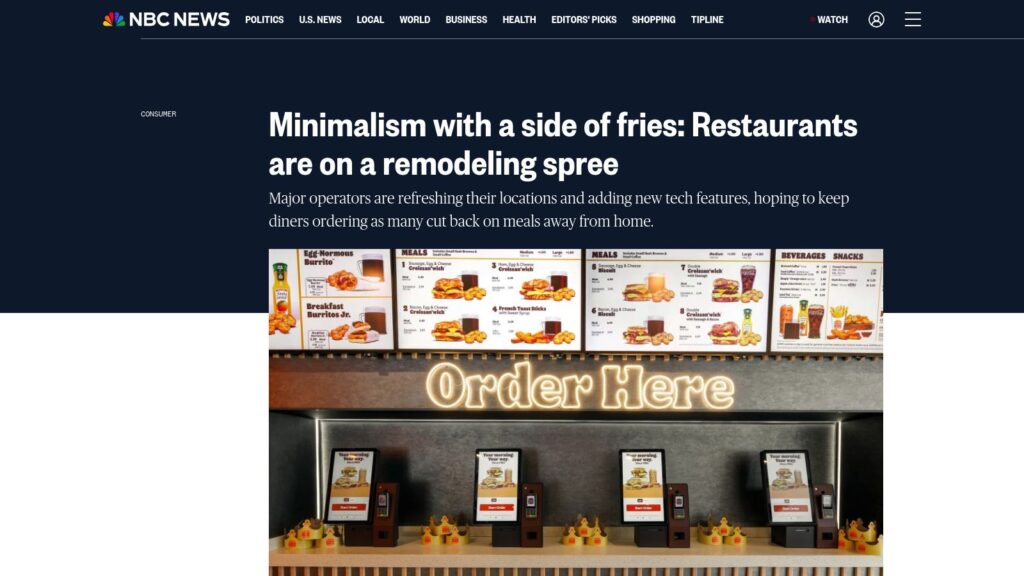
Major restaurant chains like Burger King, Denny’s, and Popeyes are undergoing significant remodels to attract customers amid declining dining out trends. Burger King has launched its “Sizzle” aesthetic with tech upgrades, while various chains are enhancing interiors and adding digital features to improve efficiency and customer experience. Despite challenges like rising costs and a tough market environment, these updates aim to re-engage diners and boost sales. The remodels, including self-ordering kiosks and modern designs, reflect the need for revitalization in an industry facing increased competition and consumer scrutiny.

https://www.nbcnews.com/business/consumer/fast-food-restaurant-chains-remodeling-design-rcna197805

Quick-Service Restaurants Embrace Digital Transformation, AI Revolution

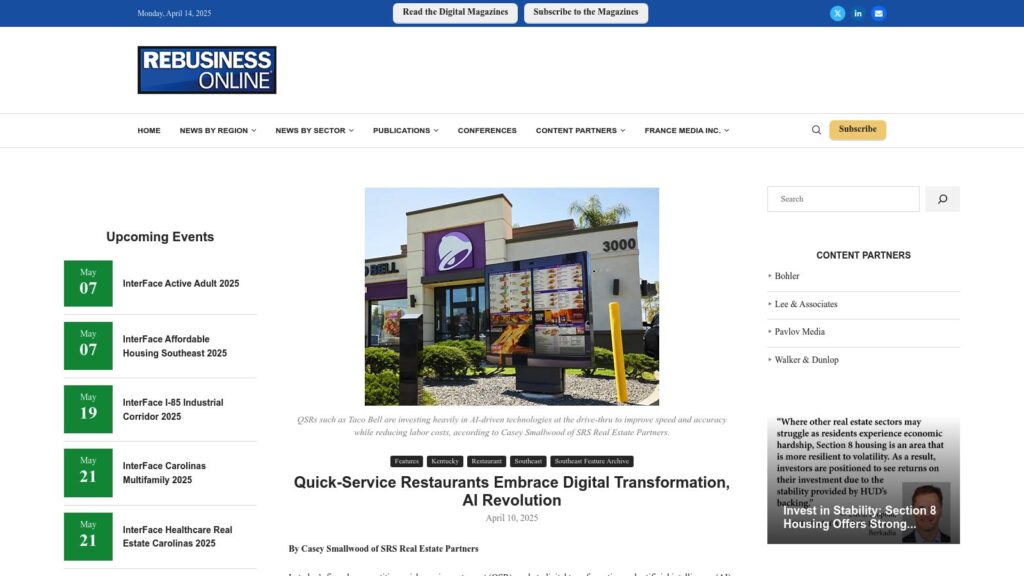
QSRs like Taco Bell are investing in AI to enhance speed and accuracy, reduce labor costs, and transform customer engagement. Digital transformation via mobile ordering, AI-driven drive-thrus, and predictive inventory is reshaping operations. Innovations include mobile apps for ordering, AI voice assistants for drive-thru interactions, and predictive analytics for demand forecasting. While technology aids efficiency and personalization, challenges such as high costs and workforce resistance persist. In a competitive landscape, successful QSRs blend technology with human touch, focusing on strategic real estate that supports digital capabilities.

https://rebusinessonline.com/quick-service-restaurants-embrace-digital-transformation-ai-revolution/

Scroll to Top