ai

The Next Generation of QSRs Part 4: Building the Restaurant of the Future
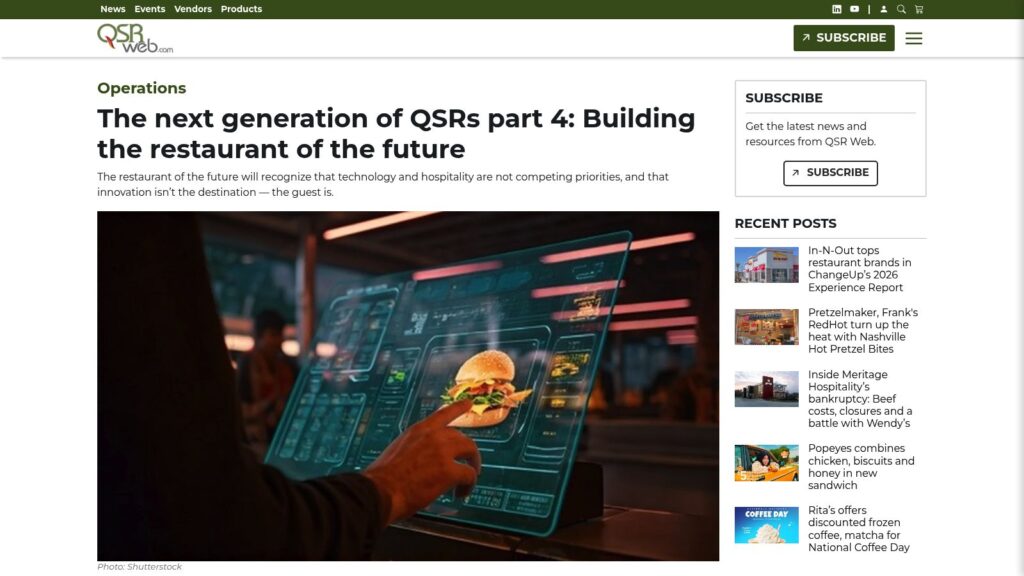
The future of quick-service restaurants (QSRs) lies in integrating technology with human hospitality to enhance the overall guest experience rather than replacing employees. Burger King exemplifies this approach with its AI assistant “Patty,” which supports staff by managing operational tasks, allowing them to focus more on customer service and connection. This people-first strategy emphasizes empowering employees with tools and authority to foster genuine interactions, addressing challenges like labor turnover while strengthening customer loyalty through meaningful engagement.
https://www.qsrweb.com/articles/the-next-generation-of-qsrs-part-4-building-the-restaurant-of-the-future/

McDonald’s Turns to AI for Drive-Thru, Inventory Management, Order Accuracy

McDonald’s is integrating AI technology to enhance its drive-thru service by improving order accuracy, speed, and personalization through voice recognition and machine learning. Additionally, the company is leveraging AI for inventory management to optimize stock levels and reduce waste, aiming to improve operational efficiency across its restaurants. These advancements reflect McDonald’s broader focus on technology-driven solutions to streamline quick-service restaurant operations and improve customer experience.

https://www.restaurantdive.com/news/mcdonalds-archiq-drive-thru-artificial-intelligence-next-strategy/831256/

What the McDonald’s AI Failure Reveals About AI Agent Mistakes

McDonald’s initial AI drive-thru assistant failed not primarily due to accuracy but because it didn’t recognize when it made mistakes, leading to unresolved errors and customer frustration. The key to successful AI deployment in fast-food operations lies in systems that can detect misunderstandings and seamlessly transfer issues to employees who can resolve them in real time, ensuring service continuity and customer satisfaction. This insight highlights the importance of designing AI with fail-safes for handoffs, clear operational protocols, and business-aligned error tolerances rather than focusing solely on raw accuracy metrics.

https://www.cio.com/article/4222701/mcdonalds-reintroduces-ai-at-its-drive-thru.html

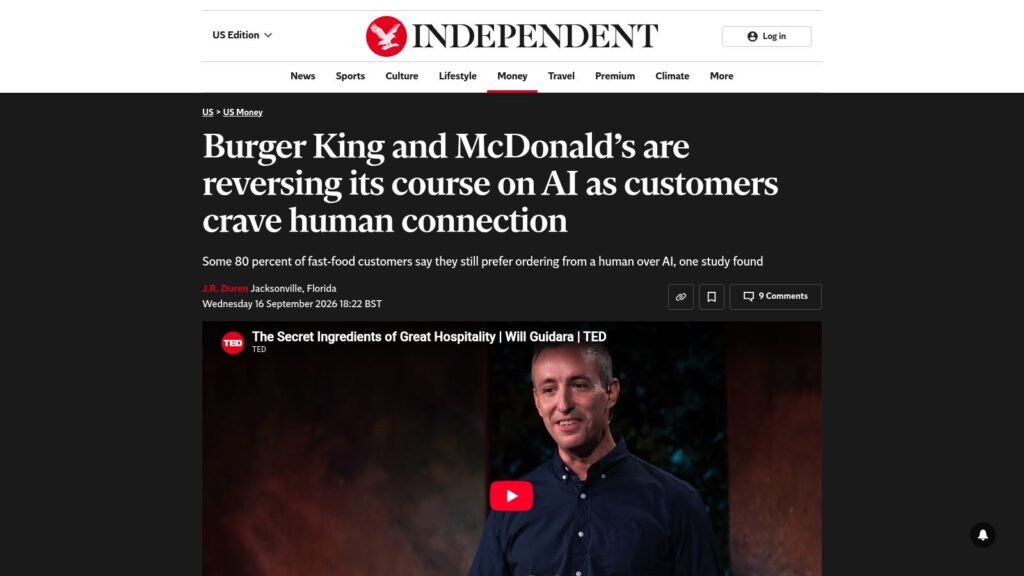
Fast Food Giants Are Reversing Its Course on AI as Customers Crave Human Connection

Major fast-food chains like Burger King and McDonald’s are shifting away from AI-driven ordering systems in response to customer preference for human interaction, with studies showing about 80% of diners favor ordering from humans over AI. This trend includes initiatives to enhance staff-to-customer engagement through in-person greetings and order accuracy checks, emphasizing qualities AI cannot replicate such as accountability and personal connection. Operators recognize that while technology can aid operations, preserving hospitality is essential to the overall customer experience.

https://www.independent.co.uk/us/money/mcdonalds-burger-king-fast-food-ai-humans-b3051426.html

Restaurants Can’t Automate Hospitality

The article argues that while restaurants can automate certain operational tasks, the core element of hospitality—personalized, empathetic customer interaction—cannot be automated. It emphasizes that human connection remains vital for creating memorable dining experiences, suggesting that technology should support rather than replace staff in delivering hospitality.

https://www.restaurantdive.com/news/restaurants-cant-automate-hospitality/827363/

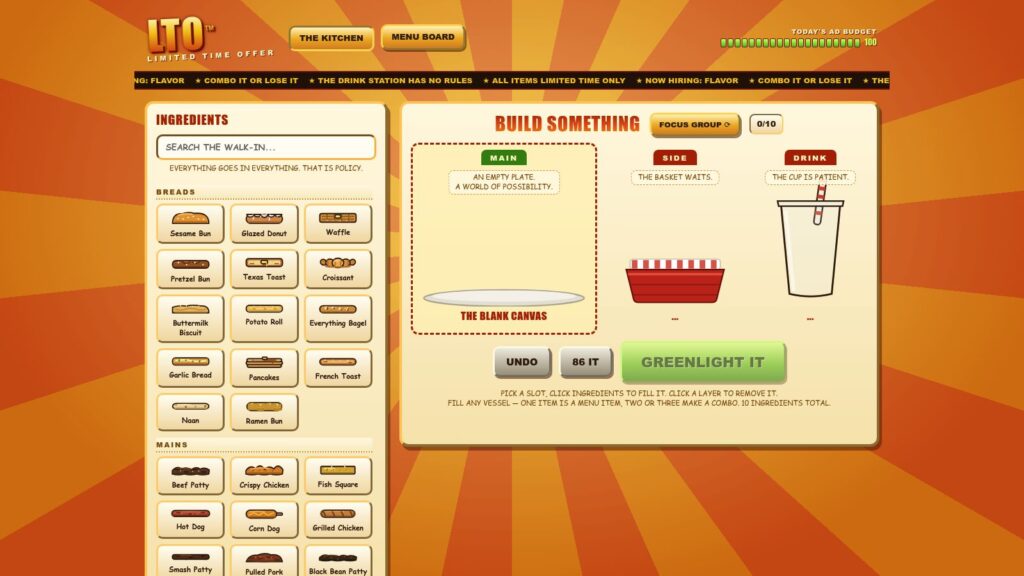
LTO™

The website presents an interactive limited-time offer platform and image creator tool where users can build custom food and drink combinations by selecting up to 10 ingredients across categories like breads, mains, cheese, toppings, sauces, and fountain drinks.

https://lto.cee.wtf/

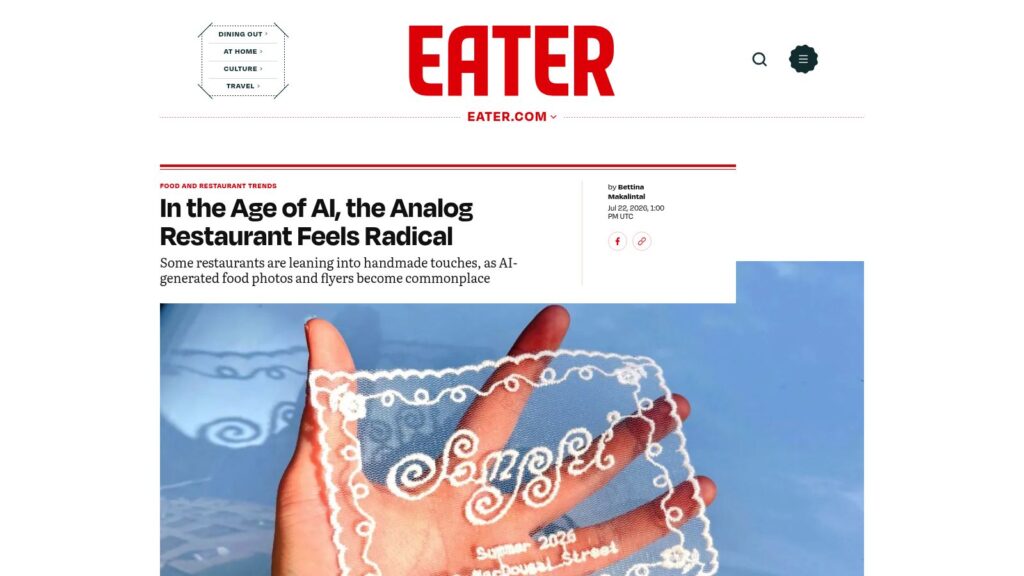
In the Age of AI, the Analog Restaurant Feels Radical

In response to the proliferation of AI-generated food imagery and promotional materials, many restaurants are embracing handcrafted, analog elements such as handwritten menus, hand-stitched logos, and vintage decor to emphasize craftsmanship and authenticity. This trend, described as “frictionmaxxing,” reflects a cultural backlash against digital excess and AI-generated “slop,” with hospitality businesses using tangible, human-made touches to differentiate themselves and connect more genuinely with customers.

https://www.eater.com/trends/975087/restaurants-lean-into-bespoke-handmade-elements-during-ai-flyer-backlash

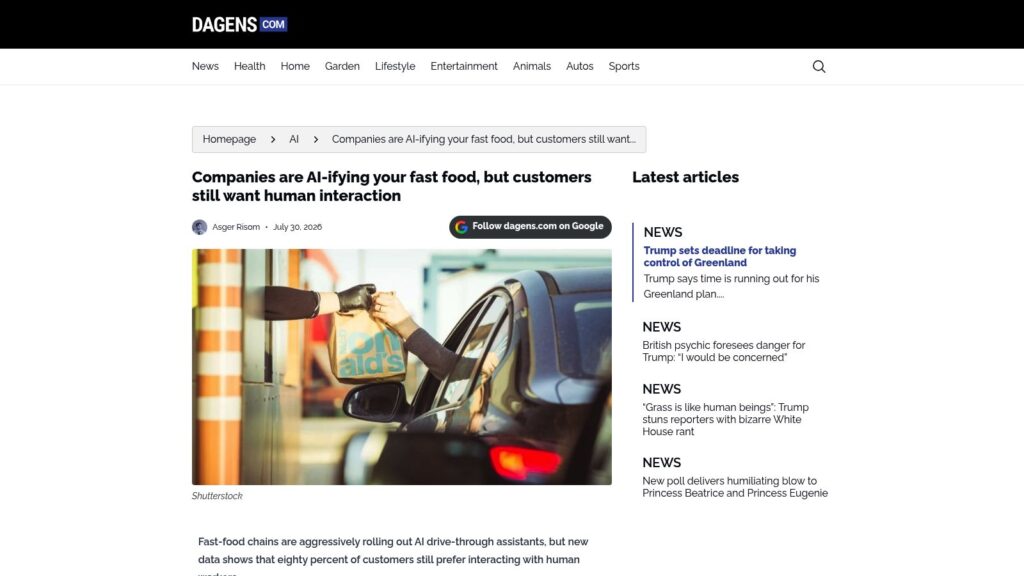
Companies Are AI-ifying Your Fast Food, but Customers Still Want Human Interaction

Fast-food chains like McDonald’s and Wendy’s are rapidly deploying AI-driven drive-through ordering systems to cut labor costs and speed service, but surveys show that approximately eighty percent of customers still prefer interacting with human workers. Customers often distrust AI order-takers to accurately process custom requests, leading to frustration and damaged brand loyalty. Industry experts suggest a hybrid model where AI handles repetitive tasks while employees focus on hospitality, emphasizing that true customer satisfaction depends on human interaction beyond mere efficiency.

https://www.dagens.com/technology/ai/companies-are-ai-ifying-your-fast-food-but-customers-still-want-human-interaction

Could AI-Powered QSR Technology Help Independents Compete with Larger Chains?

Independent quick-service restaurants (QSRs) can leverage affordable AI-powered technologies to improve efficiency, reduce costs, and better compete with larger chains that invest heavily in advanced systems. Key AI tools include automated inventory management, AI customer support agents, digital ordering systems, data-driven menu adjustments, optimized staff scheduling, real-time report generation, and AI-driven loyalty programs—all designed to streamline operations and enhance customer experience without significant upfront investment. As customer expectations evolve toward greater convenience, adopting these AI technologies is increasingly essential for independents aiming to grow and compete effectively in the changing QSR landscape.

https://www.qsrmagazine.com/story/could-ai-powered-qsr-technology-help-independents-compete-with-larger-chains/

The Next Generation of QSRs Part 2: How AI, Personalization Are Turning Loyalty Into a Growth Engine

QSR brands are leveraging AI and personalized loyalty programs to deepen customer connections and drive frequency amid softer traffic and rising prices. Companies like McDonald’s and Wendy’s use AI-driven personalization in apps and loyalty platforms to deliver relevant offers, while operators focus on seamless, integrated brand experiences across digital and physical touchpoints. AI-powered loyalty programs enable micro-level personalization, optimizing marketing efforts and customer engagement to build sustainable growth beyond broad discounting.

https://www.qsrweb.com/articles/the-next-generation-of-qsrs-part-2-how-ai-personalization-are-turning-loyalty-into-a-growth-engine/

Scroll to Top