technology

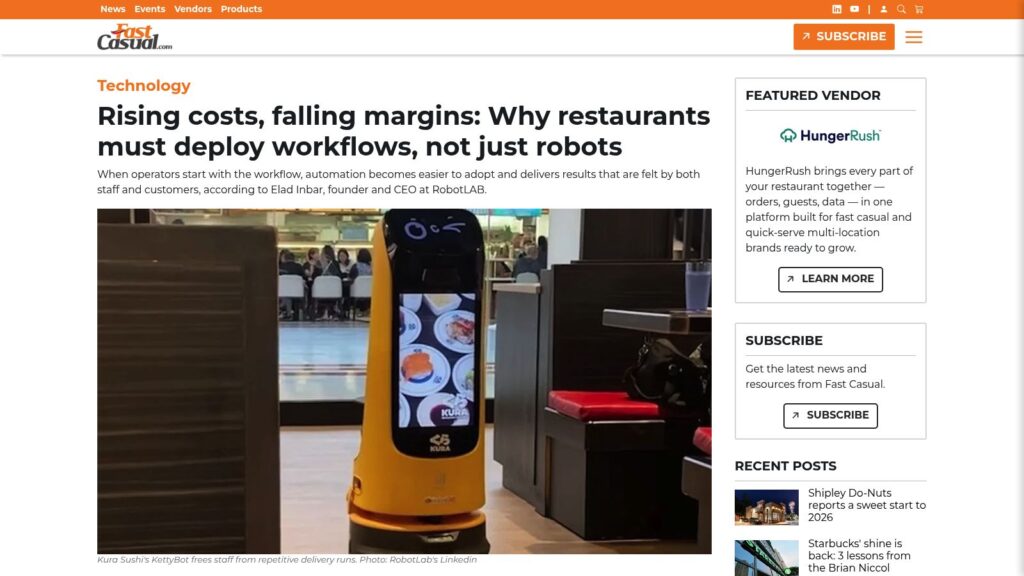
Rising Costs, Falling Margins: Why Restaurants Must Deploy Workflows, Not Just Robots

The restaurant industry faces rising food and labor costs along with staffing challenges, pushing operators to adopt robotics automation not to replace staff but to handle repetitive, low-value tasks like food delivery and floor cleaning. Successful implementation depends on redesigning workflows around these robots to integrate them smoothly into operations, enhancing efficiency and guest experience rather than disrupting service.

https://www.fastcasual.com/blogs/rising-costs-falling-margins-why-restaurants-must-deploy-workflows-not-just-robots/

A Day In The ‘Life’ Of a Food Delivery Robot: Lots Of Waiting And a Few Collisions

A Block Club Chicago reporter and photographer spent a day following a Coco food delivery robot in Lakeview, documenting its activity over seven hours, during which it made four deliveries while experiencing periods of waiting and a few minor collisions. The article highlights the robot’s cautious navigation of busy pedestrian areas, varied public reactions, and ongoing concerns about safety and job displacement amid Chicago’s pilot program for personal delivery devices.

https://blockclubchicago.org/2026/04/28/a-day-in-the-life-of-a-food-delivery-robot-lots-of-waiting-and-a-few-collisions/

Where Do You See the Future of the Restaurant Industry? Any Emerging Trends You’re Excited About?

The restaurant industry has undergone significant changes in recent years, especially in response to the pandemic, with a notable shift toward off-premise dining, carryout, and third-party delivery services. Multi-unit franchisees highlight the growing role of technology, including AI and predictive analytics, to improve operations, customer experience, and labor management, while emerging trends focus on convenience, diverse global flavors, and new dining formats blending quick service with fine dining.

https://www.franchising.com/articles/20260420_where_do_you_see_the_future_of_the_restaurant_industry_any_emerging_tre.html

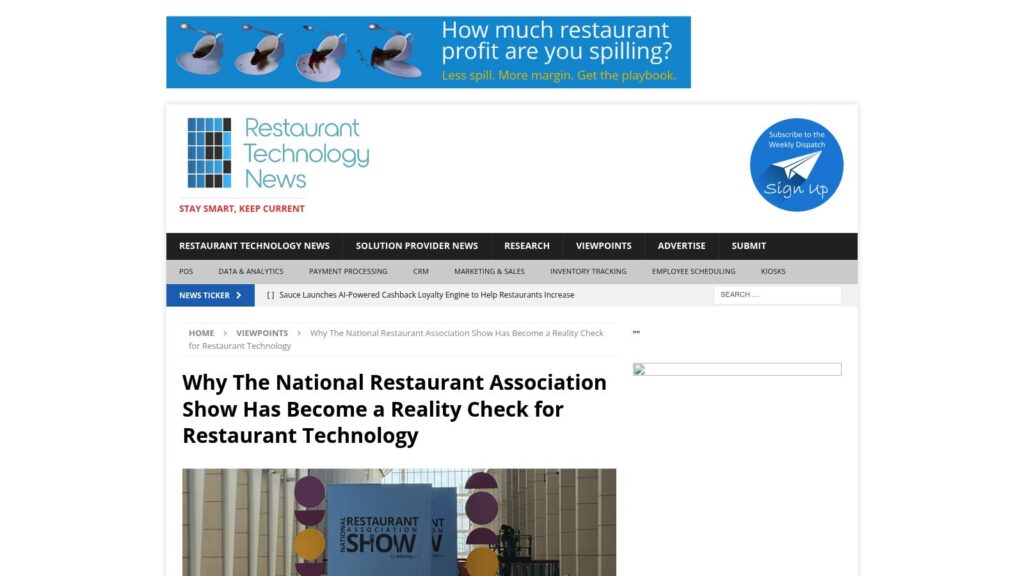
How Real-Time Line Visibility Could Reshape Restaurant Demand

A new platform called Damn Lines streams real-time video of queues outside popular Manhattan restaurants, providing customers advance visibility of wait times along with historical data and notifications. This emerging technology shifts how restaurant demand is understood and managed by making waiting lines a visible, measurable data point that influences customer behavior before they even arrive, posing new challenges and opportunities for operators in controlling demand and shaping visit patterns.

https://restauranttechnologynews.com/2026/04/how-real-time-line-visibility-could-reshape-restaurant-demand/

Can AI and Forecasting Tools Boost Darden’s Restaurant Efficiency?

Darden Restaurants is leveraging artificial intelligence and forecasting tools to enhance efficiency in its operations by improving demand forecasting, staffing, and inventory management. These technologies enable more accurate predictions of guest traffic, streamlined scheduling, reduced waste, and better labor productivity, all while maintaining a people-centered approach in its restaurants.

https://www.zacks.com/stock/news/2900749/can-ai-and-forecasting-tools-boost-dardens-restaurant-efficiency

Why McDonald’s AI Makeover Is the New Operating System for Global Retail

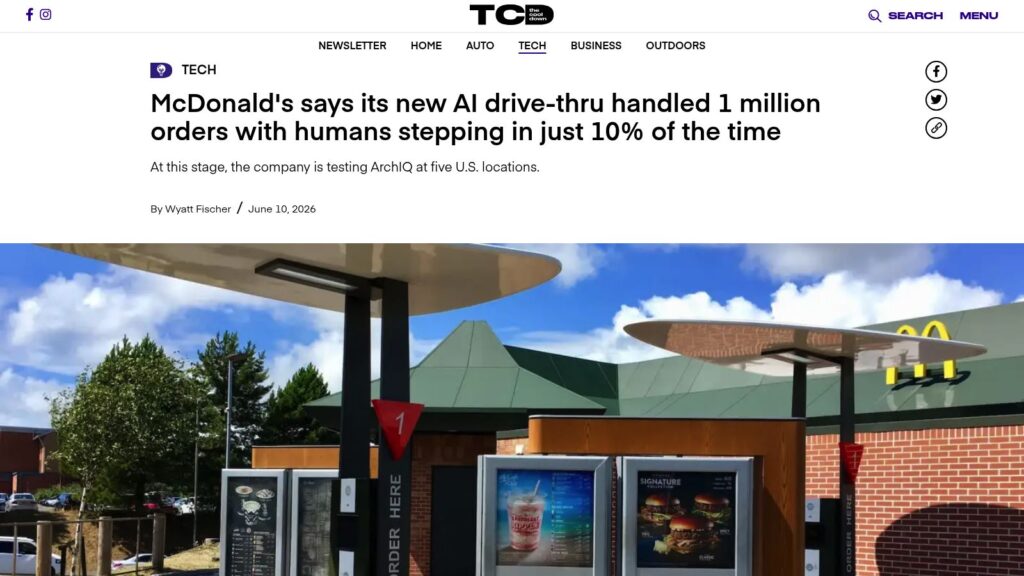
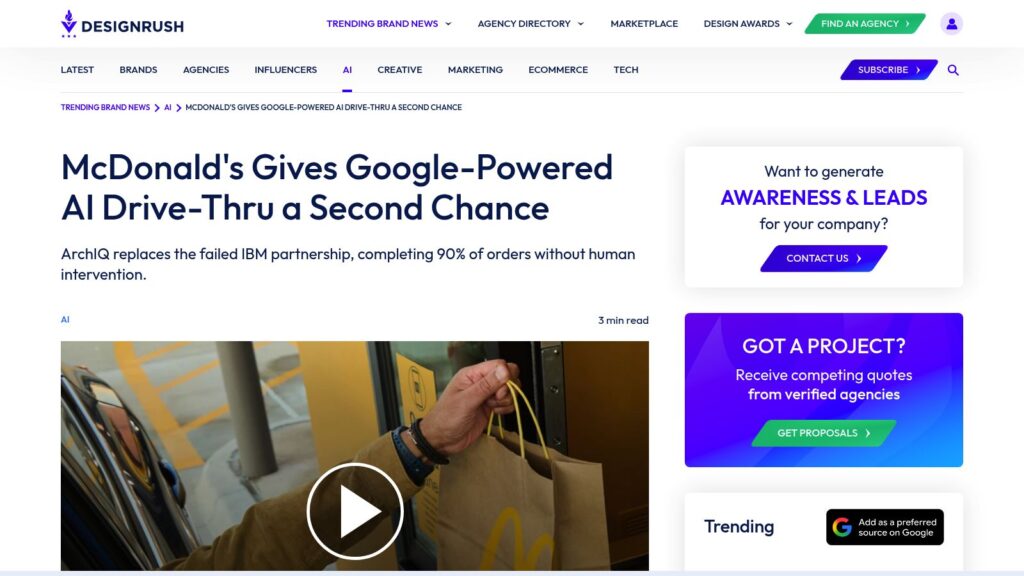
McDonald’s is transforming its global retail operations by integrating AI to create a software-defined, data-driven system that optimizes everything from menu adjustments to labor scheduling in real time. This AI makeover shifts routine tasks to algorithms and automation, freeing human workers to focus on complex, high-empathy roles, signaling a significant evolution in quick-service restaurant management and offering a blueprint for broader retail industries.

https://www.qsrmagazine.com/story/why-mcdonalds-ai-makeover-is-the-new-operating-system-for-global-retail/

An Intouch Insight Study on the In-Person QSR Guest Experience

The 2026 QSR On-Premises Study by Intouch Insight evaluates ten leading quick-service restaurant brands, revealing gaps in human connection such as inconsistent greetings and parting remarks, with 27.9% of guests not greeted and 27.4% receiving no closing remark. The study highlights suggestive selling as the largest missed revenue opportunity, averaging just 60.6% execution, and identifies dinner as the slowest daypart, with service times averaging over four minutes, impacting overall customer satisfaction.

https://www.intouchinsight.com/resources/studies/on-premises-qsr-study/

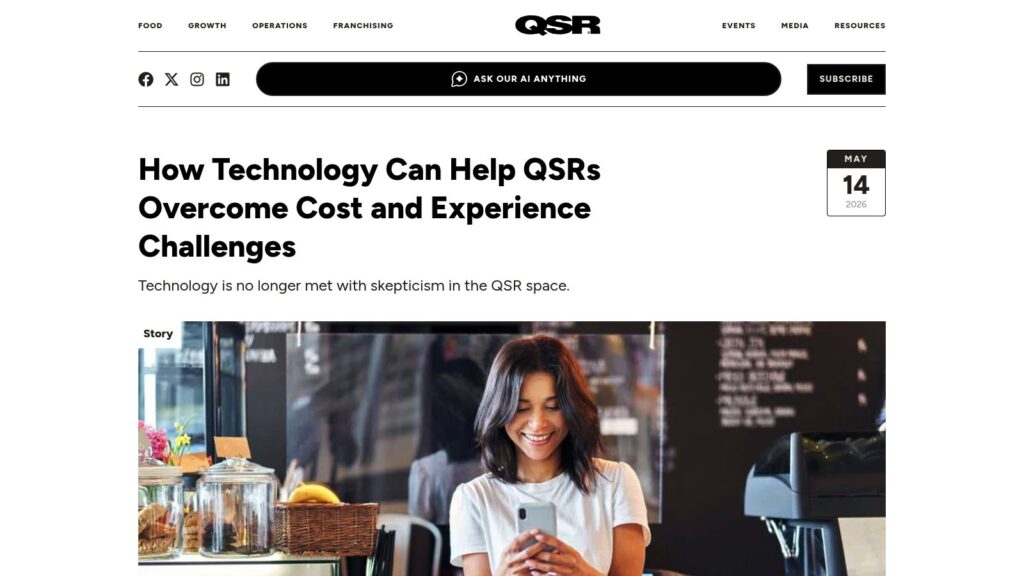
QSRs Moving Beyond the Tech Vs. Human Debate

QSR operators are shifting from viewing technology and human labor as competing forces to a “marriage of convenience,” focusing on integrating technology with staff support and training to enhance both the guest and employee experience. Successful brands design tech systems that work together seamlessly, balancing automation with human interaction to improve speed, accuracy, and customer loyalty while optimizing operations.

https://modernrestaurantmanagement.com/qsrs-moving-beyond-the-tech-vs-human-debate/

The Hidden Cost of QSR Technology Failures

Quick-service restaurants (QSRs) invest heavily in technology like drive-thru systems, kiosks, and mobile apps to deliver fast, consistent customer experiences; however, frequent tech failures—such as payment terminal malfunctions and offline POS systems—cause delays, revenue loss, and increased employee workload. Surveys show that technology issues are common and negatively impact customer loyalty, prompting leading QSRs to adopt integrated remote monitoring and management software to reduce downtime and improve operational efficiency.

https://www.qsrmagazine.com/operations/outside-insights/the-hidden-cost-of-qsr-technology-failures/

Travis Kalanick Returns With a Plan to Rewire the Restaurant Tech Stack

Travis Kalanick has rebranded his portfolio of restaurant, logistics, and automation ventures under the umbrella of Atoms, aiming to transform food production, fulfillment, and delivery through integrated technology and infrastructure. Building on his earlier CloudKitchens concept, Atoms combines real estate, software like the Otter platform for managing off-premise dining, and automation initiatives such as Lab37, which develops modular robotic kitchen tools to improve efficiency and control costs in delivery-focused kitchens. This unified ecosystem reflects Kalanick’s vision to reshape the restaurant tech stack amid industry challenges like labor costs and fragmented operations.

https://restauranttechnologynews.com/2026/03/travis-kalanick-returns-with-a-plan-to-rewire-the-restaurant-tech-stack/

Scroll to Top