sales

McDonald’s Drives Sustainable Growth Through Loyalty & Menu Innovation

McDonald's drives growth through strong international sales, the $5 Meal Deal, and marketing innovations. The “Accelerating the Arches” strategy emphasizes value and unit expansion, targeting 50,000 global restaurants by 2027. Key drivers include a successful loyalty program, menu adaptations, and ongoing promotions. However, challenges include inflation in Europe and declining foot traffic in the U.S. Competitors like DoorDash, Chipotle, and Yum! Brands are also performing well despite market pressures.

https://www.nasdaq.com/articles/mcdonalds-drives-sustainable-growth-through-loyalty-menu-innovation

Fintech Firm Square’s Data Reveals How Economic Volatility Is Impacting Restaurant Sector

Square's report shows restaurant industry grappling with economic volatility, affecting consumer behavior, particularly declining tips and shifting preferences for online ordering and vegan options. Q1 2025 average tips dropped, impacting staff income. Online ordering is vital for growth, but profitability varies between delivery methods. Fast-casual and QSRs show resilience, investing in technology amid mixed consumer sentiment, as many cut dining spending. Overall, the industry adapts through tech and menu innovation to navigate economic challenges.

https://www.crowdfundinsider.com/2025/08/247166-fintech-firm-squares-data-reveals-how-economic-volatility-is-impacting-restaurant-sector/

The Golden Arches Reinvented: How McDonald’s Menu Innovation and Operational Precision Are Securing Market Dominance

McDonald's is maintaining market dominance through innovative menus, supply chain improvements, and targeted customer engagement. Its plant-based offerings are successful in Europe, highlighting a tailored approach to regional preferences. Operational changes, including a new Chief Restaurant Experience Officer role and AI-driven pricing, enhance efficiency. Despite recent sales declines, McDonald's continues to focus on value-driven strategies and expanding its digital presence, indicating resilience and long-term growth potential. Investors should consider its consistent dividends and market positioning, though caution against volatility is advised. Overall, McDonald's balances innovation with operational effectiveness to redefine fast food.

https://www.ainvest.com/news/golden-arches-reinvented-mcdonald-menu-innovation-operational-precision-securing-market-dominance-2507/

Use Your Data or Lose Your Margins

QSR profit margins are under pressure due to rising food and labor costs, potentially worsened by tariffs. To survive, restaurants must leverage existing technology and data to transform these costs into assets. By analyzing data from POS systems and integrating various management tools, operators can reduce waste, optimize staffing, and forecast demand effectively, which leads to cost savings and improved customer experiences. Ultimately, the key to resilience lies in data-driven decision-making and seamless system integration to enhance operational efficiency and profitability.

https://www.qsrweb.com/blogs/use-your-data-or-lose-your-margins/

PDQ Exec on Driving Sales With Self-Ordering Kiosks

PDQ Chicken enhanced sales and service speed by implementing self-ordering kiosks, leading to a 25% increase in average order size and doubling kitchen efficiency during peak hours, according to Bryan Groc, Senior VP of Data Analytics. The technology addresses consumer demand for quick service while maintaining cashier support. Kiosks are growing in adoption across the restaurant industry, complementing staff and streamlining operations. They have also contributed to increased loyalty program sign-ups by simplifying the registration process for customers.

https://www.uschamber.com/co/good-company/the-leap/self-ordering-kiosk-sales

Why Fast Casual Keeps Winning, and How It’s Evolving

Fast casual restaurants thrive amid economic pressures by emphasizing premium quality, operational efficiency, and value without resorting to discounts. Analysts note a shift where consumers prefer paying slightly more for customized, higher-quality meals, benefiting chains like Chipotle and Shake Shack that focus on innovation and service. The segment's success is attributed to avoiding aggressive price wars while enhancing offerings and customer experiences. Fast casual brands are urged to continue innovating and engaging consumers to retain loyalty, especially during cost-conscious periods.

https://www.qsrmagazine.com/story/why-fast-casual-keeps-winning/

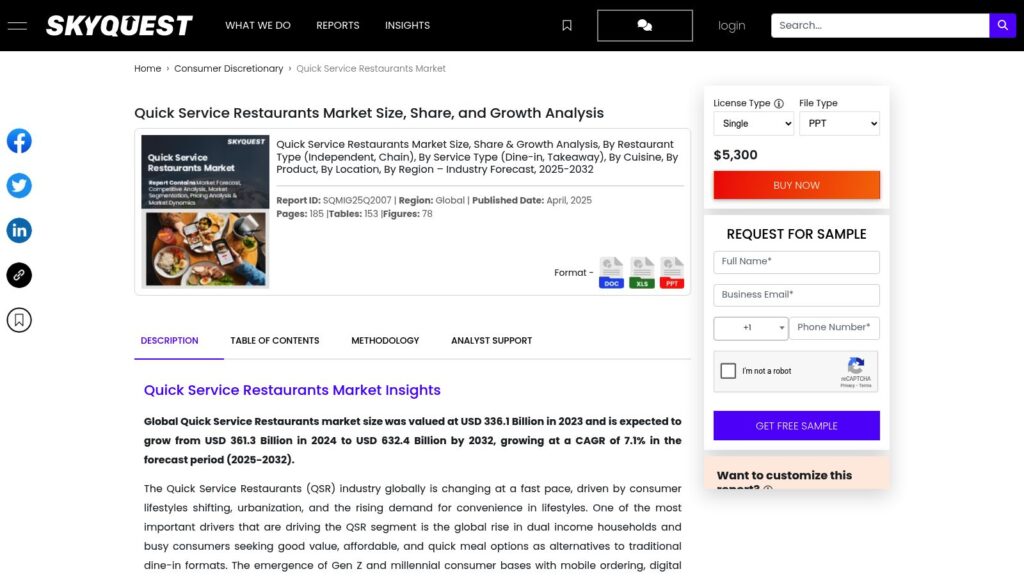
Quick Service Restaurants Market Size & Share

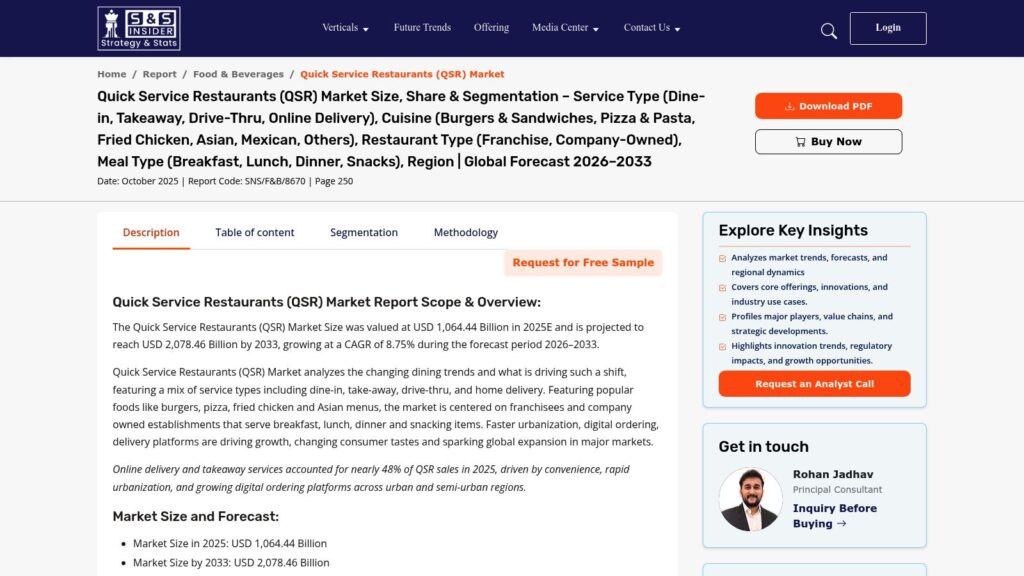
Global Quick Service Restaurants (QSR) market projected to grow from $336.1B in 2023 to $632.4B by 2032, at a 7.1% CAGR. Driven by changing consumer lifestyles, urbanization, and demand for convenience. Key trends include digitalization, AI integration for efficiency, and sustainability focus. Dine-in remains the largest segment, while delivery is the fastest-growing. Major markets include North America, Europe, and Asia-Pacific, with competitive strategies emphasizing plant-based menu options and tech innovations. Challenges include labor shortages and regulatory hurdles.

https://www.skyquestt.com/report/quick-service-restaurants-market

The Impact of QSR Promotions in Q1 2025

Q1 2025 QSR Promotions Impact Summary
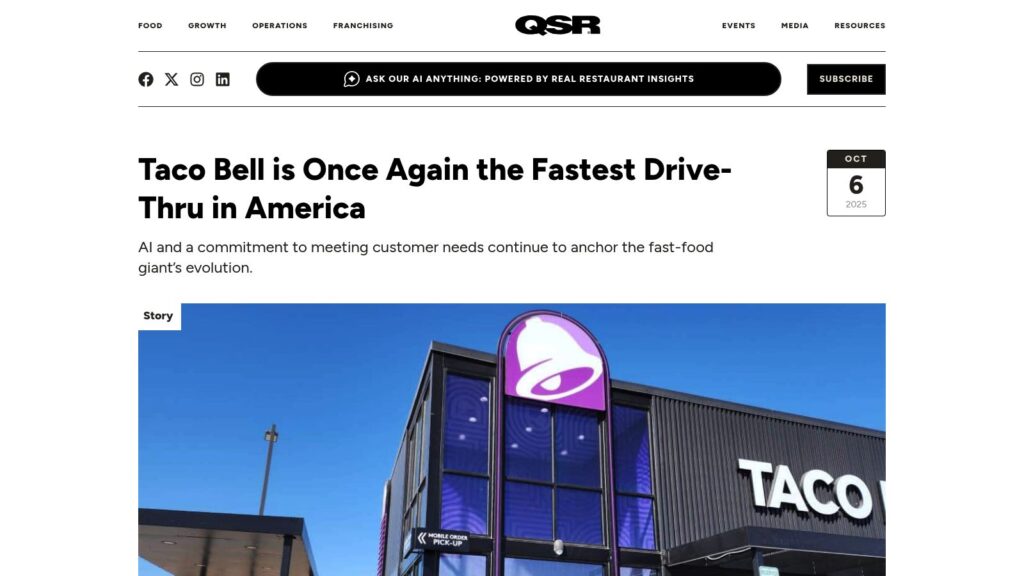
QSRs faced a 1.6% traffic decline in Q1 2025. Yum! Brands saw a 2.9% increase, driven by Taco Bell, while RBI's traffic dropped by 3.4%. Wingstop experienced a 4.3% rise, boosted by T-Mobile promotions and Super Bowl demand, with visits up 55.9% and 56.8% on respective promotional days. Taco Bell's frequent visitors grew significantly, aided by an 11.7% increase in January 2025, likely due to the new Luxe Cravings Box. Strategic promotions contributed to significant traffic increases amid overall challenges in the sector.

https://www.placer.ai/anchor/articles/the-impact-of-qsr-promotions-in-q1-2025

Why Restaurant Self-service Kiosks Can Actually Result in Customers Ordering Less Food

Self-service kiosks can lead customers to order less food due to feeling rushed when a line forms behind them. A study suggests that creating a single line for multiple kiosks or messaging that delays are the business's responsibility can help reduce this pressure, potentially increasing customer satisfaction and spending.

https://theconversation.com/why-restaurant-self-service-kiosks-can-actually-result-in-customers-ordering-less-food-235462

Scroll to Top