McDonald’s AI-Generated Ad Controversy, Explained

McDonald’s released an AI-generated Christmas ad that sparked widespread online backlash, prompting the company to disable YouTube comments and make the video private. Critics found the ad’s visuals unsettling, described its tone as negative, and accused it of missing the emotional mark, with Santa depicted poorly. The public mocked both the use of generative AI, which many see as dehumanizing and a threat to creative jobs, and the creators’ defense of their process. This controversy follows similar adverse reactions to AI ads from other brands, illustrating growing public resistance to AI-generated advertising content.

https://www.forbes.com/sites/danidiplacido/2025/12/09/mcdonalds-ai-generated-ad-controversy-explained/

How Are the UK and US Dining Cultures Converging?

UK and US dining cultures are converging, prioritizing sustainability, provenance, and immersive hospitality. A report indicates shared consumer expectations regarding food quality and environmental impact, with both markets evolving towards responsible sourcing and community-focused venues. UK diners value food quality over cost, while US demand for organic options rises. Both cultures emphasize social dining experiences, increasing average spend and loyalty through immersive practices. Future shifts may include AI-driven dietary diversity and a focus on fiber-rich foods by 2030.

https://qsrmedia.co.uk/research/in-focus/how-are-uk-and-us-dining-cultures-converging

Forget Menu Prices, McDonald’s Quietly Makes Massive Financial Move

McDonald’s is losing lower-income customers but gaining higher-income ones, prompting a focus on value offerings like Extra Value Meals. Despite lower prices, the company continues rewarding shareholders with dividends, aiming for a “Dividend King” status by maintaining 49 consecutive years of dividend increases. McDonald’s strategy balances customer retention with shareholder returns, highlighting its resilient business model.

https://www.thestreet.com/restaurants/forget-menu-prices-mcdonalds-quietly-makes-massive-financial-move

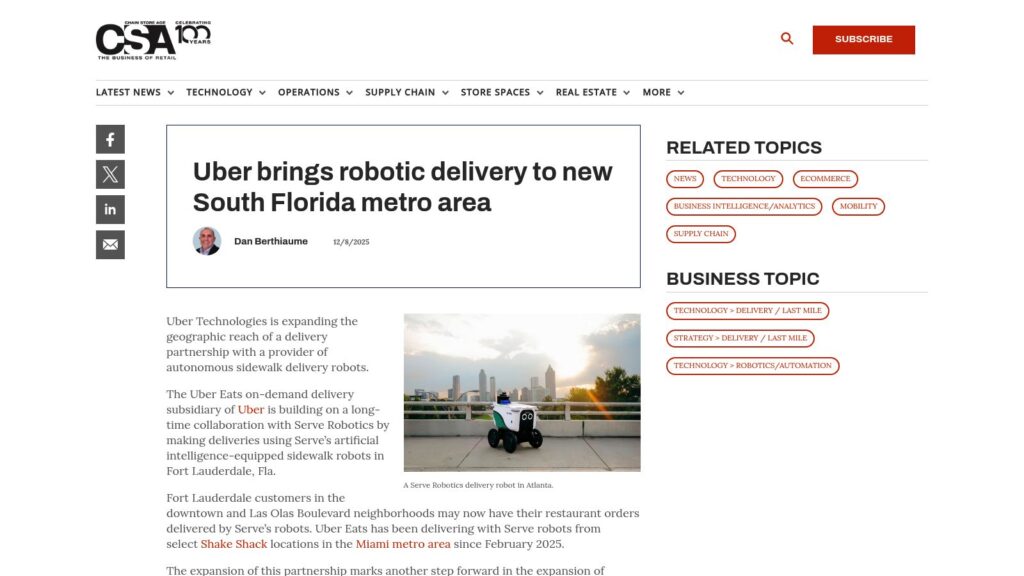
Uber Brings Robotic Delivery to New South Florida Metro Area

Uber Eats expands robotic delivery with Serve Robotics in Fort Lauderdale, enhancing autonomous deliveries in South Florida’s downtown and Las Olas Boulevard. This builds on previous operations in Miami and Atlanta, as Serve aims to deploy 2,000 robots across the U.S. by year-end. The partnership utilizes AI-equipped robots for efficient, reliable food delivery, reflecting Uber’s commitment to innovative logistics within a tech-friendly community.

https://chainstoreage.com/uber-brings-robotic-delivery-new-south-florida-metro-area

The Rise of Digital Menus: How McDonald’s Drive-Thru Kiosks Boost Sales

McDonald’s digital transformation in the QSR industry, featuring self-ordering kiosks and AI-powered menus, enhances efficiency, customer engagement, and sales. Digital menus allow real-time updates, vibrant visuals, and tailored promotions, improving decision-making and reducing errors. Kiosks boost average order values, customization, and satisfaction. This seamless experience positions McDonald’s as a market leader, and ongoing innovations signify a future trend towards more automated, personalized ordering systems.

https://vocal.media/journal/the-rise-of-digital-menus-how-mc-donald-s-drive-thru-kiosks-boost-sales

The Uncomfortable Truth About QSR Loyalty: Why Design, Not Customers, Is the Problem

QSR loyalty programs need deeper transformation beyond mere updates, as current strategies focus too heavily on transactional rewards and fail to foster true customer engagement. While Merkle suggests shifts to emotional loyalty, it overlooks essential design aspects that could enhance customer interaction and experience. The industry faces critical threats from AI alternatives, which could disrupt traditional loyalty systems, necessitating a focus on psychological engagement and meaningful choices. QSRs should prioritize creating choices with consequences and time-based dynamics to differentiate themselves effectively in a market increasingly driven by AI and consumer expectations.

https://thewisemarketer.com/the-uncomfortable-truth-about-qsr-loyalty/

How QSR Brands Can Create Emotional Connection as Prices Rise

QSR brands face challenges due to rising prices and changing consumer habits. To maintain loyalty, they must foster emotional connections rather than focus solely on discounts. Key strategies include enhancing customer experience, embracing cultural relevance, and personalizing interactions. Establishing a meaningful brand identity across all customer touchpoints and ensuring technology enhances rather than overshadows service will drive enduring relevance in a competitive landscape.

https://www.qsrmagazine.com/story/how-qsr-brands-can-create-emotional-connection-as-prices-rise/

Hi Auto and Bojangles Reveal Game-Changing Voice AI Features at Global Payments Genius Conference

Bojangles and Hi Auto showcased new Voice AI features at the Global Payments Genius Conference, enhancing drive-thru efficiency across nearly 500 restaurants. Innovations include real-time order confirmation, dual-lane accuracy using car images, and local data processing for reliability, raising heightened automation standards in the QSR industry with improved service speed and order accuracy.

https://www.qsrmagazine.com/news/hi-auto-and-bojangles-reveal-game-changing-voice-ai-features-at-global-payments-genius-conference/

Why Bojangles’ Voice AI Rollout Is a Blueprint for Operational Innovation, Not Just Automation

Bojangles and Hi Auto’s Voice AI rollout exemplifies practical innovation in drive-thrus, moving beyond typical automation failures. This system, operational at nearly 500 locations, emphasizes speed and reliability, integrating smoothly with existing systems to enhance customer service. High performance metrics (93% order completion, 96% accuracy) showcase its operational efficiency, prompting franchisee adoption not from novelty but from proven results. Voice AI is transitioning from a novelty to essential infrastructure, enabling the quick-service restaurant industry to enhance its responsiveness in a competitive landscape.

https://www.citybiz.co/article/779768/why-bojangles-voice-ai-rollout-is-a-blueprint-for-operational-innovation-not-just-automation/

Top 10 Quick Service Restaurant Companies Transforming Global Fast-Food Trends in 2025

Quick service restaurants are increasingly leveraging technology like self-service kiosks and mobile apps to address labor issues and enhance customer satisfaction. Growth in the sector is driven by rising incomes, urbanization, and demand for convenient meal options, projecting the market to reach USD 1,930.14 billion by 2032. The top 10 companies include McDonald’s, Domino’s, and Subway. The industry is set to adapt to consumer preferences with a focus on digital ordering and contactless services.

https://www.fortunebusinessinsights.com/blog/top-10-quick-service-restaurant-companies-11146

Scroll to Top