QSR

Can Intelligent Cooking Machines Invade the Kitchen and “Eliminate” a Group of Chefs?
Stir-frying robots are rapidly entering the catering industry, prompting questions about whether they will replace chefs. Advantages include fast cooking times and stable outputs, with robots taking just a few minutes to prepare dishes. However, chefs emphasize their creativity and expertise remain competitive, suggesting robots can assist rather than replace. Despite potential cost benefits, robots face challenges in practical kitchen operations and require human oversight. Overall, the integration of stir-frying robots may shift chef roles rather than eliminate them, creating opportunities for chefs to focus on creative aspects and management.
https://eu.36kr.com/en/p/3572154393483394

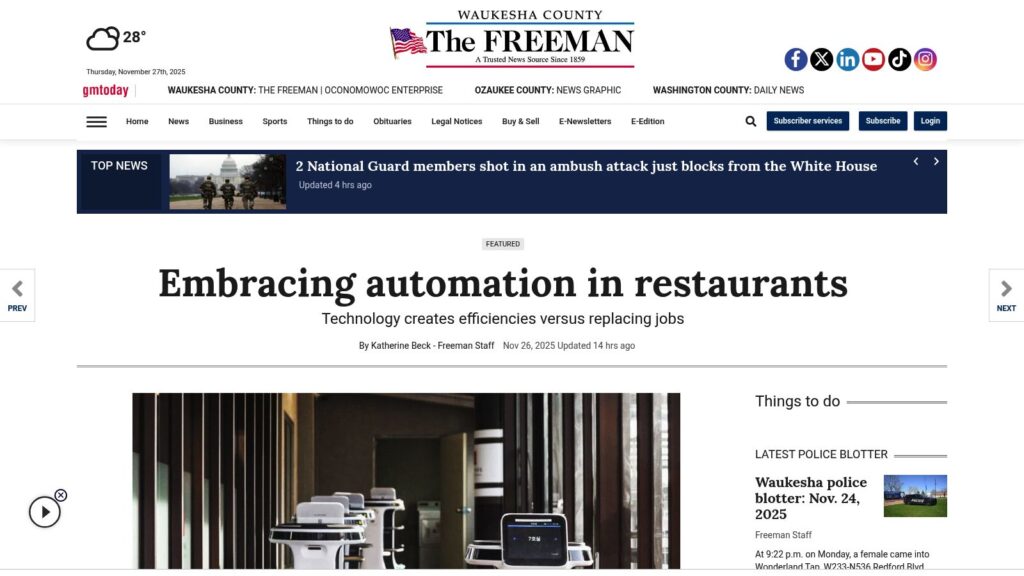
Embracing Automation in Restaurants

Automation in Restaurants: Waukesha County chefs see automation as a means to enhance efficiency without replacing jobs. Digital tools and robots in operations aim to improve the customer experience and streamline tasks. The restaurant automation market is expected to grow significantly, emphasizing the balance between human interaction and technological support. This movement encourages hiring, operational safety, and skill growth. Chefs believe automation facilitates better quality and consistency, making life easier for employees while still requiring human oversight.

https://www.gmtoday.com/the_freeman/business/embracing-automation-in-restaurants/article_3f6018b9-20e8-59d3-9b6b-7fde2c8a09aa.html

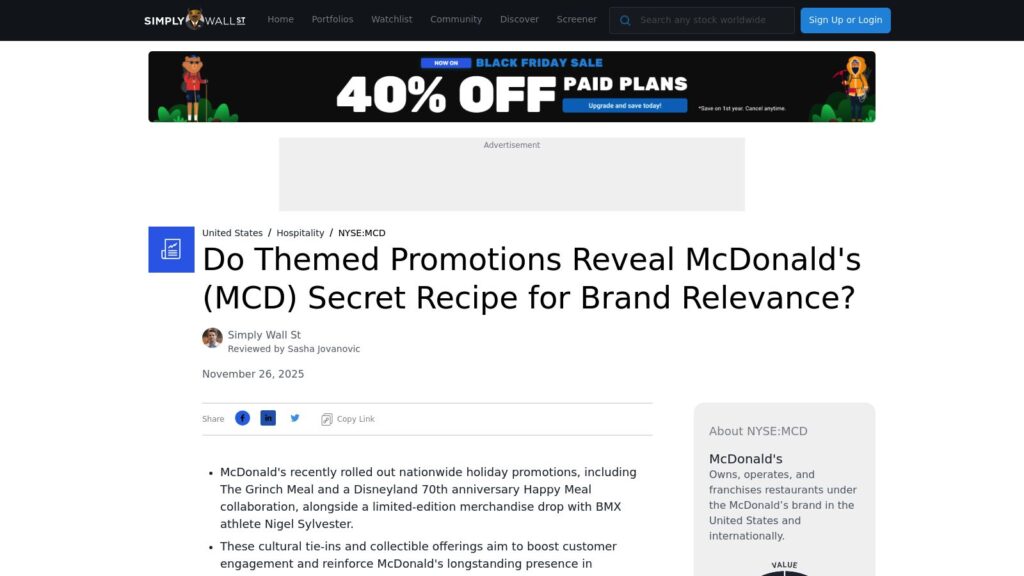
Do Themed Promotions Reveal McDonald’s (MCD) Secret Recipe for Brand Relevance?

McDonald's launched holiday promotions like The Grinch Meal and Disneyland collaboration to enhance brand relevance and customer engagement. While these initiatives may create excitement, key challenges remain, such as declining US guest traffic and rising costs. The company aims for significant revenue and earnings growth through menu innovation and digital strategies, with projected earnings of $10.4 billion by 2028. Investors should be cautious of long-term risks despite the promotional efforts.

https://simplywall.st/stocks/us/consumer-services/nyse-mcd/mcdonalds/news/do-themed-promotions-reveal-mcdonalds-mcd-secret-recipe-for

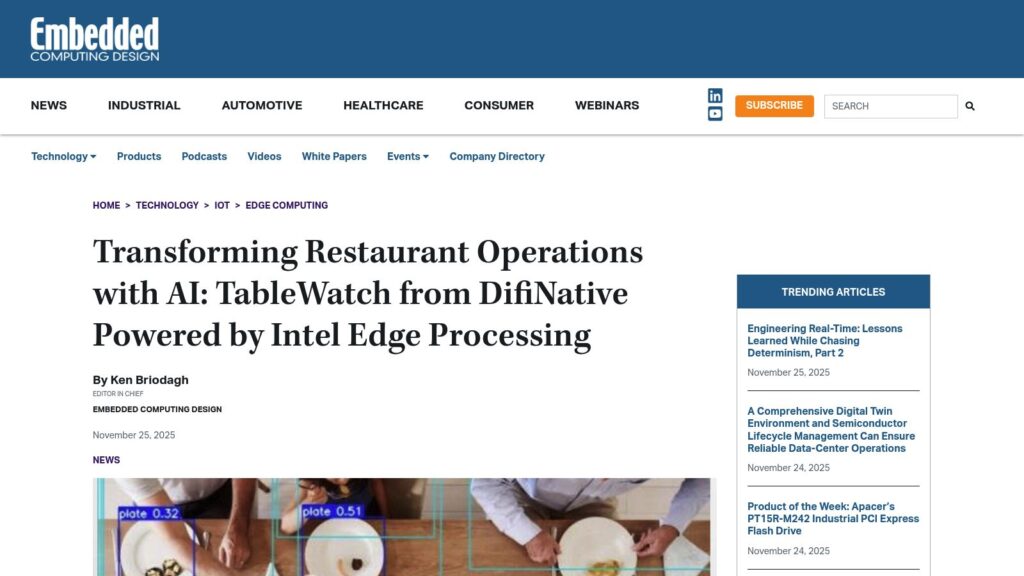
Transforming Restaurant Operations With AI: TableWatch From DifiNative Powered by Intel Edge Processing

DifiNative's TableWatch uses AI and real-time vision to optimize restaurant operations, addressing challenges like high costs and staffing issues. It automates table visibility, reduces wait times, boosts revenue, and maintains consistency across outlets. Leveraging Intel’s AI edge technology, it provides low-latency insights without needing constant cloud connectivity. SquirrelVision, the underlying technology, can apply similar capabilities across various industries by creating digital twins from visual data. Intel supports AI edge integrations through its AI Edge Initiative, enhancing performance and security in edge applications.

https://embeddedcomputing.com/technology/iot/edge-computing/transforming-restaurant-operations-with-ai-tablewatch-from-difinative-powered-by-intel-edge-processing

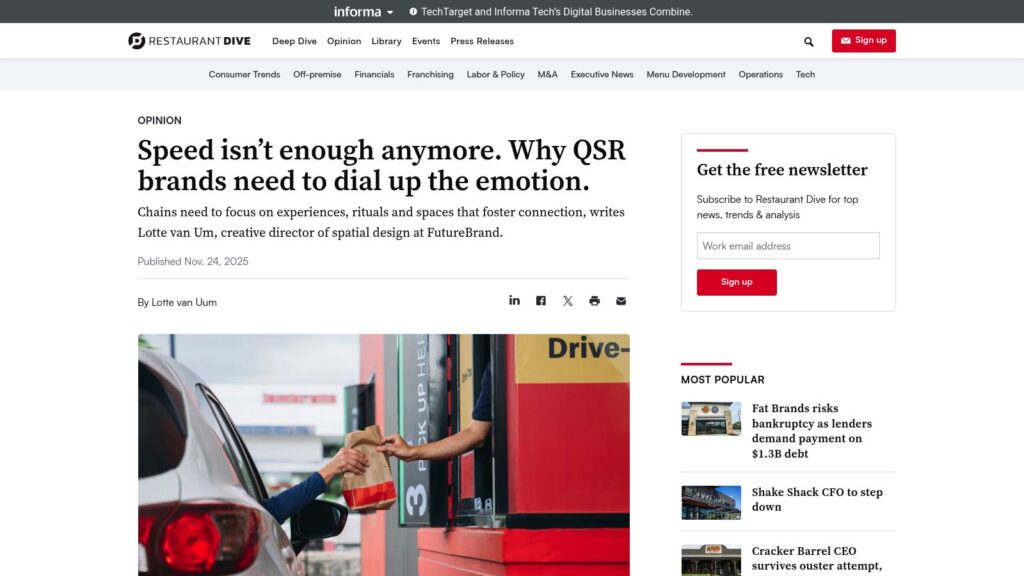
Speed Isn’t Enough Anymore. Why QSR Brands Need to Dial up the Emotion.

QSR brands must enhance emotional connections to attract and retain customers in a competitive market. Instead of focusing solely on speed, they should create meaningful experiences, localize designs, and foster community connections. Engaging rituals and empowered staff can enrich customer interactions, turning venues into inviting cultural spots rather than mere fast food locations. Brands that adapt by emphasizing emotional engagement will differentiate themselves and thrive.

https://www.restaurantdive.com/news/why-qsr-restaurants-need-to-dial-up-the-emotion/804693/

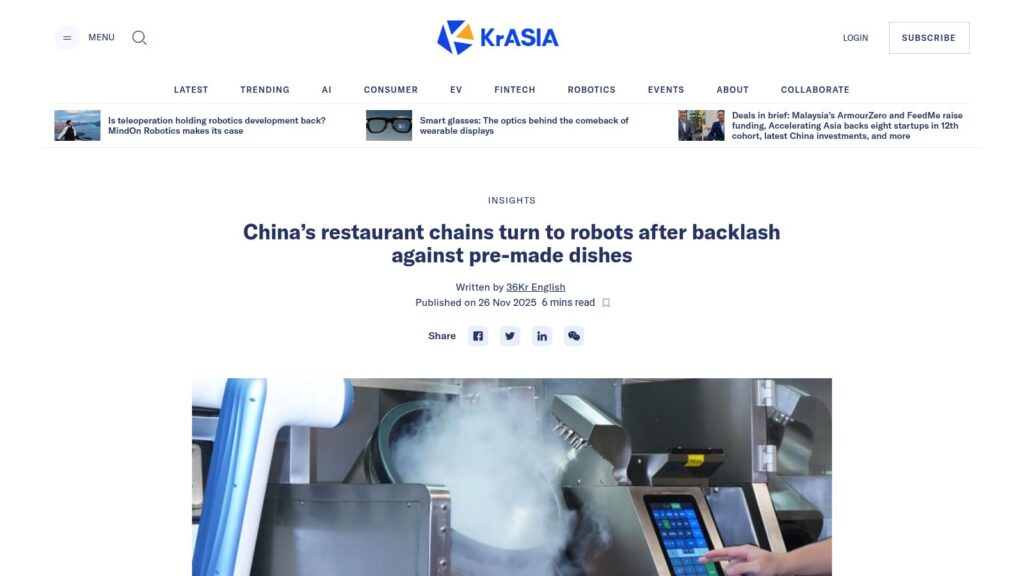
China’s Restaurant Chains Turn to Robots After Backlash Against Pre-made Dishes

China's restaurant industry is shifting from pre-prepared dishes to cooking robots due to consumer backlash. Automation in kitchens improves efficiency, reduces labor costs, and maintains food quality. Robot use is becoming mainstream as diners prefer fresh meals made by machines over reheated options. This trend is extending to workplace cafeterias, helping companies meet demand while minimizing waste and labor costs. The adoption of cooking robots reflects the industry's need for standardization and efficiency.

https://kr-asia.com/chinas-restaurant-chains-turn-to-robots-after-backlash-against-pre-made-dishes

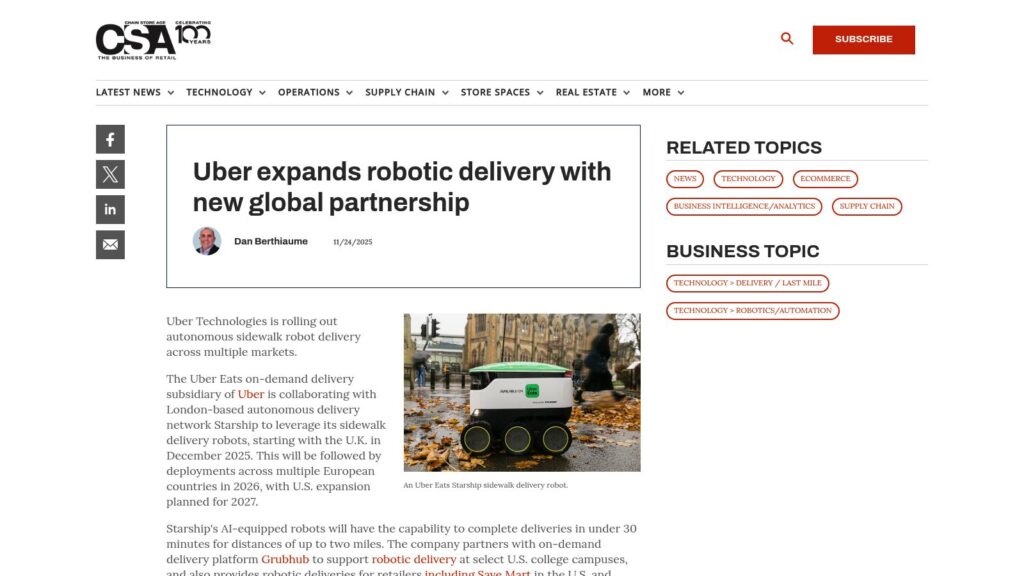
Uber Expands Robotic Delivery With New Global Partnership

Uber collaborates with Starship for global sidewalk robot deliveries, starting in the U.K. in December 2025 and expanding to Europe in 2026 and the U.S. in 2027. Starship’s robots can deliver within 30 minutes over two miles. Uber has previously used various robotic delivery methods, enhancing its service through partnerships and technology investment.

https://chainstoreage.com/uber-expands-robotic-delivery-new-global-partnership

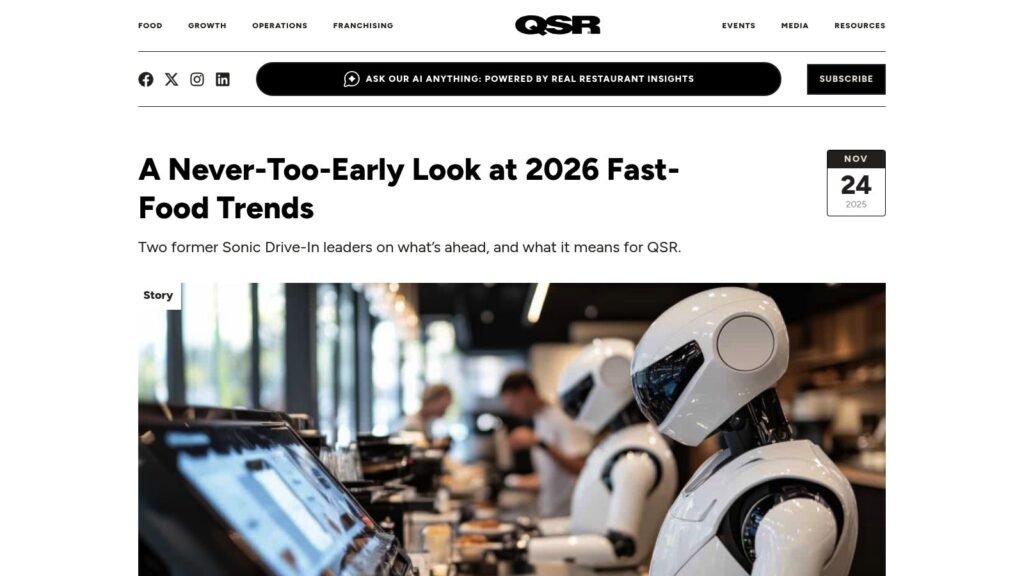
A Never-Too-Early Look at 2026 Fast-Food Trends

  • Customer Insights: Data-driven approaches will be essential to understand shifting consumer behavior.
  • AI Integration: AI will transition from optional innovation to core business infrastructure.
  • Loyalty: Personalized programs will drive growth and retention.
  • Social Media: Managing virality and reputation becomes critical.
  • Execution: Rapid and disciplined implementation of plans will separate leaders from followers.

https://www.qsrmagazine.com/story/a-never-too-early-look-at-2026-fast-food-trends/

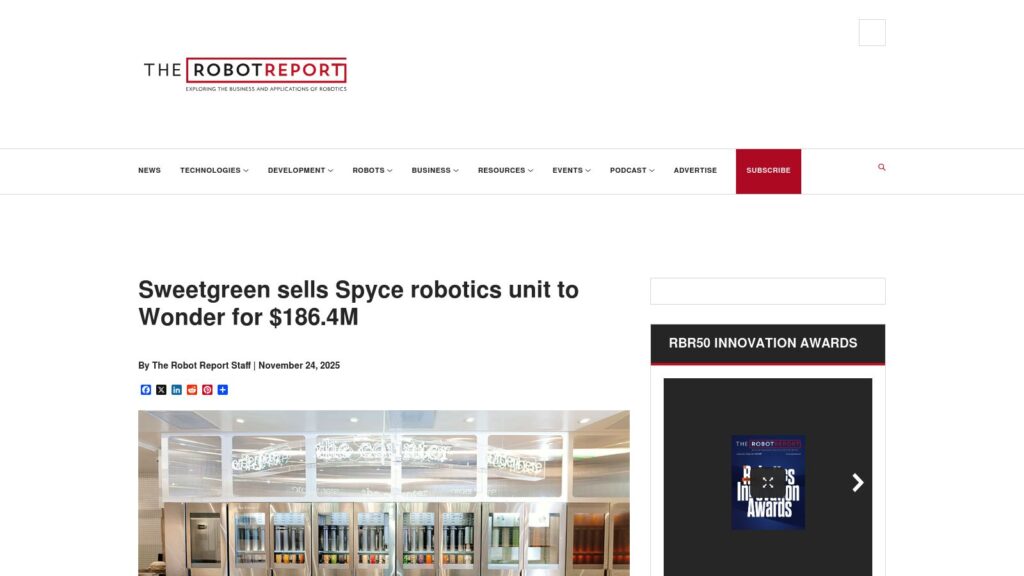
Sweetgreen Sells Spyce Robotics Unit to Wonder for $186.4M

Sweetgreen sold Spyce robotics unit to Wonder for $186.4M, planning to install its Infinite Kitchen system in more locations. Spyce, acquired by Sweetgreen in 2021, developed an automated food assembly approach. Sweetgreen aims to focus on growth and profitability with the deal, receiving $100M cash and stock. Wonder sees Infinite Kitchen as a step towards becoming a tech-driven food platform, enhancing restaurant operations and accessibility.

https://www.therobotreport.com/sweetgreen-sells-spyce-robotics-unit-wonder-186-4m/

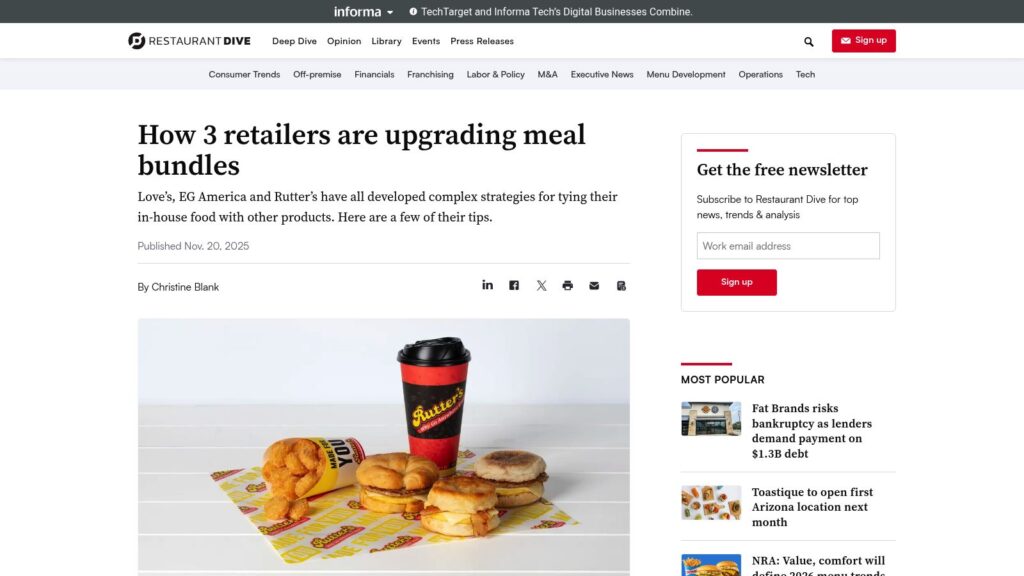
How 3 Retailers Are Upgrading Meal Bundles

Three retailers—Love's, EG America, and Rutter’s—enhance meal bundles through strategic partnerships, appealing pricing, and consumer trends. They focus on convenience, value, and familiar offerings to draw traffic. Data analysis guides their bundle creation, incorporating feedback and seasonal insights. Collaborating with CPG brands boosts awareness while personalized marketing maximizes engagement. Bundling strategies help convenience stores compete with QSRs and meet evolving consumer preferences.

https://www.restaurantdive.com/news/bundling-value-meals-QSR-c-stores/805680/

Scroll to Top