QSR

Why 2026 Is the Year of the AI-driven Restaurant
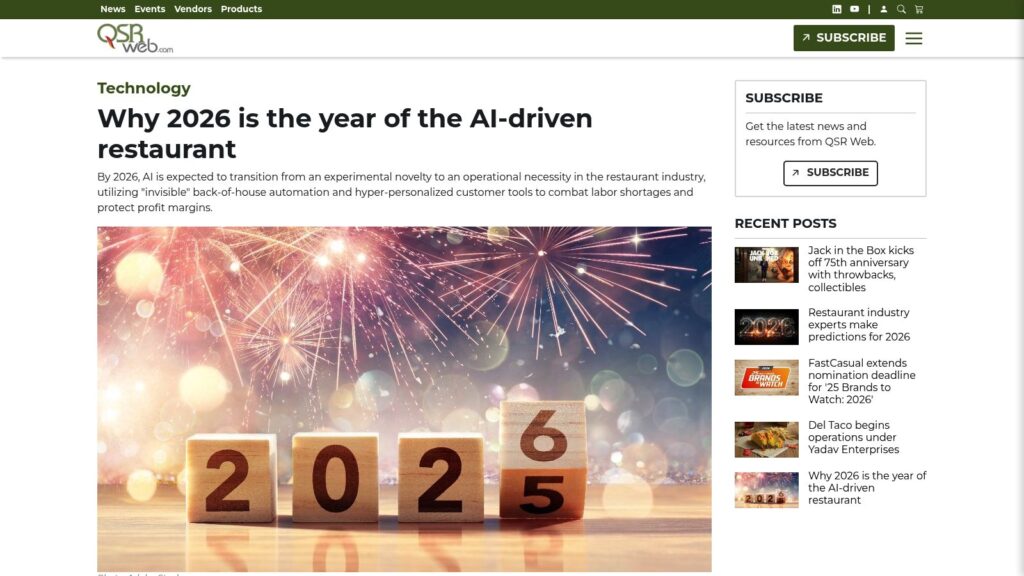
By 2026, AI in restaurants will shift from novelty to essential, addressing labor shortages and tight margins. Innovations like back-of-house automation and personalized customer tools will enhance operations and customer experience. Experts agree that AI adoption is crucial for success, as technology streamlines processes and drives growth amid economic changes, redefining hospitality through enhanced personalization without replacing human staff.

https://www.qsrweb.com/articles/why-2026-is-the-year-of-the-ai-driven-restaurant/
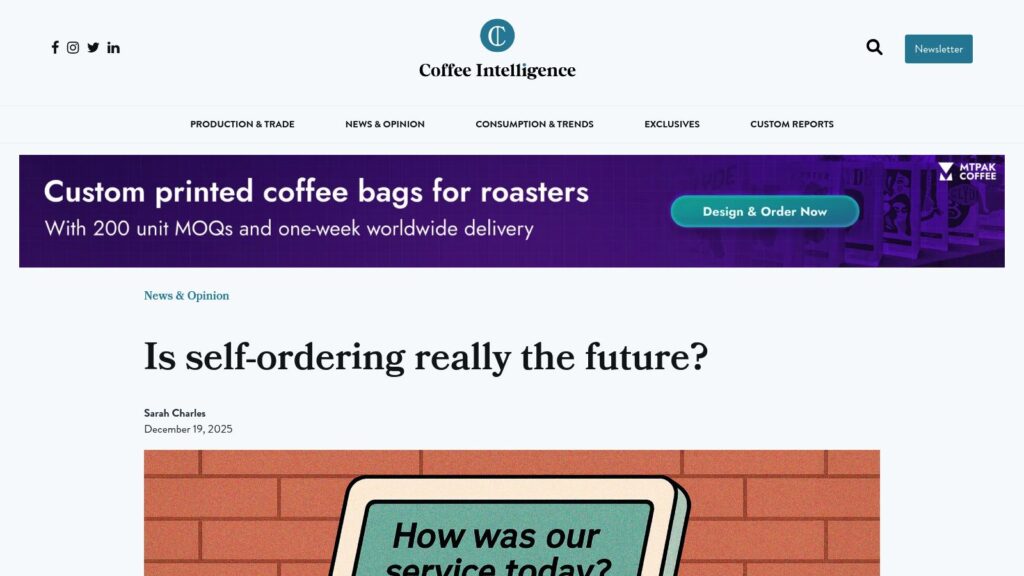
Is Self-ordering Really the Future?

Self-ordering technology, such as kiosks and apps, boosts sales and efficiency but risks diminishing personal connections in hospitality. Data shows a majority of customers prefer these systems for convenience, yet many still value human interaction, highlighting a tension between efficiency and the need for meaningful service. Companies like Starbucks are reevaluating automation's role to enhance customer experiences, indicating a potential shift toward a hybrid model that balances technology's benefits with the warmth of human service.

https://intelligence.coffee/2025/12/is-self-ordering-really-the-future/

What Google’s New Merchant Extortion Tool Means for Restaurant Operators

Google now offers a dedicated “merchant extortion” reporting tool for restaurants targeted by organized fake review extortion attempts on Google Maps. Businesses facing sudden clusters of 1- and 2-star reviews, often from fake accounts, can report not just the reviews but the extortion threats as well. This improved process helps alert Google’s Trust & Safety team to active threats. Operators are advised to document evidence and avoid paying ransoms, as reviews have become a weapon for malicious actors and need to be defended as digital assets.

https://restauranttechnologynews.com/2025/12/what-googles-new-merchant-extortion-tool-means-for-restaurant-operators/

Bee Boop! Robots Are Cooking and Serving in London Restaurants

London restaurants are hiring robots for cooking and serving, enhancing efficiency and cost-effectiveness while not fully replacing human workers. Robots like “Robbie,” a server, assist but require human operation for tasks like food delivery. While robots excel in repetitive tasks and batch cooking, chefs argue they cannot replace the creativity and personal touch needed in culinary arts. The trend aims to address labor shortages without eliminating the human element in dining experiences.

https://www.cbc.ca/news/canada/london/robot-waiters-chefs-work-in-restaurants-9.7019601

Vox AI Integrates Drive-thru Payments Through Adyen Partnership

Vox AI partnered with Adyen to launch Vox AI Pay, enabling drive-thru card payments directly at order terminals, improving transaction speed and reducing queues. The system integrates with major point-of-sale platforms, supports cashless payments, and aims to decrease processing fees. It will be demonstrated at the National Retail Federation Big Show 2026. Vox AI develops voice automation technology for quick-service restaurants, addressing labor challenges.

https://www.fdiforum.net/mag/featured/vox-ai-integrates-drive-thru-payments-through-adyen-partnership/

How Restaurants Can Protect Customer Data Without IT Complexity

Restaurants increasingly rely on technology, especially POS systems, which heightens customer data risks. Data security is vital to prevent cyberattacks that can lead to financial penalties, lawsuits, reputational harm, and regulatory compliance issues. Common challenges include malware, poor staff training, weak access controls, and vendor risks. Simple measures, like using strong POS systems, enhancing staff training, and securing networks, can protect data without complexity. Compliance with standards like PCI DSS and GDPR is crucial to avoid fines and maintain customer trust, making robust data security essential for operational success.

https://modernrestaurantmanagement.com/how-restaurants-can-protect-customer-data-without-it-complexity/

Serve Robotics Deploys 2,000 Robots & Leads U.S. Sidewalk Delivery

Serve Robotics (SERV) has deployed more than 2,000 autonomous delivery robots in 2025, giving it the largest sidewalk delivery fleet in the United States and meeting its operational target on time and on budget. The company rapidly expanded into major U.S. markets, with further launches planned in Buckhead, GA, and Alexandria, VA, and emphasizes that its zero-emission robots can cut traffic congestion and emissions while operating with minimal human intervention and high safety.

Growth is being driven by deep partnerships with Uber and DoorDash, which together provide access to over 80% of the U.S. food delivery market, and by expanding relationships with national restaurant brands such as Jersey Mike’s, Shake Shack, and Little Caesars. Over the past year, Serve’s fleet has grown 10x, its city footprint 5x, and its restaurant reach to more than 3,600 locations, while passing 1,000 deployed robots in Q3 2025 and 2,000 by mid-December, which accelerates its AI learning flywheel and strengthens its position as a leader in autonomous delivery and physical AI.

https://finance.yahoo.com/news/serve-robotics-deploys-2-000-163700829.html

Scroll to Top